Sneaker
Why Are Jordan 4 Retros Still Dominating Sneaker Culture in 2026?

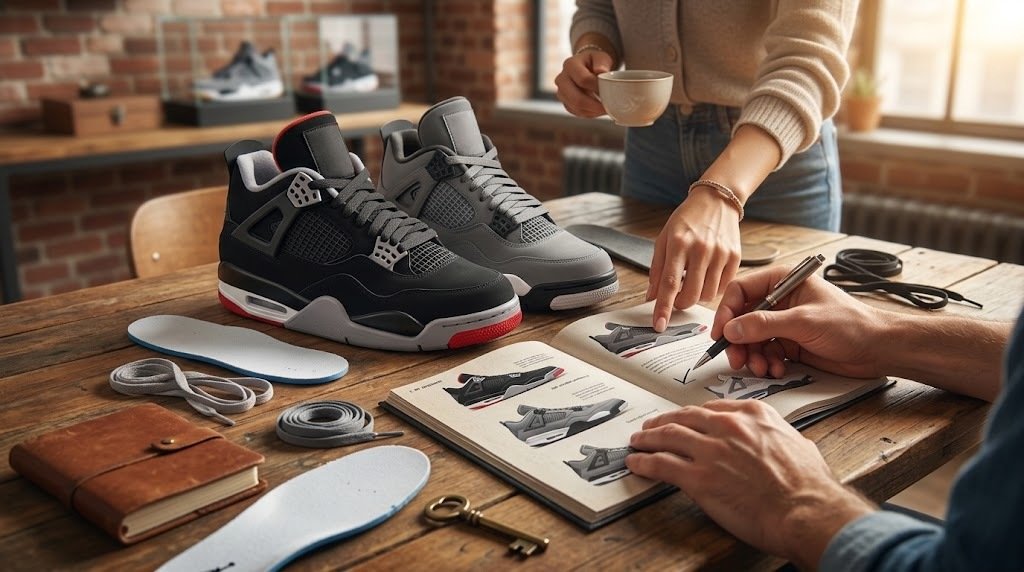
Why Are Jordan 4 Retros Still Dominating Sneaker Culture in 2026? The short answer is simple: few sneakers combine basketball history, recognizable design, pop culture, streetwear versatility, and a steady flow of new releases as effectively as the Air Jordan 4.
The silhouette has been around since 1989, yet it does not feel trapped in nostalgia. Instead, Jordan Brand keeps giving the model new reasons to matter. In 2026, the lineup includes heritage driven retros, women’s and kids’ releases, creative collaborations, and fresh interpretations that introduce the AJ4 to new audiences. House of Heat has tracked more than 15 confirmed Jordan 4 releases for the year, showing how central the silhouette remains to Jordan Brand’s calendar.
That combination explains the Jordan 4’s unusual staying power. It is old enough to have history but flexible enough to participate in today’s fashion conversation.

Why Are Jordan 4 Retros Still Dominating Sneaker Culture in 2026?
The Jordan 4 continues to dominate because it sits at the intersection of heritage and relevance.
A sneaker can be historically important without being fashionable today. The Jordan 4 has managed to avoid that problem. Its shape is distinctive enough to be immediately recognizable, while its relatively structured profile works with the oversized jeans, cargos, shorts, and layered streetwear that remain common in 2026.
The model also benefits from a powerful storytelling advantage. Its original connection to Michael Jordan gives it basketball credibility, while decades of appearances in music, film, fashion, and everyday streetwear have expanded its meaning beyond sport.
Nike’s own Jordan 4 archive identifies the original 1989 release as a Tinker Hatfield design and notes that the shoe was the first Air Jordan to receive a global release. Nike also highlights its appearance in Spike Lee’s Do the Right Thing, an early example of how the AJ4 crossed from basketball into wider pop culture.
That history gives every new retro something that newer sneakers cannot manufacture overnight.
The 1989 Design Still Looks Modern
One of the biggest reasons the Jordan 4 has survived is its design language.
Tinker Hatfield created the Air Jordan 4 with several elements that were visually unusual for a basketball shoe at the time. The side mesh, plastic support wings, visible Air cushioning, and layered upper created a technical appearance without making the shoe look overly complicated.
The result was a silhouette with enough visual detail to stand out but enough structure to work with different outfits.
The design details that still matter
Several elements continue to define the AJ4:
- Visible Air cushioning: Adds to the shoe’s recognizable profile.
- Side mesh panels: Give the upper its signature appearance.
- Support wings: Help create the model’s distinctive side profile.
- Structured midsole: Makes the shoe visually substantial.
- High contrast color blocking: Gives classic versions immediate recognition.
- Mid top construction: Provides a balance between basketball heritage and lifestyle wear.
This matters in 2026 because sneaker consumers are increasingly selective. A 2026 sneaker trend analysis from Dara O’Donnell argues that shoppers are moving toward more intentional purchases and sneakers that integrate naturally into everyday wardrobes.
The Jordan 4 already fits that requirement. It does not need to completely reinvent itself to remain wearable.
Jordan 4 Retros Have a Story Behind Them
Sneaker culture is rarely just about materials and construction. The strongest models carry stories.
The Jordan 4 has several.
Its 1989 debut coincided with one of Michael Jordan’s most memorable playoff moments. Nike’s archive connects the model with Jordan’s famous game winning shot against Cleveland during the 1988 to 1989 playoffs.
The shoe then gained another cultural dimension through Do the Right Thing. That appearance helped demonstrate that the AJ4 could exist outside the basketball court and become part of a broader visual Sneaker Culture.
This storytelling advantage continues today.
A new Jordan 4 does not arrive as an isolated product. Consumers already understand the shape, recognize the wings and mesh, and associate the silhouette with decades of Jordan Brand history. A new colorway therefore becomes another chapter in an existing story.
That is a powerful reason collectors keep returning to Jordan 4 Retros.
Which Jordan 4 Colorways Keep the Silhouette Relevant?
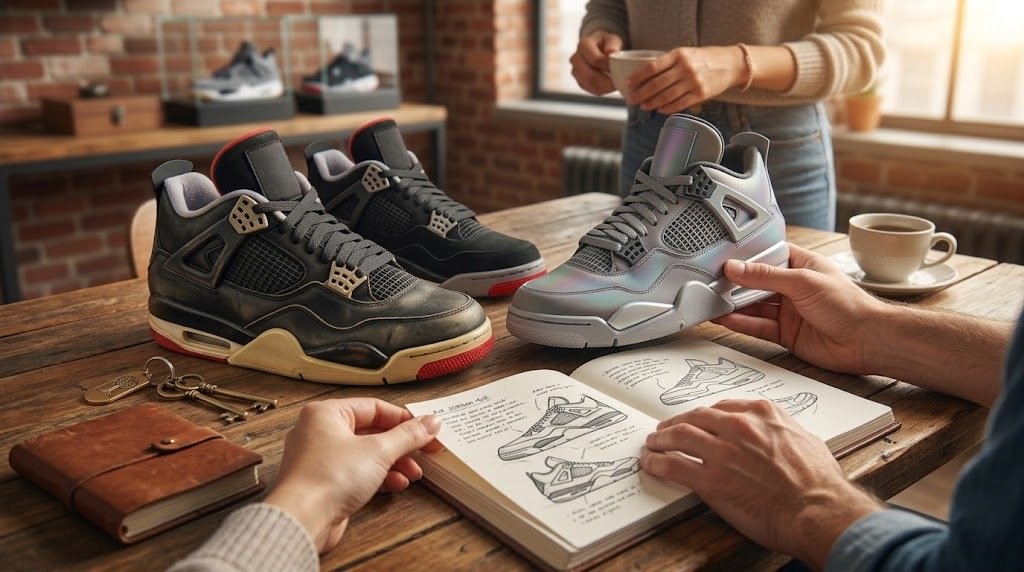
Colorways are another major part of the Jordan 4’s staying power.
The model has accumulated a large catalog, but several combinations have become cultural reference points.
Bred
The black, red, and gray combination is one of the most recognizable Jordan 4 looks. Its connection to Michael Jordan’s 1989 playoff moment makes it particularly important to the model’s history.
The 2026 return is especially significant because Jordan Brand is bringing back an OG styled version with Nike Air branding. Current reporting places the return around Black Friday, making it one of the year’s major heritage releases.
Fire Red
Fire Red represents the original Jordan 4 aesthetic particularly well. Its white base, black detailing, and red accents make it easy to recognize and easy to style.
It also demonstrates why classic Jordan 4 color blocking remains effective decades later: the contrast is strong without requiring an elaborate graphic treatment.
Military Blue
Military Blue has long held a special place among Jordan 4 enthusiasts because of its OG status and clean color combination. It is a strong example of how restrained color palettes can become more collectible over time.
University Blue
University Blue demonstrates the opposite strategy. Instead of relying entirely on OG nostalgia, the colorway uses a modern, highly recognizable palette while maintaining the classic AJ4 construction.
Together, these examples show that the Jordan 4 can appeal to both traditional collectors and newer sneaker buyers.
How the 2026 Release Strategy Keeps Jordan 4 Retros Fresh
The most important development in 2026 is not one particular colorway. It is the range of stories Jordan Brand is telling through the silhouette.
House of Heat’s 2026 release tracking highlights long requested retros such as Tour Yellow and Toro, alongside the return of the Bred and a broad selection of new concepts. It also identifies releases spanning men’s, women’s, and kids’ sizing.
That variety matters.
A heritage collector can look for an OG inspired release. A younger buyer can choose a bright seasonal colorway. A woman who wants a Jordan 4 designed around her sizing can find dedicated options. Parents can introduce the silhouette to younger sneaker fans through grade school and kids’ releases.
The result is a much broader audience than the original basketball market.
Collaborations are expanding the Jordan 4’s identity
Collaborations have also helped the silhouette move into different cultural spaces.
Nigel Sylvester is a useful example. His work connects the Jordan 4 with BMX culture and a more lifestyle focused approach to the model. House of Heat describes his influence as part of the silhouette’s continuing expansion beyond traditional basketball storytelling.
Nike has also demonstrated the AJ4’s adaptability through the SB x Air Jordan 4. The 2023 model modified the construction for skateboarding while preserving the recognizable AJ4 visual identity. Nike SB described the project as combining heritage with modern skate functionality.
That is more important than it might initially appear. It proves the Jordan 4 can enter another sport and subculture without losing its identity.
Why the Jordan 4 Works So Well With 2026 Streetwear
The Jordan 4 is unusually easy to style because its proportions already match the current preference for relaxed silhouettes.
Baggy jeans
Wide or relaxed denim creates enough space around the ankle for the Jordan 4’s substantial shape. A slightly stacked hem can emphasize the sneaker without completely covering it.
Cargo pants
Cargo pants and Jordan 4s make a natural combination because both have a functional, utility influenced visual language.
Try neutral cargo pants with a white, black, gray, or earth toned Jordan 4 for an understated look.
Shorts
The AJ4 also works with shorts because the mid top shape provides visual weight above the ankle. Athletic shorts, denim shorts, and relaxed cotton shorts can all work depending on the colorway.
Oversized streetwear
An oversized hoodie, graphic tee, varsity jacket, or relaxed outer layer can balance the sneaker’s proportions.
The key is not to make every element oversized. Let the Jordan 4 be one of the visual anchors of the outfit.
Are Jordan 4 Retros Still Worth Buying in 2026?
For many buyers, yes, but the answer depends on why you are buying.
If you want a sneaker with a strong history, recognizable design, and broad styling potential, the Jordan 4 remains one of the safest choices in the Jordan lineup.
If you are buying strictly for resale profit, the situation is different. Not every retro becomes a valuable collectible. Release volume, sizing, condition, demand, collaboration status, and long term cultural relevance all influence secondary market performance.
That distinction is important because sneaker culture in 2026 is becoming more fragmented. O’Donnell’s 2026 trend analysis points toward more selective consumers rather than a market driven entirely by hype.
In other words, buying a Jordan 4 simply because it is a Jordan 4 is no longer enough for every shopper.
Buy the pair because you like the colorway, understand the story, and know you will actually wear it.
What Makes the Jordan 4 Different From Other Retro Jordans?
The Jordan 4 occupies an interesting middle ground.
The Jordan 1 has enormous historical importance and a simpler shape. The Jordan 11 is known for its distinctive patent leather construction. The Jordan 3 has the elephant print and a more rounded visual profile.
The Jordan 4 is different because it combines technical looking details with a strong lifestyle shape.
It can look athletic without requiring a basketball uniform. It can look premium without becoming formal. It can look vintage without appearing outdated.
That flexibility is arguably its greatest competitive advantage.
An original way to measure its staying power
Consider a simple wardrobe test: imagine owning only three pairs of sneakers and needing one pair that works with jeans, cargos, shorts, hoodies, jackets, and casual tailoring.
The Jordan 4 passes more of those combinations than most retro basketball silhouettes.
That is not a resale statistic or a hype metric. It is a practical measure of why the shoe continues appearing in everyday outfits decades after its debut.
Will Jordan 4 Retros Stay Popular Beyond 2026?
The safest prediction is that the silhouette will remain important, although its level of hype will naturally rise and fall.
Sneaker trends are cyclical. Even strong models experience quieter periods. The difference with the Jordan 4 is that Jordan Brand has multiple ways to refresh it without changing its essential identity.
The brand can revisit archival colorways, create women’s and kids’ editions, collaborate with cultural figures, experiment with materials, and introduce new stories.
That gives the silhouette a larger creative runway than a sneaker dependent on one trend.
Nike’s current Air Jordan 4 archive still identifies 1989 as its original release year and Tinker Hatfield as its designer, while its current catalog continues to feature multiple Jordan 4 variations.
That combination of archive credibility and ongoing product development is difficult for competing retro silhouettes to match.

The Bottom Line: Why Are Jordan 4 Retros Still Dominating?
Why Are Jordan 4 Retros Still Dominating Sneaker Culture in 2026? Because the shoe does something most sneakers struggle to do: it makes history feel current.
Its 1989 design remains recognizable. Its Michael Jordan connection remains powerful. Its pop culture history gives it meaning beyond basketball. Its colorway catalog gives collectors variety. Its proportions work with modern streetwear. And Jordan Brand continues to introduce new versions that keep the silhouette visible.
The 2026 release calendar reinforces that point. With a large number of confirmed releases across classic retros, new colorways, collaborations, and different sizing categories, the Jordan 4 is not simply surviving on nostalgia. It is actively being repositioned for another generation.
For sneaker fans, that is the real reason the AJ4 remains dominant.
It is not just a retro.
It is a platform for basketball history, fashion, collecting, and personal style.
FAQ Section
Why are Jordan 4 Retros so popular in 2026?
Jordan 4 Retros remain popular because they combine a recognizable 1989 design, Michael Jordan’s basketball legacy, pop culture history, versatile styling, and a steady stream of new releases.
Are Jordan 4 Retros still in style in 2026?
Yes. The Jordan 4 remains highly relevant in 2026 because its structured shape works well with current streetwear, including baggy denim, cargo pants, shorts, and oversized tops.
What is the most iconic Jordan 4 colorway?
The Bred Jordan 4 is widely considered one of the most iconic because of its original color blocking and connection to Michael Jordan’s famous 1989 playoff moment.
Are Jordan 4 Retros comfortable for everyday wear?
Comfort varies by release, foot shape, and personal preference. The Jordan 4’s visible Air cushioning and structured construction make it suitable for casual wear, although people seeking maximum all day comfort may prefer modern running inspired sneakers.
Which Jordan 4 releases are coming in 2026?
The 2026 calendar includes numerous Jordan 4 releases across men’s, women’s, and kids’ sizing. Confirmed and reported highlights include returns such as Tour Yellow, Toro, and Bred, alongside new colorways and collaborations. Release dates can change, so check official Nike and Jordan channels before purchasing.
Are Jordan 4 Retros a good investment?
They can be collectible, but no Jordan 4 should be treated as a guaranteed investment. Colorway, release quantity, condition, sizing, collaboration status, and long term demand all influence secondary market value.