Brands
The Story of Supreme: From Skate Shop to Global Fashion Icon

The Story of Supreme: From Skate Shop to Global Fashion Icon begins in April 1994, when James Jebbia opened a small skate shop on Lafayette Street in downtown Manhattan. What started as a place for New York skaters eventually became a cultural institution that influenced streetwear, luxury fashion, music, art, and modern retail.
Supreme did not become famous by behaving like a traditional fashion company. Its strength came from understanding a specific community and giving that community products that felt authentic. The store became a meeting point for skaters, artists, musicians, photographers, and young people connected to New York’s downtown culture.
Today, Supreme has a global presence and remains closely associated with limited releases, its red Box Logo, provocative collaborations, skateboarding, and youth culture. Its ownership has also changed significantly, with EssilorLuxottica completing its acquisition of Supreme from VF Corporation in October 2024 for a base purchase price of $1.5 billion.
In simple terms, Supreme became a fashion icon by making its identity feel more important than traditional fashion marketing.

Supreme’s Beginning: Why Did the Skate Shop Matter?
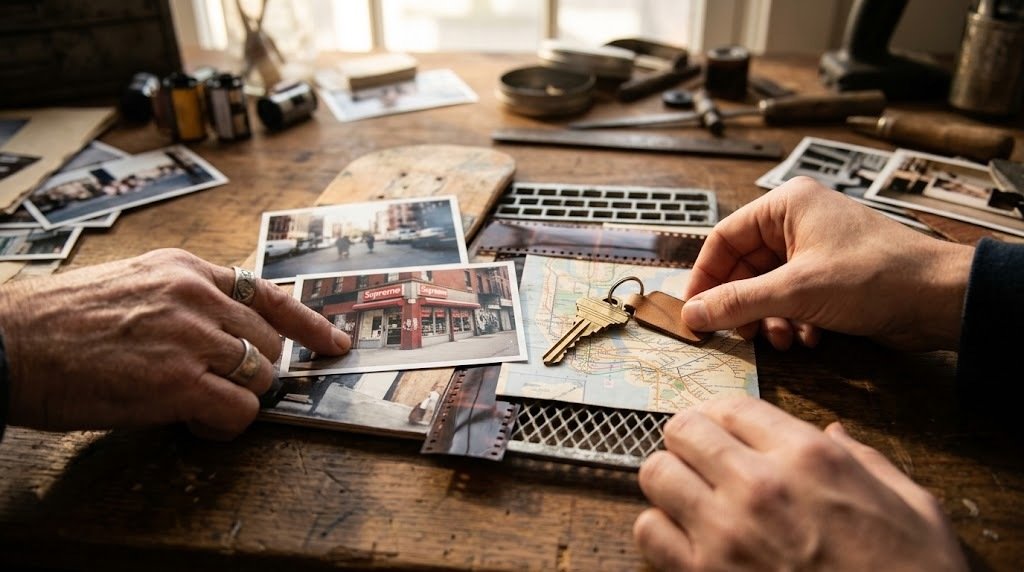
James Jebbia founded Supreme in 1994 after years of experience around influential retail and youth culture. The first Supreme store opened on Lafayette Street in Lower Manhattan and was designed around the needs of skateboarders.
According to Supreme’s own history, the store quickly became a home for New York skate culture. Neighborhood kids, local skaters, and artists became employees, customers, and part of the brand’s wider community.
The original store was unusual for its time. Rather than treating skateboarding as a niche activity separate from fashion, Supreme placed skate culture at the center of the shopping experience.
The store’s layout even allowed skateboarders to move through the space with room around the clothing displays. That detail tells us something important about Supreme’s early philosophy: the brand was built around a lifestyle before it was built around a business model.
From Lafayette Street to a Cultural Community
Supreme’s early identity was strongly connected to downtown Manhattan.
Skaters were not simply customers. They were part of the brand’s identity. Artists contributed graphics and designs. Musicians and photographers became connected with the label. The Supreme skate team helped establish credibility within skateboarding rather than relying on conventional advertising.
Early team members included influential figures from New York’s skate scene and people connected with Larry Clark’s Kids. This connection helped Supreme become part of the visual language of 1990s New York youth culture.
The Story of Supreme: From Skate Shop to Global Fashion Icon Through Its Logo
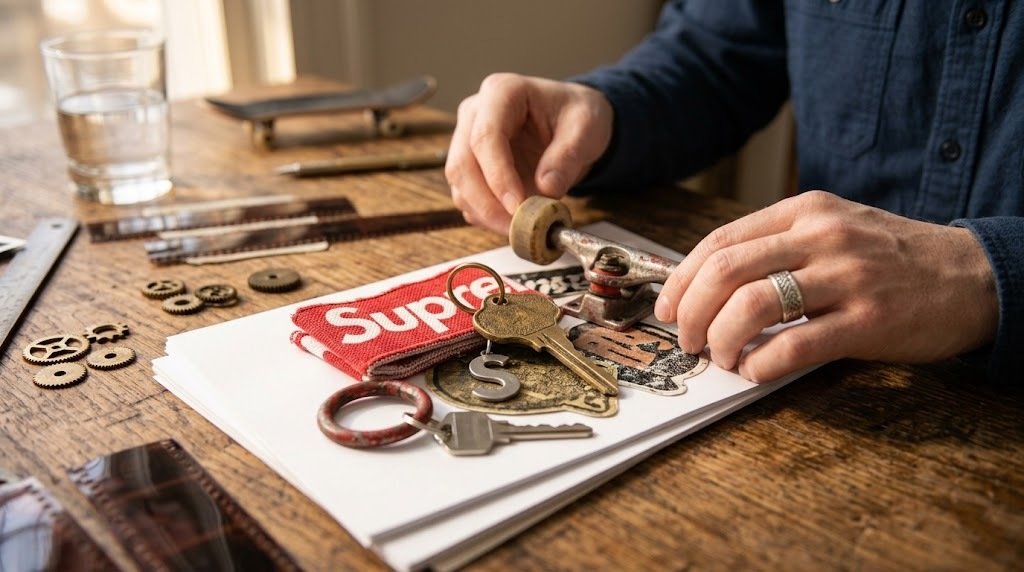
The Supreme Box Logo is one of the most recognizable symbols in streetwear.
Its simple red rectangle with white lettering looks almost effortless. That simplicity is part of its power.
The design was influenced by the work of artist Barbara Kruger, particularly her use of bold typography and red, black, and white visual language. Supreme transformed that artistic influence into a brand mark that could appear on T shirts, hoodies, caps, skateboards, accessories, and countless collaborations.
The result was a logo that became more than a corporate identifier.
For many consumers, wearing the Box Logo communicates knowledge of a particular cultural history. It can represent skateboarding, New York, streetwear collecting, music, fashion, or simply an appreciation for Supreme’s design language.
That distinction matters. Many fashion brands use logos to promote the company. Supreme made the logo itself part of the cultural product.
Why Was Supreme So Different?
Supreme’s early success came from several connected decisions:
- It focused on a specific youth culture instead of everyone.
- It used real skaters and artists as part of its identity.
- It maintained a strong connection to New York.
- It produced limited quantities.
- It avoided behaving like a conventional luxury label.
- It collaborated with unexpected cultural partners.
- It made buying the product feel like participating in a community.
That combination gave Supreme an unusual position between skate shop, clothing label, art project, and cultural institution.
How Supreme Changed the Streetwear Business
One of Supreme’s biggest contributions was its approach to product releases.
Instead of placing an entire seasonal collection in stores at once, Supreme became famous for releasing small groups of products on a regular schedule. The limited availability encouraged customers to pay attention to each release and created an atmosphere of urgency.
This became known as the drop model.
Supreme did not create every idea associated with scarcity or limited products, but it became one of the clearest examples of how controlled availability could turn ordinary retail into an event.
A hoodie was no longer simply a hoodie.
Customers had to know when it was coming, decide whether they wanted it, and act quickly before the product disappeared.
Why Do Supreme Drops Create So Much Demand?
The psychology is straightforward.
When a product is available everywhere, there is little pressure to buy immediately. When customers believe an item may disappear quickly, its perceived value can rise.
Supreme combined that scarcity with cultural credibility.
The result was a powerful cycle:
- Supreme announces a release.
- Fans discuss the products online.
- Customers line up or prepare for the online release.
- Popular products sell quickly.
- Resellers place some pieces on the secondary market.
- Social media spreads images of the products.
- Interest grows around future releases.
This model influenced countless streetwear brands and helped shape the modern limited release economy.
It also created an important lesson for fashion marketers: scarcity works best when people already believe the product has cultural value.
That is one of the clearest differences between Supreme and brands that simply manufacture artificial hype.
Supreme Collaborations That Changed Fashion
Collaboration became one of Supreme’s most powerful creative tools.
Rather than working only with conventional fashion companies, Supreme built partnerships across skateboarding, luxury fashion, sports, music, art, technology, and popular culture.
Notable collaborations have included:
- Louis Vuitton
- Comme des Garçons
- Nike
- The North Face
- Vans
- Timberland
- Lacoste
- Levi’s
- artists and photographers from different generations
- entertainment and cultural brands
Supreme’s collaboration history is especially important because it helped break down the traditional boundary between streetwear and luxury fashion.
Supreme and Louis Vuitton
The Supreme and Louis Vuitton relationship is one of the most famous examples.
Years before the official collaboration, Supreme had already created controversy through designs that referenced Louis Vuitton’s recognizable monogram. The relationship later changed dramatically when the two brands officially collaborated in 2017.
The partnership demonstrated how far streetwear had moved into luxury fashion.
The same type of clothing that once belonged primarily to skate shops could now appear alongside one of the world’s most established luxury houses.
Vogue has described Supreme’s collaboration history as a major part of its transition from outsider brand to fashion insider.
Supreme and Comme des Garçons
The Comme des Garçons collaboration was another important milestone.
Vogue’s reporting on Supreme’s history highlights the 2012 collaboration as a partnership that opened new doors for the brand and expanded its reach within fashion.
The significance was not simply commercial.
Comme des Garçons had serious credibility within avant garde fashion, while Supreme represented downtown skate culture. Bringing the two together showed that streetwear could participate in high fashion without completely abandoning its original identity.
Why Supreme Became More Than a Clothing Brand
The strongest part of The Story of Supreme: From Skate Shop to Global Fashion Icon is not the list of products Supreme has sold. It is the cultural network that developed around the company.
Supreme worked with artists, filmmakers, musicians, photographers, skaters, and designers.
Its creative output included clothing, skateboards, photography, films, accessories, and unusual products that could seem deliberately unexpected.
The brand’s skate team also played an important role. Supreme has worked with generations of notable skateboarders, helping connect the company to the sport’s changing culture.
This approach gave Supreme something that conventional advertising cannot easily manufacture: credibility inside a community.
Supreme’s Connection to Music and Art
Supreme’s collaborations have reached well beyond clothing.
The company has worked with musicians including Public Enemy, Black Sabbath, Slayer, Three 6 Mafia, and Mobb Deep. It has also collaborated with major visual artists and photographers.
This helped Supreme operate like a cultural publisher as much as a clothing company.
The product was often only one part of the story.
A photograph, video, skate film, artist collaboration, or unusual campaign could generate conversation around the brand without looking like a conventional advertisement.
That is a major reason Supreme became so influential among younger consumers.
Supreme’s Expansion Beyond New York
Supreme eventually expanded beyond its original Manhattan location.
Los Angeles became the brand’s second major store in 2004. London followed in 2011, Paris in 2016, and additional locations opened across Japan and other international markets. Berlin and Milan opened in 2021, Chicago in 2022, Seoul in 2023, and Shanghai in 2024, according to the brand’s documented history.
The important point is that Supreme did not suddenly become a global company overnight.
Its expansion happened gradually.
That slow growth helped preserve a sense of exclusivity while allowing Supreme to reach consumers outside New York.
The physical stores also maintained a recognizable visual connection to the original Lafayette Street concept.
From New York Skate Shop to Global Community
Supreme’s official history now describes the brand as having expanded from its New York City origins into a global community after more than three decades.
That description captures an important evolution.
The original Supreme customer was closely connected to downtown New York skateboarding. The modern Supreme audience is much broader.
It includes skateboarders, streetwear collectors, fashion enthusiasts, sneaker fans, artists, musicians, and consumers who may never have stepped on a skateboard.
That expansion is one of the company’s biggest achievements.
The Supreme Business Story: VF Corporation and EssilorLuxottica
Supreme’s ownership history is an important part of its modern story.
In December 2020, VF Corporation completed its acquisition of Supreme for a base purchase price of $2.1 billion. VF said the acquisition would give Supreme access to its global supply chain, international platforms, and digital capabilities.
The move was significant because Supreme had spent decades building an independent identity.
Four years later, another major change occurred.
In July 2024, EssilorLuxottica announced an agreement to purchase Supreme from VF Corporation for $1.5 billion. The transaction was completed on October 1, 2024.
EssilorLuxottica is best known for its global position in eyewear, making the acquisition an unusual chapter in Supreme’s history.
The company said Supreme’s direct commercial model, brand identity, and connection with new audiences were important parts of the opportunity.
What Does the Ownership Change Mean for Supreme?
The ownership changes do not erase Supreme’s history.
The bigger question is whether the company can expand while preserving the qualities that made it culturally important.
That means balancing two opposing pressures:
Growth: reaching more customers and developing new markets.
Exclusivity: maintaining the scarcity, creativity, and authenticity that created demand in the first place.
Supreme’s history suggests that this balance matters enormously.
What Makes Supreme Different From Other Streetwear Brands?
Many brands now use limited releases, collaborations, bold logos, and social media marketing.
Supreme helped popularize the combination.
But copying the visible parts of the Supreme formula does not automatically reproduce its success.
The original advantage was cultural credibility.
Supreme spent years building relationships with skaters, artists, musicians, photographers, and designers before its global reputation became enormous.
That is difficult to imitate.
An Original Insight From Six Years of Fashion Content Work
After six years of working with fashion and streetwear content, one pattern stands out when comparing Supreme with newer hype driven labels: Supreme’s strongest asset is not the red Box Logo. It is the context surrounding the logo.
A new brand can print a recognizable graphic on a hoodie tomorrow.
It cannot instantly recreate three decades of skate culture, New York history, collaborations, films, team riders, controversial moments, collectors, and cultural associations.
That difference explains why a simple Supreme T shirt can carry far more meaning than its physical construction would suggest.
The garment is the object.
The history is the value.
The Story of Supreme: From Skate Shop to Global Fashion Icon Today
More than 30 years after its founding, Supreme remains one of the most recognizable names in streetwear.
Its journey can be summarized in five stages:
- 1994: A skate shop opens on Lafayette Street in New York.
- 1990s: Supreme develops credibility through local skaters, artists, and downtown culture.
- 2000s and 2010s: The brand expands its stores, collaborations, and international audience.
- 2017: The Louis Vuitton collaboration demonstrates the growing relationship between streetwear and luxury fashion.
- 2020 to 2024: Supreme changes corporate ownership, first moving to VF Corporation and later to EssilorLuxottica.
The story is unusual because the company became globally famous without abandoning the identity that originally made the store interesting.
Supreme still draws heavily from skateboarding, art, music, photography, and youth culture.
That continuity is a major part of its appeal.
Why Is Supreme Still Important to Streetwear?
Supreme’s influence can be seen in how modern brands launch products, build communities, collaborate with artists, and use scarcity.
The brand helped prove that a small cultural audience could become a global consumer base.
It also demonstrated that streetwear did not need to imitate traditional luxury fashion to become valuable.
Instead, luxury fashion eventually moved toward streetwear.
That shift changed the fashion industry.
Supreme’s story is therefore not only about one company. It is also about the transformation of American fashion, particularly the movement of skateboarding and youth culture from the margins into the center of global style.
For readers interested in streetwear history, [INTERNAL LINK: Complete Streetwear Fashion Guide] can provide useful context on the broader movement Supreme helped shape.
Conclusion: Why Supreme’s Story Still Matters
The Story of Supreme: From Skate Shop to Global Fashion Icon is ultimately a story about culture before commerce.
James Jebbia did not begin with a global fashion empire. He began with a skate shop designed around a particular community in downtown New York.
That authenticity became the foundation for everything that followed.
The Box Logo became iconic. The drop model became influential. Collaborations pushed streetwear into luxury fashion. Stores expanded around the world. Corporate ownership changed twice in four years.
Yet the central idea remains recognizable: Supreme built desire by making people feel that they were buying into a culture, not simply buying clothes.
That is why the brand continues to matter in 2026.
Its greatest achievement may not be becoming a global fashion company.
It may be proving that a local skate shop could create an identity powerful enough to influence the entire fashion industry.
FAQ Section
What is Supreme best known for?
Supreme is best known for its New York skateboarding roots, red Box Logo, limited product drops, collaborations, and influence on global streetwear culture.
When was Supreme founded?
Supreme was founded by James Jebbia in April 1994. Its first store opened on Lafayette Street in downtown Manhattan.
Why did Supreme become so popular?
Supreme combined skate culture, limited product releases, strong visual identity, collaborations, and community credibility. Its scarcity based drop model also created significant demand around individual releases.
Who owns Supreme in 2026?
Supreme is owned by EssilorLuxottica. The company completed its acquisition of Supreme from VF Corporation on October 1, 2024, for a base purchase price of $1.5 billion.
What made the Supreme Box Logo famous?
The Box Logo became famous because of its simple, highly recognizable design and its connection to Supreme’s skateboarding and downtown New York identity. Its visual language was influenced by artist Barbara Kruger’s work.
Did Supreme influence modern streetwear?
Yes. Supreme helped establish limited drops, major cross industry collaborations, community focused branding, and the idea that skate inspired clothing could have significant cultural and commercial value.