Brands
Inside Palace Skateboards: How It Redefined Streetwear Culture

Inside Palace Skateboards: How It Redefined Streetwear Culture begins with a simple idea: Palace did not become influential by copying American streetwear. It built a distinctly London identity and then pushed that identity into skateboarding, football, tennis, golf, luxury fashion, music, and popular culture.
Founded in London in 2009 by Lev Tanju and his circle, Palace grew from a skate crew environment into one of the most recognizable British names in modern streetwear. Its Tri Ferg logo became instantly recognizable, while its grainy video style, irreverent humor, unusual collaborations, and limited releases helped create a brand that felt like a community rather than simply a clothing label.
What makes Palace especially interesting is that its influence cannot be explained by a logo alone. The brand changed the way a skate company could communicate, collaborate, and move between subcultures without completely abandoning its roots.

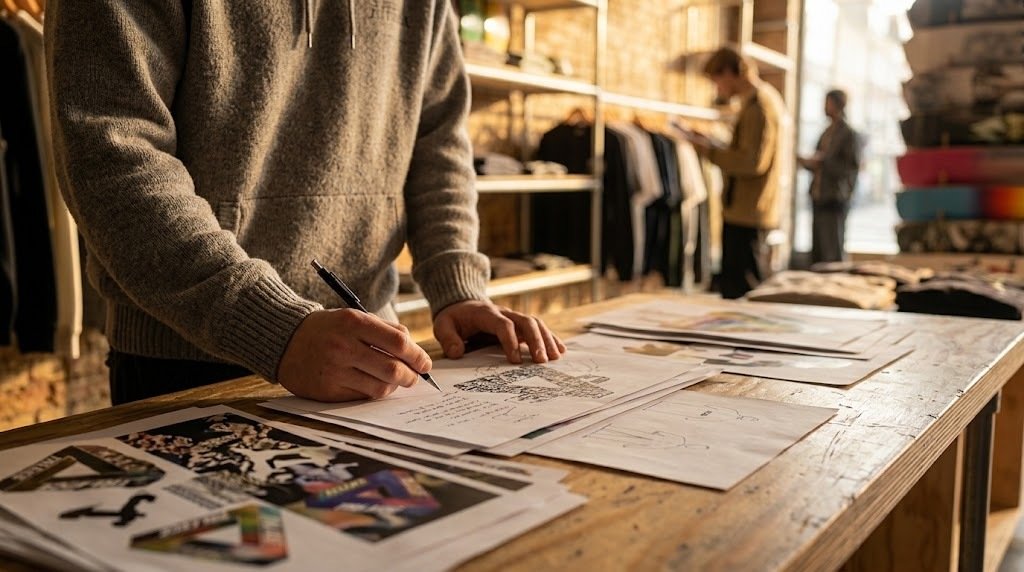
What Is Palace Skateboards and Why Did It Become So Influential?
Palace Skateboards is a London based skate and streetwear brand founded in 2009. Its early identity came from Southbank skate culture, where Lev Tanju and the Palace crew developed a style that felt distinctly British rather than like a direct imitation of American skate brands.
That distinction matters.
Before Palace became globally recognizable, American companies had enormous influence over skate fashion. Palace offered another model. It combined skateboarding with British football culture, London humor, vintage sportswear, music, and deliberately rough visual production.
The result was a brand that could feel underground even after becoming internationally famous.
The Southbank roots
The Palace story is closely connected with London’s Southbank skate scene. The early crew environment helped establish the brand’s most important characteristic: authenticity came before polish.
Palace’s early identity was not built around making skateboarding look luxurious. Instead, it made the everyday world surrounding skateboarding part of the brand.
That included hanging out, music, humor, old sports references, street photography, and the imperfect energy of London.
This approach became important to Palace’s later success because customers were buying into a world, not just a sweatshirt.
How Did the Tri Ferg Become a Streetwear Icon?
The Tri Ferg is Palace’s most recognizable visual symbol. Designed by Fergus Purcell, also known as Fergadelic, the triangular graphic became a shorthand for Palace’s London skate identity.
Its strength comes from simplicity.
The three dimensional triangle can be recognized quickly on a T shirt, hoodie, skateboard deck, cap, or accessory. That makes it highly adaptable across different products and collaborations.
But the logo also created an interesting tension inside Palace.
Some early streetwear fans criticized the brand for relying too heavily on the Tri Ferg. A long running Reddit discussion from 2016, for example, complained that Palace repeatedly used the logo on relatively simple products and questioned whether the brand was becoming creatively repetitive. Other commenters pushed back, pointing to more experimental graphics and arguing that the audience often rewarded the most recognizable pieces rather than the most creative ones.
That debate is actually useful for understanding Palace.
A powerful logo can become repetitive, but it can also become a visual language. Palace eventually used the Tri Ferg as a foundation for increasingly different cultural projects.

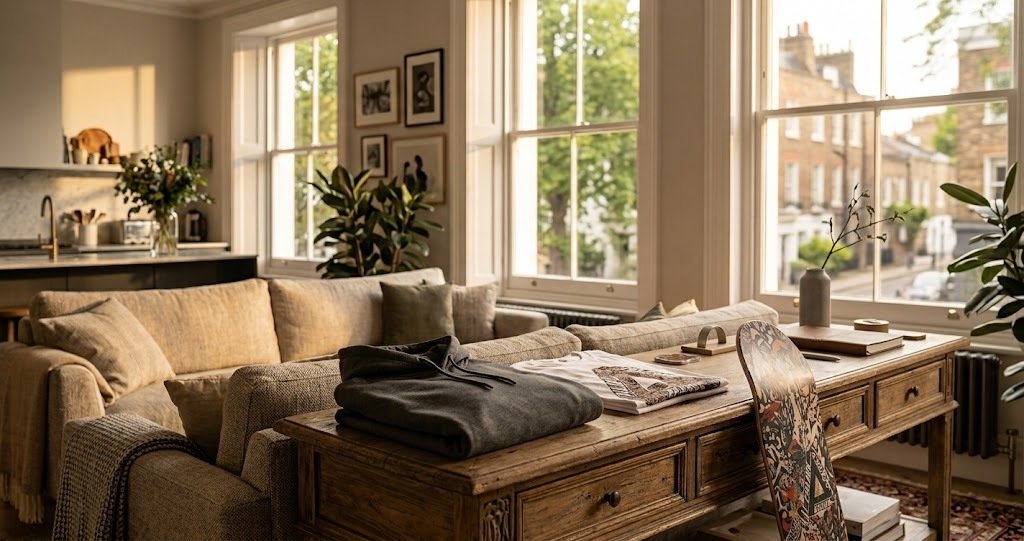
How Did Palace Redefine Streetwear Culture?
Palace changed streetwear culture by refusing to stay inside one category.
A useful way to understand its strategy is through three bridges:
- Skateboarding to everyday fashion
- British sports culture to global streetwear
- Underground humor to high profile fashion collaborations
This three bridge model explains why Palace became bigger than a conventional skate brand.
From skateboarding to everyday fashion
Palace clothing was designed to function in real city environments. Hoodies, T shirts, jackets, trousers, caps, and skate products could move between the skatepark, street, pub, and casual social settings.
That practicality helped the brand avoid feeling like costume streetwear.
The modern Palace product range still reflects this mixture of skate function and lifestyle clothing. Current Palace releases include graphic pieces, accessories, outerwear, and sports influenced collections.
From British sports culture to global fashion
Palace’s relationship with sports is one of its most important contributions to streetwear.
The brand explored football, tennis, golf, cycling, and other sports through collaborations rather than treating skateboarding as its only source of inspiration.
Its adidas relationship demonstrates this perfectly. adidas documented the Palace collaboration as early as 2014, highlighting shared London skate heritage through riders Chewy Cannon and Benny Fairfax.
Later projects moved far beyond skateboarding. Palace and adidas explored tennis, football, golf, and even wellness inspired clothing.
This created a new formula: take a recognizable British subculture, reinterpret it through Palace’s visual language, and make it accessible to a global audience.
Which Palace Collaborations Changed Its Reputation?
Collaborations were essential to Palace’s transformation from a London skate label into an international fashion brand.
Palace x Umbro
One of Palace’s early major collaborations was with British sportswear company Umbro in 2012.
The collection connected Palace with football and terrace culture, showing that skatewear could communicate with another British subculture without losing its identity.
Palace x adidas
The ongoing adidas relationship became one of Palace’s most important partnerships.
Rather than simply putting a logo on existing products, the two brands repeatedly explored different sports and cultural settings. The relationship eventually touched football, tennis, golf, and leisurewear.
This is a major reason Palace became relevant beyond skateboarding.
Palace x Ralph Lauren
The 2018 Palace x Ralph Lauren collaboration was a major cultural moment.
Palace brought its irreverent London skate personality into the world of American heritage fashion. Ralph Lauren’s own corporate reporting later identified the Palace partnership as part of its effort to connect with a new generation of consumers.
The collaboration demonstrated something important: Palace could enter a traditional luxury and heritage environment without completely changing its personality.
That was a significant shift for streetwear.
Palace and other cultural partnerships
Over time, Palace also worked with brands and organizations across fashion, sport, and culture. Dazed highlighted collaborations and projects involving adidas, Reebok, Umbro, Ralph Lauren, Dover Street Market, Juergen Teller, Alasdair McLellan, Wimbledon, and Juventus.
Why Does Palace Use Humor and Imperfect Visuals?
Palace’s visual identity is almost the opposite of polished luxury advertising.
Its early videos embraced grainy, VHS inspired imagery and the casual atmosphere of friends skating and spending time together. The Villanovan’s profile of Palace also identified this deliberately rough visual style as a key part of the brand’s identity.
That choice was strategically powerful.
Luxury advertising often says, “Look how perfect this product is.”
Palace frequently says, “Look how strange, funny, or chaotic our world is.”
That makes the brand easier to recognize.
The humor also protects Palace from becoming too serious. Even as its products became more expensive and its collaborations became more prestigious, the brand retained an element of irreverence.
This balance is difficult to maintain.
If a skate brand becomes too polished, it can lose credibility with its original audience. If it stays too underground, it may struggle to reach a wider market. Palace found a middle ground where professional production and intentionally amateur looking aesthetics could coexist.
Is Palace Skateboards Still Relevant in 2026?
Yes, but its relevance has changed.
Palace is no longer interesting simply because it is a London skate brand. Its importance comes from how successfully it connected different cultural worlds.
Its official presence includes London, and its international expansion has helped establish Palace as a global streetwear name. Its London shop is located at 26 Brewer Street.
Current Palace releases continue to use the visual language that made the brand recognizable while exploring broader sportswear and lifestyle references. Its official adidas partnership also continues to generate new interpretations of archived and contemporary sportswear.
Why the brand still matters
Palace remains relevant because it understands that streetwear is not just about clothing.
It is about:
- Music
- Skateboarding
- Sport
- Photography
- Humor
- Community
- Limited releases
- Visual identity
- Cultural credibility
That wider approach has helped Palace remain recognizable even as streetwear trends have changed.
Does Palace Skateboards Rely Too Much on Hype?
Hype is certainly part of the Palace model, but it is not the entire explanation.
Limited releases, recognizable logos, collaborations, and social media attention can create urgency around products. Contemporary Palace coverage also emphasizes seasonal drops and limited availability as important parts of its appeal.
However, the strongest Palace pieces usually work because the design has cultural context behind it.
This is where the old “lazy brand” criticism becomes interesting.
The Reddit discussion criticized repeated Tri Ferg products and questioned their value. But other participants argued that Palace produced creative graphics that simply received less attention than logo driven pieces.
The lesson is broader than Palace.
A streetwear brand can have highly creative products, but its audience may still define the brand through its most recognizable logo.
That distinction helps explain why the Tri Ferg became so dominant.
How Should You Wear Palace Skateboards Today?
Palace works best when the outfit does not look like a complete advertisement for the brand.
Try these combinations:
1. Palace hoodie with relaxed denim
A simple Palace hoodie with relaxed jeans and classic sneakers keeps the outfit rooted in traditional skate style.
2. Palace T shirt with cargos
Graphic T shirts work well with neutral cargo trousers. Let the graphic provide the visual focus.
3. Palace outerwear with simple basics
A Palace jacket can become the statement piece when paired with a plain T shirt, straight trousers, and understated sneakers.
4. Mix Palace with vintage sportswear
Because Palace has such strong connections with football and sportswear, vintage inspired jerseys, track jackets, and athletic pieces can complement its aesthetic naturally.
The key is balance. Palace’s strongest looks usually combine one recognizable statement item with simpler clothing.
What Can Other Streetwear Brands Learn From Palace?
Palace’s success offers several practical lessons.
Build an identity before chasing trends.
Palace’s London roots gave its products a recognizable point of view.
Create a world around the product.
The videos, humor, team, music connections, and photography strengthened the clothing.
Collaborate outside your obvious category.
Palace did not limit itself to skateboarding. Football, tennis, golf, luxury fashion, and other categories expanded its cultural reach.
Keep recognizable brand codes.
The Tri Ferg gave Palace an immediate visual signature.
Do not remove personality as you grow.
Perhaps the hardest achievement was maintaining humor while becoming a major international brand.
The Lasting Impact of Palace on Streetwear Culture
Palace did more than popularize another logo.
It helped prove that a British skate brand could build global influence without abandoning its local identity. It showed that skateboarding could interact naturally with football, tennis, golf, luxury fashion, music, and mainstream culture.
Its biggest achievement may be the way it changed expectations.
A skate brand no longer had to choose between authenticity and ambition. Palace demonstrated that an independent looking creative identity could coexist with major international collaborations.
That is why Palace remains important in 2026.
Its influence is not simply measured by how many people wear a Tri Ferg hoodie. It is visible in the broader streetwear landscape, where brands increasingly borrow from sports, music, nostalgia, humor, and local cultural identity to create something larger than clothing.
Conclusion: Why Palace Still Matters
Inside Palace Skateboards: How It Redefined Streetwear Culture is ultimately a story about identity.
Palace started with London skateboarding, developed a distinctive visual language, embraced humor and imperfect imagery, and then carried those ideas into global fashion and sports culture. Its collaborations with names such as adidas and Ralph Lauren showed how far a skate brand could travel without losing its original character.
The brand’s influence comes from that combination of authenticity and experimentation.
For anyone studying streetwear, Palace is worth understanding because it demonstrates that the most powerful fashion brands do not simply sell clothes. They create a cultural point of view.
FAQ Section
What is Palace Skateboards known for?
Palace Skateboards is known for London skate culture, its Tri Ferg logo, irreverent humor, distinctive graphics, skate videos, and collaborations with major sportswear and fashion brands.
When was Palace Skateboards founded?
Palace Skateboards was founded in London in 2009 by Lev Tanju and his circle of skaters. The brand developed from the Southbank skate scene before expanding internationally.
What does the Palace Tri Ferg mean?
The Tri Ferg is Palace’s signature triangular logo, designed by Fergus Purcell. It became one of the most recognizable symbols in modern streetwear and is strongly associated with Palace’s London identity.
Why is Palace Skateboards so popular?
Palace became popular by combining authentic skate culture with distinctive graphics, humor, limited releases, strong visual storytelling, and unexpected collaborations across sports and fashion.
Is Palace Skateboards still popular in 2026?
Yes. Palace remains an influential streetwear brand, with continuing product releases, international retail, and collaborations that connect skateboarding with sportswear and wider fashion culture.
What brands has Palace Skateboards collaborated with?
Palace has collaborated with brands and organizations including adidas, Umbro, Reebok, Ralph Lauren, Dover Street Market, and others across fashion and sport.