
Blogs
Inside All Gone How It Redefined Streetwear Culture


Streetwear has long been more than just a fashion trend; it has evolved into a powerful cultural movement that resonates with youth, rebellion, and creativity. Among the brands that have reshaped the streetwear scene, All Gone stands out for its distinctive approach. From its artistic expression rooted in street culture to its limited edition drops, All Gone has redefined how we consume fashion today. This article explores how the brand’s commitment to exclusivity, creative collaborations, and artistic integrity has made it a cultural icon.
The Founder’s Story of All Gone
Founded in 2006 by Olivier Lebrun, All Forgotten was born out of his passion for art, design, and street culture. Raised in Paris, Lebrun was deeply influenced by the skateboarding and hip-hop scenes of the 1990s. His early exposure to urban culture inspired him to merge his love for art with streetwear. This led to the creation of a brand that reflects street culture’s transient yet impactful nature.
The initial struggles of breaking into a niche industry only strengthened Lebrun’s resolve. Rather than following mainstream trends, he aimed to capture fleeting moments in street art, turning them into permanent fashion pieces. Lebrun’s personal connection to art was key to shaping the brand’s design philosophy, incorporating elements like graffiti and street art into All Gone‘s visual identity.
His mentorship relationships with influential figures like Virgil Abloh and Shawn Stüssy were pivotal in expanding All Gone‘s reach. These figures not only offered guidance but helped propel All Over into the limelight through key collaborations. This helped solidify the brand’s credibility in the streetwear space.
The Birth of All Things Gone
Founded as a fusion of art, culture, and fashion, All Over was designed to reflect street culture’s ever evolving nature. The brand’s core philosophy revolves around limited edition drops, capitalizing on exclusivity to appeal to scarcity-loving consumers. Early on, the brand relied on word of mouth marketing, creating buzz through its small, meticulously crafted releases. This strategy cultivated a loyal following, helping the brand gain traction in the streetwear world.

Unlike many other streetwear brands, All Gone focused not just on the latest trends but on creating a community around culture. Through its art-driven designs, the brand attracted individuals who understood the deeper meaning behind the clothing. All That Matters didn’t just want to sell fashion; it wanted to encapsulate moments of artistic expression that would otherwise be ” forgotten but not forgotten.”
All Gone’s turning point cameAll Gone’s turning point cameAll Gone’s turning point came with its collaboration with Supreme. This partnership introduced the brand to a wider audience and marked the beginning of a series of high-profile collaborations that defined its place in streetwear history.
All go aesthetic & design philosophy
At its core, All Gone blends raw urban energy with fine artistic influences. The brand’s aesthetic is defined by minimalism and bold artistic motifs, often incorporating graffiti inspired designs and geometric shapes. The color palette leans heavily on neutral tones like black, white, and grey, contrasted with neon and metallic accents to create visual tension.
The brand’s designs draw inspiration from skate culture, modern art movements, and architectural influences. These elements come together in garments that are not only fashion statements but works of art. The focus on premium materials like cotton, denim, and nylon ensures that each piece is stylish and durable, designed for the modern urban landscape.
Key Collections & Best Selling Pieces
All Gone has produced several key collections that resonate deeply with its audience. For example, the AW18 Cement collection, inspired by urban environments’ industrial feel, and the SS20 Urban Exploration collection, which celebrated the adventurous spirit of city wanderers, each captured the essence of street life through functional, artistic designs.
Signature pieces like the All Gone x Supreme hoodie and All Gone sneakers have become cultural icons, loved for their exclusivity and artistic appeal. These best sellers highlight the brand’s unique ability to combine streetwear aesthetics with fine art, making every drop a highly coveted item in the fashion world.
Collaborations & Partnerships
All Gone has forged collaborations with iconic brands like Nike, Converse, and Levi’s, reinforcingLevi’s, reinforcing its reputation for exclusivity and creativity. The Nike Air Force 1 collaboration, for example, combined All Gone‘s artistic design ethos with Nike’s sportswear legacy, resulting in a highly sought after release. These partnerships have allowed All Over to expand its reach and engage with new audiences across music, art, and street culture.
The scarcity of these collaborations, coupled with celebrity endorsements, ensures each drop generates significant hype, turning All Over into a global fashion force.

Cultural Impact & Global Influence
Beyond fashion, All Gone has shaped broader cultural movements, especially within the hip hop and skateboarding communities. Its integration of art and fashion speaks to those who view streetwear as a form of self expression. The brand’s collaborations with artists and musicians have only deepened its cultural relevance. This makes it a key player in the conversation around art, music, and fashion.
The Brand Today & Future Vision
Looking ahead, All Gone is committed to pushing boundaries in fashion and digital culture. As the brand expands into sustainability, it explores eco friendly materials and production methods. Future expansions into digital fashion and NFTs signal its readiness to engage with the evolving online marketplace. With plans to expand globally, All Over aims to continue influencing streetwear and culture for years to come.
Timeline: All Gone Brand Evolution
| Year | Milestone |
|---|---|
| 2006 | All Gone founded by Olivier Lebrun in Paris, blending street culture with art and fashion. |
| 2008 | First major collaboration with Supreme, a pivotal moment for brand recognition. |
| 2010 | Launch of AW10 Cement Collection, marking a shift toward high-quality, limited-edition pieces. |
| 2012 | Collaboration with Nike for the Air Force 1 sneakers, expanding into the global sneaker culture. |
| 2014 | All Gone collaborates with Converse for a limited Chuck Taylor release, further solidifying its streetwear status. |
| 2015 | Expansion into art-driven collaborations with prominent visual artists, reflecting deeper cultural integration. |
| 2017 | All Gone collaborates with Levi’s on a premium denim collection, blending high fashion with streetwear. |
| 2018 | Introduction of eco-friendly practices and sustainable design, marking the beginning of their green efforts. |
| 2020 | SS20 Urban Exploration Collection launched, exploring themes of urban wanderlust and functionality. |
| 2021 | Entered the digital realm with hints toward NFT collaborations and digital fashion drops. |
| 2023 | Expansion into the luxury streetwear space, solidifying their role in the high-end fashion market. |
All Gone Brand Infographic: Key Collabs or Design Timeline with Artists & Brands
To visually represent the evolution of All Gone‘s collaborations and design impact, here is a high-level infographic overview:
- 2006: All Gone founded, conceptualizing its vision.
- 2008: First collaboration with Supreme.
- 2010: Nike x All Gone Air Force 1 sneakers.
- 2012: Converse x All Gone Chuck Taylor collection.
- 2014: Levi’s x All Gone denim collection.
- 2015: Collaborations with street artists (art-driven designs).
- 2017: All Gone introduces sustainability with eco-friendly materials.
- 2020: Urban Exploration collection focuses on futuristic design themes.
- 2021: All Gone ventures into the digital space with potential NFTs.
All Gone Quote Box: Founder or Designer Quotes
Here are some iconic quotes from Olivier Lebrun, the founder of All Gone, that have helped cement the brand’s identity as a streetwear icon:
- “Streetwear is not just fashion; it’s a canvas for creative expression, a way to communicate with the world.”
- “We don’t just design clothes. We tell stories through our drops, and each one is a snapshot of a moment in time.”
- “All Gone is about authenticity. It’s about creating pieces that speak to the culture, not just follow trends.”
- “Art and fashion are inseparable in our world. We’re here to break boundaries, push creative limits, and challenge norms.”
- “Our collaborations are a celebration of culture whether it’s music, art, or skateboarding. It’s about uniting like minded creators.”
All Gone Gallery: Iconic Images & Photos
While I can’t directly provide image links, here are suggestions for where you can find some of All Gone’s iconic photos to enhance your blog:
- Nike x All Gone Air Force 1 Collaboration (2012):
- Search for images from Sneaker News or Hypebeast, where high-profile releases and their celebrity wearers have been featured. Look for collaborations with figures like Travis Scott or Kanye West wearing these sneakers.
- Supreme x All Gone Collaboration (2008):
- Visit Supreme’s official website or Instagram for archival photos from their early collaboration, especially the hoodie designs with graffiti like artwork.
- Levi’s x All Gone Denim Collection (2017):
- Check Levi’s official collaborations page or Streetwear Instagram accounts that have showcased fashion bloggers and celebrities like Virgil Abloh wearing pieces from this collection.
- Urban Exploration SS20 Collection:
- Explore All Gone’s official Instagram or Hypebeast articles for fashion editorials showcasing the reflective, utilitarian designs worn by models and influencers.
conclusion
In conclusion, All Gone has carved out an undeniable place in the world of streetwear, blending art, culture, and fashion in ways that set it apart from other global streetwear brands. From its humble beginnings in Paris in 2006, the brand’s journey has been defined by its commitment to artistic expression, exclusive collaborations, and a deep connection to street culture. All Gone’s unique ability to capture the fleeting yet powerful nature of street art and style has made it more than just a clothing label it’s a cultural movement that resonates with youth, artists, and creatives worldwide. What sets it apart from other streetwear giants like Off-White or Fear of God is its raw authenticity, its focus on individual expression, and the seamless integration of urban artistry into fashion. As a brand, All Gone transcends the fashion world, leaving behind a legacy that continues to influence both the streetwear scene and the broader artistic and cultural landscapes. With every collection, it challenges norms, celebrates creativity, and redefines the relationship between fashion, art, and culture.
Here are 15 frequently asked questions (FAQs) that fans typically have about the All Gone streetwear brand:
- What is All Gone Streetwear?
- All Gone is a luxury streetwear brand founded in 2006 by Olivier Lebrun. It blends street culture with high fashion, known for its limited edition releases, artistic designs, and collaborations with iconic brands like Nike and Supreme.
- What does All Gone stand for?
- The name All Gone represents the fleeting nature of street culture and its exclusivity. The brand is about capturing temporary, yet impactful, moments in art and fashion.
- Where is All Gone based?
- All Gone was founded in Paris, France, and has since become a globally recognized brand in the streetwear and luxury fashion space.
- How can I buy All Gone products?
- All Gone releases are usually sold through limited drops on their official website, select streetwear retailers, and through collaborations with major brands like Nike or Converse. Fans often rely on early access or raffle systems for these exclusive products.
- What is the price range of All Gone clothing?
- Prices for All Gone pieces vary, typically ranging from $100 to $500 for streetwear staples like hoodies and t-shirts, with higher end items like jackets or limited edition sneakers reaching up to $1000 or more.
- Does All Gone produce sustainable fashion?
- Yes, All Gone is increasingly focusing on sustainable practices, using eco-friendly materials and ethical production processes to reduce their environmental footprint.
- Who has All Gone collaborated with?
- Some of the major collaborations include Nike, Converse, Supreme, Levi’s, and renowned street artists, as well as partnerships with cultural icons from music and art scenes.
- Why is All Gone so exclusive?
- All Gone is known for its limited edition drops, which creates exclusivity and makes each collection highly sought after. This scarcity drives demand and adds value to the brand.
- Can I find All Gone products in stores?
- All Gone products are available at select high-end streetwear retailers and boutiques around the world, but they are primarily sold through online drops and collaborations.
- Is All Gone a luxury streetwear brand?
- Yes, All Gone is often categorized as a luxury streetwear brand due to its high-end design collaborations, limited edition pieces, and premium materials used in production.
- How does All Gone maintain its streetwear authenticity?
- All Gone maintains its authenticity by staying connected to street culture, often drawing inspiration from skateboarding, hip hop, graffiti, and urban landscapes while collaborating with artists who embody those values.
- What are the best-selling pieces from All Gone?
- Some of the brand’s best-sellers include hoodies, sneakers, and jackets from collaborations with brands like Nike and Supreme, as well as their graphic-heavy designs and minimalist streetwear essentials.
- Does All Gone release new collections every season?
- Yes, All Gone typically releases new collections every season, with special collaborations, limited edition drops, and exclusives tied to global cultural events or themes.
- Are All Gone products worth the investment?
- Many consider All Gone products a valuable investment due to their limited availability, cultural significance, and long term collector’s value, especially when tied to high profile collaborations.
- How can I stay updated on All Gone releases?
- To stay informed about upcoming drops, fans should follow All Gone’s official social media accounts (Instagram, Twitter), sign up for email newsletters, or subscribe to sneaker and streetwear blogs that cover exclusive releases.
These FAQs cover the most common queries fans and collectors have about All Gone, helping them understand the brand’s offerings, pricing, exclusivity, and collaborations.




AMD is a major name in modern computing, powering everything from personal computers and gaming systems to servers and artificial intelligence infrastructure. But what is AMD, what does the company actually make, and how do its products affect everyday users?
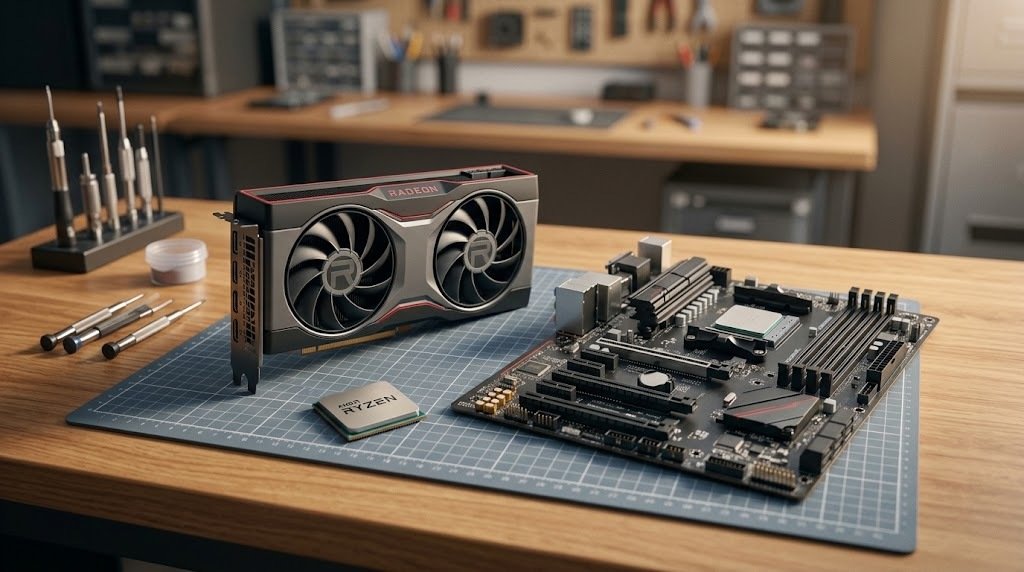
AMD, short for Advanced Micro Devices, is a semiconductor company that develops processors, graphics technologies, AI accelerators, and adaptive computing products. Its best-known consumer brands include AMD Ryzen processors for computing and AMD Radeon graphics for gaming and visual workloads.
Whether you are buying a laptop, building a gaming PC, upgrading an existing computer, or simply researching technology, understanding AMD can help you make better-informed decisions. The company competes in several parts of the computing market, so its products serve different needs rather than one specific type of customer.
This guide explains AMD’s history, major products, processor and graphics technologies, practical uses, and key considerations when comparing computer hardware. It also explains how to find official drivers and support resources without relying on outdated downloads or confusing product names.
What Is AMD and What Does the Company Do?
AMD stands for Advanced Micro Devices. Founded in 1969, the company has grown from an early semiconductor manufacturer into a global supplier of high-performance computing and adaptive computing technology. Its products serve consumers, businesses, data centers, gaming platforms, and embedded systems.
Unlike a company that focuses only on finished computers, AMD develops chips and related technologies that other manufacturers can incorporate into laptops, desktop PCs, workstations, servers, and other electronic systems.
What products does AMD make?
AMD’s product portfolio includes several important categories:
- CPUs: Processors that execute instructions and manage general computing tasks.
- GPUs: Graphics processors used for gaming, rendering, visualization, and certain computing workloads.
- AI accelerators: Specialized hardware designed to accelerate artificial intelligence and machine learning workloads.
- Server processors: Chips built for cloud computing, enterprise applications, and data centers.
- Adaptive computing products: Technologies such as field-programmable gate arrays (FPGAs) and system-on-chips used in specialized applications.
- Software and development tools: Applications, drivers, libraries, and utilities that help users and developers work with AMD hardware.
The company’s portfolio includes Ryzen, Radeon, EPYC, Instinct, and Versal product families, each serving different computing requirements.
When was AMD founded?
AMD was formally incorporated on May 1, 1969, by Jerry Sanders and seven colleagues. The company initially focused on semiconductor products and gradually expanded into more advanced computing technologies.
Over time, AMD became known for its competition in the desktop processor market and later expanded its presence in graphics, server computing, and AI-related hardware. Its development illustrates how a semiconductor company can evolve as computers become more powerful and computing workloads become more demanding.
What Are AMD Ryzen Processors?
AMD Ryzen processors are CPUs designed for personal computing, including desktops, laptops, gaming systems, and workstations. They handle the calculations and instructions needed to run operating systems, applications, games, and creative software.
The Ryzen name covers a broad product family. Two computers carrying AMD branding may perform very differently because their processors can have different architectures, core counts, power limits, clock speeds, and integrated graphics capabilities.
How do AMD Ryzen processors work?
A CPU receives instructions from software and processes them using its computing cores. More cores can help with workloads that can run several tasks in parallel, while per-core performance can influence applications that depend heavily on individual processing threads.
Other specifications matter too. Cache, memory support, power consumption, cooling, and processor generation can all affect real-world results.
For example, consider two people choosing computers:
- A student who mainly uses a browser, documents, video calls, and spreadsheets may be well served by an efficient entry-level or midrange Ryzen system.
- A video editor who regularly exports complex projects may benefit from a processor with stronger sustained multicore performance, sufficient memory, and fast storage.
The best choice depends on the applications being used, not simply the product’s name or advertised clock speed.
What are the main Ryzen processor categories?
Ryzen product families cover several types of users. Exact specifications vary by model and generation.
| Product family | Typical use |
|---|---|
| Ryzen 3 | Everyday computing and budget-focused systems |
| Ryzen 5 | General productivity, gaming, and multitasking |
| Ryzen 7 | Higher-performance gaming and demanding applications |
| Ryzen 9 | Enthusiast computing and intensive workloads |
| Ryzen Threadripper | High-end workstations and heavily parallel professional tasks |
| Ryzen AI | Selected PCs with dedicated AI acceleration capabilities |
These are general positioning guidelines rather than guaranteed performance rankings. A newer midrange chip may outperform an older higher-tier model in some tasks, while a specialized processor may be better suited to a particular workload.
Are AMD Ryzen processors good for gaming?
AMD Ryzen processors can be excellent gaming CPUs, but performance depends on the exact processor, graphics card, game, resolution, and system configuration.
A gaming PC combines several components. The CPU processes game logic and other instructions, while the GPU renders images. If the GPU is already working at full capacity, a faster CPU may produce only a small improvement in frame rates. In CPU-limited games, however, a stronger processor can make a noticeable difference.
Before choosing a gaming processor, consider:
- The games you play and their performance requirements.
- Your target resolution and refresh rate.
- Whether you stream, record, or run other applications while gaming.
- The cost of the processor, motherboard, cooling, and memory together.
- Whether your existing graphics card will limit performance.
What Is the Difference Between AMD Ryzen and Radeon?
Ryzen and Radeon are both AMD brands, but they serve different purposes.
Ryzen generally refers to AMD processors, while Radeon refers to AMD graphics products. Understanding that distinction makes it easier to compare computer specifications and identify which component needs an upgrade.
What does AMD Radeon do?
AMD Radeon is the company’s graphics brand. Radeon graphics products include desktop graphics cards, laptop graphics solutions, and professional graphics products.
A graphics processing unit, or GPU, performs the calculations needed to render images and can also accelerate other parallel workloads. For gamers, graphics hardware affects visual quality, resolution, frame rates, and support for graphics technologies.
Radeon products can also be relevant to:
- Video editing and media production.
- 3D rendering and visualization.
- Multi-monitor productivity setups.
- Certain GPU-accelerated computing applications.
The exact capabilities vary by product. A discrete graphics card is different from integrated graphics built into a processor, so buyers should check the full specification of the computer rather than assuming every AMD system includes a separate GPU.
What is the difference between integrated and dedicated graphics?
Integrated graphics are built into a processor or another main computing chip and typically share system memory. Dedicated graphics cards have their own GPU and generally include separate video memory.
Integrated graphics can be suitable for web browsing, office work, streaming, and some lighter games. A dedicated GPU is often more appropriate for demanding modern games, complex rendering, and graphics-heavy professional applications.
Neither option is automatically best for everyone. Integrated graphics can reduce cost, size, and power consumption, while a dedicated graphics card can deliver substantially more graphics performance when the workload requires it.

Which AMD Technologies Are Used in AI and Data Centers?
AMD’s business extends well beyond home computers. Its server processors, AI accelerators, and adaptive computing products support workloads that require substantial computing capacity, including cloud services, enterprise software, scientific research, and artificial intelligence.
What are AMD EPYC processors?
AMD EPYC is a family of server CPUs designed for data centers, cloud infrastructure, and enterprise computing.
Organizations use server processors to run databases, host websites, manage virtual machines, and support applications that may serve thousands or millions of users. Server buyers typically consider performance per watt, memory capacity, core count, security features, reliability, software compatibility, and the total cost of operating the system.
For example, a business moving a database to a new server should not select a CPU based on core count alone. It should also evaluate memory bandwidth, storage speed, licensing costs, application behavior, and the performance required during peak demand.
What are AMD Instinct accelerators?
AMD Instinct accelerators are designed for demanding computing workloads, including AI and high-performance computing. They are used in systems that need to process large amounts of data or perform many calculations simultaneously.
AI training and inference can require substantial computing resources. Accelerators help perform suitable calculations in parallel, while CPUs coordinate tasks and handle other parts of the workload.
However, buying an accelerator is only one part of building an AI system. Memory capacity, networking, software support, power delivery, cooling, and compatibility with development frameworks also influence the results.
AMD’s ROCm software ecosystem provides tools and libraries for GPU computing and supported AI workloads. Developers should check the current compatibility documentation before selecting hardware for a production application.
Why does AMD matter in the AI market?
AI systems need hardware for both general computing and specialized parallel processing. AMD participates in this market through server CPUs, Instinct accelerators, networking technologies, and related software.
The broader opportunity is not limited to training large AI models. Inference, enterprise applications, scientific computing, and AI-enabled services also create demand for computing infrastructure.
Still, hardware availability and software maturity matter as much as advertised performance. Businesses should evaluate supported frameworks, benchmark results relevant to their own workloads, and total system costs before committing to a platform.
Is AMD Better Than Intel or NVIDIA?
There is no universal winner. AMD, Intel, and NVIDIA offer products that overlap in some areas and differ significantly in others. The right comparison depends on the type of hardware and what you need it to do.
AMD vs. Intel: Which processor should you choose?
AMD CPU vs Intel compete in desktop and laptop CPUs, although the available models and strengths differ by product generation.
When comparing processors, examine these factors:
- Real-world performance: Look for benchmarks using the applications you actually run.
- Total platform cost: Include the motherboard, cooling, memory, and other required components.
- Power efficiency: Consider electricity use, heat output, and laptop battery life.
- Upgrade options: Check motherboard compatibility, firmware support, and the manufacturer’s upgrade policy.
- Software compatibility: Confirm that the processor and platform support your operating system and required applications.
A processor that performs exceptionally well in one benchmark may not lead in every application. Reviews using several workloads provide a more useful picture than a single headline score.
AMD vs. NVIDIA: Which graphics brand is better?
AMD Radeon and NVIDIA GeForce graphics cards compete in gaming, while both companies also offer technologies for professional and accelerated computing. AMD’s Instinct and NVIDIA’s data-center accelerators target overlapping AI and high-performance computing needs.
For gaming, compare performance at your preferred resolution, available video memory, power consumption, supported features, driver reliability, and price. For AI or professional software, investigate the exact application and supported computing framework.
A practical way to compare two graphics cards is to use benchmarks from the same reviewer, with the same game or workload, resolution, quality settings, and test system. That approach reduces the chance of drawing conclusions from inconsistent testing.
How should you evaluate AMD before buying?
Use this simple comparison framework:
| Your main priority | What to check |
|---|---|
| Everyday laptop use | Battery life, responsiveness, price, and memory |
| PC gaming | CPU and GPU benchmarks at your target resolution |
| Video editing | Application-specific performance, RAM, and storage |
| AI development | Accelerator support, memory, frameworks, and software compatibility |
| Business servers | Performance per watt, reliability, security, and operating costs |
| Future upgrades | Socket or platform support and component compatibility |
The most expensive product is not necessarily the best value. A balanced system that fits your actual workload can provide a better experience than spending heavily on one component while neglecting the rest of the computer.
How Do You Download AMD Drivers and Get Support?
Drivers help an operating system communicate correctly with hardware. Installing the appropriate driver can resolve compatibility issues, improve functionality, and enable supported graphics features.
AMD provides official downloads, product documentation, specifications, software, and troubleshooting resources through its support website.
How to download AMD drivers safely
Follow these steps to find the correct software:
- Identify your hardware model. Determine whether you need a graphics driver, chipset driver, or another product-specific download.
- Select your product or use the available detection tools where appropriate.
- Check the operating system and product compatibility listed for the download.
- Review the release notes, then install the appropriate package and follow the on-screen instructions.
- Restart your computer if requested and check whether the original issue has been resolved.
Avoid downloading drivers from unfamiliar websites that bundle installers with unrelated software. A driver intended for a different device or operating system may not solve your problem and could cause further issues.
What should you do if an AMD driver causes problems?
If an issue starts immediately after a driver update, first identify the affected hardware and the software version you installed. Then consult AMD’s official release notes and troubleshooting resources.
You can also:
- Restart the computer and check whether the issue persists.
- Confirm that Windows or your other operating system recognizes the hardware correctly.
- Review known issues for your driver version.
- Follow AMD’s recommended recovery or clean-install procedure when appropriate.
- Consult official support or a relevant hardware community if the problem continues.
The AMD community on Reddit can provide useful troubleshooting experiences, but community posts are not official company guidance. Verify any suggested fix against your hardware documentation before changing system settings.
What Should You Know Before Buying AMD Hardware?
Choosing AMD hardware is easier when you start with your requirements rather than a brand name.
An example: Building a balanced gaming PC
Imagine a buyer has a fixed budget for a gaming computer. They initially consider spending more on a premium CPU because its name sounds more powerful.
However, the games they play are mostly GPU-intensive at their preferred resolution. After comparing consistent benchmarks, the buyer may discover that a less expensive CPU paired with a stronger graphics card provides better performance for those games.
This is an illustrative example, not a measured benchmark or a claim about a particular processor. It demonstrates an important buying principle: component balance often matters more than choosing the highest-tier part in isolation.
Five checks before making a purchase
- Check the exact model: Product families contain several generations and performance levels.
- Compare independent benchmarks: Use tests that match your intended workload.
- Verify compatibility: Check the motherboard socket, supported memory, power supply, cooling, and case dimensions.
- Consider the complete cost: Include supporting components and any software requirements.
- Check ongoing support: Review driver availability, warranty terms, and the manufacturer’s documentation.
For laptop buyers, also compare display quality, keyboard comfort, portability, battery life, and cooling. A laptop’s overall design can matter more to daily use than a small difference in processor performance.
For desktop builders, confirm that all parts work together before purchasing. A compatible CPU alone does not guarantee that every motherboard, memory kit, or cooler will work without additional requirements.
What Is AMD Stock, and Why Do People Follow It?
AMD is also a publicly traded company. Its shares trade on the Nasdaq stock market under the ticker symbol AMD.
People who research AMD stock may be interested in its processor sales, data-center business, AI demand, competition, product launches, and financial results. These factors can influence how investors assess the company’s future prospects.
However, a company’s technology products and its stock performance are two different subjects. Strong product demand does not automatically mean that a stock is attractively valued at its current price.
Before evaluating AMD as an investment, consider:
- Revenue growth and profitability.
- Competition and product execution.
- Demand for AI and data-center infrastructure.
- Manufacturing capacity and supply-chain risks.
- Valuation compared with expected future performance.
- Your own investment objectives and tolerance for risk.
For current share prices, company announcements, and financial information, Historical performance and market commentary cannot guarantee future returns.
Conclusion: Is AMD Worth Learning About?
AMD is an important technology company whose products support personal computing, gaming, professional workstations, data centers, and AI infrastructure. Its Ryzen processors serve a wide range of computing needs, Radeon products handle graphics workloads, and EPYC and Instinct products target server and accelerated computing applications.
The most useful way to understand AMD is to look beyond the brand name. Identify the product category, compare the specifications that matter for your workload, check independent benchmarks, and verify compatibility before buying hardware.
If you are researching a computer upgrade, start with AMD’s official product catalog and support resources. They can help you identify the right hardware family, check technical specifications, and find the software needed to keep a compatible system working properly.
FAQ Section
What does AMD stand for?
AMD stands for Advanced Micro Devices. It is a semiconductor company that develops processors, graphics products, AI accelerators, and other computing technologies.
What is AMD best known for?
AMD is widely known for Ryzen processors, Radeon graphics products, EPYC server CPUs, and Instinct accelerators used in AI and high-performance computing.
Are AMD Ryzen processors good?
Yes, AMD Ryzen processors can be excellent for everyday computing, gaming, multitasking, and professional workloads. The best choice depends on the exact model, application requirements, budget, and overall computer configuration.
Is AMD better than Intel?
Neither company is universally better. AMD and Intel offer processors with different performance characteristics, prices, power requirements, and platform features. Compare specific models using relevant independent benchmarks.
Is AMD Radeon the same as AMD Ryzen?
No. Ryzen is AMD’s processor brand, while Radeon is its graphics brand. Some Ryzen processors include integrated graphics, but not every Ryzen-based computer has a separate Radeon graphics card.
Where can I download AMD drivers?
Download compatible AMD drivers and software. Check your hardware model and operating system before installing.

Discover what makes Xbox one of the leading gaming brands in the world. Learn about Xbox consoles, Game Pass, exclusive games, cloud gaming, and more.
What Makes Xbox One of the Leading Gaming Brands in the World?

Gaming has become one of the biggest forms of entertainment across the globe. Millions of players enjoy immersive adventures, competitive multiplayer games, and creative experiences every day. Among the biggest names in the gaming industry, Xbox has earned a reputation as one of the leading gaming brands in the world.
From powerful gaming consoles to innovative online services, Xbox continues to shape the future of gaming. Whether you are a casual player or a dedicated gamer, Xbox offers something for everyone.
In this guide, we explore what makes Xbox one of the most popular gaming brands and why millions of players choose it every year.
The History of Xbox
Xbox was introduced by Microsoft in 2001. Since then, the brand has grown into one of the largest gaming platforms in the industry.
The Xbox family has expanded over the years with several successful consoles, including:
- Xbox
- Xbox 360
- Xbox One
- Xbox Series S
- Xbox Series X
Each generation introduced new technology, better graphics, faster performance, and improved gaming experiences.
Powerful Gaming Consoles
One reason Xbox remains a leading gaming brand is its powerful hardware.
Xbox Series X
The Xbox Series X delivers excellent performance with fast loading times, stunning graphics, and smooth gameplay. It is designed for players who want the highest level of gaming performance.
Xbox Series S
The Xbox Series S offers impressive gaming power at a more affordable price. It is ideal for players who want modern gaming without spending as much as they would on a premium console.
Both consoles support thousands of games and provide excellent value.
Xbox Game Pass Changes Everything

One of the biggest reasons Xbox stands out is Xbox Game Pass.
Game Pass gives players access to a large collection of games for one monthly subscription.
Benefits include:
- Hundreds of games
- New releases available on launch day for many Microsoft titles
- Games from many popular studios
- Regular updates
- Variety across every major genre
For many players, Game Pass offers incredible value compared to purchasing every game separately.
Exclusive Games Keep Players Coming Back
Strong game libraries help every gaming platform succeed.
Xbox offers access to many popular titles through Microsoft owned studios.
Popular franchises include:
- Halo
- Forza Motorsport
- Forza Horizon
- Gears of War
- Microsoft Flight Simulator
- Age of Empires
These games continue to attract millions of players worldwide.
Cloud Gaming Expands Access
Cloud gaming has become an important part of modern gaming.
Xbox Cloud Gaming allows players to enjoy many games without downloading large files to their console.
Players can enjoy compatible games on:
- Smartphones
- Tablets
- Personal computers
- Supported smart televisions
This flexibility makes gaming more convenient than ever.
Strong Online Multiplayer Experience
Xbox has invested heavily in online gaming.
Players can:
- Play with friends
- Join multiplayer matches
- Create gaming communities
- Use voice chat
- Earn achievements
- Share gameplay
The Xbox network connects millions of gamers around the world every day.
Backward Compatibility Adds Value
Another reason Xbox is respected by gamers is backward compatibility.
Many games from older Xbox generations continue to work on newer consoles.
This allows players to enjoy classic favorites without purchasing older hardware.
For many families and longtime gamers, this feature saves money while preserving favorite games.
Excellent Controller Design
The Xbox controller is widely recognized for its comfort.
Its ergonomic design helps players enjoy long gaming sessions with less fatigue.
Modern Xbox controllers also include:
Wireless connectivity
Players can move freely without cable restrictions.
Fast response
Buttons and triggers offer responsive controls during competitive gameplay.
Broad compatibility
Controllers work with Xbox consoles, many Windows computers, and supported mobile devices.
Gaming for Every Type of Player
Xbox offers games for players of every age and interest.
Popular categories include:
Action Games
Fast paced adventures with exciting combat.
Racing Games
Realistic driving experiences through games like Forza Horizon.
Sports Games
Football, basketball, baseball, soccer, and more.
Family Games
Fun experiences suitable for children and families.
Adventure Games
Large open worlds with engaging stories and exploration.
Innovation Keeps Xbox Competitive
Technology continues to evolve, and Xbox continues to innovate.
Microsoft regularly improves:
- Console performance
- Cloud gaming
- Digital game libraries
- Accessibility features
- Security
- Online services
These improvements help Xbox remain competitive in a rapidly changing gaming industry.
Why Gamers Trust Xbox
Millions of players choose Xbox because it delivers consistent quality.
Key reasons include:
- Reliable hardware
- Large game library
- Xbox Game Pass
- Online multiplayer
- Cloud gaming
- Comfortable controllers
- Strong developer support
- Regular software updates
- Excellent performance
- Wide range of gaming options
These strengths have helped Xbox become one of the most recognized gaming brands in the world.
Internal Linking Suggestions
You can improve your website SEO by linking this article to related content such as:
- Best Xbox Games in 2026
- Xbox Game Pass Complete Guide
- Xbox Series X Review
- Xbox Series S Review
- Cloud Gaming Explained
- Xbox Accessories Guide
- Gaming Console Buying Guide
- Best Multiplayer Games
Frequently Asked Questions
Why is Xbox one of the leading gaming brands?
Xbox offers powerful consoles, an extensive game library, Xbox Game Pass, cloud gaming, and reliable online multiplayer services that appeal to millions of players worldwide.
What is Xbox Game Pass?
Xbox Game Pass is a subscription service that gives members access to a large collection of games for a monthly fee.
Which Xbox console is best?
The Xbox Series X is best for players seeking maximum performance, while the Xbox Series S is an excellent choice for those looking for a more affordable console.
Does Xbox support cloud gaming?
Yes. Xbox Cloud Gaming allows eligible players to stream supported games on compatible devices without needing powerful hardware.
Can I play older Xbox games on new consoles?
Many older Xbox games are supported through backward compatibility, allowing players to enjoy classic titles on newer Xbox consoles.
Is Xbox suitable for families?
Yes. Xbox offers a wide selection of family friendly games along with parental controls that help manage gaming experiences for children.
What makes Xbox different from other gaming brands?
Xbox combines powerful hardware, a popular subscription service, cloud gaming, strong online features, and a diverse game library, making it one of the most complete gaming ecosystems available.
Conclusion
What makes Xbox one of the leading gaming brands in the world? The answer lies in its commitment to innovation, quality, and player satisfaction. From powerful consoles and a massive game library to Xbox Game Pass and cloud gaming, Xbox continues to provide outstanding value for gamers of all ages.
As gaming continues to grow, Xbox remains focused on delivering better technology, exciting games, and connected experiences that keep millions of players engaged around the world.


The Artist Behind Contemporary Japan’s Most Recognizable Characters
Contemporary Japanese art has many influential artists. Few have created a style as recognizable as Yoshitomo Nara’s. His childlike characters, simple designs, and emotional artwork connect with people worldwide. For more than three decades Nara has explored themes of childhood, loneliness, independence, and hope. His characters may look innocent but their expressions reveal deeper emotions.
Today Yoshitomo Nara’s artwork appears in major museums, exhibitions, and private collections. His work also inspires designers, musicians, collectors, and creative professionals. Whether you are new to contemporary Japanese art or already know his work, Nara’s journey shows why he remains one of the most respected living artists in 2026.
A New Voice in Contemporary Japanese Art
When Yoshitomo Nara developed his style in the 1980s and 1990s, contemporary art was becoming more diverse. Many artists explored abstract ideas and complex concepts. Nara chose a different approach by creating simple characters with strong emotions. His paintings often show children with large heads and expressive eyes. These figures may look playful but they represent deeper feelings like loneliness, curiosity, and strength.
Nara uses clean compositions without many details. This keeps the focus on his characters and allows viewers to create their own meanings. His art feels personal and universal at the same time. People from different cultures connect with his characters because the emotions feel familiar. By 2026 Yoshitomo Nara continues inspiring artists and collectors worldwide. His simple yet powerful style has helped shape contemporary Japanese art.
The Journey That Shaped Yoshitomo Nara’s Artistic Vision
Yoshitomo Nara was born in 1959 in Hirosaki, Japan. He grew up in a quiet town surrounded by nature. His parents worked long hours, so he often spent time alone. During these years he developed a strong imagination. He loved drawing whenever he had free time. He also enjoyed reading books and listening to music. These early interests became an important part of his creative life. Many of the emotions from his childhood later appeared in his artwork.
Nara studied at Aichi Prefectural University of the Arts. There he improved his drawing and painting skills. After completing his studies in Japan he moved to Germany. He continued his education at the Kunstakademie Düsseldorf under the artist A.R. Penck. Living in Europe exposed him to different cultures and artistic ideas. It also gave him time to think about his childhood memories and his Japanese identity. These experiences helped shape the unique style that made him famous.
During the 1990s Yoshitomo Nara began receiving international recognition. His exhibitions attracted growing attention from galleries, museums, and collectors. His paintings featured children with expressive faces that looked innocent yet rebellious. These characters became his signature style. He also created sculptures, drawings, ceramics, and large installations. His work has been displayed across Asia, Europe, and North America. Millions of people have visited his exhibitions over the years.
By 2026 Yoshitomo Nara is recognized as one of Japan’s most influential contemporary artists. His success comes from honesty, creativity, and emotional storytelling. His career proves that personal experiences can inspire art that connects with people around the world.
The Meaning Behind Yoshitomo Nara’s Iconic Characters

One of the most recognizable parts of Yoshitomo Nara’s work is his unique characters. They have oversized heads, expressive eyes, and strong facial expressions. At first they may look simple. However they often communicate deep emotions. These figures have become symbols of contemporary Japanese art. People from many different countries recognize them instantly. Their memorable appearance has helped Nara build a unique artistic identity.
Although many of the characters look like children, they represent emotions that people of all ages understand. Some appear lonely or thoughtful. Others look confident, curious, or quietly rebellious. A few seem playful while others appear calm and mysterious. Every expression tells a different story. Nara rarely explains exactly what his characters are thinking. This allows viewers to create their own interpretation. Each person can connect with the artwork in a personal way.
Nara’s characters are inspired by his childhood memories, personal experiences, and emotions. He spent much of his early life alone. Those memories continue to influence his creative work. His honesty gives the paintings emotional depth. Many people feel a connection because the emotions seem real and genuine.
The simplicity of his style is another reason for its success. He often avoids busy backgrounds or unnecessary details. This keeps the focus on the character and its expression. Small changes in the eyes or mouth can completely change the mood of a painting.
Even in 2026 Yoshitomo Nara’s iconic characters continue to appear in major exhibitions, museum collections, and art books around the world. They remain one of the strongest examples of emotional storytelling in contemporary art. Their timeless appeal continues to inspire artists, collectors, and creative audiences.
Beyond Paintings: Sculptures, Drawings, and Installations
Although Yoshitomo Nara is best known for his paintings, his creative work has expanded since the late 1980s into sculpture, drawing, ceramics, printmaking, and large scale installations. After moving to Germany in 1988 and later returning to Japan in 2000, he continued to experiment with new materials and techniques. Each medium allows him to express his ideas in a different way. Instead of repeating the same approach, Nara enjoys trying new forms. This has helped his work remain fresh and meaningful for many years.
His sculptures transform his famous characters into three dimensional forms. Visitors can walk around them and experience them from different angles. This creates a stronger emotional connection than viewing a flat painting. His sculptures have appeared in museums, sculpture parks, galleries, and public exhibitions around the world, especially throughout the 2000s and 2010s. Many have become popular attractions because of their unique appearance and emotional presence. In 2021, his collaboration with Stella McCartney showed how his art could move into fashion and reach celebrity audiences as well.
Drawing remains at the center of Nara’s creative process. Since the 1990s, he has often begun with simple sketches before developing larger works. His drawings show that a few simple lines can express powerful feelings. These sketches also reveal how his ideas grow over time. Many collectors and celebrities who follow contemporary art appreciate his drawings because they provide a closer look at his artistic thinking.
Nara has also created installations that transform entire exhibition spaces. These environments encourage visitors to slow down and quietly observe the artwork. The peaceful atmosphere allows people to reflect on their own emotions and memories. His installations create experiences that go beyond simply looking at art. By working across different mediums, Yoshitomo Nara continues expanding his artistic vision. His creativity, emotional honesty, and willingness to experiment have made him one of the most respected contemporary Japanese artists. Even in 2026, his work continues to inspire audiences, collectors, young artists, and cultural figures such as Stella McCartney and other international celebrities around the world.
Yoshitomo Nara Collectibles

Yoshitomo Nara collectibles are highly valued by art lovers and collectors around the world. His work extends beyond original paintings and sculptures. Over the years many collectible items have been released through museums, galleries, publishers, and official collaborations. These products allow fans to own a piece of his artistic world without purchasing an original artwork.
Art prints are among the most popular Yoshitomo Nara collectibles. Official exhibition posters and limited edition prints are collected because they feature his iconic characters and emotional style. Many of these releases become difficult to find after exhibitions end. This increases their value among collectors.
Books and exhibition catalogs are also highly collectible. They document Nara’s career and showcase paintings, drawings, sculptures, and installations from different periods. Signed editions are especially desirable because they are produced in limited numbers.
Nara has also released collectible merchandise through official collaborations. These include skateboards, toys, posters, postcards, pins, stickers, keychains, and stationery. Museum gift shops often sell exclusive items that are available only during special exhibitions. These limited releases attract collectors from many countries.
Fashion collaborations have added another category of collectibles. His 2019 collaboration with Stella McCartney introduced clothing, bags, and accessories featuring his famous artwork. Many of these pieces are now sought after in the resale market.
Collectors value Yoshitomo Nara items because of their artistic quality, limited availability, and cultural importance. Demand continues to grow as contemporary Japanese art becomes more popular worldwide. By 2026 Yoshitomo Nara collectibles remain an important part of the global art collecting community. They appeal to experienced collectors, new fans, and anyone who appreciates meaningful contemporary art.
International Exhibitions and Global Recognition
Yoshitomo Nara’s artwork has been displayed in leading museums and galleries around the world since the 1990s. Major exhibitions in 2001, 2010, 2019, and 2021 helped bring his work to global audiences. His paintings, sculptures, drawings, and installations have been shown in Japan, Europe, North America, and many parts of Asia. People from different cultures connect with the emotions in his work. Each exhibition introduces new audiences to his unique artistic style.
Many of Nara’s works are included in major museum collections. His art is also owned by private collectors around the world. Museums value his work because it combines simple images with deep emotional meaning. His exhibitions often feature works from different periods of his career, from the late 1980s to the 2020s. This allows visitors to see how his ideas and techniques have developed over time. His work has also been admired by cultural figures such as Stella McCartney, Beck, Björk, and Pharrell Williams.
Large retrospective exhibitions have played an important role in celebrating Nara’s achievements. Shows such as Yoshitomo Nara + graf A to Z in 2006 and later museum presentations in the 2010s and 2020s brought together paintings, sculptures, sketches, and rare works from different decades. They help visitors understand the growth of his artistic journey. While his style has changed in small ways, his emotional honesty has remained consistent throughout his career. This balance between growth and authenticity makes his work timeless.
Many visitors return to his exhibitions because they discover something new each time. His artwork encourages quiet reflection and personal interpretation. Different people often see different meanings in the same painting. This makes every exhibition a unique experience.
By 2026 Yoshitomo Nara continues participating in international exhibitions and cultural events. His influence reaches artists, students, collectors, and museum visitors across the world. His career demonstrates that sincere storytelling and simple visual language can create lasting connections between people from different cultures and generations.
Creative Collaborations and Cultural Influence
Yoshitomo Nara’s influence extends far beyond museums and galleries. His artwork has become part of fashion, music, publishing, and popular culture. Since the 1990s, he has worked with designers, musicians, publishers, and cultural organizations on many creative projects. These collaborations have introduced his art to people who may not usually visit museums. They have also helped younger audiences discover his unique artistic style.
One of Nara’s best known collaborations came in 2021, when he worked with fashion designer Stella McCartney on a special collection. His famous characters appeared on clothing, bags, accessories, and limited edition pieces. The partnership showed how contemporary art and fashion can work together without losing artistic value. It also brought his work to fashion lovers around the world. The collection received attention for combining creativity with everyday style.
Nara’s artwork has also appeared on album covers, books, posters, skateboards, toys, and other collectible merchandise. In 1998, he designed the cover for the Japanese rock band Shonen Knife’s album Happy Hour, which helped bring his visual language to a wider music audience. These projects allow fans to enjoy his art in daily life. Many collectors value these limited edition items because they combine design with fine art. His illustrations remain instantly recognizable across different products and creative industries.
His artistic style has inspired countless young illustrators, designers, and contemporary artists. Many admire his simple lines, expressive faces, and emotional storytelling. His work reminds creators that powerful ideas do not always require complicated designs. Honest emotions can have an even greater impact.
By 2026, Yoshitomo Nara continues to be one of Japan’s most influential cultural figures. His work connects contemporary art, fashion, design, music, and popular culture. Through every collaboration, he remains true to his personal vision, emotional honesty, and distinctive artistic identity.
Why Collectors Value Yoshitomo Nara’s Artwork
Yoshitomo Nara is one of the most collected contemporary Japanese artists in the world. Since the 1990s his paintings, drawings, sculptures, prints, and ceramics have attracted strong interest from museums, private collectors, and art institutions. His works appear in important public collections as well as prestigious private collections across Japan, Europe, North America, and Asia. This global demand reflects both his artistic quality and his lasting cultural influence.
One reason for Nara’s popularity is his distinctive artistic identity. His expressive characters and emotional storytelling are instantly recognizable. While many artists change styles to follow trends, Nara has remained true to his personal vision. At the same time he has continued to develop new ideas and explore different mediums. This balance between consistency and creative growth has strengthened his reputation over several decades.
Limited availability also increases the value of his artwork. Original paintings and sculptures are produced in small numbers and are rarely offered for sale. When important works appear at galleries or auctions, they often attract strong interest from collectors around the world. His prints and limited editions are also highly sought after because they allow more people to collect his work.
Collectors are drawn not only to the rarity of his art but also to its emotional impact. Themes such as childhood, independence, hope, loneliness, and self reflection speak to people from many different cultures. His artwork creates personal connections that remain meaningful over time.
As global interest in contemporary Japanese art continues to grow, Yoshitomo Nara remains one of its most respected figures. By 2026 his artwork continues to hold strong artistic, cultural, and collectible value. His influence continues to shape museums, collections, and future generations of artists.
Yoshitomo Nara’s Legacy in 2026
More than thirty years after gaining global recognition, Yoshitomo Nara continues influencing contemporary art. His simple yet emotional style has inspired many artists and changed how people view modern Japanese art. His paintings, sculptures, and installations remain popular in museums and exhibitions. His influence also reaches publishing, design, and fashion.
Nara has built a lasting legacy by staying true to his own vision. He does not follow trends but creates art with honesty and emotion. In 2026 Yoshitomo Nara remains one of the world’s most respected living artists. His work proves that simple expressions can communicate powerful feelings.
Conclusion
Yoshitomo Nara has gained global recognition through artwork that is simple yet emotionally powerful. His iconic characters and honest storytelling have earned him a unique place in contemporary Japanese art. Throughout his career he has remained true to his creative vision while continuing to explore new ideas. His paintings, sculptures, drawings, and installations express emotions that connect with people across different cultures and generations. Nara’s influence has also reached the world of streetwear through fashion collaborations and collectible designs that combine contemporary art with modern style. Even in 2026 he continues inspiring collectors, artists, designers, museums, and streetwear enthusiasts through exhibitions and creative projects. His legacy proves that simplicity, emotion, originality, and artistic authenticity can create a lasting impact on both contemporary art and streetwear culture.
Frequently Asked Questions
Who is Yoshitomo Nara?
Yoshitomo Nara is a Japanese contemporary artist known for his expressive paintings, sculptures, and drawings featuring childlike characters with emotionally powerful expressions.
What is Yoshitomo Nara famous for?
He is famous for creating iconic characters that combine innocence with complex emotions, making him one of the most influential figures in contemporary Japanese art.
When was Yoshitomo Nara born?
Yoshitomo Nara was born on December 5, 1959, in Hirosaki, Aomori Prefecture, Japan.
Where did Yoshitomo Nara study art?
He studied at Aichi Prefectural University of the Arts in Japan and later continued his education at the Kunstakademie Düsseldorf in Germany.
What inspires Yoshitomo Nara’s artwork?
His work is inspired by childhood memories, music, everyday emotions, personal experiences, and observations of human nature.
Why do Yoshitomo Nara’s characters look angry?
Their expressions are open to interpretation. While some appear defiant or serious, they often represent emotions such as independence, resilience, loneliness, or quiet confidence rather than anger.
What type of art does Yoshitomo Nara create?
His work includes paintings, sculptures, drawings, prints, ceramics, and large-scale installations.
Has Yoshitomo Nara collaborated with fashion brands?
Yes. He has collaborated with brands such as Stella McCartney, bringing his distinctive artwork into fashion collections and creative projects.
Why is Yoshitomo Nara important in contemporary art?
He helped redefine contemporary Japanese art by creating emotionally expressive works that combine simplicity with universal themes.
Are Yoshitomo Nara’s artworks collectible?
Yes. His original paintings, sculptures, prints, and limited-edition works are highly sought after by museums, galleries, and private collectors worldwide.
Where has Yoshitomo Nara exhibited his work?
His artwork has been displayed in major museums and galleries across Japan, Europe, North America, South Korea, China, and many other countries.
Does Yoshitomo Nara still create art in 2026?
Yes. Yoshitomo Nara continues producing new artworks, participating in international exhibitions, and contributing to the contemporary art world.
Why do collectors admire Yoshitomo Nara?
Collectors value his work for its emotional depth, recognizable style, artistic consistency, and lasting influence on contemporary art.
What themes appear in Yoshitomo Nara’s artwork?
His artwork often explores childhood, solitude, hope, independence, memory, and human emotion through simple yet meaningful imagery.
What is Yoshitomo Nara’s legacy?
Yoshitomo Nara’s legacy lies in transforming contemporary Japanese art through emotionally expressive characters, authentic storytelling, and a timeless artistic vision that continues to inspire audiences around the world.
For collaborations, press, or inquiries, contact us at streeticonic1@gmail.com.
-

 Lifestyle12 months ago
The Story of Acne Studios: From Underground Roots to Global Fashion Icon
-

 Sneaker12 months ago
Inside Aime Leon Dore How It Redefined Streetwear Culture
-

 News & Drops12 months ago
Inside ADER error: How It Redefined Streetwear Culture
-

 Lifestyle12 months ago
Inside adidas how It Redefined Streetwear Culture
-

 Brands12 months ago
The Story of A-COLD-WALL From Underground Roots to Global Fashion Icon
-

 Style Guides12 months ago
Inside Acronym How It Redefined Streetwear Culture
-

 Style Guides12 months ago
Action Bronson: Where Streetwear Meets Art, Culture, and Identity
-
 Clothing9 months ago
Balmain Luxury Fashion Brand: History, Design Philosophy, Market Position & Global Influence