
Style Guides
How Travis Scott Became a Streetwear Fashion Icon in 2026


How Travis Scott Became a Streetwear Fashion Icon is really a story about more than clothes. His rise came from connecting music, sneakers, branding, merchandise, luxury fashion, and Houston culture into one recognizable visual language.
Travis Scott did not become influential simply because he wore expensive labels. He became a fashion force because people could recognize his taste before they even saw the label. Oversized silhouettes, earthy colors, vintage references, utility details, statement sneakers, graphic designs, and the Cactus Jack identity became parts of a style system that felt distinctly his.
Business of Fashion describes Scott as a youth culture style figure who mixes high fashion with streetwear. That combination is the key to understanding his impact.
His fashion journey also shows how the relationship between musicians and fashion houses has changed. Scott moved from wearing streetwear and sneakers to helping create products and collections with some of the world’s most recognizable brands.
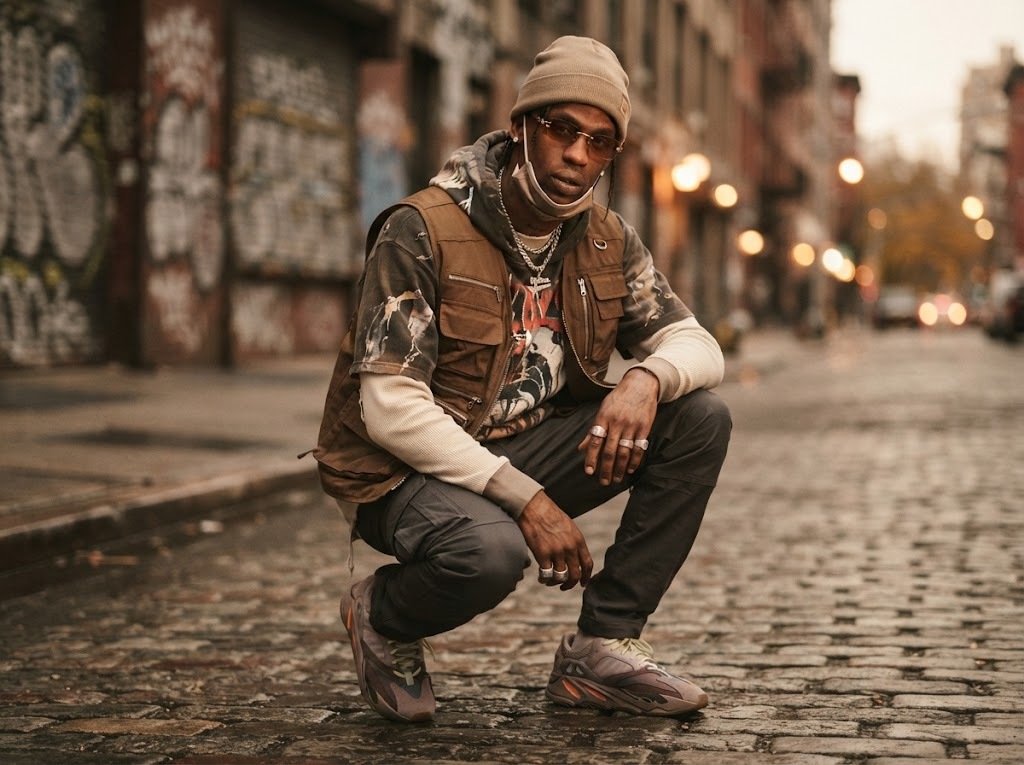
How Travis Scott Became a Streetwear Fashion Icon Through Houston Culture
Scott’s fashion identity has always been connected to Houston.
Rather than abandoning that background as his career grew, he repeatedly turned it into a creative asset. His work incorporates dusty browns, cactus imagery, workwear influences, oversized clothing, Western references, and the surreal atmosphere associated with his music.
Nike’s own description of his Air Force 1 collaboration specifically connects the design to Houston, work clothing, outdoor tones, and Scott’s Astroworld-inspired creative world.
That matters because authenticity is one of the strongest currencies in streetwear.
Scott’s clothing does not look like a completely separate project from his music. His visual identity, album artwork, merchandise, concerts, sneakers, and personal wardrobe often communicate the same themes.
This created something more powerful than a collection of fashionable outfits: a recognizable universe.
Why Houston became part of his fashion identity
Scott was born in Houston, and the city has remained an important reference point throughout his creative career.
His Cactus Jack aesthetic often combines the ruggedness of Texas with psychedelic graphics and contemporary streetwear. That contrast gives his style an unusual balance: rough but polished, nostalgic but futuristic, casual but highly curated.
The approach also helped distinguish him from artists whose fashion identities were built almost entirely around luxury logos.
The Rise of Travis Scott Streetwear
The phrase Travis Scott streetwear describes a style that sits between several fashion worlds.
It can include:
- Oversized hoodies and graphic T-shirts
- Cargo pants and utility clothing
- Vintage inspired pieces
- Workwear influences
- Statement sneakers
- Western and cowboy references
- Earthy brown, black, cream, and muted tones
- High fashion accessories
- Jewelry and watches
- Limited edition merchandise
The important point is that Scott rarely treats these categories as isolated.
A relaxed hoodie might be paired with luxury jewelry. Vintage looking pants can sit alongside an expensive watch. A workwear inspired jacket can be worn with a highly collectible sneaker.
That mixing of price points and fashion categories is one reason his style became so influential among younger consumers.
A Reddit discussion among watch enthusiasts illustrates the divide around Scott’s appeal, but even skeptical commenters acknowledged that his styling has influenced younger fashion consumers.
He made contrast part of the look
Scott’s outfits often work because they create contrast.
Think:
rugged + luxury
vintage + futuristic
oversized + tailored
streetwear + designer
utility + status
That formula is more important than any single hoodie, sneaker, or brand.
How Nike and Jordan Changed Travis Scott’s Fashion Influence
Sneakers were arguably the biggest bridge between Scott’s music audience and the wider fashion market.
His relationship with Nike and Jordan transformed his creative identity into products that could be worn by millions of people.
One early milestone was his Nike Air Force 1 collaboration. Nike described the design as a patchwork of references to Scott’s upbringing, workwear, natural tones, and Astroworld. The shoe also incorporated removable Swoosh elements and Cactus Jack references.
Then came major Jordan collaborations, including the Air Jordan 4 and Air Jordan 1.
The Air Jordan 6 collaboration continued the same approach, combining Jordan heritage with Cactus Jack branding and utility influenced apparel.
These projects helped establish a crucial idea:
Travis Scott was not simply promoting sneakers. He was helping reinterpret familiar silhouettes through his own visual language.
That distinction matters.
Instead of replacing classic sneaker designs with completely new products, collaborations allowed him to alter recognizable shapes through color, materials, graphics, branding, and unusual details.
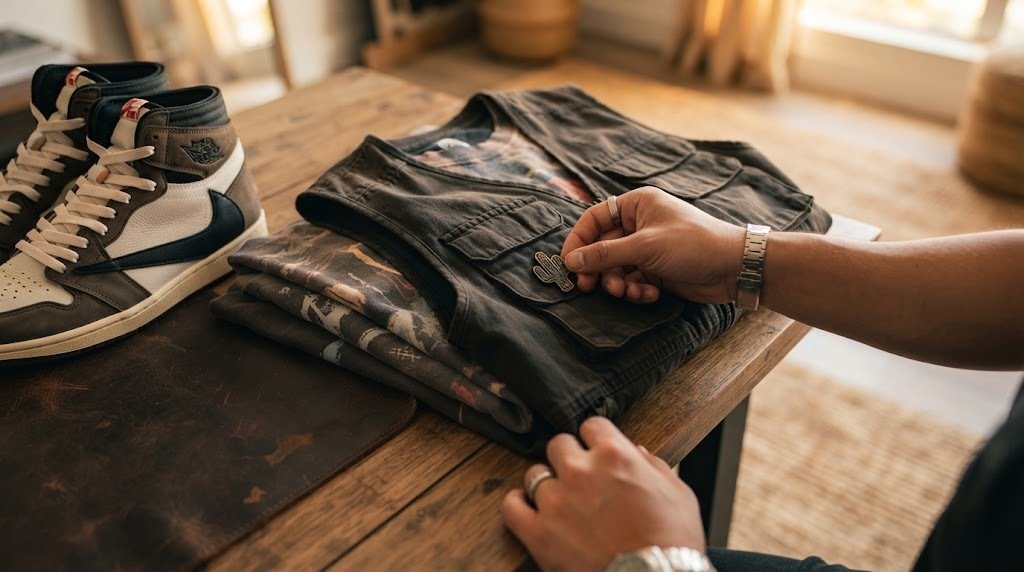
Why the sneakers became cultural objects
The appeal was not limited to footwear.
A Travis Scott sneaker could represent music fandom, sneaker collecting, streetwear knowledge, scarcity, and participation in a particular youth culture.
Business of Fashion reported that his Air Jordan 1 sold out rapidly in 2019, with resale prices quickly exceeding the original retail price.
That combination of scarcity and cultural meaning helped push his sneaker culture collaborations beyond ordinary merchandise.
Cactus Jack Turned Personal Style Into a Brand
Another major reason for Scott’s influence is Cactus Jack.
Cactus Jack is not merely a logo placed on clothing. It became the visual bridge between Scott’s music, merchandise, collaborations, and broader creative identity.
His merchandise helped change expectations around what artist merchandise could be.
Traditional concert merchandise often exists mainly as a souvenir. Scott’s drops increasingly functioned more like streetwear releases, with recognizable graphics, limited availability, thematic collections, and strong connections to his albums and performances.
Fashion Capital notes that Travis Scott merchandise became closely associated with limited drops, Cactus Jack branding, bold graphics, and the transformation of music merchandise into a streetwear product.
Astroworld changed the scale
The 2018 Astroworld era was particularly important.
The album’s amusement park concept created a complete visual world that extended into clothing, graphics, stage design, merchandise, and promotional imagery.
This is one of the clearest examples of Scott’s approach: the clothing was part of the story rather than a separate fashion campaign.
That strategy helped fans feel like they were buying into an experience.
From Streetwear to Dior: When Luxury Fashion Took Notice
Scott’s influence became impossible to ignore when luxury fashion houses began treating him as a creative collaborator rather than simply a celebrity guest.
The biggest example was Cactus Jack Dior, the Spring/Summer 2022 men’s collection created with Dior’s Kim Jones.
It was historically significant because Dior presented it as its first full collection created in partnership with a musician.
The collection was not simply Dior clothing with Scott’s name attached.
Scott and Jones worked together on references, graphics, silhouettes, colors, and visual direction. Vogue reported that the collection incorporated Scott’s personal style, including flared trousers, illustrations, his handwritten graphics, and a modified Dior Oblique pattern featuring “Jack.”
The color palette also connected the collection to Houston. Pink represented the sky, green referenced cacti, and brown reflected the earth.
This was a major turning point.
Scott’s streetwear vocabulary had moved into one of the most established luxury fashion environments in the world.
Why the Dior collaboration mattered
The significance was not simply that a rapper appeared at Paris Fashion Week.
Scott participated in the creative process.
That changed the perception of his fashion role from consumer and celebrity to creative contributor.
The collaboration also demonstrated that streetwear culture could influence luxury design without losing its original identity.
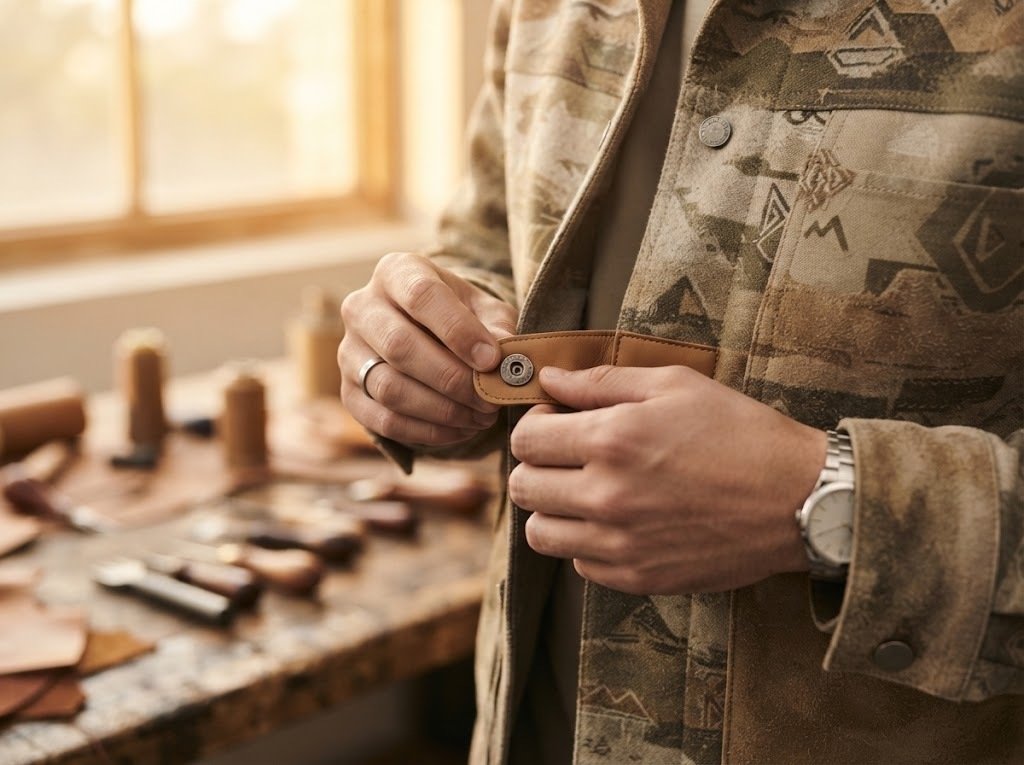
Why Travis Scott’s Style Influenced Gen Z
Scott’s influence is especially strong because his style works in a social media environment.
A traditional fashion icon might influence people through runway shows, magazine covers, or advertising campaigns.
Scott’s outfits can spread through:
- TikTok
- Sneaker communities
- Fan accounts
- Street style photography
- Resale marketplaces
- Music videos
- Concert footage
N-Hype’s analysis similarly identifies Scott as a major influence on Gen Z fashion and emphasizes how his style connects music, sneakers, individuality, and global youth culture.
The result is a feedback loop.
Scott wears something.
Fans photograph it.
Social platforms distribute the image.
People search for the pieces.
Resale communities discuss them.
Other artists and influencers reinterpret the look.
Then the style becomes part of the broader streetwear conversation.
The important lesson: he made fashion feel participatory
Scott’s audience does not simply watch his fashion choices.
They recreate them.
They remix them.
They build collections around them.
That is a major difference between being fashionable and being culturally influential.
Luxury Watches and the Expansion of the Travis Scott Image
Scott’s fashion influence eventually moved beyond sneakers and clothing.
His relationship with Audemars Piguet is an important example of how his image crossed into luxury watches.
The brand created a Royal Oak Perpetual Calendar Openworked “Cactus Jack” limited edition with Cactus Jack. Audemars Piguet lists the model as a 200-piece limited edition, featuring a brown ceramic case and Cactus Jack design language.
This collaboration is significant because it demonstrates the flexibility of Scott’s visual identity.
The same brown, earthy, industrial aesthetic associated with his streetwear could be translated into an extremely sophisticated mechanical watch.
In other words, the Cactus Jack identity was no longer confined to hoodies and sneakers.
It could operate in luxury.
What Makes Travis Scott’s Style Different From Other Rappers?
Scott is not the only musician who has influenced fashion.
Hip-hop has produced generations of fashion leaders.
What makes Scott distinctive is his ability to combine several aesthetics without making the outfit feel disconnected.
His style frequently borrows from:
- Streetwear for comfort and cultural credibility.
- Workwear for ruggedness and utility.
- Vintage fashion for character.
- Western influences for his Texas connection.
- Luxury fashion for refinement and status.
- Sneaker culture for accessibility and collectability.
- Music merchandise for direct fan connection.
The result is a personal formula rather than a single trend.
That is why simply copying one Travis Scott outfit does not necessarily recreate his style.
The deeper lesson is understanding how he combines pieces.
The Biggest Reason Travis Scott Became a Fashion Icon
The simplest answer is this:
Travis Scott became a streetwear fashion icon because he turned personal style into a complete cultural identity.
His clothing supports his music.
His sneakers support his brand.
Cactus Jack connects the different projects.
Houston supplies a recurring cultural foundation.
Luxury collaborations expand his credibility.
Limited drops create scarcity.
Social media spreads the imagery.
Fans give the style a life of its own.
This is what separates Scott from a celebrity who occasionally wears an interesting outfit.
His fashion influence operates as a system.
An original insight: the “three-layer” Travis effect
A useful way to understand Scott’s fashion power is through three layers:
Layer 1: Recognition
People recognize the colors, silhouettes, graphics, and Cactus Jack references.
Layer 2: Participation
Fans buy sneakers, merchandise, and similar clothing to participate in the culture.
Layer 3: Translation
Designers and luxury brands translate elements of his aesthetic into completely different categories.
That third layer is especially important. The progression from Houston influenced streetwear to Dior and Audemars Piguet shows that Scott’s aesthetic can survive outside its original context.
That is a stronger form of fashion influence than simply creating a viral outfit.
Will Travis Scott Remain a Streetwear Fashion Icon?
Scott’s long term influence will depend on whether he continues to evolve rather than repeatedly recreate the same formula.
So far, his strongest fashion moments have come when he has expanded his visual vocabulary.
The Dior collaboration showed luxury tailoring.
Nike and Jordan showed product design.
Cactus Jack showed branding.
His watch collaboration showed luxury accessories.
His personal wardrobe shows how these elements can coexist.
His future relevance will likely depend on maintaining that ability to connect different creative worlds.
For streetwear, his most lasting contribution may not be one particular sneaker or hoodie.
It may be the idea that a musician can build an entire visual language and then take that language from the street to luxury fashion without completely losing its identity.
Conclusion
The story of How Travis Scott Became a Streetwear Fashion Icon is ultimately a story of cultural crossover.
He combined Houston influences, streetwear, sneakers, music merchandise, Cactus Jack branding, and luxury fashion into a recognizable identity. His Nike and Jordan collaborations helped turn his aesthetic into highly desirable products, while the Cactus Jack Dior collection demonstrated that his creative influence could extend into luxury menswear. His Audemars Piguet collaboration pushed that identity even further into high-end accessories.
Scott’s biggest fashion achievement is therefore not simply that he wears good clothes.
It is that his taste became a language other people wanted to speak.
For anyone studying modern streetwear, his career offers a useful lesson: the strongest fashion identities are not built from individual products. They are built from consistent ideas, recognizable symbols, cultural references, and a community that wants to participate.
FAQ
How did Travis Scott become a streetwear fashion icon?
Travis Scott became a streetwear fashion icon by combining his Houston roots, music, Cactus Jack branding, sneakers, merchandise, and luxury fashion collaborations into one recognizable visual identity.
What is Travis Scott streetwear known for?
Travis Scott streetwear is known for oversized silhouettes, graphic designs, earthy colors, utility clothing, vintage influences, Western references, statement sneakers, and a mix of streetwear with luxury accessories.
What brands has Travis Scott collaborated with?
Scott has collaborated with major brands including Nike, Jordan Brand, Dior, and Audemars Piguet. His creative work has also extended into other major commercial partnerships.
Why are Travis Scott sneakers so popular?
Travis Scott sneakers combine recognizable Nike and Jordan silhouettes with distinctive Cactus Jack design details, limited availability, and strong connections to his music and streetwear culture.
What was the Cactus Jack Dior collaboration?
Cactus Jack Dior was a Spring/Summer 2022 men’s collection developed by Travis Scott and Dior menswear creative director Kim Jones. It combined Dior’s luxury heritage with Scott’s Houston and Cactus Jack inspired visual language.
Is Travis Scott considered a fashion designer?
Scott is primarily known as a musician and creative figure, but his collaborations demonstrate meaningful involvement in fashion and product design. His Dior collaboration in particular involved direct creative input into graphics, references, colors, and design direction.














All Gone is a collectible street culture book series created by Michael Dupouy and published through La MJC. Since its first edition in 2006, the series has documented influential sneakers, fashion, art, toys, brands, collaborations, and other objects connected to contemporary street culture.
For collectors and fashion enthusiasts, All Gone is more than a yearly book. Each edition acts as a visual record of a particular moment in streetwear history. Limited print runs, distinctive cover art, photography, and contributions from major names have also made older volumes increasingly interesting on the secondary market.
The important point for shoppers is simple: All Gone is a book series, not a single product. Availability changes by edition. The official collection currently lists 44 books, with older releases frequently marked sold out, while newer volumes may still be available.

What Is All Gone?
All Gone is an annual street culture publication that records notable products and creative developments from a particular year.
The project was conceived by Michael Dupouy through La MJC. The first edition arrived in 2006 as a limited hardcover publication documenting roughly 180 collectible products from that year. The original edition was limited to 500 copies and was produced in collaboration with Indesignwetrust and colette.
The early concept was deliberately broad. Rather than concentrating only on clothing, the book brought together categories such as:
- Sneakers
- T-shirts
- Skate products
- Designer toys
- Accessories
- Art
- Streetwear collaborations
- Collectible objects
- Photography and visual culture
The original All Gone also featured contributions and perspectives from important figures within street culture. Its pages included work connected with names such as Nigo, Hiroshi Fujiwara, KAWS, Futura, James Jarvis, Edison Chen, and others.
That mixture of product documentation and cultural commentary is one reason the series has remained relevant to fashion and streetwear collectors.
Why Is All Gone Important to Streetwear?
All Gone matters because it documents streetwear as culture rather than treating it simply as clothing.
A sneaker, graphic tee, toy, collaboration, or accessory can disappear from stores quickly. Once a product becomes sold out, however, its cultural context can become harder to reconstruct. All Gone addresses that problem by preserving selected products and stories in physical form.
A yearly snapshot of street culture
Each volume is tied to a particular period. That gives collectors an unusual way to look back at how streetwear changed.
For example, the 2006 edition came from a period when brands such as A Bathing Ape, Stüssy, Supreme, Nike, Vans, Neighborhood, Visvim, HUF, OriginalFake, and others were central to the street culture landscape.
Later editions reflect different moments, aesthetics, collaborations, and creative movements.
This makes the series useful for two audiences:
- Collectors, who want physical records of important releases.
- Fashion researchers and enthusiasts, who want to understand how street culture developed over time.
The book itself became a collectible
There is an interesting distinction between the products documented inside All Gone and the book itself.
The series began by documenting sought-after street culture products. Over time, the books became collectible objects too.
The official collection shows this progression clearly. Older volumes from 2006 through 2022 are frequently marked sold out, while selected newer editions remain listed for purchase.
That creates a collector’s paradox: a book created to document rare objects can eventually become one of the rare objects being collected.
All Gone Editions: From 2006 to the Modern Era
The easiest way to understand All Gone is to look at its evolution.
All Gone 2006
The first edition established the foundation.
The official product information describes a 170-page hardcover limited to 500 copies. It was produced by La MJC, Indesignwetrust, and colette and included extras such as a Nike poster and Vans stickers.
The limited quantity is particularly notable when compared with later print runs.
All Gone 2007–2010
The following editions expanded the format and increased production.
The 2007 edition, for example, was a 256-page hardcover limited to 1,000 copies.
The 2009 edition was also 256 pages and limited to 1,000 copies.
The 2010 edition added another collector-focused element: a fifth-anniversary presentation with a pebble leather cover. The official listing identifies it as a 256-page hardcover and describes a limited production associated with the anniversary edition.
These details matter because collectors should not assume every All Gone volume has the same format or scarcity.
The Decade edition
The series also produced a special All Gone Decade volume.
Rather than functioning exactly like a standard annual release, it commemorated the first ten years of the project and compiled selected imagery produced since 2006. The official description says it was limited to 1,500 copies and offered as part of a box set with the 2015 edition.
All Gone 2019
The 2019 edition is particularly recognizable because of its “I Want Your Love” theme and artwork by Chicago-based artist Nina Chanel Abney.
The official edition contains 216 pages and was limited to 1,500 copies. La MJC founder Michael Dupouy explained that the title referenced Chic’s “I Want Your Love,” while Abney created artwork specifically for the publication.
Ageless Galaxy also describes the 2019 edition as the 14th edition of the project and highlights its role as a round-up of the year’s street culture.
All Gone 2021 and 2022
The series continued to connect its covers with major creative movements.
The 2021 edition used imagery associated with Bored Ape Yacht Club and was produced in a limited run of 1,750 copies.
For 2022, VERDY created the two covers featuring VICK and VISTY. The edition was limited to 2,000 copies and printed in France.
All Gone 2024
The 2024 edition demonstrates how the series expanded its relationship with fashion heritage.
Its Heritage Monogram edition features the monogram of French maison Au Départ. The book is a 192-page hardcover limited to 1,250 copies and printed in France.
The volume also includes references to an extensive group of fashion, footwear, art, and streetwear names, demonstrating how the boundaries between streetwear and broader fashion culture have become increasingly fluid.
All Gone 2025
The latest edition listed on the official collection is All Gone 2025: “Pointman et ses amis.”
It is priced at €80 on the official site and remains listed as available, unlike many older volumes. The book is a 192-page hardcover limited to 1,000 copies and printed in France.
FUTURA 2000 created the two covers, with one centered on Pointman and another featuring his Atoms imagery.

Which All Gone Books Are Sold Out?
A major part of the All Gone collecting experience is availability.
The official collection currently displays 44 books. Several editions are marked sold out, including numerous versions from 2006 through 2022.
Examples include:
- All Gone 2006 Black
- All Gone 2007 Purple
- All Gone 2008 editions
- All Gone 2009 editions
- All Gone 2010 editions
- All Gone 2011 editions
- All Gone 2012 editions
- All Gone 2013 editions
- All Gone 2014 editions
- All Gone 2015 editions
- All Gone 2016 editions
- All Gone 2017 editions
- All Gone 2018 editions
- All Gone 2019 editions
- All Gone 2020 editions
- All Gone 2021 editions
- All Gone 2022 editions
Meanwhile, the official collection currently lists the 2023, 2024, and 2025 books with purchase options.
This is important for anyone searching online: sold out on the publisher’s website does not automatically mean impossible to find. It means the original retail channel does not currently offer that edition as a normal in-stock product.
How Much Does All Gone Cost?
There is no single price for every All Gone book.
The original publisher’s retail price can differ significantly from secondary-market pricing because older editions may no longer be available directly.
Current official listings show newer books around €80, including the 2025 edition.
Secondary-market prices can be substantially different.
For example, an eBay marketplace page recently displayed various All Gone listings ranging from comparatively affordable used copies to several hundred dollars for scarce editions. One 2010 anniversary copy was listed at $500, while a sealed 2009 copy was listed at $650 at the time of the crawl. These are asking prices, not verified final sale prices.
That distinction is essential when researching collectible books.
What affects the price?
Several factors can influence a copy’s market value:
- Edition year
- Cover variation
- Original print quantity
- Condition
- Sealed versus opened condition
- Included inserts or accessories
- Original packaging
- Signed copies
- Provenance
- Demand among collectors
A practical collecting tip is to compare completed sales, when available, rather than relying only on active asking prices.
How to Buy All Gone Safely in the USA
If you are looking for an All Gone book in the United States, start with the official publisher.
If the edition is sold out, the secondary market becomes more relevant.
Check the edition carefully
“All Gone 2019” is not necessarily one identical product. The official 2019 release had both sand and black cover versions.
Before purchasing, verify:
- Year
- Cover color
- Edition size
- ISBN or EAN
- Page count
- Condition
- Included extras
- Seller photographs
This is particularly important when a listing uses generic photographs.
Compare the seller’s description with the publisher’s specifications
A seller claiming to have a rare edition should be able to provide clear photographs of the actual copy.
Look for:
- Front cover
- Back cover
- Spine
- Copyright page
- ISBN/EAN
- Any original inserts
- Condition of corners and edges
For expensive copies, additional provenance can be useful.

All Gone vs. a Regular Fashion Book
Why does All Gone attract attention when there are countless fashion books available?
The difference is its editorial focus.
A conventional fashion book might concentrate on a designer, fashion house, collection, photographer, or historical period. All Gone instead builds a yearly snapshot around the products and personalities shaping street culture book.
That makes its archive especially useful for understanding the relationship between:
- Sneakers and fashion
- Music and clothing
- Art and streetwear
- Luxury and youth culture
- Collaborations and brand identity
- Limited releases and collecting
- Independent creativity and global fashion
The 2024 edition, for example, includes names spanning streetwear, luxury fashion, footwear, accessories, art, and contemporary design.
This breadth is one of the series’ defining characteristics.
Is All Gone Still Relevant in 2026?
Yes, but its relevance is best understood as documentation and cultural history, rather than simply a trend guide.
Streetwear changes extremely quickly. A product that dominates social media one year can become difficult to find several years later. A physical archive provides context that short-lived social posts cannot always preserve.
The official All Gone collection now spans releases from 2006 through 2025, creating nearly two decades of annual documentation.
For someone studying modern fashion, that creates an unusually long visual timeline.
One useful insight from reviewing the editions is the changing scale of scarcity. The first edition was limited to 500 copies, while later editions used quantities such as 1,000, 1,250, 1,500, 1,750, and 2,000 copies.
That means “limited edition” should not be treated as a single category. The actual edition size can make a major difference when comparing books.
What Should New Collectors Look For?
If you are starting an All Gone collection, you do not necessarily need to chase every year.
A more useful approach is to choose editions around a theme.
Build by era
You could begin with an early volume such as 2006, add a decade-era edition, and then choose a recent volume such as 2024 or 2025.
Build by artist
Another approach is to follow cover artists and creative collaborations.
Examples include:
- Nina Chanel Abney
- VERDY
- Bored Ape Yacht Club
- Au Départ
- FUTURA 2000
Each represents a different chapter in the visual evolution of the series.
Build around streetwear history
You can also select editions connected to the brands and products that interest you most.
That approach makes the collection useful as a reference library rather than simply a shelf of expensive books.
Where can I buy All Gone?
The safest starting point is the official All Gone website. If a particular edition is sold out there, collectors can investigate reputable secondary-market sellers while carefully checking the exact edition, condition, and authenticity.
Is All Gone worth collecting?
That depends on your interest in streetwear history, photography, design, and collectible publishing. The series offers a chronological record of street culture from 2006 onward, while limited print runs make individual editions distinct collector objects.
Conclusion: Why All Gone Still Matters
All Gone occupies an unusual position between fashion publishing, art documentation, and collectible culture.
What began in 2006 as a limited publication documenting sought-after street culture products has developed into a long-running archive covering nearly two decades. The series has featured major brands, artists, photographers, designers, and collaborations while changing its visual identity from edition to edition.
For collectors, the most important lesson is to look beyond the words sold out. Identify the exact year, cover, edition size, condition, and publication details before judging a book’s rarity or price.
For fashion readers, All Gone offers something different: a physical timeline of how street culture moved from niche communities into a much broader influence on contemporary fashion.
FAQ Section
Is All Gone a fashion book?
All Gone is a street culture publication covering sneakers, apparel, art, toys, accessories, collaborations, photography, and collectible products.
Who created All Gone?
All Gone was conceived by Michael Dupouy through La MJC, with the first edition produced in collaboration with Indesignwetrust and colette.
Is All Gone sold out?
Many older editions are currently marked sold out on the official website, while selected newer editions remain available.
How many All Gone books are there?
The official collection currently displays 44 books and special editions.
Where can I buy All Gone?
Start with the official All Gone website. Sold out editions may also appear through secondary-market sellers, where buyers should verify edition details and condition.
Why do collectors collect All Gone?
Collectors value the series for its limited editions, cover art, photography, documentation of street culture, and historical connection to influential fashion and creative brands.

ADER error is a phrase that many fashion enthusiasts search when they experience confusion related to ADER ERROR products, websites, branding, or online shopping issues. ADER ERROR is a Korean fashion brand known for its oversized silhouettes, creative designs, and unique approach to contemporary streetwear. However, users may sometimes encounter problems connected with product availability, website errors, order issues, or misunderstandings about the brand name.
In simple words, an ADER error usually refers to a problem or mistake connected with ADER ERROR, whether it happens during browsing, purchasing, identifying authentic products, or understanding the brand itself.
This guide explains what ADER error means, common reasons behind it, and practical ADER error troubleshooting methods. You will also learn how to avoid common mistakes when buying ADER ERROR clothing and how to recognize authentic pieces.
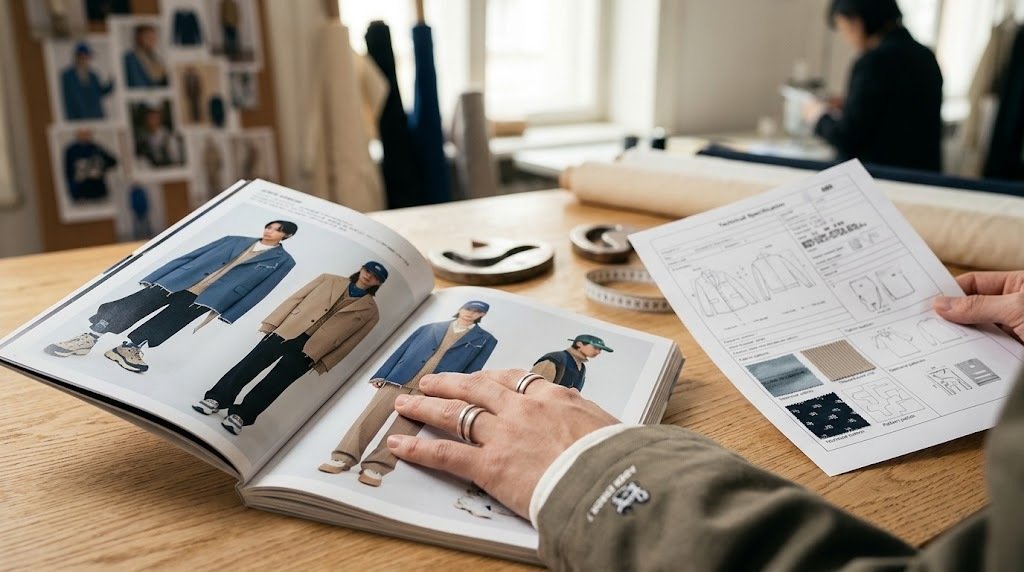
What Is ADER error?
An ADER error is not an official technical error message from the ADER ERROR brand. Instead, it is a general term people use when something goes wrong while interacting with ADER ERROR products, websites, or information.
ADER ERROR itself is a South Korean fashion label founded in 2014. The brand became popular because of its experimental designs, minimal branding, oversized fits, and collaborations with global companies.
According to the brand’s official identity, ADER ERROR focuses on creating a cultural communication platform rather than simply selling clothing.
Common situations where people may use the term ADER error include:
- Website loading problems
- Checkout or payment failures
- Incorrect product information
- Confusion about authentic versus fake products
- Wrong sizing expectations
- Missing order updates
- Searching for unavailable items
Understanding the exact problem is the first step toward solving it.
Why Does ADER error Happen?
There are several reasons why users may experience problems related to ADER ERROR.
1. Website or Technical Problems
One of the most common causes is a temporary website issue.
Online fashion stores can experience:
- Server downtime
- Slow loading pages
- Payment gateway failures
- Browser compatibility problems
- Cache-related errors
For example, a customer may add an ADER ERROR jacket to their cart but receive an error during checkout because the payment session expires.
How to Fix It
Try these simple steps:
- Refresh the page
- Clear browser cache and cookies
- Use another browser
- Disable unnecessary browser extensions
- Try again after a few minutes
2. Product Availability Issues
ADER ERROR releases limited collections, which means popular products can sell out quickly.
A user may think there is an error because:
- A product page exists but the item is unavailable
- A size option disappears
- A product cannot be added to the cart
- A previous collection is no longer listed
Limited drops are common in streetwear fashion, especially among brands that focus on exclusivity.
3. Incorrect Size Selection
Another common ADER error happens because customers misunderstand the brand’s sizing system.
ADER ERROR is known for oversized and relaxed silhouettes. A customer who normally wears a medium from another brand may find an ADER ERROR medium much larger than expected.
Before purchasing, always check:
- Shoulder measurements
- Chest width
- Sleeve length
- Product fit description
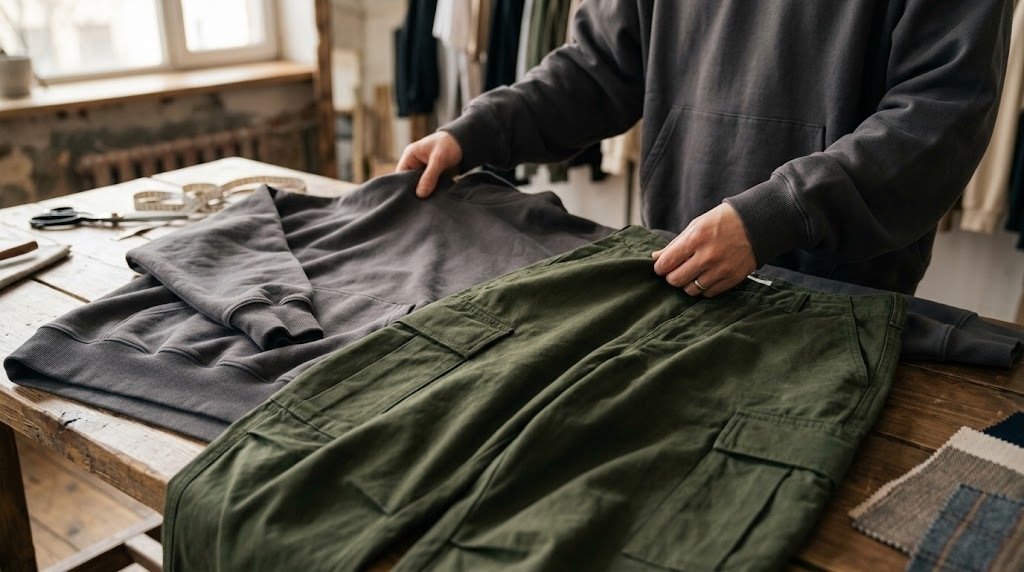
ADER error Troubleshooting: Step-by-Step Solutions
If you are facing an ADER error, follow these troubleshooting methods based on the type of problem.
Fixing Website Related ADER Error Problems
If the issue happens while browsing the official website, try:
Check Your Internet Connection
A weak connection can prevent pages from loading correctly.
Test your connection and reload the website.
Update Your Browser
Older browser versions may create compatibility issues.
Recommended browsers:
- Google Chrome
- Safari
- Firefox
- Microsoft Edge
Remove Cached Data
Your browser may store outdated information.
Steps:
- Open browser settings
- Go to privacy options
- Clear cached images and files
- Restart the browser
Fixing Shopping and Checkout Errors
Online shopping errors are frustrating, especially during limited releases.
Possible solutions:
Confirm Payment Information
Check:
- Card details
- Billing address
- Available balance
- International payment permissions
Try Another Payment Method
Sometimes banks block international transactions.
You can try:
- Another card
- Another payment provider
- Contacting your bank
Check Product Availability Again
A product may disappear because another customer completed the purchase first.
How to Avoid ADER ERROR When Buying Clothing
Buying premium streetwear requires attention to detail.
Purchase From Reliable Sources
ADER ERROR products are available through official channels and selected retailers.
Avoid websites offering:
- Extremely low prices
- No return policy
- Poor product photos
- Missing brand information
Understand ADER ERROR Authenticity Details
Fake products are common in popular fashion markets.
Look for:
- Correct logo placement
- Quality stitching
- Fabric quality
- Accurate labels
- Proper packaging
Authentic ADER ERROR clothing usually reflects careful construction and unique design details.
Common ADER ERROR Mistakes Buyers Make
Many problems can be avoided by understanding common mistakes.
Mistake 1: Assuming All Sizes Fit Normally
ADER ERROR uses a fashion-forward oversized style.
A buyer expecting a traditional slim fit may believe there is a problem with the product.
Mistake 2: Buying From Unverified Sellers
Many counterfeit products use ADER ERROR branding.
Always research the seller before purchasing expensive clothing.
Mistake 3: Ignoring Product Measurements
Fashion brands often use different sizing standards.
Measurements are more reliable than simply choosing your usual size.
ADER ERROR Brand Overview: Why It Gets Attention
ADER ERROR has become recognized globally because it combines streetwear, art, and cultural storytelling.
The brand is known for:
- Oversized clothing
- Minimal branding
- Experimental designs
- Gender-neutral collections
- Creative collaborations
The brand’s popularity has increased among fashion communities in the USA, Europe, and Asia.

Acronym is a shortened form created from the initial letters, or sometimes parts, of a longer name or phrase. In the strictest traditional usage, an acronym is pronounced as a word, such as NASA, NATO, or radar.
But there is an important detail: in everyday American English, people often use acronym more broadly for abbreviations made from initials, including terms such as FBI and DIY, even though these are technically called initialisms when each letter is pronounced separately.
That small distinction explains why the word can seem confusing.
Whether you encountered “acronym” in a fashion article, social media post, business document, school assignment, technology discussion, or clothing brand name, this guide explains exactly what it means, how it works, and how to use the term correctly.

What Is an Acronym?
An acronym is a word or shortened expression formed from the initial letters of several words in a name or phrase.
For example:
- NASA = National Aeronautics and Space Administration
- NATO = North Atlantic Treaty Organization
- RADAR = radio detection and ranging
- SCUBA = self-contained underwater breathing apparatus
- LASER = light amplification by stimulated emission of radiation
The key feature is pronunciation. In the narrow definition, the letters combine to create something that can be spoken as a normal word.
Merriam-Webster defines an acronym as a word formed from the initial letters or major parts of a compound term and also notes that the word is commonly used more broadly for initial-letter abbreviations.
This is why you may see slightly different definitions depending on the dictionary or style guide you consult.
Simple definition:
An acronym is a shortened name or phrase created from letters taken from the original words, usually forming a pronounceable word.
Acronym vs. Abbreviation: What Is the Difference?
An abbreviation is the broader category. It means a shortened form of a word or phrase.
An acronym is therefore a type of abbreviation, but not every abbreviation is an acronym.
Consider these examples:
| Term | Full form | Category |
|---|---|---|
| NASA | National Aeronautics and Space Administration | Acronym |
| NATO | North Atlantic Treaty Organization | Acronym |
| FBI | Federal Bureau of Investigation | Initialism / commonly called acronym |
| ASAP | As Soon As Possible | Initialism or acronym in broad usage |
| appt. | appointment | Abbreviation |
| Dr. | Doctor | Abbreviation |
| etc. | et cetera | Abbreviation |
Cambridge explains that abbreviations can be created in several ways, including initial letters, while acronyms are specifically words formed from the first letters of other words and pronounced as full words.
What Is an Initialism?
An initialism is formed from the first letters of multiple words, but the letters are pronounced separately.
For example:
- FBI → “F-B-I”
- CIA → “C-I-A”
- USA → “U-S-A”
- DIY → “D-I-Y”
- HTML → “H-T-M-L”
So, under the strict distinction:
Acronym: pronounced as a word.
Initialism: pronounced letter by letter.
Abbreviation: general category covering many kinds of shortened forms.
However, language is not perfectly rigid. Merriam-Webster specifically acknowledges that acronym is often used for initialisms too.

How Does an Acronym Work?
Creating an acronym is usually straightforward.
1. Start with a phrase
Take:
National Aeronautics and Space Administration
2. Identify the important initial letters
N + A + S + A
3. Combine them
NASA
4. Pronounce the result
“Nah-sah,” rather than saying each letter separately.
That final step is what makes NASA a classic example of an acronym under the narrow definition.
Not every phrase produces a convenient word. Sometimes the resulting letters are pronounced individually, creating an initialism instead.
Acronyms Can Use More Than Just First Letters
Acronyms do not always behave like perfectly mechanical first-letter formulas.
Some use parts of words or selected major words to create something pronounceable. RADAR, for example, comes from radio detection and ranging. SCUBA comes from self-contained underwater breathing apparatus. These terms eventually became ordinary vocabulary rather than feeling like shortened technical labels.
That process is important because some acronyms become so familiar that people forget they originally represented longer phrases.
Why Do People Use Acronyms?
Acronyms make communication shorter and easier, particularly when a long phrase appears repeatedly.
They are especially common in:
- Government
- Technology
- Science
- Medicine
- Business
- Education
- Military terminology
- Online communication
- Fashion and streetwear
- Entertainment
- Sports
Imagine writing “National Aeronautics and Space Administration” every time the organization was mentioned. NASA is much faster to read and remember.
Acronyms can also create recognizable names. A short term is easier to place in a headline, logo, product description, conversation, or social media caption.
Acronyms in Fashion and Clothing
The fashion industry uses Acronym vs Abbreviation and acronym-like names frequently.
Shoppers may encounter terms such as:
- PPE — personal protective equipment
- UV — ultraviolet
- GSM — grams per square meter, commonly used when discussing fabric weight
- TENCEL™ — a trademarked brand name rather than a generic acronym
- DIY — do it yourself, often used when discussing customization
- OOTD — outfit of the day, widely used in social media fashion content
There is also a separate fashion-specific use of the word ACRONYM®. ACRONYM® is the name of a technical apparel brand associated with designers Errolson Hugh and Michaela Sachenbacher. Its official site currently presents a large collection of technical garments and lists Hugh and Sachenbacher as its CEOs.
That distinction matters for searchers. If someone types “Acronym” while researching clothing, they may mean either the general linguistic concept or the fashion label.
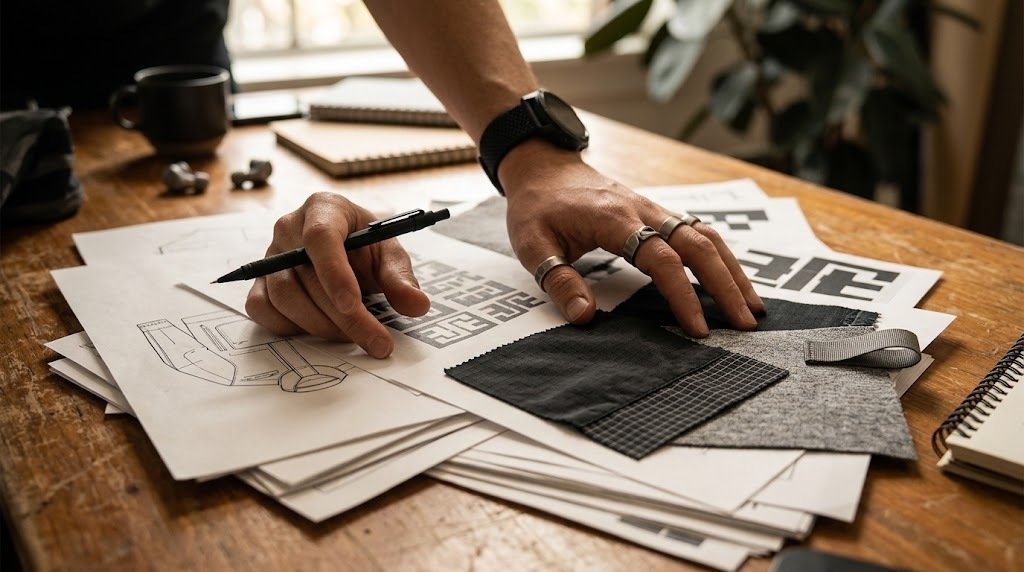
Common Acronym Examples You Should Know
Here are useful examples from everyday American English.
NASA
NASA stands for National Aeronautics and Space Administration.
It is pronounced as a word and is one of the clearest examples of a traditional acronym.
NATO
NATO means North Atlantic Treaty Organization.
It is normally pronounced as a word rather than as four separate letters.
SCUBA
SCUBA stands for self-contained underwater breathing apparatus.
This is an interesting example because the acronym became so common that scuba is now normally written in lowercase when used as an ordinary noun. Cambridge similarly identifies scuba as an acronym that has become established in the language.
RADAR
RADAR means radio detection and ranging.
Like scuba, radar has moved beyond being merely a shortened technical expression and functions as a normal English word.
LASER
LASER comes from light amplification by stimulated emission of radiation.
Today, most readers recognize “laser” as an ordinary word rather than thinking about its original expanded phrase.
DIY
DIY means do it yourself.
Strictly speaking, it is usually classified as an initialism because people normally say the three letters separately. In everyday usage, however, many people simply call it an acronym.
Acronyms in Social Media and Modern Communication
Digital communication has created a huge number of shortened expressions.
Common examples include:
- LOL — laughing out loud
- BRB — be right back
- TBH — to be honest
- IMO — in my opinion
- FYI — for your information
- FOMO — fear of missing out
- DM — direct message
- IRL — in real life
These expressions demonstrate an important point: everyday users do not always follow the strict dictionary distinction between an acronym and an initialism.
For SEO writers, marketers, fashion publishers, and social media creators, clarity is usually more important than forcing a technical label into every sentence.
If readers understand that FBI is an abbreviation made from initial letters, calling it an “acronym” in ordinary conversation will rarely create confusion. But in an educational or linguistic article, explaining the distinction makes the information more precise.
How Should Acronyms Be Written?
There is no single capitalization rule that applies to every acronym.
Many newer organizational or technical abbreviations appear in capital letters:
- NASA
- NATO
- FBI
- DIY
- HTML
Some acronyms become ordinary words over time:
- radar
- scuba
- laser
Cambridge notes that established acronyms may eventually be written in lowercase because they have become normal vocabulary.
Should You Use Periods?
Modern English generally writes many common initial-based terms without periods:
NASA, not N.A.S.A.
FBI, not F.B.I.
USA, not U.S.A.
However, punctuation conventions vary by publication and style guide. The safest approach for professional writing is to follow the style guide used by your publication and remain consistent.
Define an Acronym on First Use
If your audience may not know the term, write the full phrase first, followed by the shortened form.
For example:
The National Aeronautics and Space Administration (NASA) launched the mission.
After that, you can simply use NASA.
This approach is especially useful in fashion, business, technical, and educational content where readers may come from different backgrounds.
Where Did the Word “Acronym” Come From?
The word itself has an interesting history.
Modern dictionaries trace acronym to the Greek-derived elements acro-, associated with “tip” or “end,” and -onym, meaning “name.” Merriam-Webster gives its first known English use as 1940, while other historical references place English attestations in the early 1940s.
Wikipedia’s historical overview notes that the German form Akronym appeared earlier, while English usage developed during the 20th century.
The concept itself is older than the modern word. People have shortened names and phrases for centuries. What changed in the 20th century was the scale and importance of this practice in government, science, technology, organizations, and mass communication.
Common Mistakes When Using Acronyms
A few mistakes appear repeatedly in everyday writing.
Mistake 1: Treating Every Short Form as an Acronym
Dr. is an abbreviation, but it is not an acronym formed from the initials of several words.
Mistake 2: Assuming Every Initialism Is Technically an Acronym
Under the strict distinction, FBI is an initialism because each letter is pronounced separately.
In ordinary American English, however, “acronym” is frequently used more broadly.
Mistake 3: Forgetting to Define Specialized Terms
A reader might understand NASA immediately but have no idea what a specialized industry acronym means.
Define unfamiliar terms when they first appear.
Mistake 4: Using Too Many Acronyms
A page packed with unexplained abbreviations becomes difficult to read.
A useful editorial rule is simple: shorten repeated phrases, not reader comprehension.
A Simple Way to Remember the Difference
Use this three-part test:
Is it a shortened form?
→ It may be an abbreviation.
Is it made from initial letters?
→ It may be an initialism or acronym.
Can you pronounce the result as a normal word?
→ It fits the strict definition of an acronym.
For example:
National Aeronautics and Space Administration → NASA → acronym
Federal Bureau of Investigation → FBI → initialism
Appointment → appt. → abbreviation
This simple framework resolves most common confusion.
Why Acronyms Matter in Fashion, Branding, and Culture
Acronyms are not limited to dictionaries and classrooms. They influence how modern brands and communities communicate.
Fashion labels, sneaker communities, designers, and online style groups often use short names because they are visually compact and easy to remember. A three-letter or four-letter expression can fit naturally into a logo, garment graphic, product name, hashtag, or social media caption.
The important distinction is context.
If acronym appears in a grammar article, it probably refers to a linguistic device. If ACRONYM® appears alongside technical jackets, modular trousers, or performance apparel, it refers to the fashion brand.
That difference is a useful search-intent lesson: the same spelling can represent a common noun, a linguistic concept, or a proper brand name depending on context.
Final Takeaway
An acronym is a shortened expression formed from letters or parts of a longer phrase. In the strict sense, it is pronounced as a word, such as NASA, NATO, radar, or scuba. An initialism, such as FBI or DIY, is pronounced letter by letter, while abbreviation is the broader term for shortened forms.
The terminology is not completely uniform. Major dictionaries acknowledge that acronym is commonly used in a broader sense that includes initialisms.
For everyday writing, the most important rule is clarity: introduce unfamiliar shortened terms, use capitalization consistently, and choose terminology that your audience will understand.
FAQ Section
What is an acronym in simple words?
An acronym is a shortened form made from letters or parts of a longer phrase. In the strict definition, the result is pronounced as a word, such as NASA, NATO, or radar.
What is the difference between an acronym and an abbreviation?
An abbreviation is any shortened form of a word or phrase. An acronym is one type of abbreviation, usually created from initial letters and pronounced as a word.
Is FBI an acronym?
In the strict terminology, FBI is an initialism because its letters are pronounced individually: “F-B-I.” However, dictionaries note that acronym is commonly used more broadly to include initialisms.
Is NASA an acronym?
Yes. NASA stands for National Aeronautics and Space Administration and is pronounced as a word, making it a classic acronym.
Is DIY an acronym or abbreviation?
DIY is an abbreviation formed from the initial letters of “do it yourself.” More precisely, it is an initialism because the letters are normally pronounced separately.
What is ACRONYM® in fashion?
ACRONYM® is also the name of a technical apparel brand associated with Errolson Hugh and Michaela Sachenbacher. It is a proper brand name and should not be confused with the general linguistic term acronym.
-

 Lifestyle12 months ago
The Story of Acne Studios: From Underground Roots to Global Fashion Icon
-

 Sneaker12 months ago
Inside Aime Leon Dore How It Redefined Streetwear Culture
-
 News & Drops12 months ago
Inside ADER error: How It Redefined Streetwear Culture
-

 Lifestyle12 months ago
Inside adidas how It Redefined Streetwear Culture
-
 Brands12 months ago
The Story of A-COLD-WALL From Underground Roots to Global Fashion Icon
-
 Style Guides12 months ago
Inside Acronym How It Redefined Streetwear Culture
-
 Clothing9 months ago
Balmain Luxury Fashion Brand: History, Design Philosophy, Market Position & Global Influence
-
 Style Guides12 months ago
Action Bronson: Where Streetwear Meets Art, Culture, and Identity
Pingback: Why Rappers Are Becoming the New Face of Fashion Brands