Style Guides
How to Spot Fake Streetwear: A 2026 Beginner’s Guide

How to Spot Fake Streetwear is easier when you stop looking for one “magic” sign and start checking several details together. Labels, stitching, materials, graphics, tags, packaging, seller history, and price can all help reveal whether a piece is genuine.
Buying streetwear is exciting, especially when you find a rare hoodie, limited sneaker, vintage graphic tee, or sold-out collaboration at a surprisingly good price. The problem is that counterfeiters have become better at copying logos, tags, packaging, and even manufacturing details.
That means beginners should not rely on a single QR code, receipt, logo, or “looks authentic” judgment.
A better approach is to build an authentication habit: verify the seller first, compare the item with reliable reference images, inspect construction and labels, then look at the price and transaction details as a whole.
This guide breaks that process down into practical steps you can use when shopping online or in person.

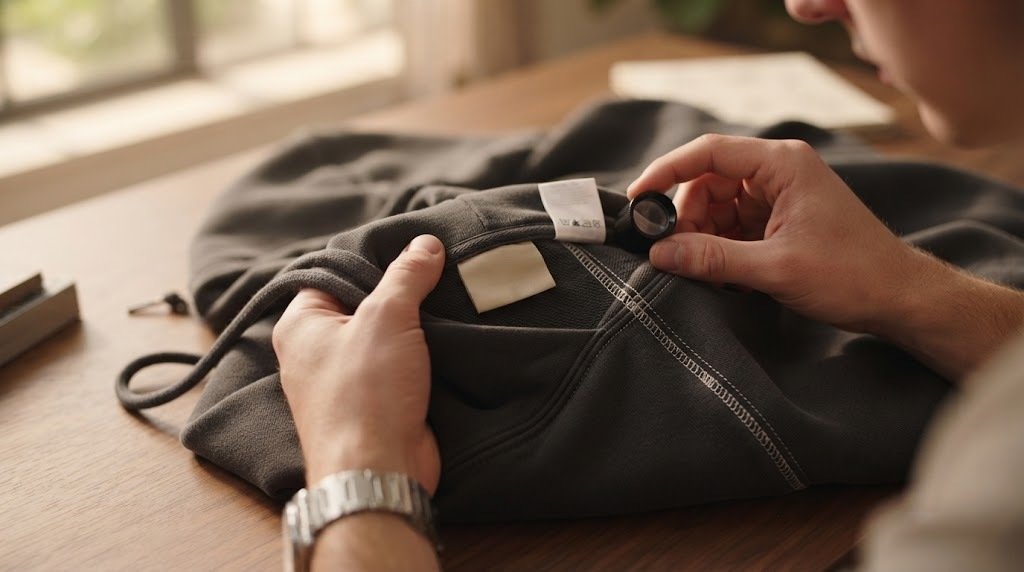
What Makes Fake Streetwear Different From Authentic Clothing?
Fake streetwear is counterfeit clothing or footwear made to imitate an existing brand or specific product without being an authorized product from that brand.
Authentic streetwear usually has a consistent relationship between its design, materials, construction, branding, labeling, and production details. Counterfeit products may reproduce the overall appearance but often reveal inconsistencies when you inspect several elements together.
That distinction matters because one imperfect detail does not automatically mean an item is fake.
Authentic products can have manufacturing variations. Older releases can have different labels from newer releases. Collaborations can use unusual packaging or materials. Vintage pieces can show significant wear.
Instead of asking:
“Does this one detail look wrong?”
Ask:
“Does the entire item make sense for this particular release?”
That mindset is one of the most useful lessons for beginners.
How to Spot Fake Streetwear: Start With the Seller
Before examining the hoodie or sneakers, examine the person selling them.
A genuine product can be sold through an unreliable seller, while a convincing counterfeit can be presented with professional-looking photos. Seller research therefore deserves to happen before you spend money.
Check the seller’s history
Look for:
- Established selling history
- Consistent customer feedback
- Clear product descriptions
- Multiple original photographs
- Return or dispute policies
- Verifiable contact information
- Previous sales of similar products
- Payment methods offering buyer protection
Be cautious when an expensive item is being sold by a newly created account with little history.
Also look for copied product photography. If the seller’s “own” photos appear elsewhere online, that does not prove the item is counterfeit, but it removes an important layer of trust.
Ask for additional photographs
For an expensive secondhand item, ask for close-up photographs of:
- Front and back
- Neck label
- Wash or care label
- Stitching
- Graphic or embroidery
- Hardware
- Tags
- Packaging
- Any serial, style, or product identification details
A seller who refuses reasonable authentication photos should increase your caution.
What Physical Details Should You Check?
Once you have the item in front of you, inspect it systematically rather than randomly.
1. Stitching and construction
Look closely at seams, hems, embroidery, pockets, cuffs, and major stress points.
Potential warning signs include:
- Uneven stitching
- Loose threads everywhere
- Poorly aligned seams
- Crooked embroidery
- Inconsistent spacing
- Poorly finished edges
- Hardware that feels unusually cheap
However, remember that authentic garments are not necessarily perfect. Handmade or vintage pieces may have imperfections.
The key is pattern and consistency.
If several construction details look careless on an item supposedly positioned as a premium product, investigate further.
2. Fabric and material
Touch the garment when possible.
Ask:
- Does the fabric weight match the known release?
- Does the texture seem correct?
- Does the garment drape properly?
- Does the material feel consistent with reference examples?
- Does the print or embroidery sit correctly on the fabric?
Material alone should never be your only authentication test because counterfeiters can use surprisingly convincing fabrics.
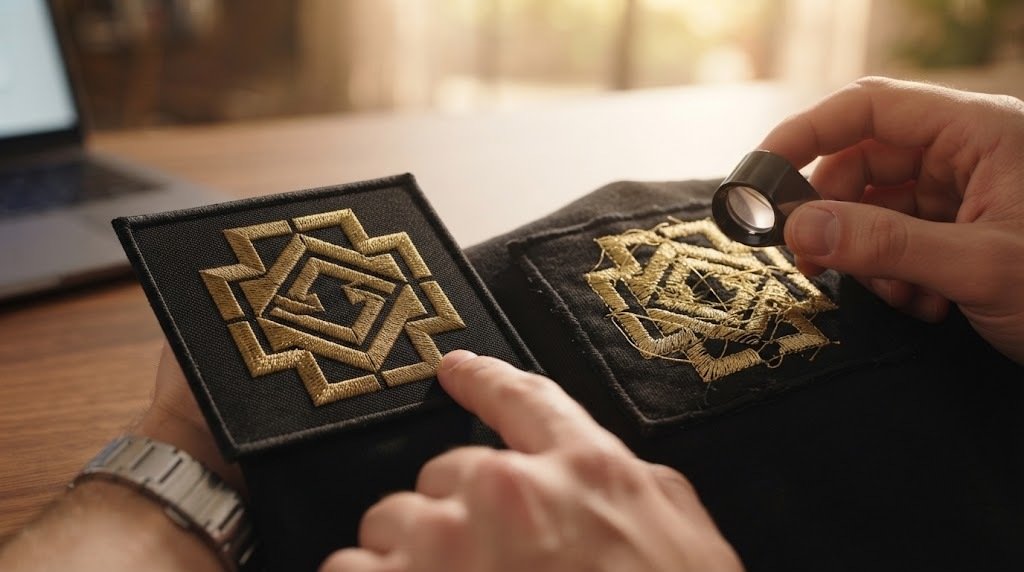
3. Graphics, embroidery, and logos
Look closely at the brand’s most recognizable visual elements.
Check:
- Letter spacing
- Logo proportions
- Embroidery density
- Graphic positioning
- Print sharpness
- Color accuracy
- Alignment
- Font details
A logo that looks correct from six feet away can reveal inconsistencies when viewed closely.
How Can Tags and Labels Reveal Fake Streetwear?
Labels are among the most useful areas to inspect, but they are also commonly copied.
Neck tags
Compare the tag against reliable photographs of the same model and release, not just another item from the same brand.
Look for differences in:
- Font
- Stitching
- Tag dimensions
- Logo placement
- Material
- Country-of-origin information
- Spacing
- Wash instructions
Wash and care labels
The internal care label can provide valuable clues.
Check whether:
- Text is correctly spelled
- Information is formatted consistently
- Multiple labels are properly attached
- Product details match the garment
- Country-of-origin information makes sense
- Fiber composition is plausible
A counterfeit may have an obvious spelling mistake, but modern fakes can also contain perfectly written labels.
So a clean label is not proof of authenticity.
Hangtags and retail tags
Compare:
- Barcode formatting
- Fonts
- Card quality
- Printing
- Hole placement
- Attachment method
- Product codes
A barcode or QR code should not automatically be trusted. Counterfeiters can copy legitimate codes from real products.
A code that scans simply proves that the code contains readable information—not necessarily that the garment in your hands is genuine.
Does Price Help You Identify Fake Streetwear?
Yes, but price is a warning signal, not an authentication test.
If a highly desirable item normally sells for $300 and someone offers it for $50 with no credible explanation, you should investigate.
Possible explanations for a low price include:
- Heavy wear
- Missing accessories
- Damage
- Urgent sale
- Poor sizing
- Local market differences
- Older release
- Seller unfamiliarity with the item
But “I need money today” should not automatically convince you.
A useful rule is:
The bigger the price gap, the more evidence you should require.
Do not allow a bargain to create artificial urgency.
How to Authenticate Streetwear When Shopping Online
Online shopping removes one of your biggest advantages: physical inspection.
That means you need to compensate with better research.
Compare the exact release
Do not search for:
“Supreme hoodie tag”
Search for the specific product, season, colorway, collaboration, or release.
For example:
“Brand + model + season + color + tag”
Different production years can have different labels, packaging, hardware, or construction.
Compare multiple reference photos
Look at photographs from:
- Official brand sources
- Established retailers
- Reputable resale platforms
- Archived product listings
- Experienced collector communities
Do not authenticate from one photograph.
Create a small mental checklist and compare several details.
Reverse-image search suspicious photos
If a seller uses the same photographs found on multiple websites, ask why.
Stock photographs can be legitimate, but when an individual seller claims the pictures show the exact item they own, copied imagery becomes a meaningful warning sign.
What Are the Biggest Fake Streetwear Red Flags?
A single red flag is rarely enough. Several together can make the risk much clearer.
Watch for:
- Price dramatically below normal market value
- Seller refuses detailed photos
- Newly created selling account
- Stock images instead of item-specific photos
- Misspelled branding
- Incorrect tags
- Strange fonts
- Poor stitching
- Wrong materials
- Incorrect product details
- Packaging inconsistent with the release
- Suspicious payment requests
- No meaningful return policy
- Pressure to pay immediately
The “five-point mismatch” approach
Here is a practical method I recommend for beginners.
Check five independent areas:
- Seller
- Product construction
- Labels
- Release details
- Price and transaction
If all five make sense, your confidence increases.
If two or three areas disagree with reliable references, stop and investigate before paying.
This is more dependable than searching for one supposed “secret” authentication trick.
Fake Streetwear vs. Vintage, Replica, and Reproduction
Not every non-authentic-looking item is necessarily counterfeit in the same way.
Replica
A replica intentionally imitates an existing branded product.
Reproduction
A reproduction is made later to recreate the appearance of an older design. It may be openly sold as a reproduction rather than falsely represented as an original vintage piece.
Vintage
Vintage clothing is genuinely old, although exact definitions can vary by seller and market.
This distinction matters when shopping for vintage streetwear.
A seller describing a modern reproduction as a 1990s original is a major problem—even if the garment itself is well made.
Vintage specialists also point to age-related clues such as fabric wear, labels, construction methods, and hardware when evaluating older clothing.
What About Sneakers and Streetwear Accessories?
The same authentication principles apply to sneakers, caps, bags, jewelry, and accessories.
Sneakers
Check:
- Stitching
- Shape
- Materials
- Sole construction
- Insole
- Size tag
- Box label
- Accessories
- Packaging
- Product code
Never authenticate sneakers solely because the box looks genuine.
Caps and hats
Inspect:
- Embroidery
- Interior tags
- Sweatband
- Shape
- Closure
- Stitching
- Fabric
Bags and accessories
Check:
- Hardware
- Zippers
- Engraving
- Lining
- Logo placement
- Stitching
- Serial or product details
- Packaging
The more expensive the item, the more important it becomes to use several independent checks.
When Should You Use a Professional Authentication Service?
Professional authentication can make sense when the financial risk is high or the item is particularly difficult to verify.
Consider professional help for:
- Expensive designer collaborations
- Rare vintage pieces
- High-value sneakers
- Limited editions
- Items with unusual production histories
- Purchases from unknown sellers
For lower-cost items, the authentication fee may not make financial sense.
You can also research specialist communities for the specific brand or category. Experienced collectors often know release-specific details that general guides miss.
The important point is to treat community advice as evidence, not unquestionable authority.
How to Protect Yourself From Counterfeit Streetwear
Authentication starts before the purchase.
Buy through safer channels
Whenever possible, prioritize:
- Official brand stores
- Authorized retailers
- Established resale marketplaces
- Sellers with strong transaction histories
- Platforms offering meaningful buyer protection
Keep your transaction records
Save:
- Original listing
- Seller messages
- Product photographs
- Payment receipt
- Tracking information
- Return policy
- Authentication documentation
If there is a dispute later, this evidence can be valuable.
Avoid payment pressure
Be particularly careful when someone insists on:
- Friends-and-family payments
- Cryptocurrency only
- Gift cards
- Off-platform payment
- Direct bank transfer with no protection
A legitimate bargain is not worth losing your money with no recourse.
Why Counterfeit Streetwear Is a Bigger Problem Than a Bad Purchase
Counterfeiting is not simply about receiving a shirt that looks slightly different.
Trademarks help consumers identify the source of goods, and the USPTO notes that trademark protection can help brands combat counterfeiting and fraud.
U.S. Customs and Border Protection also works with trademark owners to help identify and stop infringing goods entering the country.
For buyers, the practical lesson is simple: authenticity protects both your money and the value of the products you collect.
A Beginner’s Streetwear Authentication Checklist
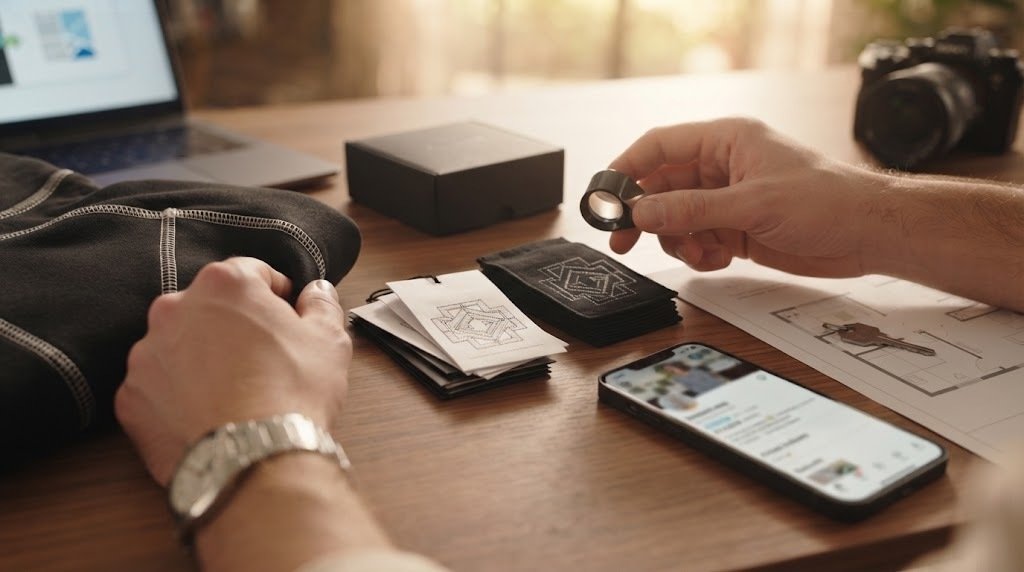
Before purchasing an expensive streetwear item, run through this checklist:
Seller
- Established seller history
- Genuine item-specific photographs
- Reasonable return policy
- Buyer-protected payment
Product
- Correct construction
- Appropriate material
- Accurate logo and graphics
- Consistent stitching
Labels
- Correct neck tag
- Correct care label
- Correct product information
- No suspicious spelling or formatting
Release
- Correct season or model
- Details match known examples
- Packaging makes sense for the release
Price
- Price is reasonably explained
- No unexplained extreme discount
- Seller is not creating artificial urgency
If several boxes remain unchecked, walk away.
Final Thoughts: Learn to Authenticate, Not Just Recognize Logos
Learning How to Spot Fake Streetwear is less about becoming an expert overnight and more about developing a repeatable process.
Start with the seller. Examine the item. Compare exact-release details. Inspect labels and construction. Check the price. Review the transaction method. For expensive purchases, consider professional authentication.
The biggest mistake beginners make is trying to find one definitive sign of authenticity. Counterfeiters change their methods, and genuine products can vary across seasons and factories.
Your strongest protection is therefore multiple pieces of evidence that agree with one another.
Streetwear is supposed to be fun. You should be able to hunt for rare pieces, discover older releases, and build a collection without turning every purchase into a gamble.
Take a few extra minutes before you pay. That small habit can save you from an expensive fake.
FAQ Section
How can I tell if streetwear is fake?
Check the seller, price, stitching, materials, logos, neck tags, care labels, packaging, and exact release details. Never rely on one feature alone.
Is a low price proof that streetwear is fake?
No. A low price can have legitimate explanations, including condition, sizing, urgency, or an older release. However, an unusually low price should trigger additional authentication checks.
Can QR codes prove streetwear is authentic?
No. QR codes and barcodes can be copied or reused. Treat them as one piece of evidence rather than definitive proof.
Are fake streetwear items always poorly made?
No. Modern counterfeit products can be surprisingly convincing. Construction quality, labels, packaging, and materials should be evaluated together.
Should I buy streetwear from an unknown seller?
You can, but the risk is higher. Research the seller, request item-specific photographs, use buyer-protected payment, and avoid transactions that pressure you to pay outside a protected platform.
When should I use a professional authentication service?
Consider professional authentication for expensive, rare, vintage, or difficult-to-verify pieces where the potential financial loss is substantially greater than the authentication cost.
Pingback: Why Limited-Edition Drops Sell Out in Minutes
Pingback: A Ma Maniere: Complete 2026 Fashion & Sneaker Guide