Brands
How Small Streetwear Brands Are Competing With Big Names

How Small Streetwear Brands Are Competing With Big Names is no longer a question of who has the biggest advertising budget. Independent labels are finding ways to compete through sharper identities, closer communities, limited releases, distinctive products, and faster reactions to culture.
The short answer: small streetwear brands compete by avoiding direct competition. Instead of trying to match a global label product for product, they build a smaller but more specific audience that cares deeply about the brand.
That shift matters because streetwear has never been only about clothing. Its history is tied to skateboarding, music, art, subcultures, local communities, and personal identity. Major brands such as Supreme, BAPE, Stüssy, Kith, and Palace have demonstrated how cultural relevance can become a powerful business advantage. Current 2026 coverage also shows how established labels continue to rely on collaborations, distinctive identities, limited products, and cultural credibility.
For a small label, the opportunity is to take those principles and make them more personal.

Why Small Streetwear Brands Can Compete With Major Labels
Large brands have obvious advantages: bigger budgets, established distribution, celebrity relationships, manufacturing capacity, and global recognition.
Small labels have a different advantage: speed and focus.
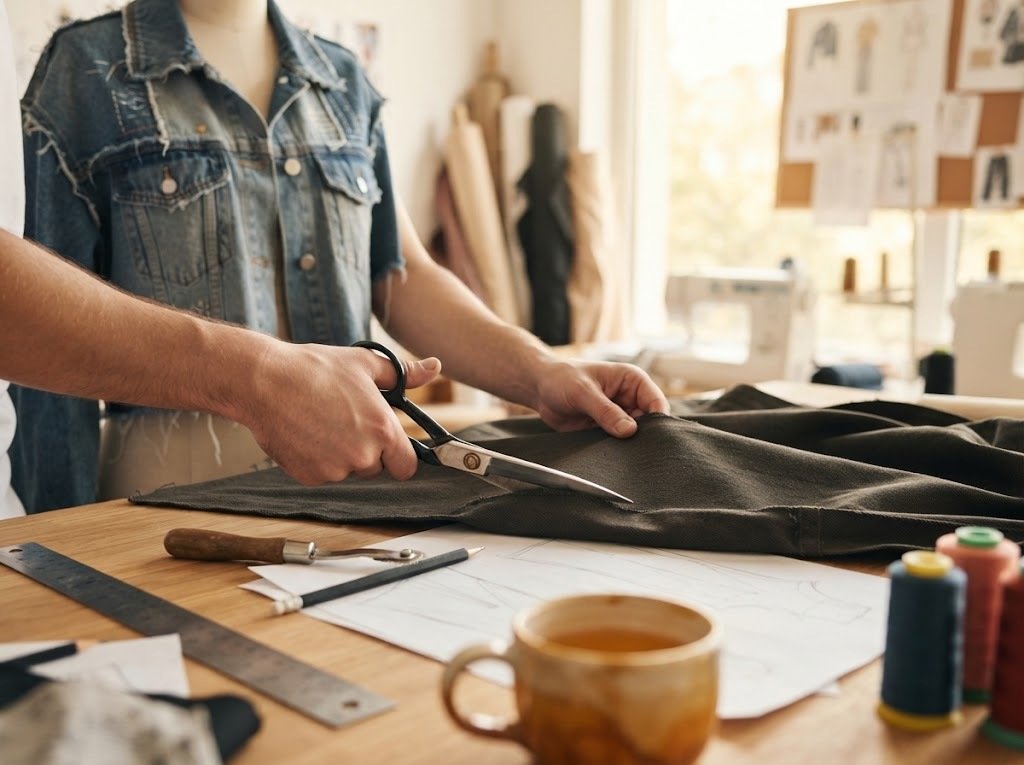
A major company may need months to approve a collection, coordinate multiple teams, and protect a global brand image. An independent designer can notice a cultural shift, develop a concept, produce a small batch, and communicate directly with customers much faster.
This is one reason the modern streetwear landscape continues to create room for newer labels. Highsnobiety’s 2026 coverage specifically notes that the market has expanded beyond traditional giants and that up-and-coming designers have opportunities to build viable businesses.
The competition is therefore not simply:
Small brand vs. big brand.
It is:
Specific identity vs. mass recognition.
A small company does not need millions of followers if a much smaller audience is unusually engaged.
Small brands can make decisions faster
Speed is valuable in streetwear because trends move quickly.
An independent label can:
- Test a new graphic without producing thousands of units
- Change its content strategy quickly
- Respond to customer feedback
- Experiment with new fabrics or silhouettes
- Launch limited products
- Collaborate with local artists
- Adjust pricing based on actual demand
That flexibility becomes a competitive advantage when it is combined with good product judgment.
How Small Streetwear Brands Build a Stronger Identity
One of the biggest mistakes new labels make is trying to look like every other successful streetwear company.
A black hoodie, oversized graphic, random typography, and a complicated website do not automatically create a recognizable brand.
The real question is:
What should customers associate with your brand that they cannot easily get somewhere else?
The Reddit streetwear startup discussion highlights this problem clearly. Contributors criticized generic graphic tees and argued that stronger brands tend to have a distinct story, voice, manufacturing approach, or creative direction.
1. They choose a specific niche
Instead of targeting “everyone who likes streetwear,” a smaller brand can focus on a defined community.
For example:
- Skate-inspired workwear
- Japanese-influenced denim
- Motorcycle culture
- Minimalist urban clothing
- Music-inspired apparel
- Outdoor streetwear
- Vintage sports aesthetics
- Local city culture
- Experimental cut-and-sew pieces
The narrower starting point can actually make marketing easier.
A customer who feels that a brand was created specifically for their interests is more likely to remember it.
2. They turn the founder story into part of the brand
People often want to know who is behind an independent label.
The founder’s design process, failures, inspirations, sampling process, and production decisions can become useful content.
That does not mean posting “support my small business” every day.
It means showing the work behind the product.
For example, instead of simply posting a photograph of a hoodie, a brand could show:
- The original sketch
- Fabric selection
- First sample
- Fit problems
- Revised sample
- Final product
- Customer reactions
The product becomes a story rather than another item in an online catalog.
How Small Streetwear Brands Use Limited Drops
Limited releases are one of the strongest tools available to smaller labels, but scarcity only works when the underlying product is desirable.
Major streetwear companies helped popularize the drop model, where products are released at specific times and quantities. GQ’s analysis of major streetwear brands points to seasonal drops, collaborations, and high resale demand as important characteristics of modern streetwear culture.
A smaller brand can use the same concept without pretending to have massive demand.
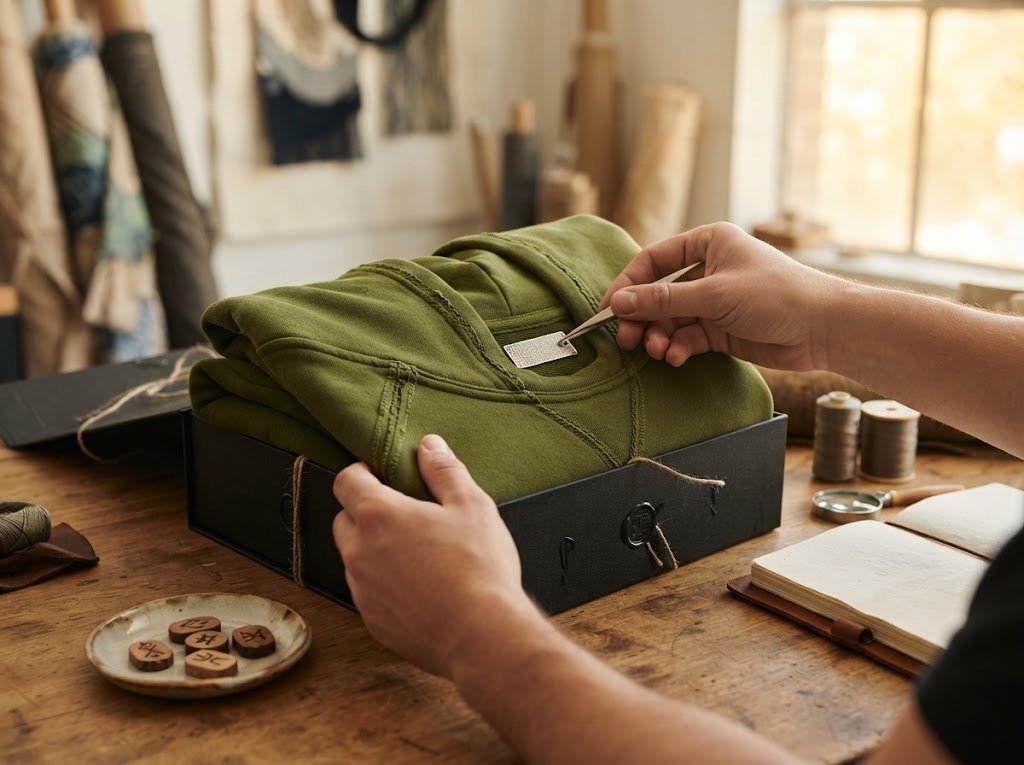
Small-batch production reduces risk
Instead of manufacturing 1,000 units before knowing whether customers want them, a small brand can test a limited collection.
A practical example is a three-product launch:
- One heavyweight T-shirt
- One hoodie
- One accessory
Rather than introducing 15 designs at once, the brand measures which product receives the strongest response.
This creates a useful feedback loop:
Concept → small batch → customer response → improvement → next drop
That is one of the most practical ways an independent label can compete with larger companies.
Scarcity should be honest
There is an important difference between genuine scarcity and fake urgency.
If a brand says “only 50 made,” it should actually produce only 50.
Trust is more valuable than a short-term sales spike.
Why Community Is More Important Than Follower Count
A major brand might have millions of followers.
A small label does not need to beat that number.
It needs to create a community where customers actively participate.
This can happen through:
- TikTok
- Discord
- Email newsletters
- Local events
- Pop-ups
- Skate sessions
- Artist collaborations
- Customer photography
- Behind-the-scenes content
The best independent brands often behave more like communities than traditional clothing companies.
This principle also appears in startup-focused streetwear discussions. The Streetwear Startup community emphasizes the importance of learning, networking, branding, production, and relationships between creators and industry professionals.
Engagement beats empty reach
Imagine two brands.
Brand A: 100,000 followers and almost no meaningful comments.
Brand B: 8,000 followers with customers discussing releases, sharing outfits, attending events, and waiting for the next drop.
Brand B may have the stronger foundation.
This is an important competitive advantage because community creates repeat customers without requiring every sale to begin with paid advertising.
How Social Media Helps Small Streetwear Brands Compete
Social platforms have dramatically lowered the cost of showing a product to potential customers.
But simply posting product photos is not enough.
Small brands can use several content categories.
Product content
Show:
- Fit
- Fabric
- Construction
- Details
- Measurements
- Styling ideas
Process content
Show:
- Sketches
- Sampling
- Printing
- Embroidery
- Packaging
- Quality control
Cultural content
Talk about:
- Music
- Sneakers
- Art
- Skateboarding
- Design
- Local scenes
- Fashion history
Community content
Feature:
- Customers
- Collaborators
- Local creatives
- Photographers
- Musicians
- Artists
This makes the brand’s social account useful even when the audience is not ready to purchase.
If a brand uses paid influencers or receives other promotional relationships, U.S. advertising rules also matter. The FTC says material connections between influencers and brands should be clearly disclosed, including relationships involving payment or free or discounted products.
Collaborations Give Small Brands Access to New Audiences
A collaboration does not have to mean partnering with a famous celebrity.
For a small brand, a better first collaboration might involve:
- A local tattoo artist
- Independent musician
- Photographer
- Skateboarder
- Illustrator
- Vintage store
- Coffee shop
- Record store
- Another complementary clothing label
The advantage is audience overlap.
Suppose a small streetwear label has 4,000 followers and a local artist has 3,000 engaged followers. A well-matched collaboration can expose both audiences to something new.
The key is relevance.
A random collaboration may create attention for a week. A culturally connected collaboration can strengthen the identity of both brands.
Major streetwear companies have used collaborations as a long-term cultural strategy, but smaller labels can apply the same principle at a local and more authentic level. Current brand coverage from GQ and Highsnobiety continues to highlight collaborations as a defining part of streetwear’s evolution.
Product Quality Can Be a Small Brand’s Secret Weapon
Branding gets attention.
Quality creates repeat customers.
A small company should use its limited scale to obsess over details that become difficult for mass-market businesses to personalize.
That could include:
- Better fabric weight
- Better stitching
- Distinctive hardware
- Custom labels
- Improved fit
- Better washing techniques
- Unique packaging
- Small production runs
- More careful quality control
The goal is not necessarily to make the most expensive garment.
It is to make the product feel intentional.
Startland News’ reporting on streetwear founders emphasizes that understanding production is one of the major hurdles for new apparel businesses, while experienced founders also stress starting small and building demand before scaling.
That is an important lesson: production is part of the brand, not merely an operation behind it.
Smart Pricing Helps Independent Brands Survive
Small brands should not automatically try to be cheap.
Competing on price with a major company can be dangerous because large businesses usually have advantages in purchasing, distribution, and production volume.
Instead, pricing should reflect:
- Product quality
- Manufacturing cost
- Packaging
- Shipping
- Marketing
- Returns
- Platform fees
- Desired margin
- Customer expectations
A premium price can work when customers understand why the product costs more.
A $120 hoodie needs a stronger explanation than “premium quality.”
Show the fabric. Explain the fit. Demonstrate construction. Explain the design process.
When customers understand the value, price becomes easier to evaluate.
Intellectual Property Is an Overlooked Competitive Advantage
Small brands sometimes try to gain attention by borrowing recognizable logos, characters, artwork, or names.
That can create serious problems later.
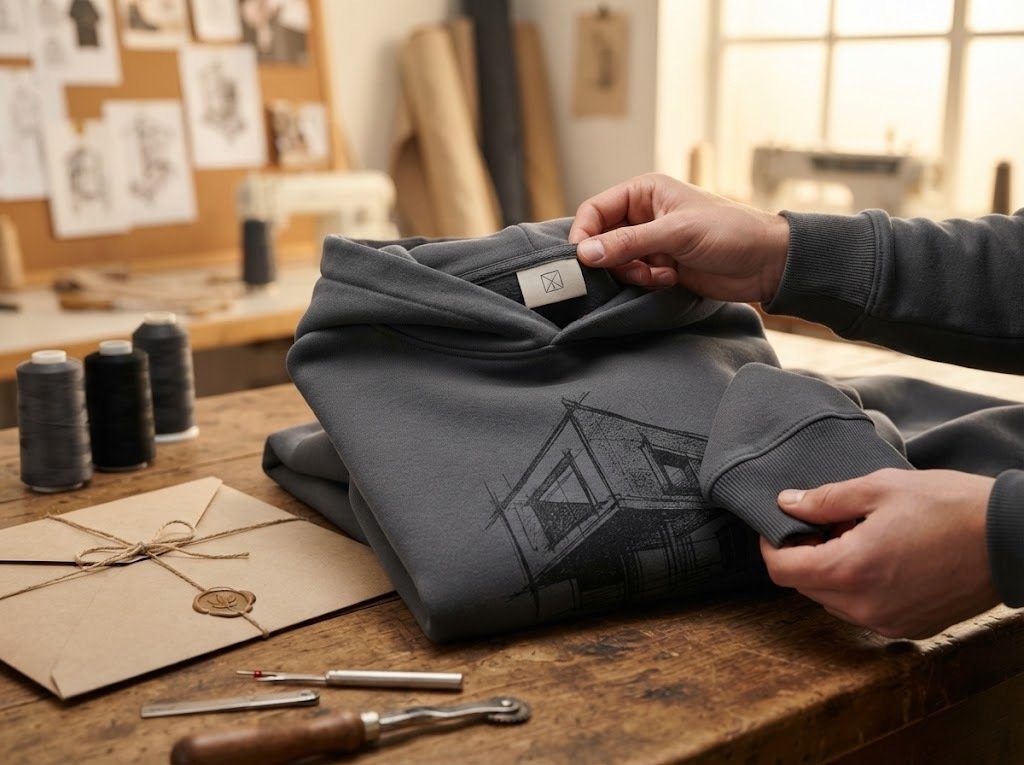
The USPTO explains that trademarks can include words, phrases, symbols, designs, or combinations that identify and distinguish goods or services. It also recommends understanding trademark searching and registration before building a business around a brand identity.
A smarter approach is to build original intellectual property from the beginning.
Before investing heavily in:
- Brand names
- Logos
- Packaging
- Labels
- Domains
- Marketing materials
research whether similar trademarks already exist.
This is one area where originality is not simply a creative advantage. It can also become a business asset.
What Small Streetwear Brands Should Not Copy From Big Brands
Competing with major labels does not mean copying their playbook completely.
Avoid these mistakes:
Don’t launch too many products
More products do not automatically mean more sales.
A focused collection is easier to market and easier for customers to understand.
Don’t manufacture huge quantities too early
Inventory can consume cash quickly.
Test demand before scaling.
Don’t chase every trend
If your brand changes personality every month, customers will struggle to understand what it represents.
Don’t depend entirely on influencers
An influencer can create awareness, but a brand needs its own audience.
Don’t confuse hype with loyalty
A viral post can generate traffic.
A strong product and community generate repeat customers.
A Practical Competitive Framework for 2026
A useful way to evaluate a small streetwear brand is to score five areas from 1 to 10:
| Area | Question |
|---|---|
| Identity | Can someone describe your brand in one sentence? |
| Product | Is there a reason to choose your product over a generic alternative? |
| Community | Do customers actively interact with the brand? |
| Content | Does your content provide value beyond selling clothes? |
| Retention | Do buyers have a reason to return for another drop? |
If a brand scores poorly in all five areas, spending more on advertising will probably not solve the fundamental problem.
If it scores strongly in identity, product, and community, marketing can amplify what already works.
That is the central competitive lesson:
Small streetwear brands do not need to become bigger than major brands. They need to become more meaningful to the right customers.
What Is the Future of Small Streetwear Brands?
The future is likely to favor brands that combine strong creative direction with disciplined business practices.
Streetwear itself has become deeply integrated with mainstream fashion. GQ describes the category as increasingly difficult to define, while current British GQ and Highsnobiety coverage shows how established labels, luxury companies, independent designers, and cultural brands now operate within an increasingly blurred fashion landscape.
That creates both opportunity and competition.
The small brands most likely to stand out will be those that:
- Know exactly who they are.
- Create products with a clear reason to exist.
- Start with manageable quantities.
- Build direct relationships with customers.
- Use social media as storytelling rather than constant advertising.
- Collaborate with culturally relevant people.
- Protect their original brand assets.
- Improve based on customer feedback.
- Prioritize quality and consistency.
- Scale only after demand proves itself.
Conclusion
Small streetwear brands can absolutely compete with major names, but the winning strategy is rarely to imitate them.
Large brands have scale. Independent labels can have specificity.
They can move faster, experiment more freely, communicate directly with customers, create smaller collections, collaborate locally, and build communities around a shared identity.
The most important shift is to stop asking, “How can my brand become as big as Supreme, BAPE, or Kith?”
Instead ask:
“What can my brand do exceptionally well for a specific group of people?”
That question leads to better products, better storytelling, stronger communities, and ultimately a more defensible business.
For small streetwear brands in 2026, competing successfully is less about having the biggest audience and more about becoming impossible for the right audience to ignore.
FAQ Section
Can small streetwear brands compete with major brands?
Yes. Small streetwear brands can compete by focusing on a specific niche, building strong communities, producing distinctive products, and moving faster than larger companies.
How do small streetwear brands build a loyal following?
They build loyalty through consistent brand identity, direct customer interaction, behind-the-scenes content, limited releases, collaborations, events, and products that reflect the interests of a specific community.
Should a small streetwear brand use limited drops?
Limited drops can be effective when scarcity is genuine and the product is desirable. Small batches can also reduce inventory risk and help a brand test customer demand before increasing production.
Is social media important for small streetwear brands?
Yes. Social media gives independent brands a relatively low-cost way to showcase products, tell their stories, communicate with customers, collaborate with creators, and build communities.
Do small streetwear brands need influencers?
No. Influencers can increase awareness, but they are not essential. Small brands can also grow through customer-generated content, organic social media, local collaborations, events, email marketing, and word of mouth.
What is the biggest advantage of a small streetwear brand?
The biggest advantage is flexibility. A small brand can usually experiment with designs, respond to customers, test products, and change its marketing strategy faster than a large organization.
Pingback: Why Japanese Streetwear Brands Are Gaining Global Popularity