
Brands
Bratz: Fashion Dolls That Redefined Pop Culture

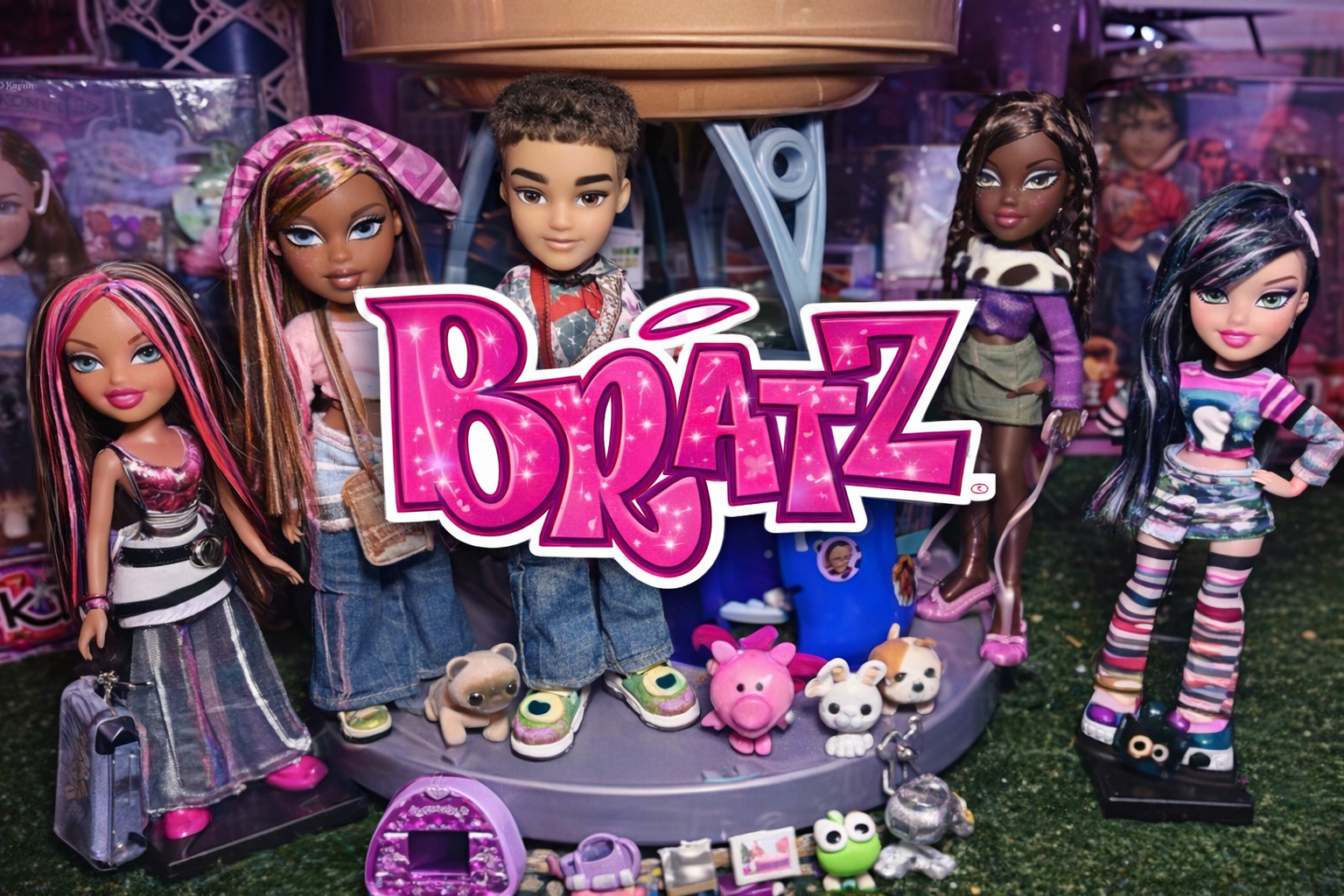
Beginning in the conventional arenas of dolls, as identified within the fashion icon theme as Barbie, with Bratz coming along in the year 2001, being starkly different, bold, daring, as attested to by the style and fashion that spoke volumes and reached the hearts of tweens throughout the world, thereby bringing to life something new and unprecedented within the arena of fashion icons as created by MGA Entertainment, as they are known as a toy manufacturer.
The appearance of Bratz dolls was timely when children’s toys were ready for evolution. However, instead of having the normal proportion and look, Bratz dolls were extreme and featured urban fashion designs that were appropriate for the times.
Origins of Bratz
Bratz dolls are believed to have originated in the early 2000s. Carter Bryant, who previously worked for Mattel as a designer, came up with the idea, which was later taken up by MGA Entertainment, who put forward the concept. The dolls, while being vastly different from conventional fashion dolls, featured distinctive features such as large almond eyes, well-defined glossy lips, slim appearances, and clothing reflecting trends from the real world.
In June 2001, the first four Bratz doll characters, Yasmin, Cloe, Sasha, and Jade, were officially launched in the USA by MGA. These characters had diverse cultural backgrounds and styles. This was what immediately set these characters apart from all the other dolls.
Bratz dolls had been conceptualized around self-expression and fashion passion, as opposed to princess and career storylines. In fact, the tagline for Bratz Dolls read “The Girls with a Passion for Fashion!” – which summed up the brand’s aspiration to encourage self-expression in children through play.
The Bratz Design Revolution
Bratz dolls were not like any other dolls, especially regarding their enlarged features, which are not considered normal in dolls. Bratz dolls are known for their large head features along with facial features, yet accompanied by dramatic makeup ideas, such as those used in music culture and other magazines. They are also noted for their trendy wear, not necessarily being traditional classics.
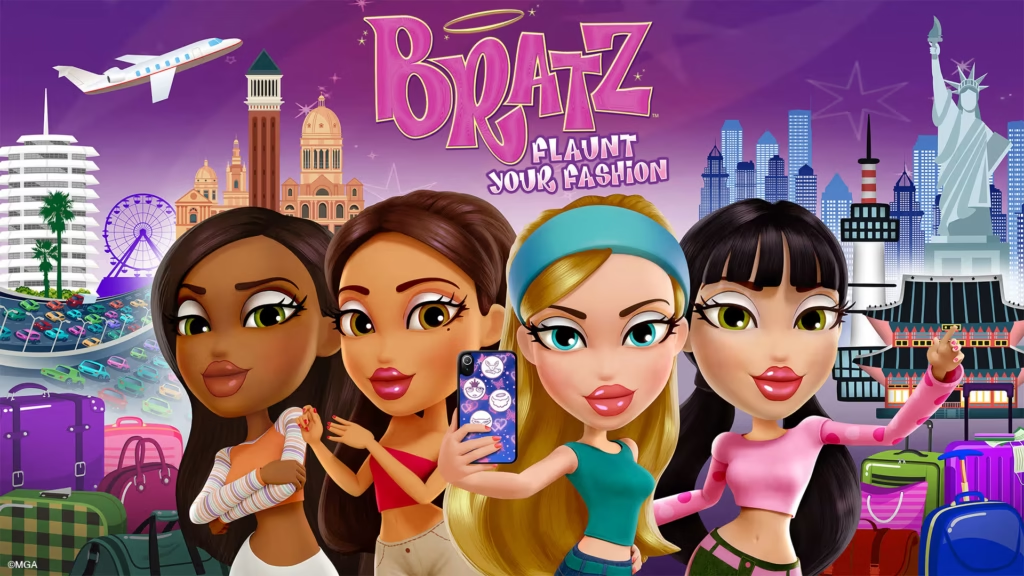
Diversity was also incorporated in the brand as the original characters were of different ethnicity and beauty type. This, to a great extent, can be seen as bold in embracing the standards of the fashion industry, which had come under a lot of criticism for beauty standards. This concept can actually be seen as highly effective in catering to a vast number of audiences around the world. Also, the style and accessorizing were an integral part of the Bratz dolls as each doll had multiple change of pace clothes, snap-on feet, and accessories. In addition to that, the Bratz doll style also embodied the concepts of hip hop, pop, and club culture.
Early Success and Market Impact
Although Bratz didn’t seem to have an immediate success, as they failed to outsell the competition during the first year of release, much of it was because of the name associated with Barbie. Yet, during the subsequent years after the first Christmas season after the release of Bratz, these dolls really took off. In 2006, the sales of Bratz merchandise around the world summed up to an astounding $2.5 billion.
By the year 2006, Bratz had managed a market share of around 40 percent within the overall market of fashion dolls and could be termed a huge success story, putting pressure on several other traditional or conventional forms of toys. The marketability of the Bratz doll was not just a matter of sales, but a major paradigm shift in the marketing of the doll and the overall understanding of the concept of the doll. Many other forms of fashion dolls offered the marketing and play opportunity of a chosen career or a more traditional form of play; the Bratz doll was the first of its kind, addressing the “tween” category.
Characters and Personalities
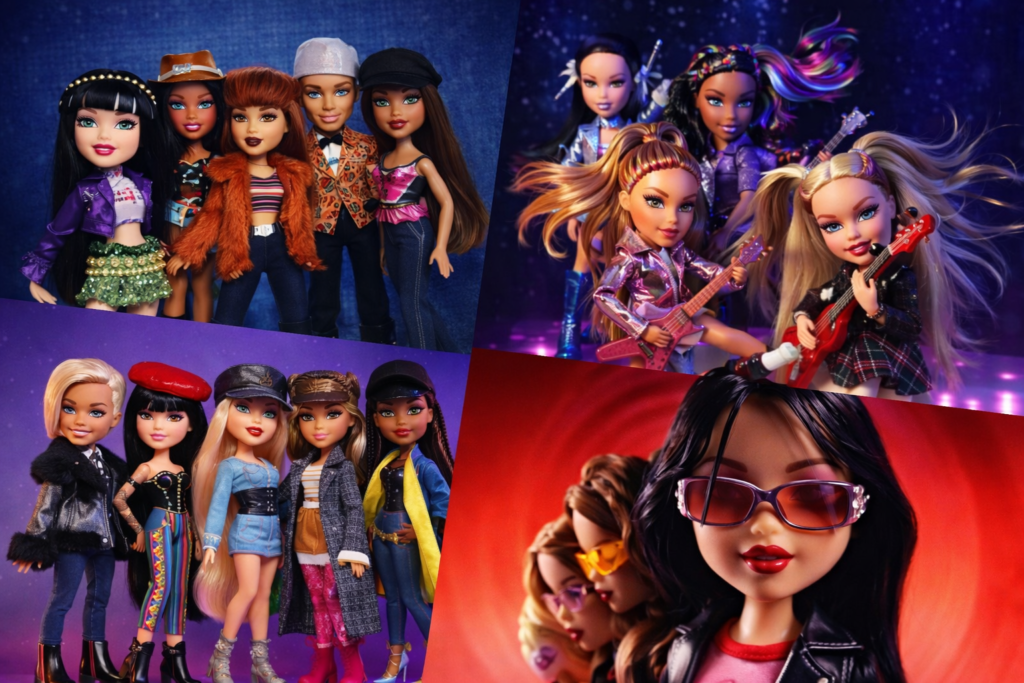
The original Bratz dolls became instantly recognizable. Yasmin was portrayed as the “Pretty Princess,” Cloe as “Angel,” Sasha as “Bunny Boo,” and Jade as “Kool Kat.” All these unique traits given to each of the dolls made the narrative quite rich, as each doll took on the role of a unique avatar for self expression. These characters also represented the diversity of the early 2000s in terms of fashion as well as youth culture, encouraging a more diverse view of beauty that went beyond conventional norms. This narrative of breaking the conventional mold in terms of shapes as well as colors solidified Bratz as more than just toys but as cultural icons of their era.
Spin‑Offs, Legal Battles, and Media Expansion
As the success of the initial series of Bratz dolls like Yasmin, Cloe, Jade, Sasha, and later Meygan reached its peak worldwide, many other series and spin-offs of the Bratz dolls were released. MGA Entertainment made the most of the popularity of the Bratz Dolls, with many other successful series such as the Bratz Kidz, Bratz Boyz, Bratz Babyz, and later even other series such as Bratzillaz. These series had new versions of the original Bratz Dolls.
Bratz Boyz was the first spin off brand to be launched, followed later by Bratz Babyz, in 2002. Bratz Boyz was essentially a spin off of the iconic Bratz brand, with characters made into babies, with clothing and play sets centered around ideas. The brand was successful enough to have video games and films made based on the original toy play sets, with the central theme of storytelling.
By the mid-2000s, Bratz were available in media forms other than just the physical toys themselves. MGA Entertainment produced theatrical and direct-to-video movies using Bratz characters in their narrative adventures, mixing fashion, friendship, and action. Such films, like Bratz: Rock Angelz, were very closely related to themed doll sets and accessories, reinforcing this brand’s focus on storytelling through fashion and identity. The video games Bratz: Rock Angelz and Bratz: Super Babyz further extended this brand into interactive entertainment, where fans could play with recognizable Bratz personalities in virtual worlds on consoles and computers.
Amid this rapid growth, Bratz’s success sparked one of the most significant legal disputes in modern toy history. In 2004 MGA Entertainment sued Mattel, which led to a massive countersuit from the maker of Barbie, claiming that the creator of Bratz, designer Carter Bryant, developed the concept while he was still employed by Mattel. Mattel contended that Bryant’s employment agreement assigned any designs created during his tenure to them and, as such, the Bratz concept and design should be owned by Mattel.A federal jury initially ruled in favor of Mattel in 2008, awarding the company damages and a broad injunction that could have transferred control of the entire Bratz trademark portfolio to Mattel.
The choice made in 2008 had emerged as a significant shocker in the legal world. MGA Entertainment had been ordered by the judge to cease production of their toys and was later awarded a permanent injunction to remove all their Bratz toys from the shelves. This includes all associated products such as Boyz, Kidz, Babyz, etc. Mention had been made of sketches of designs for the Bratz toys that had been created in the early days of Bryant’s involvement with Mattel, on which the jury had decided in favor of Mattel.
However, the legal case did not draw to a close. Since MGA contested the ruling in opposition, the injunction stayed. So, Bratz products continued being sold. In a subsequent claim in the long-running legal dispute between these two companies, MGA counter-claimed Mattel for legal wrongs, including unfair competition. In 2011, the judgment by a U.S. jury in favor of MGA for certain claims relating to trade secrets, as well as copyrights to the products, restored MGA’s legal rights to the Bratz brand.
This legal battle between Bratz and Mattel is commonly referred to as a hallmark or remembered moment in the history of the toy industry, where intellectual property or artistic rights can define not only a given brand but the whole global toy industry. The two companies’ legal battles notwithstanding, MGA retained control over the Bratz brand.
Although the heydays for Bratz were the 2000s as far as expansion and controversy go, under MGA there have been new innovations in the brand too. So, for example, in 2012, MGA was able to produce Bratzillaz, a supernatural or mystical theme featuring the witch cousins of the original Bratz characters with their own histories and styles. Even though it was short-lived and eventually stopped in 2013, this too has been part of the broader strategy for the brand as far as variety is concerned in terms of theme or play sets that Bratz offers.
Bratz also extended to print and global publications. Production of Bratz magazines began during the early 2000s, ranging from Brazil to the United Kingdom, delivering readers fashion updates, comics, and other interactive materials featuring their loved dolls and their fashion world. Such publications further reinforced the Bratz brand less as a toy but as a fashion forward world of possibilities.
Despite these minor stopovers and relabeling in the 2010s, including the full range relaunch in the region around 2015 and mini collector relaunches thereafter, Bratz continued to grow and adapt into the 2020s. In 2021, Bratz effectively turned 20 years old and celebrated by methodically reproducing special editions and fashions that captured that nostalgia while appealing to new grown-up fans who remembered the original line. By 2024, Bratz appears to remain strongly focused on high-end fashion collaborations, in-store expansions, and celebrity ties; thus, it illustrates the way the character adapts and evolves to new eras.
Design Evolution, Cultural Influence, and Modern Legacy
As Bratz grew past its initial release and subsequent legal battles, the design idea behind the brand continued to change and respond to both consumer feedback and cultural trends. From their initial release, the dolls have been known for their fashion, diversity, and unique looks. With oversized almond-like eyes, pouty lips, and edgy fashion, Bratz dolls have a very unique urban street fashion look and attitude that is rare for the early 2000s.
Since its creation, Bratz has grown to offer limited collections beyond the basic doll form as highly collectible editions, which were packaged nicely. These special editions were aimed—in terms of packaging and artistic style—at making them more appealing and giving them the status of highly valuable items to certain collectors.
However, Bratz remained culturally significant because of the boldness of their fashion. The company promoted diversity, whether ethnic or fashion-based, and celebrated all sorts of styles and personalities, which appealed to young tweens and later to adults who appreciated a more diverse representation of beauty and personality within a doll.
Fans also praised the line for its promotion of individuality and fearlessness in fashion. However, the brand also became the topic of much cultural discourse and controversy. While some had pointed to the inappropriateness of the clothing being represented by the Bratz dolls to youthful children, the American Psychological Association had also pointed to the topic of the sexualization of child-oriented toys.
The Bratz doll line, despite early backlash, is now considered ahead of its time by many onlookers who feel it pushed boundaries in mainstream toys before widespread diversity was common. The aesthetic of Bratz-cum-exaggerated-proportions and real‑world influences from urban fashion, music, and youth subcultures-is now celebrated as a big influencer in the trends of fashion dolls and beyond.
Bratz’ resurgence in culture was ignited at the tail end of the 2010s and the early 2020s, powered by nostalgia for Y2K aesthetics. Social media platforms like TikTok and Instagram have become key drivers in this resurgence; viral trends include the #BratzChallenge, which calls on users to emulate the dolls’ ubiquitous bold makeup and fashion styles. This has reexposed Bratz to a new generation of people while comically showing how influential the aesthetic is within fashion and beauty culture.
Bratz’s visual influence has also extended to fashion trends and runway shows, as well as online culture, and elements of its visual style, such as large platform shoes, low-rise jeans, and bold accessories, have echoed in recent fashion trends.
Collaboration developed into another major component of the Bratz brand’s evolving ideology. In this context, the brand collaborated with major icons of contemporary culture, including Kylie Jenner. A range of mini collectibles and fashion dolls bearing her name featured the brand’s signature style paired with the real-life pop culture icon. In these limited-edition offerings, there is the connection between the original ideology of the Bratz brand and contemporary culture.
In 2024-2025, Bratz continues to champion the concept of ‘crossovers’ in media as well as embrace pop culture elements within their collaborations, as seen within their ‘Bratz x Mean Girls’ and ‘Bratz x Wicked’-themed doll sets. These sets firmly re-entrench the brand within the nexus of fashion, pop culture, and toys.
Additionally, social media campaigns have introduced Bratz to new cultural conversations, with branded content even featuring the dolls in adult pop culture contexts, such as horror genres, which was not something they were usually known for, particularly for Gen Z and millennial audiences instead of children.
Even commercial associations with other companies, as seen with Bratz, underscore the cultural impact of the brand. Indeed, individuals have designed dolls resembling musicians and contemporary celebrities as a form of artistic representation, demonstrating how Bratz fashion extends beyond its toy roots.
Though there has been, over time, some variation in terms of product quality and fan acceptance, many nostalgic fans hold on to the originals of Y2K Bratz for their cultural significance, as well as their impact on creativity and self-expression in fashion. This attachment shows that Bratz dolls are not simply toys, but rather icons of creativity in terms of style among “tweens.”
The metamorphosis of the Bratz doll from a divisive children’s toy to a cultural icon points to the toy’s evolutionary capabilities and adaptability to changing trends and involvement with a newer generation of fans, from its status as a fashion-forward children’s toy to a symbol of pop culture and fashion, diversity, and youthfulness until 2026.
Modern Expansion, Cultural Role, and Future Directions
Bratz has continued to reinvent itself as a fashion driven cultural brand alongside its core identity as a toy line in the 2020s. After the nostalgic inspired resurgence in the early part of the decade, MGA Entertainment has expanded its approach beyond the traditional doll racks to include collector’s editions, collaborations with celebrities, limited releases, and other forms of multimedia engagement. This contemporary era of Bratz welcomes old and new followers as consumers find the franchise through its focus on fashion, films, and other content on social media sites.
Bratz’s modern approach to brand building is all about cultural relevance and storytelling. To that end, the company has made several big name partnerships within the world of IP, including Mean Girls, as it has teamed up with Paramount Consumer Products to produce collector edition versions of movie legends and other beloved characters appearing in Bratz style.
In the year 2025, the doll line developed a limited edition, Bratz x Clueless series in honor of the 30th anniversary of the cult classic film, Clueless. They included, for instance, the characters Cher Horowitz, Amber, and Dionne in authentic recreations of iconic outfits from the film, asserting the Bratz fashion story further.
Over the years, partnering with style and beauty icons has sustained the brand’s strategy for celebrity partnerships. For example, a partnership with Kylie Jenner inspired the launch of several Bratz x Kylie Fashion Dolls, which combined the real-life style of the beauty icon with the edginess of the Bratz brand. This was the very first full-scale, celebrity-based fashion launch for the brand, supported by pop-up shops like the Bratz Lookbook experience.
Bratz has also encouraged and celebrated social and cultural expression through fashion and community-based collaborations. The breakthrough collaboration Bratz Pride X Jimmy Paul was released, and on this platform, fans had their first view of the same sex-couple in Bratz fashion dolls, called Roxxi and Nevra, all designed by the renowned LGBTQ+ designer Jimmy Paul. Similarly, there was an adult fashion capsule collection and a collectible two-pack released for Pride Month.
This too includes the age of digital culture and integrating social media. MGA creates content that introduces the Bratz brand to the larger culture, such as content on TikTok, where animated dolls perform scenes from licensed collaborations like Mean Girls and horror movies. This enables the brand to engage the adult audience, now Gen Z and millennial adults, who engage with both nostalgia and current trends, showing that Bratz’s appeal extends beyond children’s playrooms.
Furthermore, the retail coverage of the product is promising within several global markets. Bratz dolls are available across several major retail outlets, including Target, Walmart, Macy’s, Amazon, and others that offer exclusive ranges of the product or dolls such as Cloe, Yasmin, Jade, Sasha, and friends Felicia, among others.
The personality of Bratz Brand & Company has additionally been defined via the improvement of engagement with the media. Official announcements regarding the development of a live action motion picture by Amazon MGM Studios with Kim Kardashian confirmed to produce and in talks to play the role of the villain suggests the brand’s visibility in the media.
Fashion and beauty culture continue to intertwine with Bratz’s image. Trend pieces inspired by the dolls’ bold makeup aesthetic, with dramatic eyes and glossy finishes, have surfaced as the “Bratzification” aesthetic, embraced by celebrities and makeup artists alike. These trends reflect how Bratz’s stylistic cues influence real‑world beauty norms and how doll design can shape fashion dialogue across generations.
One of the essential aspects of the current day Bratz fanbase is the engagement factor. For fans online, they’re talking about everything from returning side characters fans might see in the next release to leaks and prototypes of upcoming dolls. This shows the type of strong fanbase that is involved in the toy and collectible culture.
If we look into the future up to 2026 and then onwards, there have been talks and speculations from fans on sites such as Reddit and other online forums that the franchise may endure through the 2030s if MGA is able to continue innovating through thematic revivals, as well as other methods. There is a widespread speculation that the use of transmedia storytelling can secure the status of the Bratz dolls as nostalgic and cultural icons.
Bratz’s current path indicates a combination of heritage, cultural significance, and forward-thinking strategy. Bratz’s ability to blur fashion, entertainment, social media, and collector culture implies that the fashion toy will have significant facets in the world of fashion toys in the future.
Bratz’s Cultural Impact, Challenges, and Legacy
Bratz has evolved to mean much more than a toy. In the almost three-decade history since the turn of the century, Bratz have made an indelible mark in different areas of life, including fashion, entertainment, and culture. From their early 2000s version to their refined version in the 2020s, Bratz dolls have indeed evolved to be the product of trends.
The reason for this is:
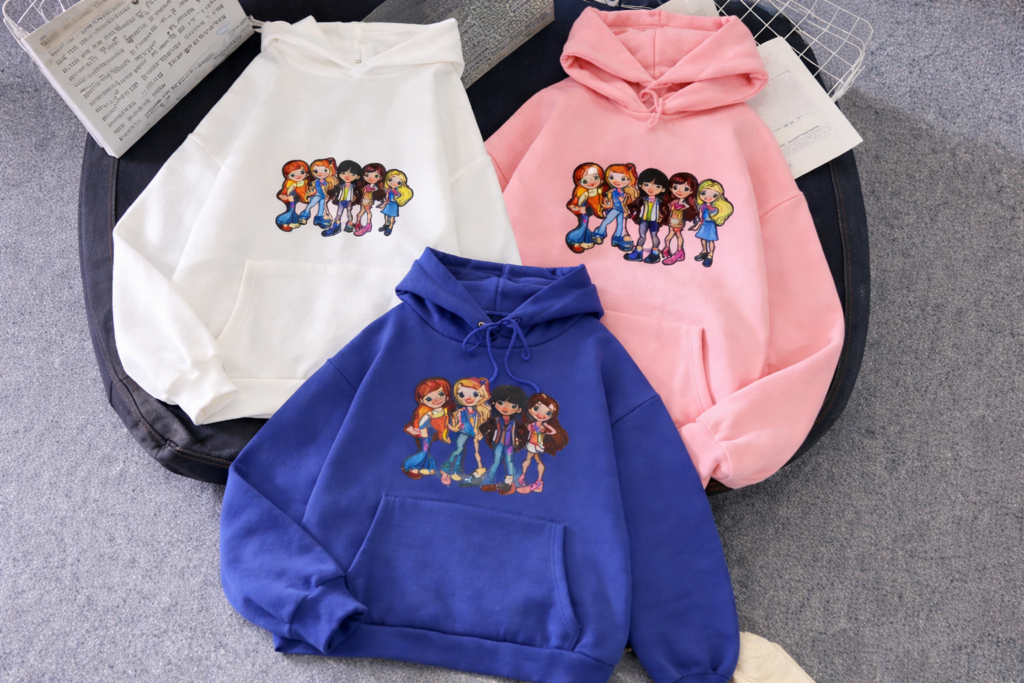
The reason why this has happened is simply this: campaigning for acceptance, these dolls introduced a new trend of doll representation, celebrating diversity of looks, ethnicity, and attitude. Unlike other dolls, such as the famous Barbie dolls, these celebrated street wear with iconic accessories like hoodies, mini skirts, chunky boots, and lip gloss.
Currently, the impacts of Bratz on culture can be observed only in the fashion and beauty sectors. Many fashion designers and stylists attribute the effect of the bold mix of colors, hyper-layering of clothing, and accessories used on the doll figures to be the inspiration for the “Bratzification” look. Many retail stores such as Target and Walmart have displays showing various fashion trends for the season and playsets that take inspiration from the Bratz look.
The brand has also had its own fair share of challenges and controversies with regard to its growth. Challenges, such as those faced with regard to the intellectual property rights from Mattel, occurred during the earlier days of the growth of MGA. Controversies, such as the negative reflection of the fashion forward concept on the beauty of young girls, have also been addressed in a positive manner during later days of the growth of a brand.
In addition, in the entertainment industry, Bratz has remained an eclectic platform. Indeed, the animated television shows, online content, and films provided the same stories as they focused on the themes of friendship, passion, and creativity. Evidently, these content avenues have remained instrumental in portraying the fashion and culture credentials of the doll, as well as creating new stories that promote self-expression and creativity. The collector’s version has remained an essential factor that boosts the doll’s value among adults.
Bratz has managed to really nail that cultural relevance down, especially with their use of collaborations within fashion. Collaborations, such as those done with celebrities and designers such as Kylie Jenner, Jimmy Paul, and those featuring films from Paramount depicting the evolution of Bratz from being a toy to becoming a fashion icon, sell out as part of very limited collector series editions, demonstrating Bratz streetwear, Bratz clothing, and Bratz hoodie style relevance. These collaborations have truly been what has helped Bratz achieve relevance as far as 2025 goes while becoming a multi-generational cultural icon.
Bratz, by way of its collector-based products, reflects how it has shifted gears from appealing to adults, as well as continuing to provide content for its loyal fans, while still appealing to new generations with interest in the brand. This reflects larger market trends with regard to high-end products in the toy industry. Therefore, MGA, with its collector-based product, aligns with its “Kidult” strategy.
Bratz’s influence on fashion, street style, style in dolls, as well as a ‘Kidult’ culture of collectors, is undeniable. Through its engagement of consumers with fashion-forward clothing, street style sneakers, and character-driven storytelling, Bratz opened doors to a whole new world of understanding of play, identity, and expression within the kids’ entertainment genre. The journey of Bratz, from its humble beginnings as a simple playset to its collaborations globally, speaks to its commitment to being relevant.
Viewed from a global perspective, it can be stated that the brand has successfully been able to maintain its presence in the North American, European, and Asian markets with global integrated content for the products and media. In this manner, diverse categories of audiences have been able to relate to the brand with the trends of these regional markets. Digital marketing, such as through Instagram, TikTok, and YouTube, ensures that the footprint of the brand increases and participation is facilitated through various challenges and competitions on platforms such as doll photography.
Looking to the future, Bratz is focused on high-fashion celebrity partnerships and theatrical productions of cinema featuring the fashionable element of the Bratz brand.MGA’s future strategy appears to be an integrated platform of toys, collectibles, digital media, and lifestyle brands. This means the brand of Bratz dolls has maintained a nostalgic touch while being at the cutting edge of new ideas at all times.
Conclusion
Bratz has changed dramatically since it entered the marketplace as a line of toys consisting of fashion driven dolls back in 2001. Today, “Bratz” has become synonymous with streetwear clothing, individuality, and interplay between cultures, as the brand includes toys, fashion, media, and entertainment, thanks to its collaboration with celebrities.Whether it is the original streetwear inspired hoodie or the 2025 collector edition, the brand has consistently managed to capture the imagination, particularly through its “Kidult” strategy across different geographies. Bratz is not just a doll or fashion product, but rather a cultural phenomenon in the world of streetwear. However, in 2026, Bratz dolls are not just another set of toys or dolls, but a multi layered icon which incorporates a combination of thoughts and concepts associated with play, fashion, and even society, which explains the influence a set of toys may have in shaping society, proving that dolls indeed act as a mirror to society, culture, and personality.
Frequently Asked Questions About Bratz
1. What are Bratz dolls?
Bratz are a line of fashion dolls created by MGA Entertainment, featuring bold streetwear inspired outfits, exaggerated facial features, and unique personalities. They combine play, fashion, and pop culture influences.
2. Who created Bratz?
Bratz was created by designer Carter Bryant and launched by MGA Entertainment in 2001. Bryant’s design focused on fashion forward dolls with an urban street style.
3. When was Bratz first released?
The first Bratz dolls were released in 2001. The original line included four characters: Cloe, Yasmin, Jade, and Sasha.
4. Why are Bratz dolls significant in fashion culture?
Bratz introduced a streetwear inspired style to dolls, emphasizing bold outfits, sneakers, hoodies, and accessories. They influenced youth fashion, makeup trends, and teen streetwear aesthetics.
5. What makes Bratz different from Barbie?
Unlike Barbie, Bratz focuses on urban fashion, diverse cultural representation, and bold personalities. The dolls feature oversized eyes, glossy lips, and a stronger emphasis on streetwear clothing.
6. What types of Bratz clothing are available?
Bratz clothing includes streetwear sets, hoodies, skirts, jackets, sneakers, and themed outfits reflecting pop culture, fashion trends, and seasonal collections.
7. How has Bratz evolved over time?
Bratz has expanded from traditional dolls to animated series, movies, collector editions, fashion collaborations, and digital experiences, maintaining relevance in 2025 and beyond.
8. What are Bratz collector editions?
Collector editions are limited release dolls with high fashion outfits, exclusive accessories, and premium packaging designed for adult collectors and fans of nostalgia based products.
9. Have Bratz dolls faced controversies?
Yes. Bratz faced legal disputes with Mattel over intellectual property. Critics also questioned the dolls’ beauty standards. MGA addressed these concerns by releasing diverse dolls with inclusive designs.
10. Which celebrities have collaborated with Bratz?
Bratz has collaborated with celebrities like Kylie Jenner, Jimmy Paul, and other fashion influencers for limited edition dolls and fashion inspired collections.
11. Where are Bratz dolls sold?
Bratz dolls are available worldwide through MGA Entertainment, authorized retailers like Target and Walmart, online platforms, and specialty toy stores.
12. What is Bratz’s cultural impact?
Bratz influenced streetwear fashion, teen makeup trends, and doll representation. They have inspired youth identity expression and adult collector culture globally.
13. What types of Bratz collections exist?
Collections include fashion themed sets, seasonal releases, special collaborations, movie and animated series editions, and limited collector dolls with premium outfits and accessories.
14. Are Bratz dolls still popular in 2025?
Yes. Bratz remains popular with children and adult collectors. Digital media, social campaigns, and fashion collaborations have helped the brand stay culturally relevant.
15. How does Bratz combine fashion and play?
Bratz blends fashion, culture, and storytelling by providing dolls with trend driven clothing, streetwear sneakers, and character narratives. This allows fans to engage creatively and explore personal style.
For collaborations, press, or inquiries, contact us at streeticonic1@gmail.com.

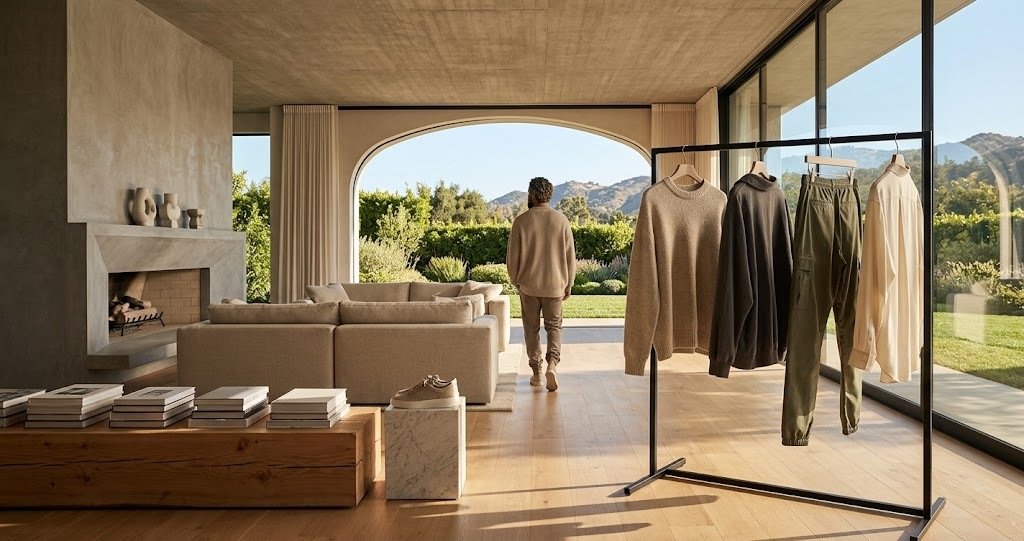
Inside Fear of God: How Jerry Lorenzo Changed Modern Fashion is a story about much more than hoodies, sneakers, and oversized silhouettes. Jerry Lorenzo transformed the way modern consumers think about the relationship between streetwear, luxury, sport, music, and everyday American clothing.
In simple terms, Lorenzo built Fear of God by taking familiar American wardrobe pieces and changing their proportions, materials, styling, and cultural meaning. His approach helped move relaxed clothing from the margins of fashion toward the center of contemporary menswear. GQ described this shift as part of a broader transformation in American luxury fashion, while Lorenzo himself has consistently emphasized comfort, practicality, and an unmistakably American point of view.
The interesting part is that Lorenzo did not begin as a traditional fashion insider. He studied business, worked around baseball and nightlife, and taught himself fashion while developing his label. That unconventional background became one of his greatest advantages.
This article examines how Jerry Lorenzo built Fear of God, why his design language became so influential, how major collaborations accelerated the brand, and why his influence continues into 2026.
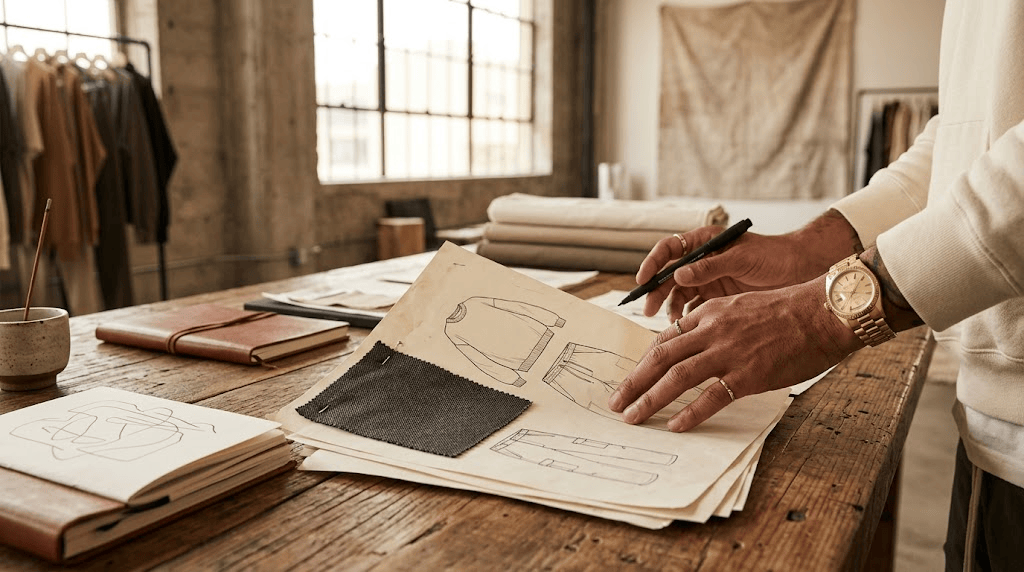
How Did Jerry Lorenzo Start Fear of God?
Fear of God was founded by Jerry Lorenzo in Los Angeles in 2013. Before fashion became his career, Lorenzo had already experienced several worlds that would later appear in his designs: professional baseball, American sports culture, nightlife, music, and Los Angeles street culture.
Lorenzo was born Jerry Lorenzo Manuel in Sacramento in 1977. His father, Jerry Manuel, was a former Major League Baseball player, coach, and manager. Because of his father’s career, Lorenzo spent much of his childhood moving between different places and environments.
That background matters because Fear of God was never built around one narrow subculture.
Lorenzo eventually earned an MBA and worked in the business side of sports before becoming involved in Los Angeles nightlife. He began promoting parties and developed relationships with musicians, entertainers, athletes, and young entrepreneurs.
The turning point came when Lorenzo noticed something practical: people around him were wearing brands and building businesses, yet he believed he could create clothing that better expressed his own point of view.
His early approach was remarkably direct. Instead of attempting to invent an entirely new category, he focused on improving garments he already wanted to wear.
That principle became central to Fear of God’s identity.
Why Is the Name Fear of God Important?
The name reflects Lorenzo’s religious upbringing and personal relationship with faith. GQ’s profile describes the Manuel household as deeply religious and notes that Lorenzo considers the name literal.
The meaning also creates an interesting contrast with the clothing itself.
Fear of God does not primarily communicate religion through conventional graphics or traditional religious fashion. Instead, the name sits beside baseball references, rock music, hip-hop, American sportswear, vintage clothing, and relaxed tailoring.
That tension helped make the brand distinctive.
How Did Fear of God Become a Streetwear Powerhouse?
One of the biggest early accelerators was Virgil Abloh.
Abloh became an early supporter of Lorenzo’s work and helped connect him with Kanye West. That relationship eventually led Lorenzo into work connected to the Yeezus tour, Yeezy, and other projects. GQ reports that Lorenzo worked as a design consultant with West for approximately three and a half years.
The exposure was enormous.
Fear of God’s early pieces began appearing on influential musicians and celebrities, while Lorenzo’s distinctive silhouettes spread through streetwear culture.
Some of the defining elements included:
- Extra-long T-shirts and tanks
- Oversized hoodies
- Layered proportions
- Distressed denim
- Extended bomber jackets
- Track pants
- Neutral and muted color palettes
- Luxury fabrics applied to familiar casual garments
The important distinction is that Lorenzo was not simply making oversized clothing.
He was changing the relationship between familiar garments.
A hoodie could become the foundation of a luxury outfit. A track pant could be styled with a sophisticated jacket. A simple T-shirt could gain importance through neckline, length, fabric, and proportion.
That combination helped Fear of God become recognizable without depending on loud branding.
GQ notes that Fear of God silhouettes were widely copied, including by major mass-market retailers.
What Did Kanye West and Virgil Abloh Contribute?
Kanye West gave Lorenzo access to an enormous cultural platform, while Virgil Abloh acted as an important early bridge between Lorenzo and the wider fashion and music ecosystem.
But reducing Fear of God’s success to celebrity endorsement misses the larger story.
Lorenzo was simultaneously developing a design language of his own.
This becomes particularly clear when looking at what happened after his work with West ended. Lorenzo continued developing Fear of God rather than allowing the brand to remain dependent on a celebrity association.
That independence became one of the most important chapters in the brand’s evolution.
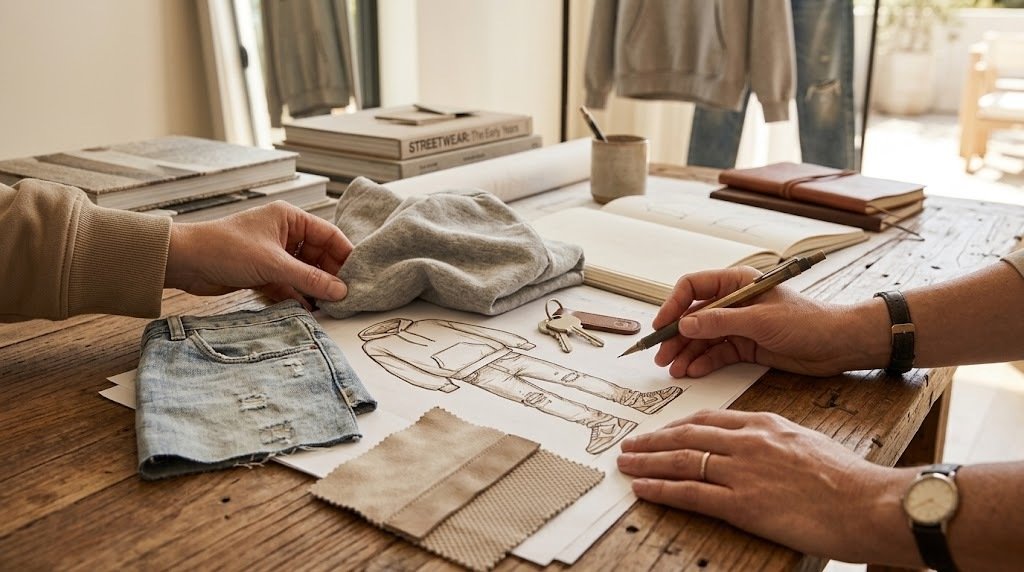
What Makes Jerry Lorenzo’s Design Philosophy Different?
Lorenzo’s design philosophy can be summarized in one idea: elevate the familiar.
He has explained that his influences are not limited to obscure fashion references. Instead, movies, music, sports, American retail, vintage clothing, and everyday products all contribute to his creative vocabulary.
This helps explain why Fear of God feels recognizable even when individual pieces are expensive.
Proportion Became a Signature
One of Lorenzo’s most important contributions was his treatment of proportion.
Instead of simply making clothes larger, he played with relationships between garments:
- A long shirt under a shorter jacket
- Oversized outerwear with narrower bottoms
- Extended hoodies with cropped layers
- Relaxed trousers paired with structured pieces
- Athletic garments mixed with tailoring
This created a visual language that many brands later adopted.
Comfort Became Part of Luxury
Traditional luxury fashion often associated sophistication with structured construction and formal clothing.
Lorenzo challenged that assumption.
His goal was to make elevated clothing feel as easy to wear as casual sportswear. This philosophy later became particularly important as Fear of God expanded into tailoring.
GQ reported that Lorenzo wanted to remove the intimidation traditionally associated with formal clothing while maintaining sophistication and comfort.
The result was not simply “luxury streetwear.”
It was a broader idea of comfortable American luxury.
American Culture Became the Design System
Baseball, hip-hop, grunge, suburban America, Hollywood, and California all appear within Fear of God’s visual world.
Lorenzo’s childhood exposure to baseball was especially significant. His father recalled that Jerry paid attention to uniforms, logos, and visual presentation rather than only the strategy of the sport.
That observation offers a useful way to understand his career.
Lorenzo often approaches clothing as a cultural system rather than as isolated garments.
How Did Fear of God Expand Beyond Streetwear?
Fear of God eventually began moving beyond its original streetwear reputation.
The shift became particularly visible with Seventh Collection, which introduced more tailoring, knitwear, denim, and formal elements. GQ reported that Lorenzo spent roughly two years developing the collection, despite the industry’s faster seasonal rhythm.
This was a significant strategic move.
Instead of abandoning his original design language, Lorenzo applied it to a wider wardrobe.
A Fear of God customer could now move between:
- Sweatshirts and hoodies
- Denim and casual trousers
- Knitwear
- Tailored jackets
- Loafers
- More formal suiting
The common thread was still proportion and comfort.
The Zegna Collaboration
Fear of God’s collaboration with Zegna was another important milestone because it connected Lorenzo’s American sportswear perspective with an established Italian luxury house.
The partnership demonstrated that Lorenzo’s ideas could operate inside a traditional luxury environment without losing their casual character.
GQ described the collaboration as polished sportswear built around relaxed tailoring and comfort.
What Is Fear of God Essentials?
Fear of God Essentials became one of the most important ways Lorenzo expanded his audience.
The concept developed after the earlier F.O.G. experiment with PacSun. The initial idea was to create a more accessible version of the brand, but Lorenzo later developed Essentials as a more intentional extension of the main label.
This was strategically important because it separated two different consumer needs.
Fear of God mainline focuses on luxury materials, elevated construction, and higher price points.
Essentials focuses on accessible everyday wardrobe staples such as hoodies, sweatpants, T-shirts, shorts, and other casual pieces.
The official Fear of God store continues to present Essentials as a major part of the brand’s product ecosystem. Current 2026 products include Classic Hoodies, Classic Sweatpants, and other Essentials styles built around relaxed fits and heavyweight fleece.
This creates an important lesson from Lorenzo’s business strategy: accessibility does not necessarily require abandoning brand identity.
Instead, the same design language can exist at different levels of the market.
How Did Jerry Lorenzo Change Modern Fashion?
Lorenzo’s influence extends far beyond Fear of God itself.
His impact can be seen in how modern menswear treats:
1. Streetwear and Luxury
The old distinction between streetwear and luxury became increasingly difficult to maintain.
Fear of God helped demonstrate that hoodies, sweatpants, sneakers, and athletic references could coexist with luxury-level materials and construction.
2. Oversized Silhouettes
Lorenzo helped popularize proportions that became common throughout contemporary menswear.
Oversized tops, longer layers, relaxed trousers, and deliberately loose styling became mainstream rather than niche.
3. Casual Tailoring
His later collections demonstrated that tailoring did not have to mean stiffness.
A modern suit could be relaxed, practical, and comfortable while still appearing sophisticated.
4. Celebrity and Cultural Partnerships
Fear of God worked across fashion, music, sports, and entertainment.
Its history includes collaborations and relationships involving Kanye West, Justin Bieber, Nike, Zegna, New Era, Disney, and adidas. GQ documented several of these relationships, while adidas officially announced its long-term partnership with Lorenzo in 2020 and positioned Fear of God Athletics as a third pillar alongside the luxury mainline and Essentials.
The adidas relationship is especially relevant because sport has always been part of Lorenzo’s worldview.
In 2024, Fear of God Athletics and adidas also announced an Overtime Elite basketball team, reinforcing the connection between Lorenzo’s fashion philosophy and his lifelong relationship with sport.
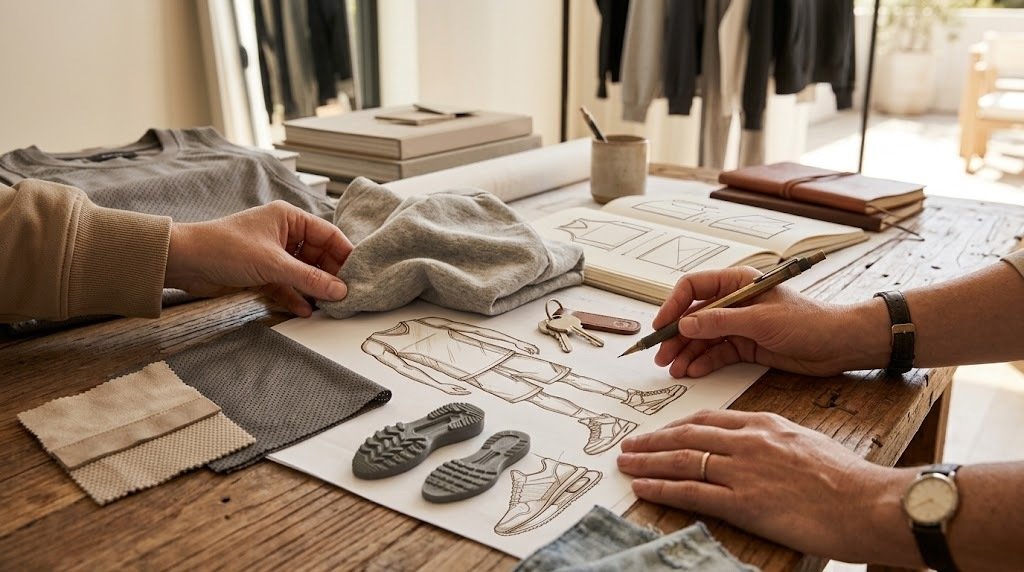
Why Is Fear of God Still Relevant in 2026?
Fear of God remains relevant because Lorenzo’s core idea has proved more durable than a specific trend.
The official Fear of God store currently features Collection Nine menswear, Collection Nine womenswear, Essentials Summer 2026, footwear, and Fear of God Athletics products.
That product breadth shows how far the company has moved from its early T-shirts and long tanks.
The brand now operates across multiple categories while maintaining a recognizable visual identity.
There is also a deeper reason for its longevity.
Lorenzo did not build Fear of God around a single seasonal gimmick. In a 2022 Interview Magazine conversation, he explained his resistance to traditional fashion seasons and described the Eternal Collection as an attempt to create clothing that could transcend time rather than simply follow a numbered release schedule.
An Original Insight: Lorenzo Changed the “Hierarchy” of Clothing
A useful way to measure Lorenzo’s influence is to look at what happened to garments that were once considered secondary.
Before the luxury streetwear shift, a sweatshirt was usually treated as casual clothing, while a tailored jacket represented sophistication.
Fear of God helped reverse that hierarchy.
The sweatshirt became worthy of luxury construction. The sneaker became part of a polished wardrobe. The track pant could be styled as a central fashion statement.
That is why Lorenzo’s influence is bigger than any single Fear of God collection.
He changed what consumers believed certain clothes could mean.
That is arguably his most important contribution to modern fashion.
What Is Jerry Lorenzo’s Legacy?
Jerry Lorenzo’s legacy is not simply that he made oversized hoodies popular.
His larger achievement was creating a distinctly American fashion language that could move between streetwear, luxury, sport, music, and everyday life.
He started without the traditional fashion education or institutional pathway associated with major luxury designers. Yet that outsider position became part of his creative advantage.
Instead of asking what fashion was supposed to look like, Lorenzo repeatedly asked a more practical question:
How can familiar clothing better represent the way people actually want to live?
That question explains why Fear of God could move from long T-shirts and distressed denim into knitwear, tailoring, women’s clothing, footwear, Essentials, and athletics without completely losing its identity.
For seven years of following and analyzing fashion and streetwear trends, one pattern stands out: brands that survive beyond a hype cycle usually create a recognizable point of view rather than simply copying what is popular. Lorenzo’s career is a particularly strong example of that principle.
His influence is visible whenever comfort is treated as luxury, athletic clothing enters formal styling, oversized proportions become sophisticated, or American cultural references become the foundation of premium fashion.
Conclusion
Inside Fear of God is ultimately a story about changing the rules without abandoning practicality.
Jerry Lorenzo combined his experiences in sports, Los Angeles culture, music, faith, business, and everyday American life to build a fashion language that millions of consumers could recognize.
Fear of God’s evolution from a small Los Angeles label into a global fashion house shows how powerful a consistent point of view can become. From early collaborations with Kanye West and Virgil Abloh to Essentials, Zegna, Nike, and adidas, Lorenzo repeatedly expanded the definition of what his brand could represent.
For readers interested in modern streetwear, Fear of God is worth studying not simply because it is popular, but because it demonstrates how culture, design, business, and personal experience can combine into a lasting fashion identity.
FAQ Section
Who founded Fear of God?
Fear of God was founded by American designer Jerry Lorenzo in Los Angeles in 2013. Lorenzo remains the founder and creative force behind the brand.
Why is Fear of God so influential?
Fear of God helped blur the boundary between streetwear and luxury fashion. Its oversized proportions, relaxed tailoring, neutral colors, premium materials, and cultural references influenced contemporary menswear and many brands that followed.
What is Fear of God Essentials?
Fear of God Essentials is the more accessible extension of Jerry Lorenzo’s fashion brand. It focuses on everyday wardrobe staples including hoodies, T-shirts, sweatpants, shorts, and other casual pieces. The official 2026 collection continues to emphasize relaxed fits and heavyweight fabrics.
Did Jerry Lorenzo work with Kanye West?
Yes. Lorenzo worked with Kanye West for approximately three and a half years, contributing to projects connected with Yeezus, Yeezy, A.P.C., and merchandise. Their relationship helped expose Fear of God to a much wider audience.
What inspired Jerry Lorenzo’s fashion?
Lorenzo draws from a wide range of American cultural references, including baseball, hip-hop, rock music, films, vintage clothing, Los Angeles, and everyday American products. His upbringing around professional baseball also influenced his approach to uniforms, proportion, and visual identity.
Is Fear of God still relevant in 2026?
Yes. Fear of God’s official 2026 product ecosystem includes Collection Nine, Essentials Summer 2026, womenswear, footwear, and athletics-related products, showing that the brand has expanded considerably beyond its early streetwear roots.
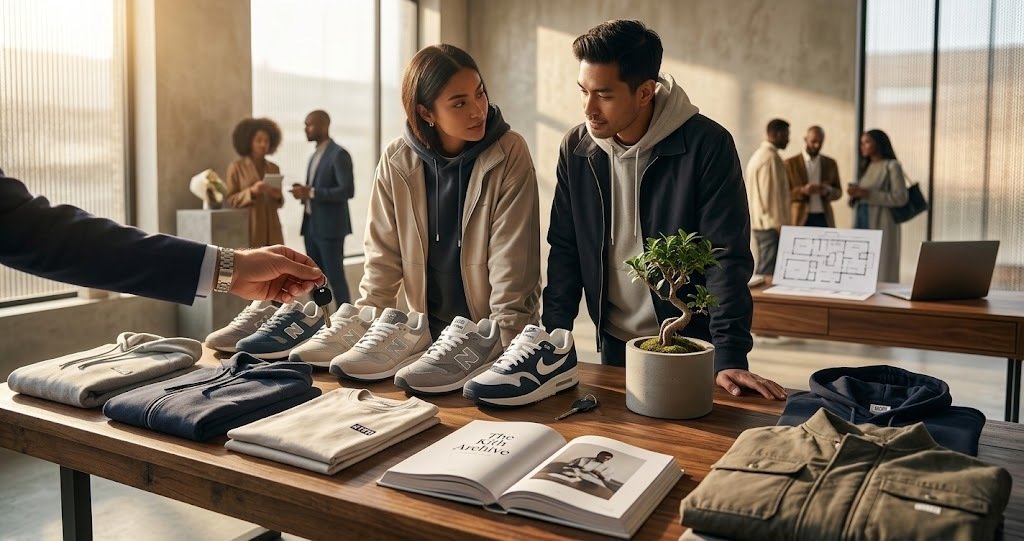
Why Is Kith One of the Most Respected Names in Streetwear Today? The answer goes far beyond hoodies, sneakers, and limited drops. Kith has built its reputation by combining New York identity, premium design, carefully selected collaborations, retail experiences, and a lifestyle vision that has expanded well beyond traditional streetwear.
Kith was established in New York City in 2011 by Ronnie Fieg. The brand began with deep roots in footwear and retail before developing into a broader lifestyle company offering men’s, women’s, and children’s apparel, footwear, accessories, food, and other lifestyle products.
What makes Kith Streetwear especially interesting is its ability to evolve without completely abandoning its origins. Early Kith was strongly connected to sneaker culture and bold streetwear. Today’s Kith is more refined, with tailored clothing, elevated materials, accessories, hospitality, and major collaborations sitting alongside recognizable Kith staples.
That evolution helps explain why the brand continues to command attention in the United States and internationally.
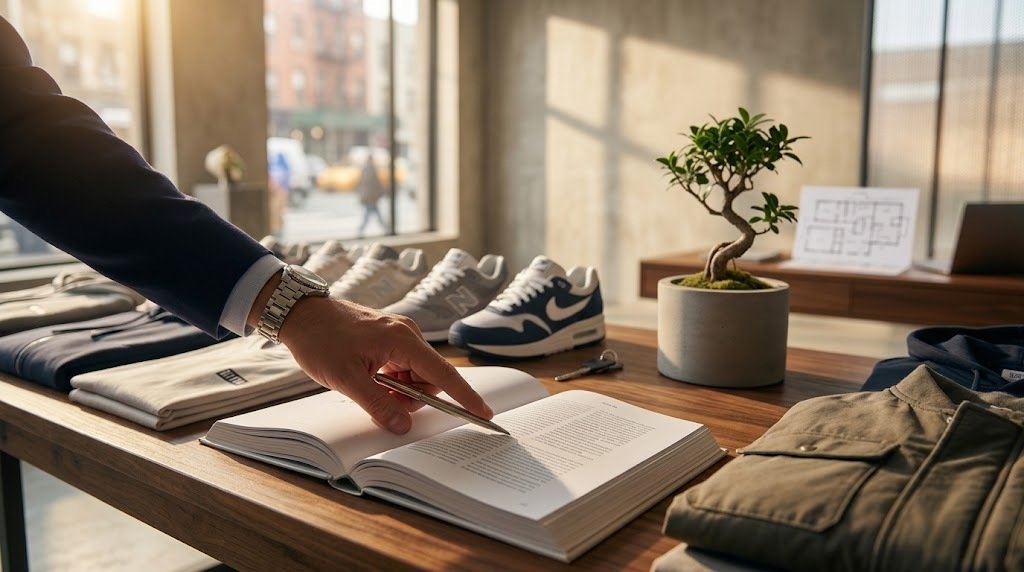
Why Is Kith One of the Most Respected Names in Streetwear Today?
Kith is respected because it does not treat streetwear as only a clothing category. It treats fashion as part of a larger cultural experience.
Five factors explain much of its reputation:
- A strong New York identity
- Ronnie Fieg’s footwear and retail expertise
- High profile collaborations
- Premium product and design development
- A lifestyle focused retail experience
Together, these elements have allowed Kith to move from sneaker focused retail into a globally recognized lifestyle brand without losing its connection to street culture.
1. Kith Streetwear Started With a Strong New York Identity
New York is not simply part of Kith’s history. It is central to the brand’s creative language.
Ronnie Fieg established Kith in New York in 2011 after developing extensive experience in footwear retail and sneaker collaborations. His earlier work with brands such as ASICS helped establish his reputation for creating distinctive footwear projects before Kith became a standalone brand.
The New York influence appears in Kith’s approach to clothing, sports references, architecture, store design, and collaborations.
This matters because successful streetwear brands often represent more than a logo. They represent a place, community, or attitude.
Kith’s version of New York is broad. It can include basketball, baseball, hip hop, sneakers, luxury fashion, vintage references, contemporary art, food, and everyday city dressing.
That flexibility gives the brand a wider creative vocabulary than a label built around one specific trend.
New York Style Instead of One Fixed Uniform
One of the most revealing developments came with Kith’s 2025 return to the runway.
Vogue reported that Kith’s first fashion show since 2019 brought together approximately 400 guests on Lafayette Street and presented a more mature version of the brand. The collection combined sporty pieces with tailoring, richer fabrics, outerwear, accessories, and collaborations.
The important point was not simply that Kith held a fashion show.
It was that the show demonstrated how the brand had expanded its definition of streetwear.
2. Ronnie Fieg Turned Footwear Expertise Into a Brand Advantage
Kith’s founder Ronnie Fieg is one of the most important reasons the company developed such strong credibility in sneaker culture.
Before Kith, Fieg developed relationships with footwear brands and gained attention through limited collaborations. His work with ASICS became particularly influential, with early projects helping establish his reputation for distinctive color combinations and carefully developed sneaker concepts.
That background gave Kith an advantage.
Fieg understood that customers did not simply want another sneaker. They wanted a story, a reason to care, and a product that felt different from the standard release.
This approach later became part of Kith’s wider product philosophy.
Instead of treating collaborations as random promotional exercises, Kith often uses them to connect different communities.
A sneaker collaboration can connect Kith with performance footwear fans. A sports partnership can connect the brand with basketball or baseball culture. A luxury partnership can introduce Kith customers to higher end tailoring and materials.
The result is a network of cultural connections rather than one narrow audience.
3. Kith’s Collaborations Created Cultural Relevance
Collaborations are probably the most visible part of the Kith strategy.
Over the years, the brand has worked across footwear, sportswear, luxury fashion, food, automotive, entertainment, and lifestyle categories. Its history includes projects involving names such as Nike, adidas, New Balance, Coca Cola, Versace, Tommy Hilfiger, and many others.
But the important lesson is not simply that Kith has many collaborations.
It is how collaborations are used to expand the meaning of the brand.
Why Kith Collaborations Feel Different
A strong collaboration gives both partners something valuable.
For Kith, the partner brings heritage, recognition, or a specialized audience.
Kith then brings its own visual language, retail experience, storytelling, and community.
This can make a collaboration feel like a cultural event rather than a basic co branded product.
Recent examples show how wide that strategy has become. In 2026, Kith’s official site featured projects with BMW, adidas Football and Lionel Messi, the New York Knicks, Tribeca Festival, Taxi Driver, Cinelli, and Giorgio Armani.
That range is significant.
Kith can move from a basketball inspired jacket to a luxury suit, a bicycle, a backgammon set, or automotive merchandise while still maintaining a recognizable identity.
Few streetwear brands have achieved that level of category flexibility.
4. Kith Made Premium Basics Part of Its Identity
Another reason Kith remains respected is that its appeal does not depend entirely on rare collaborations.
The brand has also developed a strong reputation around everyday clothing.
Premium sweatshirts, T shirts, hoodies, trousers, outerwear, and accessories give customers products that can be worn regularly rather than only collected.
This is an important distinction.
Hype can attract someone to a brand once. Product quality and usability can convince that customer to return.
Kith’s current direction also shows a stronger focus on fabric, texture, tailoring, and understated design. Vogue’s coverage of the brand’s 2025 evolution noted that its newer product had become less logo heavy, with richer fabrics, more muted colors, sophisticated outerwear, and tailoring.
That shift reflects a larger change in the streetwear market.
Consumers who discovered Kith in the 2010s have grown older. Many now want clothing that works in more settings while still carrying the cultural credibility they associate with the brand.
Kith has responded by expanding its product vocabulary instead of forcing customers to choose between streetwear and more refined fashion.
5. Kith Turned Shopping Into an Experience
This may be the biggest difference between Kith and an ordinary clothing retailer.
Kith stores are designed to feel like destinations.
The company has invested heavily in architecture, visual presentation, food, product storytelling, and physical experiences. Its flagship locations have become part of how consumers understand the brand.
The idea is simple:
Kith does not only sell a product. It sells a world around the product.
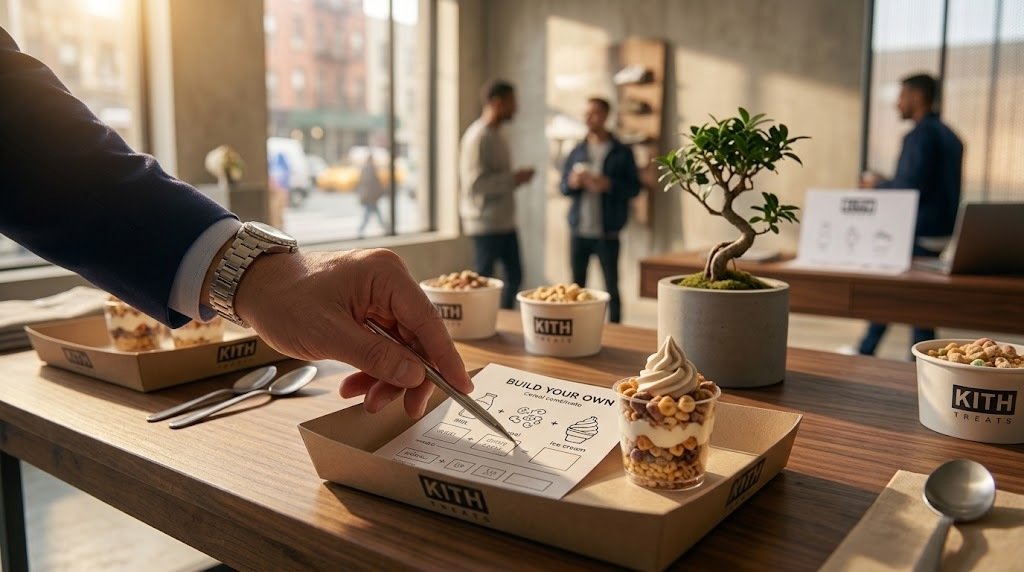
That philosophy can be seen in Kith Treats.
Kith Treats Made Food Part of the Brand
Kith Treats began in 2015 and grew from Fieg’s childhood interest in cereal. Kith describes the concept as a long held dream that eventually became an important part of the company’s identity.
The concept is clever because it connects nostalgia with fashion.
Customers can visit a Kith location, shop clothing, experience the store environment, and have a food experience associated with the brand.
Kith Treats also developed rotating specials connected to the brand’s friends and collaborators. Its history includes contributions from figures such as Virgil Abloh, Futura, Daniel Arsham, Action Bronson, and Victor Cruz.
By 2025, Kith celebrated ten years of Treats, showing that the concept had become much more than a temporary marketing experiment.
This is one of Kith’s smartest moves because it creates a physical memory around the brand.
A customer may forget an online advertisement.
They are less likely to forget visiting a flagship, eating at Treats, seeing an unusual installation, and buying a piece of clothing during the same experience.
6. Kith Expanded From Streetwear Into Lifestyle
Calling Kith only a streetwear brand does not fully describe what it has become.
Kith officially describes itself as a lifestyle brand and specialty retailer offering seasonal collections for men, women, and children, along with accessories and footwear.
Its expansion into lifestyle categories is deliberate.
The company has explored food and beverage, home products, sports partnerships, automotive projects, accessories, and other experiences.
For example, Kith’s current 2026 assortment includes products connected to BMW, including a backgammon board, poker deck, posters, automotive accessories, and apparel. Its site also highlights partnerships with adidas Football and Lionel Messi, the New York Knicks, and Tribeca Festival.
This is where Kith separates itself from the conventional streetwear model.
A traditional streetwear company may ask:
What should we put on a hoodie?
Kith increasingly asks:
What parts of a customer’s lifestyle can this brand meaningfully participate in?
That difference has helped Kith become more durable.
7. Kith Evolved Without Abandoning Its Original Audience
Brand evolution can be dangerous.
When a streetwear label becomes more luxurious, it can lose the customers who supported it early.
Kith has avoided that problem by keeping recognizable elements from its past while adding new categories.
Its 2025 runway was a useful example. Vogue noted that traces of the original Kith remained through sporty looks, fuzzy jackets, New York sports references, and older graphic pieces, even as the overall collection became more refined.
That balance is important.
Kith can appeal to someone buying a classic graphic tee and another customer interested in a sophisticated suit or luxury collaboration.
The brand does not need every customer to dress the same way.
Instead, it gives different customers different entry points into the same universe.
8. Why Kith Still Matters in 2026
Kith’s current position is especially interesting because streetwear itself has changed.
The market has moved away from the idea that every successful streetwear product must be covered in logos or released through extreme hype.
Kith has responded by becoming more product focused.
In Vogue’s 2025 coverage, Fieg described the shift from theatrical fashion presentations toward putting the product at the center. The article also highlighted Kith’s move toward richer materials, tailoring, accessories, and luxury collaborations.
The official Kith site shows that evolution continuing in 2026.
Its current collections include elevated apparel, lifestyle products, sports collaborations, luxury partnerships, women’s collections, children’s collections, and home or recreational products.
That gives Kith unusual longevity.
The brand can participate in streetwear culture without being trapped by the traditional definition of streetwear.
An Original Observation: The Kith Customer Can Grow With the Brand
One useful way to understand Kith’s success is to look at the customer journey.
Imagine someone who discovered Kith sneakers in their late teens or early twenties.
At first, they might buy a graphic tee or sneaker collaboration.
A few years later, they might purchase a premium hoodie or jacket.
Later, they may become interested in tailoring, accessories, home goods, restaurants, or automotive collaborations.
The brand has created enough categories for that customer to remain within the Kith ecosystem as their tastes and spending habits change.
This is not simply a product expansion strategy.
It is a customer life cycle strategy.
That is one of the clearest reasons Kith has remained culturally relevant while the definition of streetwear has changed.
9. Is Kith Luxury, Streetwear, or Something Else?
The most accurate answer is that Kith sits between categories.
It has the cultural roots of streetwear, the product development ambitions of a fashion brand, and the retail strategy of a lifestyle company.
Calling it only “luxury streetwear” misses part of the story.
Calling it only “streetwear” is also increasingly incomplete.
Kith itself has emphasized the breadth of its aesthetic. Vogue reported that Fieg sees New York style as the connecting thread, rather than a single narrow fashion category.
That broad positioning may be one of the brand’s greatest strengths.
It allows Kith to experiment without completely breaking its identity.
10. What Can Other Streetwear Brands Learn From Kith?
Kith’s success offers several useful lessons for the wider fashion industry.
Build a recognizable point of view
Kith’s connection to New York gives its products a consistent cultural foundation.
Make collaborations meaningful
The strongest collaborations introduce new audiences while still making sense for the brand.
Invest in the physical experience
Kith demonstrates that stores can become cultural destinations instead of simple places to process transactions.
Give customers reasons to return
Regular collections, collaborations, food concepts, events, and lifestyle products create multiple reasons to stay connected.
Evolve with your audience
Kith has changed as its original customers have grown older. That is more sustainable than trying to remain permanently frozen in one version of streetwear.
Frequently Asked Questions About Kith
Is Kith considered a streetwear brand?
Yes, Kith has strong roots in streetwear and sneaker culture, but it has evolved into a broader lifestyle and fashion brand. Its current collections include streetwear, tailoring, accessories, footwear, women’s fashion, children’s clothing, food, and lifestyle products.
Why is Kith so popular?
Kith’s popularity comes from its combination of New York identity, premium products, collaborations, limited releases, strong retail experiences, and community focused storytelling.
Who founded Kith?
Kith was founded in New York City in 2011 by Ronnie Fieg, who remains the company’s founder, CEO, and creative director.
What does Kith mean?
The name Kith comes from the phrase “kith and kin,” referring broadly to friends and family. The concept fits the brand’s emphasis on community and relationships.
Is Kith considered luxury?
Kith operates in a space between streetwear, contemporary fashion, and luxury. Its product range includes accessible everyday pieces as well as high end collaborations and lifestyle projects.
What makes Kith different from other streetwear brands?
Kith combines clothing with retail, food, art, sports, luxury collaborations, and lifestyle experiences. That broader ecosystem makes it different from brands focused primarily on apparel.
Conclusion: Why Kith Has Earned Its Reputation
So, Why Is Kith One of the Most Respected Names in Streetwear Today?
Because Kith has consistently done more than follow streetwear trends.
It built credibility through footwear, developed a recognizable New York identity, created influential collaborations, invested in premium product, and transformed stores into cultural experiences. Most importantly, it has continued evolving as its audience has matured.
Kith’s current direction proves that streetwear does not have to remain locked into one visual formula. A brand can begin with sneakers and graphic apparel and eventually move into tailoring, food, automotive culture, sports, accessories, and luxury without losing its original cultural relevance.
That combination of heritage and reinvention is what makes Kith worth watching in 2026.
For readers interested in the wider evolution of streetwear, Kith is a particularly useful case study because its story shows how a New York sneaker focused business became a global lifestyle brand.
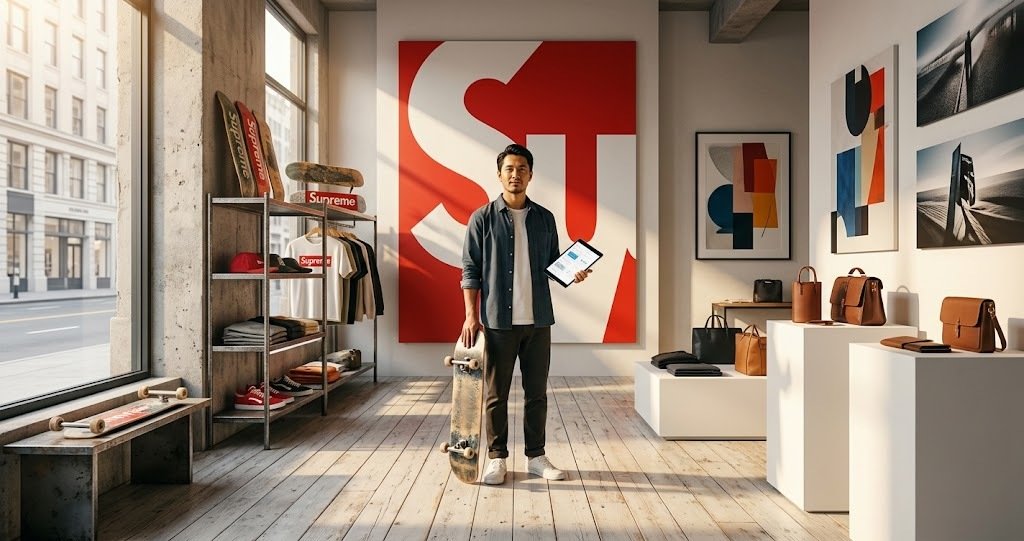
The Story of Supreme: From Skate Shop to Global Fashion Icon begins in April 1994, when James Jebbia opened a small skate shop on Lafayette Street in downtown Manhattan. What started as a place for New York skaters eventually became a cultural institution that influenced streetwear, luxury fashion, music, art, and modern retail.
Supreme did not become famous by behaving like a traditional fashion company. Its strength came from understanding a specific community and giving that community products that felt authentic. The store became a meeting point for skaters, artists, musicians, photographers, and young people connected to New York’s downtown culture.
Today, Supreme has a global presence and remains closely associated with limited releases, its red Box Logo, provocative collaborations, skateboarding, and youth culture. Its ownership has also changed significantly, with EssilorLuxottica completing its acquisition of Supreme from VF Corporation in October 2024 for a base purchase price of $1.5 billion.
In simple terms, Supreme became a fashion icon by making its identity feel more important than traditional fashion marketing.

Supreme’s Beginning: Why Did the Skate Shop Matter?
James Jebbia founded Supreme in 1994 after years of experience around influential retail and youth culture. The first Supreme store opened on Lafayette Street in Lower Manhattan and was designed around the needs of skateboarders.
According to Supreme’s own history, the store quickly became a home for New York skate culture. Neighborhood kids, local skaters, and artists became employees, customers, and part of the brand’s wider community.
The original store was unusual for its time. Rather than treating skateboarding as a niche activity separate from fashion, Supreme placed skate culture at the center of the shopping experience.
The store’s layout even allowed skateboarders to move through the space with room around the clothing displays. That detail tells us something important about Supreme’s early philosophy: the brand was built around a lifestyle before it was built around a business model.
From Lafayette Street to a Cultural Community
Supreme’s early identity was strongly connected to downtown Manhattan.
Skaters were not simply customers. They were part of the brand’s identity. Artists contributed graphics and designs. Musicians and photographers became connected with the label. The Supreme skate team helped establish credibility within skateboarding rather than relying on conventional advertising.
Early team members included influential figures from New York’s skate scene and people connected with Larry Clark’s Kids. This connection helped Supreme become part of the visual language of 1990s New York youth culture.
The Story of Supreme: From Skate Shop to Global Fashion Icon Through Its Logo
The Supreme Box Logo is one of the most recognizable symbols in streetwear.
Its simple red rectangle with white lettering looks almost effortless. That simplicity is part of its power.
The design was influenced by the work of artist Barbara Kruger, particularly her use of bold typography and red, black, and white visual language. Supreme transformed that artistic influence into a brand mark that could appear on T shirts, hoodies, caps, skateboards, accessories, and countless collaborations.
The result was a logo that became more than a corporate identifier.
For many consumers, wearing the Box Logo communicates knowledge of a particular cultural history. It can represent skateboarding, New York, streetwear collecting, music, fashion, or simply an appreciation for Supreme’s design language.
That distinction matters. Many fashion brands use logos to promote the company. Supreme made the logo itself part of the cultural product.
Why Was Supreme So Different?
Supreme’s early success came from several connected decisions:
- It focused on a specific youth culture instead of everyone.
- It used real skaters and artists as part of its identity.
- It maintained a strong connection to New York.
- It produced limited quantities.
- It avoided behaving like a conventional luxury label.
- It collaborated with unexpected cultural partners.
- It made buying the product feel like participating in a community.
That combination gave Supreme an unusual position between skate shop, clothing label, art project, and cultural institution.
How Supreme Changed the Streetwear Business
One of Supreme’s biggest contributions was its approach to product releases.
Instead of placing an entire seasonal collection in stores at once, Supreme became famous for releasing small groups of products on a regular schedule. The limited availability encouraged customers to pay attention to each release and created an atmosphere of urgency.
This became known as the drop model.
Supreme did not create every idea associated with scarcity or limited products, but it became one of the clearest examples of how controlled availability could turn ordinary retail into an event.
A hoodie was no longer simply a hoodie.
Customers had to know when it was coming, decide whether they wanted it, and act quickly before the product disappeared.
Why Do Supreme Drops Create So Much Demand?
The psychology is straightforward.
When a product is available everywhere, there is little pressure to buy immediately. When customers believe an item may disappear quickly, its perceived value can rise.
Supreme combined that scarcity with cultural credibility.
The result was a powerful cycle:
- Supreme announces a release.
- Fans discuss the products online.
- Customers line up or prepare for the online release.
- Popular products sell quickly.
- Resellers place some pieces on the secondary market.
- Social media spreads images of the products.
- Interest grows around future releases.
This model influenced countless streetwear brands and helped shape the modern limited release economy.
It also created an important lesson for fashion marketers: scarcity works best when people already believe the product has cultural value.
That is one of the clearest differences between Supreme and brands that simply manufacture artificial hype.
Supreme Collaborations That Changed Fashion
Collaboration became one of Supreme’s most powerful creative tools.
Rather than working only with conventional fashion companies, Supreme built partnerships across skateboarding, luxury fashion, sports, music, art, technology, and popular culture.
Notable collaborations have included:
- Louis Vuitton
- Comme des Garçons
- Nike
- The North Face
- Vans
- Timberland
- Lacoste
- Levi’s
- artists and photographers from different generations
- entertainment and cultural brands
Supreme’s collaboration history is especially important because it helped break down the traditional boundary between streetwear and luxury fashion.
Supreme and Louis Vuitton
The Supreme and Louis Vuitton relationship is one of the most famous examples.
Years before the official collaboration, Supreme had already created controversy through designs that referenced Louis Vuitton’s recognizable monogram. The relationship later changed dramatically when the two brands officially collaborated in 2017.
The partnership demonstrated how far streetwear had moved into luxury fashion.
The same type of clothing that once belonged primarily to skate shops could now appear alongside one of the world’s most established luxury houses.
Vogue has described Supreme’s collaboration history as a major part of its transition from outsider brand to fashion insider.
Supreme and Comme des Garçons
The Comme des Garçons collaboration was another important milestone.
Vogue’s reporting on Supreme’s history highlights the 2012 collaboration as a partnership that opened new doors for the brand and expanded its reach within fashion.
The significance was not simply commercial.
Comme des Garçons had serious credibility within avant garde fashion, while Supreme represented downtown skate culture. Bringing the two together showed that streetwear could participate in high fashion without completely abandoning its original identity.
Why Supreme Became More Than a Clothing Brand
The strongest part of The Story of Supreme: From Skate Shop to Global Fashion Icon is not the list of products Supreme has sold. It is the cultural network that developed around the company.
Supreme worked with artists, filmmakers, musicians, photographers, skaters, and designers.
Its creative output included clothing, skateboards, photography, films, accessories, and unusual products that could seem deliberately unexpected.
The brand’s skate team also played an important role. Supreme has worked with generations of notable skateboarders, helping connect the company to the sport’s changing culture.
This approach gave Supreme something that conventional advertising cannot easily manufacture: credibility inside a community.
Supreme’s Connection to Music and Art
Supreme’s collaborations have reached well beyond clothing.
The company has worked with musicians including Public Enemy, Black Sabbath, Slayer, Three 6 Mafia, and Mobb Deep. It has also collaborated with major visual artists and photographers.
This helped Supreme operate like a cultural publisher as much as a clothing company.
The product was often only one part of the story.
A photograph, video, skate film, artist collaboration, or unusual campaign could generate conversation around the brand without looking like a conventional advertisement.
That is a major reason Supreme became so influential among younger consumers.
Supreme’s Expansion Beyond New York
Supreme eventually expanded beyond its original Manhattan location.
Los Angeles became the brand’s second major store in 2004. London followed in 2011, Paris in 2016, and additional locations opened across Japan and other international markets. Berlin and Milan opened in 2021, Chicago in 2022, Seoul in 2023, and Shanghai in 2024, according to the brand’s documented history.
The important point is that Supreme did not suddenly become a global company overnight.
Its expansion happened gradually.
That slow growth helped preserve a sense of exclusivity while allowing Supreme to reach consumers outside New York.
The physical stores also maintained a recognizable visual connection to the original Lafayette Street concept.
From New York Skate Shop to Global Community
Supreme’s official history now describes the brand as having expanded from its New York City origins into a global community after more than three decades.
That description captures an important evolution.
The original Supreme customer was closely connected to downtown New York skateboarding. The modern Supreme audience is much broader.
It includes skateboarders, streetwear collectors, fashion enthusiasts, sneaker fans, artists, musicians, and consumers who may never have stepped on a skateboard.
That expansion is one of the company’s biggest achievements.
The Supreme Business Story: VF Corporation and EssilorLuxottica
Supreme’s ownership history is an important part of its modern story.
In December 2020, VF Corporation completed its acquisition of Supreme for a base purchase price of $2.1 billion. VF said the acquisition would give Supreme access to its global supply chain, international platforms, and digital capabilities.
The move was significant because Supreme had spent decades building an independent identity.
Four years later, another major change occurred.
In July 2024, EssilorLuxottica announced an agreement to purchase Supreme from VF Corporation for $1.5 billion. The transaction was completed on October 1, 2024.
EssilorLuxottica is best known for its global position in eyewear, making the acquisition an unusual chapter in Supreme’s history.
The company said Supreme’s direct commercial model, brand identity, and connection with new audiences were important parts of the opportunity.
What Does the Ownership Change Mean for Supreme?
The ownership changes do not erase Supreme’s history.
The bigger question is whether the company can expand while preserving the qualities that made it culturally important.
That means balancing two opposing pressures:
Growth: reaching more customers and developing new markets.
Exclusivity: maintaining the scarcity, creativity, and authenticity that created demand in the first place.
Supreme’s history suggests that this balance matters enormously.
What Makes Supreme Different From Other Streetwear Brands?
Many brands now use limited releases, collaborations, bold logos, and social media marketing.
Supreme helped popularize the combination.
But copying the visible parts of the Supreme formula does not automatically reproduce its success.
The original advantage was cultural credibility.
Supreme spent years building relationships with skaters, artists, musicians, photographers, and designers before its global reputation became enormous.
That is difficult to imitate.
An Original Insight From Six Years of Fashion Content Work
After six years of working with fashion and streetwear content, one pattern stands out when comparing Supreme with newer hype driven labels: Supreme’s strongest asset is not the red Box Logo. It is the context surrounding the logo.
A new brand can print a recognizable graphic on a hoodie tomorrow.
It cannot instantly recreate three decades of skate culture, New York history, collaborations, films, team riders, controversial moments, collectors, and cultural associations.
That difference explains why a simple Supreme T shirt can carry far more meaning than its physical construction would suggest.
The garment is the object.
The history is the value.
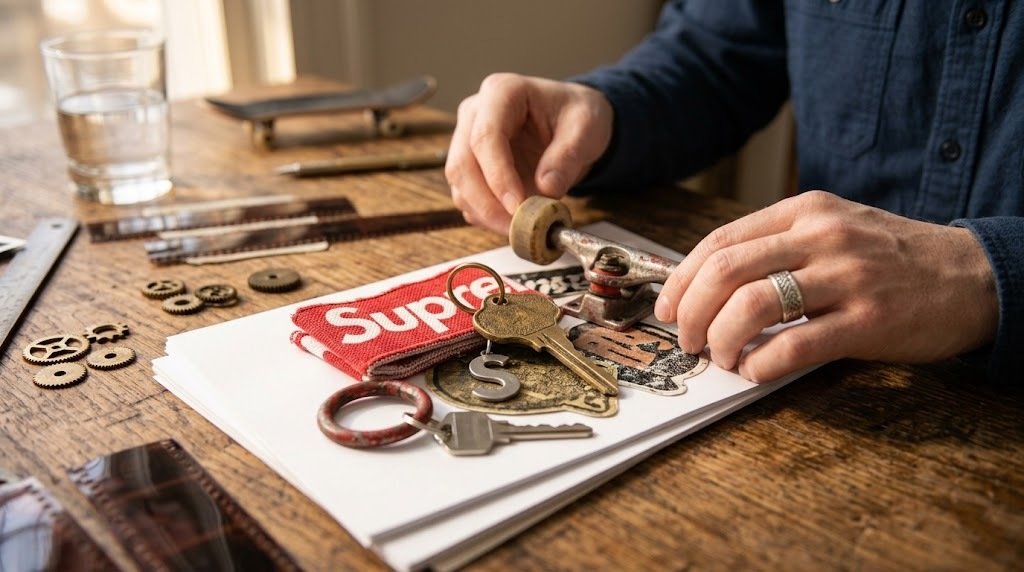
The Story of Supreme: From Skate Shop to Global Fashion Icon Today
More than 30 years after its founding, Supreme remains one of the most recognizable names in streetwear.
Its journey can be summarized in five stages:
- 1994: A skate shop opens on Lafayette Street in New York.
- 1990s: Supreme develops credibility through local skaters, artists, and downtown culture.
- 2000s and 2010s: The brand expands its stores, collaborations, and international audience.
- 2017: The Louis Vuitton collaboration demonstrates the growing relationship between streetwear and luxury fashion.
- 2020 to 2024: Supreme changes corporate ownership, first moving to VF Corporation and later to EssilorLuxottica.
The story is unusual because the company became globally famous without abandoning the identity that originally made the store interesting.
Supreme still draws heavily from skateboarding, art, music, photography, and youth culture.
That continuity is a major part of its appeal.
Why Is Supreme Still Important to Streetwear?
Supreme’s influence can be seen in how modern brands launch products, build communities, collaborate with artists, and use scarcity.
The brand helped prove that a small cultural audience could become a global consumer base.
It also demonstrated that streetwear did not need to imitate traditional luxury fashion to become valuable.
Instead, luxury fashion eventually moved toward streetwear.
That shift changed the fashion industry.
Supreme’s story is therefore not only about one company. It is also about the transformation of American fashion, particularly the movement of skateboarding and youth culture from the margins into the center of global style.
For readers interested in streetwear history, [INTERNAL LINK: Complete Streetwear Fashion Guide] can provide useful context on the broader movement Supreme helped shape.
Conclusion: Why Supreme’s Story Still Matters
The Story of Supreme: From Skate Shop to Global Fashion Icon is ultimately a story about culture before commerce.
James Jebbia did not begin with a global fashion empire. He began with a skate shop designed around a particular community in downtown New York.
That authenticity became the foundation for everything that followed.
The Box Logo became iconic. The drop model became influential. Collaborations pushed streetwear into luxury fashion. Stores expanded around the world. Corporate ownership changed twice in four years.
Yet the central idea remains recognizable: Supreme built desire by making people feel that they were buying into a culture, not simply buying clothes.
That is why the brand continues to matter in 2026.
Its greatest achievement may not be becoming a global fashion company.
It may be proving that a local skate shop could create an identity powerful enough to influence the entire fashion industry.
FAQ Section
What is Supreme best known for?
Supreme is best known for its New York skateboarding roots, red Box Logo, limited product drops, collaborations, and influence on global streetwear culture.
When was Supreme founded?
Supreme was founded by James Jebbia in April 1994. Its first store opened on Lafayette Street in downtown Manhattan.
Why did Supreme become so popular?
Supreme combined skate culture, limited product releases, strong visual identity, collaborations, and community credibility. Its scarcity based drop model also created significant demand around individual releases.
Who owns Supreme in 2026?
Supreme is owned by EssilorLuxottica. The company completed its acquisition of Supreme from VF Corporation on October 1, 2024, for a base purchase price of $1.5 billion.
What made the Supreme Box Logo famous?
The Box Logo became famous because of its simple, highly recognizable design and its connection to Supreme’s skateboarding and downtown New York identity. Its visual language was influenced by artist Barbara Kruger’s work.
Did Supreme influence modern streetwear?
Yes. Supreme helped establish limited drops, major cross industry collaborations, community focused branding, and the idea that skate inspired clothing could have significant cultural and commercial value.
-
 Lifestyle11 months ago
The Story of Acne Studios: From Underground Roots to Global Fashion Icon
-
 News & Drops10 months ago
Inside ADER error: How It Redefined Streetwear Culture
-

 Lifestyle10 months ago
Inside adidas how It Redefined Streetwear Culture
-
 Brands11 months ago
The Story of A-COLD-WALL From Underground Roots to Global Fashion Icon
-
 Brands11 months ago
A Bronx Tale From Film to Fashion
-
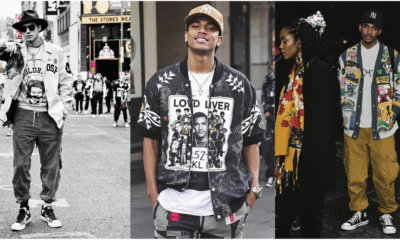
 Style Guides10 months ago
Inside Acronym How It Redefined Streetwear Culture
-
 Sneaker10 months ago
Inside Aime Leon Dore How It Redefined Streetwear Culture
-
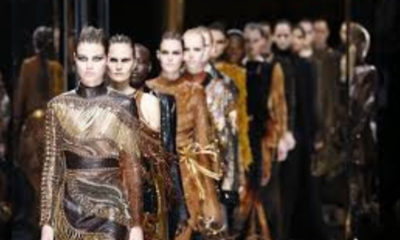
 Clothing7 months ago
Balmain Luxury Fashion Brand: History, Design Philosophy, Market Position & Global Influence