Brands
Bratz: Fashion Dolls That Redefined Pop Culture

Beginning in the conventional arenas of dolls, as identified within the fashion icon theme as Barbie, with Bratz coming along in the year 2001, being starkly different, bold, daring, as attested to by the style and fashion that spoke volumes and reached the hearts of tweens throughout the world, thereby bringing to life something new and unprecedented within the arena of fashion icons as created by MGA Entertainment, as they are known as a toy manufacturer.
The appearance of Bratz dolls was timely when children’s toys were ready for evolution. However, instead of having the normal proportion and look, Bratz dolls were extreme and featured urban fashion designs that were appropriate for the times.
Origins of Bratz
Bratz dolls are believed to have originated in the early 2000s. Carter Bryant, who previously worked for Mattel as a designer, came up with the idea, which was later taken up by MGA Entertainment, who put forward the concept. The dolls, while being vastly different from conventional fashion dolls, featured distinctive features such as large almond eyes, well-defined glossy lips, slim appearances, and clothing reflecting trends from the real world.
In June 2001, the first four Bratz doll characters, Yasmin, Cloe, Sasha, and Jade, were officially launched in the USA by MGA. These characters had diverse cultural backgrounds and styles. This was what immediately set these characters apart from all the other dolls.
Bratz dolls had been conceptualized around self-expression and fashion passion, as opposed to princess and career storylines. In fact, the tagline for Bratz Dolls read “The Girls with a Passion for Fashion!” – which summed up the brand’s aspiration to encourage self-expression in children through play.
The Bratz Design Revolution
Bratz dolls were not like any other dolls, especially regarding their enlarged features, which are not considered normal in dolls. Bratz dolls are known for their large head features along with facial features, yet accompanied by dramatic makeup ideas, such as those used in music culture and other magazines. They are also noted for their trendy wear, not necessarily being traditional classics.

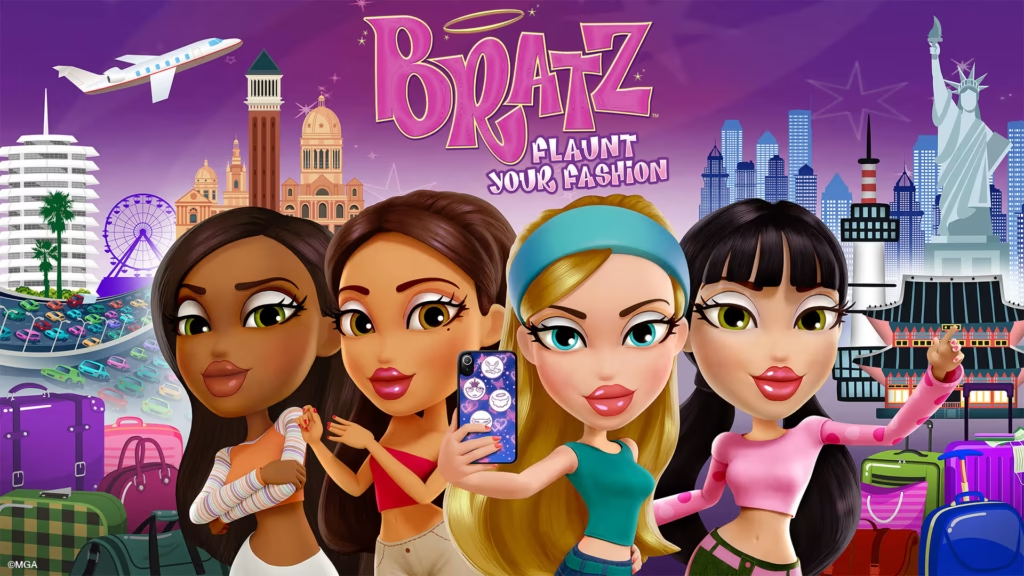
Diversity was also incorporated in the brand as the original characters were of different ethnicity and beauty type. This, to a great extent, can be seen as bold in embracing the standards of the fashion industry, which had come under a lot of criticism for beauty standards. This concept can actually be seen as highly effective in catering to a vast number of audiences around the world. Also, the style and accessorizing were an integral part of the Bratz dolls as each doll had multiple change of pace clothes, snap-on feet, and accessories. In addition to that, the Bratz doll style also embodied the concepts of hip hop, pop, and club culture.
Early Success and Market Impact
Although Bratz didn’t seem to have an immediate success, as they failed to outsell the competition during the first year of release, much of it was because of the name associated with Barbie. Yet, during the subsequent years after the first Christmas season after the release of Bratz, these dolls really took off. In 2006, the sales of Bratz merchandise around the world summed up to an astounding $2.5 billion.
By the year 2006, Bratz had managed a market share of around 40 percent within the overall market of fashion dolls and could be termed a huge success story, putting pressure on several other traditional or conventional forms of toys. The marketability of the Bratz doll was not just a matter of sales, but a major paradigm shift in the marketing of the doll and the overall understanding of the concept of the doll. Many other forms of fashion dolls offered the marketing and play opportunity of a chosen career or a more traditional form of play; the Bratz doll was the first of its kind, addressing the “tween” category.
Characters and Personalities

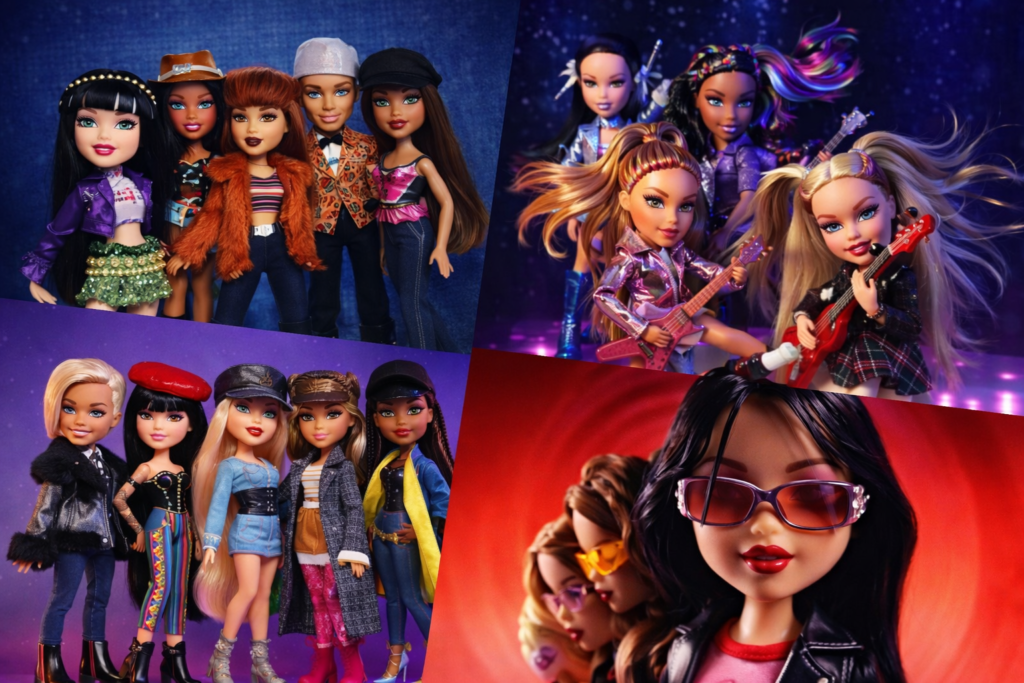
The original Bratz dolls became instantly recognizable. Yasmin was portrayed as the “Pretty Princess,” Cloe as “Angel,” Sasha as “Bunny Boo,” and Jade as “Kool Kat.” All these unique traits given to each of the dolls made the narrative quite rich, as each doll took on the role of a unique avatar for self expression. These characters also represented the diversity of the early 2000s in terms of fashion as well as youth culture, encouraging a more diverse view of beauty that went beyond conventional norms. This narrative of breaking the conventional mold in terms of shapes as well as colors solidified Bratz as more than just toys but as cultural icons of their era.
Spin‑Offs, Legal Battles, and Media Expansion
As the success of the initial series of Bratz dolls like Yasmin, Cloe, Jade, Sasha, and later Meygan reached its peak worldwide, many other series and spin-offs of the Bratz dolls were released. MGA Entertainment made the most of the popularity of the Bratz Dolls, with many other successful series such as the Bratz Kidz, Bratz Boyz, Bratz Babyz, and later even other series such as Bratzillaz. These series had new versions of the original Bratz Dolls.
Bratz Boyz was the first spin off brand to be launched, followed later by Bratz Babyz, in 2002. Bratz Boyz was essentially a spin off of the iconic Bratz brand, with characters made into babies, with clothing and play sets centered around ideas. The brand was successful enough to have video games and films made based on the original toy play sets, with the central theme of storytelling.
By the mid-2000s, Bratz were available in media forms other than just the physical toys themselves. MGA Entertainment produced theatrical and direct-to-video movies using Bratz characters in their narrative adventures, mixing fashion, friendship, and action. Such films, like Bratz: Rock Angelz, were very closely related to themed doll sets and accessories, reinforcing this brand’s focus on storytelling through fashion and identity. The video games Bratz: Rock Angelz and Bratz: Super Babyz further extended this brand into interactive entertainment, where fans could play with recognizable Bratz personalities in virtual worlds on consoles and computers.
Amid this rapid growth, Bratz’s success sparked one of the most significant legal disputes in modern toy history. In 2004 MGA Entertainment sued Mattel, which led to a massive countersuit from the maker of Barbie, claiming that the creator of Bratz, designer Carter Bryant, developed the concept while he was still employed by Mattel. Mattel contended that Bryant’s employment agreement assigned any designs created during his tenure to them and, as such, the Bratz concept and design should be owned by Mattel.A federal jury initially ruled in favor of Mattel in 2008, awarding the company damages and a broad injunction that could have transferred control of the entire Bratz trademark portfolio to Mattel.
The choice made in 2008 had emerged as a significant shocker in the legal world. MGA Entertainment had been ordered by the judge to cease production of their toys and was later awarded a permanent injunction to remove all their Bratz toys from the shelves. This includes all associated products such as Boyz, Kidz, Babyz, etc. Mention had been made of sketches of designs for the Bratz toys that had been created in the early days of Bryant’s involvement with Mattel, on which the jury had decided in favor of Mattel.
However, the legal case did not draw to a close. Since MGA contested the ruling in opposition, the injunction stayed. So, Bratz products continued being sold. In a subsequent claim in the long-running legal dispute between these two companies, MGA counter-claimed Mattel for legal wrongs, including unfair competition. In 2011, the judgment by a U.S. jury in favor of MGA for certain claims relating to trade secrets, as well as copyrights to the products, restored MGA’s legal rights to the Bratz brand.
This legal battle between Bratz and Mattel is commonly referred to as a hallmark or remembered moment in the history of the toy industry, where intellectual property or artistic rights can define not only a given brand but the whole global toy industry. The two companies’ legal battles notwithstanding, MGA retained control over the Bratz brand.
Although the heydays for Bratz were the 2000s as far as expansion and controversy go, under MGA there have been new innovations in the brand too. So, for example, in 2012, MGA was able to produce Bratzillaz, a supernatural or mystical theme featuring the witch cousins of the original Bratz characters with their own histories and styles. Even though it was short-lived and eventually stopped in 2013, this too has been part of the broader strategy for the brand as far as variety is concerned in terms of theme or play sets that Bratz offers.
Bratz also extended to print and global publications. Production of Bratz magazines began during the early 2000s, ranging from Brazil to the United Kingdom, delivering readers fashion updates, comics, and other interactive materials featuring their loved dolls and their fashion world. Such publications further reinforced the Bratz brand less as a toy but as a fashion forward world of possibilities.
Despite these minor stopovers and relabeling in the 2010s, including the full range relaunch in the region around 2015 and mini collector relaunches thereafter, Bratz continued to grow and adapt into the 2020s. In 2021, Bratz effectively turned 20 years old and celebrated by methodically reproducing special editions and fashions that captured that nostalgia while appealing to new grown-up fans who remembered the original line. By 2024, Bratz appears to remain strongly focused on high-end fashion collaborations, in-store expansions, and celebrity ties; thus, it illustrates the way the character adapts and evolves to new eras.
Design Evolution, Cultural Influence, and Modern Legacy
As Bratz grew past its initial release and subsequent legal battles, the design idea behind the brand continued to change and respond to both consumer feedback and cultural trends. From their initial release, the dolls have been known for their fashion, diversity, and unique looks. With oversized almond-like eyes, pouty lips, and edgy fashion, Bratz dolls have a very unique urban street fashion look and attitude that is rare for the early 2000s.
Since its creation, Bratz has grown to offer limited collections beyond the basic doll form as highly collectible editions, which were packaged nicely. These special editions were aimed—in terms of packaging and artistic style—at making them more appealing and giving them the status of highly valuable items to certain collectors.
However, Bratz remained culturally significant because of the boldness of their fashion. The company promoted diversity, whether ethnic or fashion-based, and celebrated all sorts of styles and personalities, which appealed to young tweens and later to adults who appreciated a more diverse representation of beauty and personality within a doll.
Fans also praised the line for its promotion of individuality and fearlessness in fashion. However, the brand also became the topic of much cultural discourse and controversy. While some had pointed to the inappropriateness of the clothing being represented by the Bratz dolls to youthful children, the American Psychological Association had also pointed to the topic of the sexualization of child-oriented toys.
The Bratz doll line, despite early backlash, is now considered ahead of its time by many onlookers who feel it pushed boundaries in mainstream toys before widespread diversity was common. The aesthetic of Bratz-cum-exaggerated-proportions and real‑world influences from urban fashion, music, and youth subcultures-is now celebrated as a big influencer in the trends of fashion dolls and beyond.
Bratz’ resurgence in culture was ignited at the tail end of the 2010s and the early 2020s, powered by nostalgia for Y2K aesthetics. Social media platforms like TikTok and Instagram have become key drivers in this resurgence; viral trends include the #BratzChallenge, which calls on users to emulate the dolls’ ubiquitous bold makeup and fashion styles. This has reexposed Bratz to a new generation of people while comically showing how influential the aesthetic is within fashion and beauty culture.
Bratz’s visual influence has also extended to fashion trends and runway shows, as well as online culture, and elements of its visual style, such as large platform shoes, low-rise jeans, and bold accessories, have echoed in recent fashion trends.
Collaboration developed into another major component of the Bratz brand’s evolving ideology. In this context, the brand collaborated with major icons of contemporary culture, including Kylie Jenner. A range of mini collectibles and fashion dolls bearing her name featured the brand’s signature style paired with the real-life pop culture icon. In these limited-edition offerings, there is the connection between the original ideology of the Bratz brand and contemporary culture.
In 2024-2025, Bratz continues to champion the concept of ‘crossovers’ in media as well as embrace pop culture elements within their collaborations, as seen within their ‘Bratz x Mean Girls’ and ‘Bratz x Wicked’-themed doll sets. These sets firmly re-entrench the brand within the nexus of fashion, pop culture, and toys.
Additionally, social media campaigns have introduced Bratz to new cultural conversations, with branded content even featuring the dolls in adult pop culture contexts, such as horror genres, which was not something they were usually known for, particularly for Gen Z and millennial audiences instead of children.
Even commercial associations with other companies, as seen with Bratz, underscore the cultural impact of the brand. Indeed, individuals have designed dolls resembling musicians and contemporary celebrities as a form of artistic representation, demonstrating how Bratz fashion extends beyond its toy roots.
Though there has been, over time, some variation in terms of product quality and fan acceptance, many nostalgic fans hold on to the originals of Y2K Bratz for their cultural significance, as well as their impact on creativity and self-expression in fashion. This attachment shows that Bratz dolls are not simply toys, but rather icons of creativity in terms of style among “tweens.”
The metamorphosis of the Bratz doll from a divisive children’s toy to a cultural icon points to the toy’s evolutionary capabilities and adaptability to changing trends and involvement with a newer generation of fans, from its status as a fashion-forward children’s toy to a symbol of pop culture and fashion, diversity, and youthfulness until 2026.
Modern Expansion, Cultural Role, and Future Directions
Bratz has continued to reinvent itself as a fashion driven cultural brand alongside its core identity as a toy line in the 2020s. After the nostalgic inspired resurgence in the early part of the decade, MGA Entertainment has expanded its approach beyond the traditional doll racks to include collector’s editions, collaborations with celebrities, limited releases, and other forms of multimedia engagement. This contemporary era of Bratz welcomes old and new followers as consumers find the franchise through its focus on fashion, films, and other content on social media sites.
Bratz’s modern approach to brand building is all about cultural relevance and storytelling. To that end, the company has made several big name partnerships within the world of IP, including Mean Girls, as it has teamed up with Paramount Consumer Products to produce collector edition versions of movie legends and other beloved characters appearing in Bratz style.
In the year 2025, the doll line developed a limited edition, Bratz x Clueless series in honor of the 30th anniversary of the cult classic film, Clueless. They included, for instance, the characters Cher Horowitz, Amber, and Dionne in authentic recreations of iconic outfits from the film, asserting the Bratz fashion story further.
Over the years, partnering with style and beauty icons has sustained the brand’s strategy for celebrity partnerships. For example, a partnership with Kylie Jenner inspired the launch of several Bratz x Kylie Fashion Dolls, which combined the real-life style of the beauty icon with the edginess of the Bratz brand. This was the very first full-scale, celebrity-based fashion launch for the brand, supported by pop-up shops like the Bratz Lookbook experience.
Bratz has also encouraged and celebrated social and cultural expression through fashion and community-based collaborations. The breakthrough collaboration Bratz Pride X Jimmy Paul was released, and on this platform, fans had their first view of the same sex-couple in Bratz fashion dolls, called Roxxi and Nevra, all designed by the renowned LGBTQ+ designer Jimmy Paul. Similarly, there was an adult fashion capsule collection and a collectible two-pack released for Pride Month.
This too includes the age of digital culture and integrating social media. MGA creates content that introduces the Bratz brand to the larger culture, such as content on TikTok, where animated dolls perform scenes from licensed collaborations like Mean Girls and horror movies. This enables the brand to engage the adult audience, now Gen Z and millennial adults, who engage with both nostalgia and current trends, showing that Bratz’s appeal extends beyond children’s playrooms.
Furthermore, the retail coverage of the product is promising within several global markets. Bratz dolls are available across several major retail outlets, including Target, Walmart, Macy’s, Amazon, and others that offer exclusive ranges of the product or dolls such as Cloe, Yasmin, Jade, Sasha, and friends Felicia, among others.
The personality of Bratz Brand & Company has additionally been defined via the improvement of engagement with the media. Official announcements regarding the development of a live action motion picture by Amazon MGM Studios with Kim Kardashian confirmed to produce and in talks to play the role of the villain suggests the brand’s visibility in the media.
Fashion and beauty culture continue to intertwine with Bratz’s image. Trend pieces inspired by the dolls’ bold makeup aesthetic, with dramatic eyes and glossy finishes, have surfaced as the “Bratzification” aesthetic, embraced by celebrities and makeup artists alike. These trends reflect how Bratz’s stylistic cues influence real‑world beauty norms and how doll design can shape fashion dialogue across generations.
One of the essential aspects of the current day Bratz fanbase is the engagement factor. For fans online, they’re talking about everything from returning side characters fans might see in the next release to leaks and prototypes of upcoming dolls. This shows the type of strong fanbase that is involved in the toy and collectible culture.
If we look into the future up to 2026 and then onwards, there have been talks and speculations from fans on sites such as Reddit and other online forums that the franchise may endure through the 2030s if MGA is able to continue innovating through thematic revivals, as well as other methods. There is a widespread speculation that the use of transmedia storytelling can secure the status of the Bratz dolls as nostalgic and cultural icons.
Bratz’s current path indicates a combination of heritage, cultural significance, and forward-thinking strategy. Bratz’s ability to blur fashion, entertainment, social media, and collector culture implies that the fashion toy will have significant facets in the world of fashion toys in the future.
Bratz’s Cultural Impact, Challenges, and Legacy
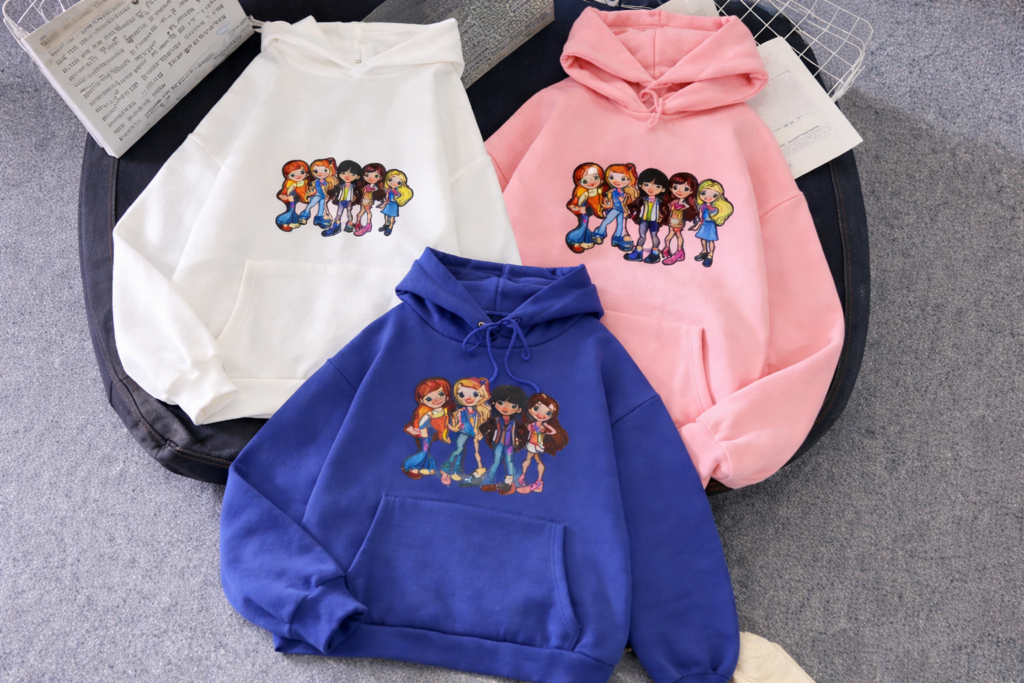
Bratz has evolved to mean much more than a toy. In the almost three-decade history since the turn of the century, Bratz have made an indelible mark in different areas of life, including fashion, entertainment, and culture. From their early 2000s version to their refined version in the 2020s, Bratz dolls have indeed evolved to be the product of trends.
The reason for this is:
The reason why this has happened is simply this: campaigning for acceptance, these dolls introduced a new trend of doll representation, celebrating diversity of looks, ethnicity, and attitude. Unlike other dolls, such as the famous Barbie dolls, these celebrated street wear with iconic accessories like hoodies, mini skirts, chunky boots, and lip gloss.
Currently, the impacts of Bratz on culture can be observed only in the fashion and beauty sectors. Many fashion designers and stylists attribute the effect of the bold mix of colors, hyper-layering of clothing, and accessories used on the doll figures to be the inspiration for the “Bratzification” look. Many retail stores such as Target and Walmart have displays showing various fashion trends for the season and playsets that take inspiration from the Bratz look.
The brand has also had its own fair share of challenges and controversies with regard to its growth. Challenges, such as those faced with regard to the intellectual property rights from Mattel, occurred during the earlier days of the growth of MGA. Controversies, such as the negative reflection of the fashion forward concept on the beauty of young girls, have also been addressed in a positive manner during later days of the growth of a brand.
In addition, in the entertainment industry, Bratz has remained an eclectic platform. Indeed, the animated television shows, online content, and films provided the same stories as they focused on the themes of friendship, passion, and creativity. Evidently, these content avenues have remained instrumental in portraying the fashion and culture credentials of the doll, as well as creating new stories that promote self-expression and creativity. The collector’s version has remained an essential factor that boosts the doll’s value among adults.
Bratz has managed to really nail that cultural relevance down, especially with their use of collaborations within fashion. Collaborations, such as those done with celebrities and designers such as Kylie Jenner, Jimmy Paul, and those featuring films from Paramount depicting the evolution of Bratz from being a toy to becoming a fashion icon, sell out as part of very limited collector series editions, demonstrating Bratz streetwear, Bratz clothing, and Bratz hoodie style relevance. These collaborations have truly been what has helped Bratz achieve relevance as far as 2025 goes while becoming a multi-generational cultural icon.
Bratz, by way of its collector-based products, reflects how it has shifted gears from appealing to adults, as well as continuing to provide content for its loyal fans, while still appealing to new generations with interest in the brand. This reflects larger market trends with regard to high-end products in the toy industry. Therefore, MGA, with its collector-based product, aligns with its “Kidult” strategy.
Bratz’s influence on fashion, street style, style in dolls, as well as a ‘Kidult’ culture of collectors, is undeniable. Through its engagement of consumers with fashion-forward clothing, street style sneakers, and character-driven storytelling, Bratz opened doors to a whole new world of understanding of play, identity, and expression within the kids’ entertainment genre. The journey of Bratz, from its humble beginnings as a simple playset to its collaborations globally, speaks to its commitment to being relevant.
Viewed from a global perspective, it can be stated that the brand has successfully been able to maintain its presence in the North American, European, and Asian markets with global integrated content for the products and media. In this manner, diverse categories of audiences have been able to relate to the brand with the trends of these regional markets. Digital marketing, such as through Instagram, TikTok, and YouTube, ensures that the footprint of the brand increases and participation is facilitated through various challenges and competitions on platforms such as doll photography.
Looking to the future, Bratz is focused on high-fashion celebrity partnerships and theatrical productions of cinema featuring the fashionable element of the Bratz brand.MGA’s future strategy appears to be an integrated platform of toys, collectibles, digital media, and lifestyle brands. This means the brand of Bratz dolls has maintained a nostalgic touch while being at the cutting edge of new ideas at all times.
Conclusion
Bratz has changed dramatically since it entered the marketplace as a line of toys consisting of fashion driven dolls back in 2001. Today, “Bratz” has become synonymous with streetwear clothing, individuality, and interplay between cultures, as the brand includes toys, fashion, media, and entertainment, thanks to its collaboration with celebrities.Whether it is the original streetwear inspired hoodie or the 2025 collector edition, the brand has consistently managed to capture the imagination, particularly through its “Kidult” strategy across different geographies. Bratz is not just a doll or fashion product, but rather a cultural phenomenon in the world of streetwear. However, in 2026, Bratz dolls are not just another set of toys or dolls, but a multi layered icon which incorporates a combination of thoughts and concepts associated with play, fashion, and even society, which explains the influence a set of toys may have in shaping society, proving that dolls indeed act as a mirror to society, culture, and personality.
Frequently Asked Questions About Bratz
1. What are Bratz dolls?
Bratz are a line of fashion dolls created by MGA Entertainment, featuring bold streetwear inspired outfits, exaggerated facial features, and unique personalities. They combine play, fashion, and pop culture influences.
2. Who created Bratz?
Bratz was created by designer Carter Bryant and launched by MGA Entertainment in 2001. Bryant’s design focused on fashion forward dolls with an urban street style.
3. When was Bratz first released?
The first Bratz dolls were released in 2001. The original line included four characters: Cloe, Yasmin, Jade, and Sasha.
4. Why are Bratz dolls significant in fashion culture?
Bratz introduced a streetwear inspired style to dolls, emphasizing bold outfits, sneakers, hoodies, and accessories. They influenced youth fashion, makeup trends, and teen streetwear aesthetics.
5. What makes Bratz different from Barbie?
Unlike Barbie, Bratz focuses on urban fashion, diverse cultural representation, and bold personalities. The dolls feature oversized eyes, glossy lips, and a stronger emphasis on streetwear clothing.
6. What types of Bratz clothing are available?
Bratz clothing includes streetwear sets, hoodies, skirts, jackets, sneakers, and themed outfits reflecting pop culture, fashion trends, and seasonal collections.
7. How has Bratz evolved over time?
Bratz has expanded from traditional dolls to animated series, movies, collector editions, fashion collaborations, and digital experiences, maintaining relevance in 2025 and beyond.
8. What are Bratz collector editions?
Collector editions are limited release dolls with high fashion outfits, exclusive accessories, and premium packaging designed for adult collectors and fans of nostalgia based products.
9. Have Bratz dolls faced controversies?
Yes. Bratz faced legal disputes with Mattel over intellectual property. Critics also questioned the dolls’ beauty standards. MGA addressed these concerns by releasing diverse dolls with inclusive designs.
10. Which celebrities have collaborated with Bratz?
Bratz has collaborated with celebrities like Kylie Jenner, Jimmy Paul, and other fashion influencers for limited edition dolls and fashion inspired collections.
11. Where are Bratz dolls sold?
Bratz dolls are available worldwide through MGA Entertainment, authorized retailers like Target and Walmart, online platforms, and specialty toy stores.
12. What is Bratz’s cultural impact?
Bratz influenced streetwear fashion, teen makeup trends, and doll representation. They have inspired youth identity expression and adult collector culture globally.
13. What types of Bratz collections exist?
Collections include fashion themed sets, seasonal releases, special collaborations, movie and animated series editions, and limited collector dolls with premium outfits and accessories.
14. Are Bratz dolls still popular in 2025?
Yes. Bratz remains popular with children and adult collectors. Digital media, social campaigns, and fashion collaborations have helped the brand stay culturally relevant.
15. How does Bratz combine fashion and play?
Bratz blends fashion, culture, and storytelling by providing dolls with trend driven clothing, streetwear sneakers, and character narratives. This allows fans to engage creatively and explore personal style.
For collaborations, press, or inquiries, contact us at streeticonic1@gmail.com.