Brands
Why Rappers Are Becoming the New Face of Fashion Brands

Why Rappers Are Becoming the New Face of Fashion Brands is no longer a question limited to celebrity endorsements. Rappers have moved from wearing designer clothes to influencing collections, appearing in campaigns, walking runways, launching labels, and shaping what consumers consider culturally relevant.
The simplest explanation is this: rappers bring fashion brands something traditional advertising often cannot buy, cultural credibility. Their influence connects music, streetwear, luxury, social media, and youth culture in one audience.
The relationship has deep roots. Hip hop fashion grew from the streets of the Bronx in the 1970s, while artists later helped popularize Adidas, Timberland, Polo, designer labels, sneakers, jewelry, and streetwear worldwide.
But the relationship has changed. Today, a rapper may be more than a person wearing a brand. They can be a creative partner, designer, investor, campaign face, runway personality, or even a bridge between a luxury house and an audience it previously struggled to reach.

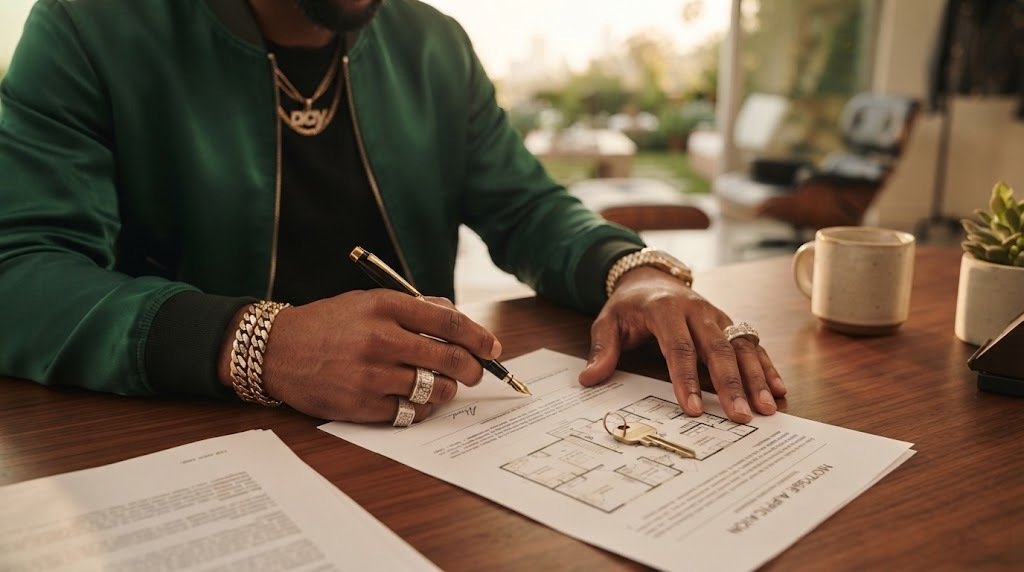
Why Are Rappers Becoming the New Face of Fashion Brands?
Rappers are becoming fashion brand faces because they combine visibility, cultural influence, personal style, and community trust.
A traditional model places a celebrity in an advertisement and asks consumers to notice the product. The modern rap and fashion model is more integrated. The artist may wear a designer naturally, discuss the brand in an interview, appear at its fashion show, collaborate on a product, and then introduce it to millions of followers.
That creates a much stronger connection between the person, product, and culture.
Academic research on the evolution of luxury streetwear describes this shift as fashion houses using rappers and other cultural intermediaries to enter or strengthen their position in categories historically controlled by traditional fashion gatekeepers.
In other words, rappers are not simply advertising fashion.
They are helping define what fashionable means.
How Rappers and Fashion Became Closely Connected
The relationship between rappers and fashion did not begin with Instagram or luxury collaborations.
Hip hop emerged in the South Bronx during the 1970s, and clothing quickly became part of the culture’s identity. Tracksuits, sneakers, bomber jackets, oversized clothing, hats, gold jewelry, and customized pieces became important forms of self expression.
Run DMC Changed the Rules
Run DMC demonstrated how powerful an artist and brand relationship could become.
The group’s famous connection with Adidas helped turn the brand’s sneakers into an important part of hip hop identity. Their performance of “My Adidas” helped establish a new type of relationship between a music group and an athletic brand.
The important lesson was bigger than one sneaker.
The audience did not simply see an advertisement. They saw artists they admired wearing something that represented their culture.
That distinction still matters today.
Dapper Dan Connected Hip Hop With Luxury
Harlem designer Dapper Dan pushed the relationship even further. His boutique, opened in 1982, became known for customized designs inspired by luxury fashion and worn by major hip hop artists.
His influence eventually reached the luxury industry itself. Dapper Dan later entered an official partnership with Gucci, demonstrating how an aesthetic that once existed outside the traditional fashion system could eventually be embraced by it.
This history explains why today’s rapper and luxury brand relationship is not as surprising as it may first appear.
Hip hop has been challenging fashion’s traditional boundaries for decades.
Why Rappers Have Become So Valuable to Fashion Brands
There are several reasons brands increasingly want rappers involved in their fashion strategies.
1. Rappers Have Cultural Credibility
A rapper’s clothing choices can feel more authentic than a conventional advertisement.
When an artist repeatedly wears a particular silhouette, sneaker, designer, or accessory, fans can interpret the choice as part of the artist’s identity rather than simply a paid promotion.
That authenticity is valuable because fashion is heavily influenced by social proof.
2. Rappers Reach Younger Consumers
Rappers often operate across multiple cultural spaces at once.
A single artist can have an audience across:
- Music streaming platforms
- TikTok
- YouTube
- Fashion events
- Sneaker communities
- Streetwear communities
- Live performances
This makes rappers useful to brands trying to reach consumers who do not respond to traditional fashion advertising.
3. Their Personal Style Is Part of Their Brand
A successful rapper is effectively a personal fashion brand.
Think about artists such as A$AP Rocky, Travis Scott, Cardi B, Pharrell Williams, and others. Their clothing choices are frequently discussed independently of their music.
The fashion conversation becomes part of their celebrity identity.
The Council of Fashion Designers of America has documented how artists such as Cardi B became significant fashion figures, including through designer relationships and commercial collaborations.
4. They Can Give a Brand Cultural Relevance
Fashion companies do not only compete on product quality.
They compete for attention.
A rapper can make a brand part of a cultural conversation that extends beyond the clothing itself.
That is particularly important for luxury brands attempting to connect with younger consumers and streetwear audiences.
From Brand Ambassador to Creative Partner
One of the biggest changes in rappers in fashion is the shift from endorsement to collaboration.
An ambassador wears the product.
A creative partner can influence the product itself.
That difference matters.
Modern rapper and fashion relationships can include:
- Capsule collections
- Footwear collaborations
- Apparel design
- Creative direction
- Fashion campaigns
- Runway appearances
- Brand storytelling
- Retail collaborations
- Artist merchandise
- Limited edition products
A$AP Rocky provides a useful example of this broader role. His relationship with fashion extends beyond simply appearing in clothing. Business of Fashion has documented his interest in fashion and his development from Harlem’s hip hop scene into a figure involved in fashion design and creative projects.
More recently, his partnership with Quince in 2026 showed how an artist can become part of a retailer’s broader attempt to build cultural relevance and originality.
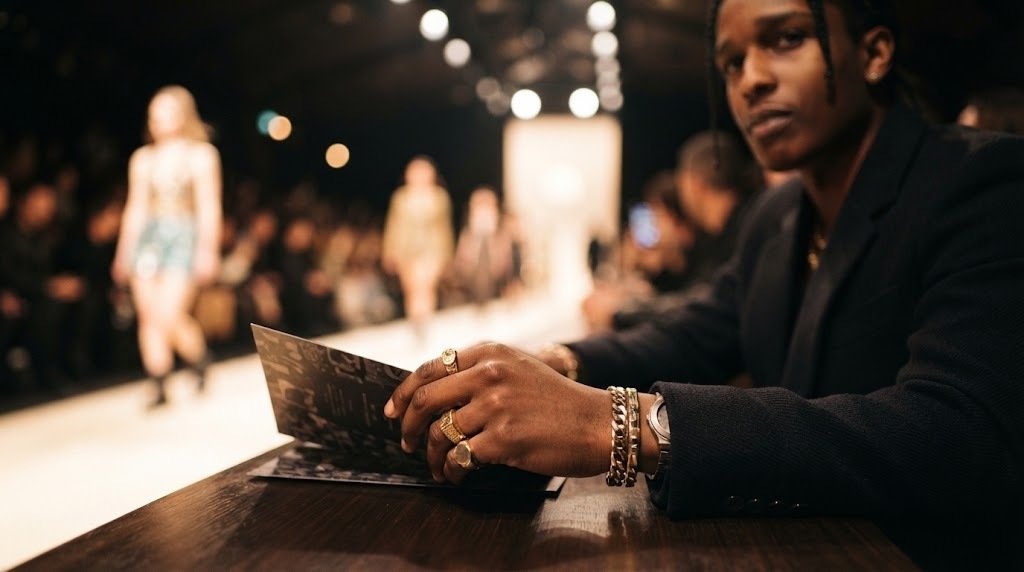
Why Luxury Fashion Wants Rappers
Luxury fashion once operated through a relatively controlled system.
Fashion editors, designers, models, buyers, critics, and traditional celebrities played major roles in determining which brands were desirable.
Hip hop disrupted that system.
Rappers brought a different definition of status. Luxury was not always about following traditional rules. It could be about customization, rarity, confidence, oversized silhouettes, sneakers, jewelry, or mixing expensive pieces with streetwear.
That made rappers particularly valuable to luxury brands.
Streetwear Made Luxury More Accessible
The luxury industry increasingly adopted pieces associated with street culture, including sneakers, hoodies, graphic T shirts, and casual silhouettes.
Research into luxury streetwear shows how major fashion houses incorporated these elements while also using cultural intermediaries such as rappers to reach new audiences.
The result was a two way exchange:
Hip hop moved toward luxury, while luxury moved toward hip hop.
That is one of the most important reasons today’s fashion landscape looks different from the fashion industry of the 1980s.
Rappers Are Also Becoming Fashion Week Figures
The modern relationship goes beyond campaigns.
Rappers are increasingly visible at fashion weeks as front row guests, runway models, collaborators, and creative participants.
Offset’s 2024 New York Fashion Week appearance is a clear example. The rapper served as an ambassador for CFDA’s NYFW Live and also appeared as a runway model for Luar and Melitta Baumeister.
This matters because a runway appearance changes the role of the artist.
They are no longer simply consuming fashion.
They are participating in the fashion system.
A similar shift can be seen with artists such as A$AP Rocky and Travis Scott, who have been associated with high fashion campaigns, runway appearances, and collections. Academic research has specifically identified this development as part of the industry’s broader acceptance of hip hop artists as legitimate fashion actors.
Why Rappers in Fashion Feel More Authentic Than Traditional Ads
One overlooked reason rappers work so well for fashion brands is context.
A fashion advertisement tells consumers what the brand wants them to believe.
A rapper’s personal style can demonstrate that belief before the campaign even exists.
For example, if an artist has spent years combining sneakers, vintage pieces, luxury accessories, and streetwear, a fashion collaboration feels like a natural extension of an established identity.
This creates what I would call the style-to-product pipeline:
- The artist develops a recognizable personal style.
- Fans associate that style with the artist.
- The artist wears or discusses specific brands.
- The audience begins associating those brands with the culture.
- The fashion company formalizes the relationship.
- The collaboration becomes a commercial product.
This is an important distinction from simple celebrity advertising.
The artist’s influence often exists before the contract.
That is one reason the strongest rapper and fashion partnerships feel culturally natural rather than forced.
Fashion Brands Also Benefit From Rap Lyrics and Music
Fashion influence does not stop at clothing.
Luxury brands have been mentioned in rap lyrics for decades.
The practice became especially visible in hip hop because brand names can communicate wealth, aspiration, identity, and status in only a few words.
Research into fashion name dropping has highlighted how mentioning a brand in music can create exposure that extends beyond traditional advertising.
There is an important cultural difference here.
When a rapper says a brand name, listeners may interpret it as part of a lifestyle story.
The brand becomes a symbol.
That symbolic value can be more powerful than simply showing a logo in an advertisement.
Female Rappers Are Expanding the Fashion Conversation
The fashion influence of rap is not limited to male artists.
Female rappers have helped expand the relationship between music and fashion through beauty, styling, jewelry, footwear, couture, body conscious silhouettes, and experimental clothing.
Cardi B is a strong example of this shift. The CFDA highlighted her influence on fashion and noted her collaborations and relationships with major designers and brands.
Earlier generations also created important foundations.
Salt-N-Pepa, Lil’ Kim, Missy Elliott, and other artists demonstrated that female rap fashion could be bold, theatrical, glamorous, and commercially influential.
The result is a much wider definition of what a fashion icon can look like.
What Fashion Brands Gain From Rappers
The business case can be summarized into five major benefits:
| Benefit | Why It Matters |
|---|---|
| Cultural credibility | Connects brands with real communities |
| Audience reach | Provides access to highly engaged fans |
| Storytelling | Gives products a human identity |
| Product innovation | Artists can influence designs and concepts |
| Social visibility | Creates conversation across digital platforms |
The strongest partnerships combine several of these advantages rather than relying on follower numbers alone.
A rapper with 10 million followers may be less useful than an artist with a smaller but highly engaged audience whose style perfectly matches the brand.
That is an important lesson for fashion marketers.
Influence is not the same thing as audience size.
What This Means for the Future of Rappers in Fashion
The next stage of the relationship will likely involve even more creative control.
Rappers are increasingly expected to do more than wear clothes.
They may help develop products, shape campaigns, influence creative direction, appear in runway presentations, launch independent labels, or create entire fashion ecosystems around their identities.
The boundaries between rapper, designer, entrepreneur, and creative director are becoming increasingly flexible.
Fashion is also becoming more participatory. Social platforms allow artists to show outfits immediately, receive feedback, create demand, and influence purchasing behavior without waiting for traditional media coverage.
The fashion industry is therefore moving from a model where brands tell audiences what is fashionable toward one where artists, communities, and online culture help determine it.
Is This Trend Going to Continue?
Yes, but the partnerships that survive will probably become more selective.
Consumers are increasingly capable of recognizing when a collaboration feels purely commercial.
A rapper wearing a brand once for an advertisement is easy to understand.
A rapper who has genuinely developed a relationship with a designer, worn the brand for years, influenced a collection, and helped tell its story has much stronger credibility.
The future is therefore not simply about putting rappers in fashion campaigns.
It is about giving artists meaningful creative roles.
That is the biggest evolution in the relationship between rappers and fashion.
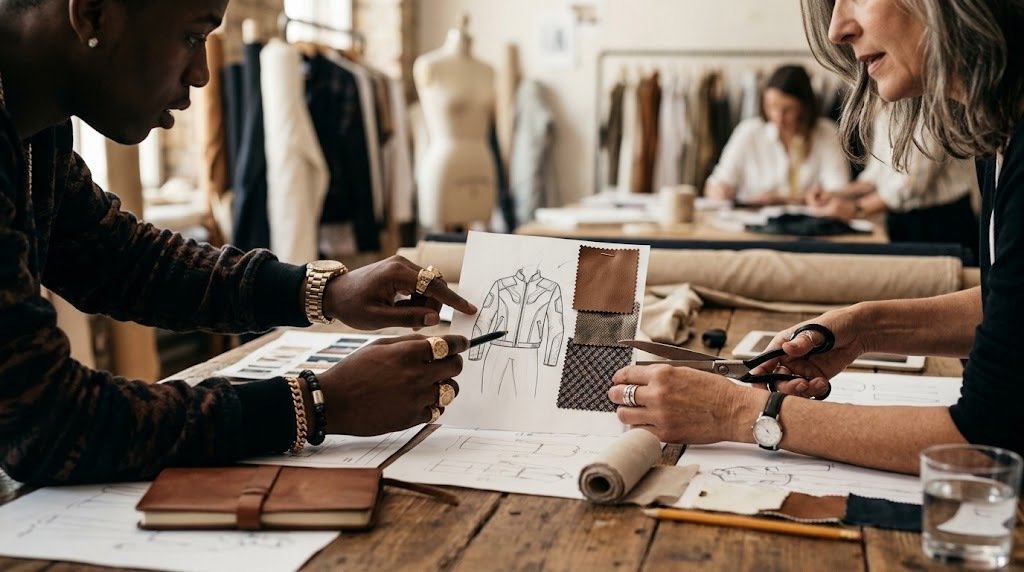
Conclusion: Why Rappers Are Becoming the New Face of Fashion Brands
The answer to Why Rappers Are Becoming the New Face of Fashion Brands goes deeper than celebrity popularity.
Rappers have spent decades shaping streetwear, luxury trends, sneaker culture, jewelry, styling, and youth identity. From Run DMC’s Adidas connection to Dapper Dan’s transformation of luxury references into streetwear and today’s fashion week appearances, hip hop has repeatedly challenged the traditional boundaries of fashion.
The difference today is scale and access.
Artists can communicate directly with global audiences, participate in fashion shows, influence products, collaborate with luxury houses, and turn personal style into commercial power.
For fashion brands, that makes rappers more than celebrities.
They are cultural translators, creative partners, and trend setters.
And as fashion continues to merge with music, social media, streetwear, and entertainment, the influence of rappers is likely to become even harder for the industry to ignore.
Frequently Asked Questions
Why are rappers becoming the new face of fashion brands?
Rappers combine cultural influence, personal style, large audiences, and strong connections with younger consumers. Their involvement can give fashion brands credibility that traditional advertising may not provide.
How have rappers influenced fashion?
Rappers have influenced fashion through streetwear, sneakers, luxury clothing, jewelry, custom designs, music videos, lyrics, collaborations, and appearances at major fashion events.
Why do luxury brands work with rappers?
Luxury brands work with rappers because artists can introduce established fashion houses to younger audiences and streetwear communities while giving the brands greater cultural relevance.
Who are some rappers known for their fashion influence?
Artists including A$AP Rocky, Travis Scott, Cardi B, Pharrell Williams, Run DMC, Lil’ Kim, and others have played important roles in the relationship between rap and fashion.
Are rappers becoming fashion designers?
Yes. Some rappers have moved beyond endorsements into product development, collaborations, creative direction, and independent fashion businesses. This reflects the broader convergence of music, fashion, and entrepreneurship.
Why are rappers important to streetwear?
Rappers have helped make sneakers, oversized clothing, hoodies, graphic T shirts, luxury streetwear, and other casual pieces culturally significant. Their influence has helped move streetwear from subculture into mainstream fashion.
Pingback: How A$AP Rocky Influences Modern Streetwear Style