Blogs
Why Has Yoshitomo Nara Become a Global Icon of Contemporary Japanese Art?


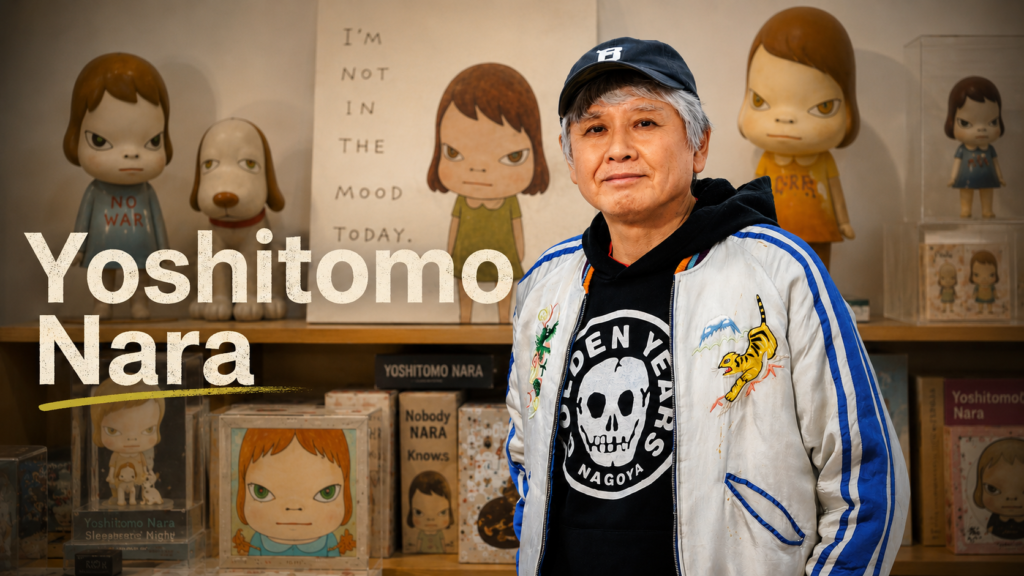
The Artist Behind Contemporary Japan’s Most Recognizable Characters
Contemporary Japanese art has many influential artists. Few have created a style as recognizable as Yoshitomo Nara’s. His childlike characters, simple designs, and emotional artwork connect with people worldwide. For more than three decades Nara has explored themes of childhood, loneliness, independence, and hope. His characters may look innocent but their expressions reveal deeper emotions.
Today Yoshitomo Nara’s artwork appears in major museums, exhibitions, and private collections. His work also inspires designers, musicians, collectors, and creative professionals. Whether you are new to contemporary Japanese art or already know his work, Nara’s journey shows why he remains one of the most respected living artists in 2026.
A New Voice in Contemporary Japanese Art
When Yoshitomo Nara developed his style in the 1980s and 1990s, contemporary art was becoming more diverse. Many artists explored abstract ideas and complex concepts. Nara chose a different approach by creating simple characters with strong emotions. His paintings often show children with large heads and expressive eyes. These figures may look playful but they represent deeper feelings like loneliness, curiosity, and strength.
Nara uses clean compositions without many details. This keeps the focus on his characters and allows viewers to create their own meanings. His art feels personal and universal at the same time. People from different cultures connect with his characters because the emotions feel familiar. By 2026 Yoshitomo Nara continues inspiring artists and collectors worldwide. His simple yet powerful style has helped shape contemporary Japanese art.
The Journey That Shaped Yoshitomo Nara’s Artistic Vision
Yoshitomo Nara was born in 1959 in Hirosaki, Japan. He grew up in a quiet town surrounded by nature. His parents worked long hours, so he often spent time alone. During these years he developed a strong imagination. He loved drawing whenever he had free time. He also enjoyed reading books and listening to music. These early interests became an important part of his creative life. Many of the emotions from his childhood later appeared in his artwork.
Nara studied at Aichi Prefectural University of the Arts. There he improved his drawing and painting skills. After completing his studies in Japan he moved to Germany. He continued his education at the Kunstakademie Düsseldorf under the artist A.R. Penck. Living in Europe exposed him to different cultures and artistic ideas. It also gave him time to think about his childhood memories and his Japanese identity. These experiences helped shape the unique style that made him famous.
During the 1990s Yoshitomo Nara began receiving international recognition. His exhibitions attracted growing attention from galleries, museums, and collectors. His paintings featured children with expressive faces that looked innocent yet rebellious. These characters became his signature style. He also created sculptures, drawings, ceramics, and large installations. His work has been displayed across Asia, Europe, and North America. Millions of people have visited his exhibitions over the years.
By 2026 Yoshitomo Nara is recognized as one of Japan’s most influential contemporary artists. His success comes from honesty, creativity, and emotional storytelling. His career proves that personal experiences can inspire art that connects with people around the world.
The Meaning Behind Yoshitomo Nara’s Iconic Characters

One of the most recognizable parts of Yoshitomo Nara’s work is his unique characters. They have oversized heads, expressive eyes, and strong facial expressions. At first they may look simple. However they often communicate deep emotions. These figures have become symbols of contemporary Japanese art. People from many different countries recognize them instantly. Their memorable appearance has helped Nara build a unique artistic identity.
Although many of the characters look like children, they represent emotions that people of all ages understand. Some appear lonely or thoughtful. Others look confident, curious, or quietly rebellious. A few seem playful while others appear calm and mysterious. Every expression tells a different story. Nara rarely explains exactly what his characters are thinking. This allows viewers to create their own interpretation. Each person can connect with the artwork in a personal way.
Nara’s characters are inspired by his childhood memories, personal experiences, and emotions. He spent much of his early life alone. Those memories continue to influence his creative work. His honesty gives the paintings emotional depth. Many people feel a connection because the emotions seem real and genuine.
The simplicity of his style is another reason for its success. He often avoids busy backgrounds or unnecessary details. This keeps the focus on the character and its expression. Small changes in the eyes or mouth can completely change the mood of a painting.
Even in 2026 Yoshitomo Nara’s iconic characters continue to appear in major exhibitions, museum collections, and art books around the world. They remain one of the strongest examples of emotional storytelling in contemporary art. Their timeless appeal continues to inspire artists, collectors, and creative audiences.
Beyond Paintings: Sculptures, Drawings, and Installations
Although Yoshitomo Nara is best known for his paintings, his creative work has expanded since the late 1980s into sculpture, drawing, ceramics, printmaking, and large scale installations. After moving to Germany in 1988 and later returning to Japan in 2000, he continued to experiment with new materials and techniques. Each medium allows him to express his ideas in a different way. Instead of repeating the same approach, Nara enjoys trying new forms. This has helped his work remain fresh and meaningful for many years.
His sculptures transform his famous characters into three dimensional forms. Visitors can walk around them and experience them from different angles. This creates a stronger emotional connection than viewing a flat painting. His sculptures have appeared in museums, sculpture parks, galleries, and public exhibitions around the world, especially throughout the 2000s and 2010s. Many have become popular attractions because of their unique appearance and emotional presence. In 2021, his collaboration with Stella McCartney showed how his art could move into fashion and reach celebrity audiences as well.
Drawing remains at the center of Nara’s creative process. Since the 1990s, he has often begun with simple sketches before developing larger works. His drawings show that a few simple lines can express powerful feelings. These sketches also reveal how his ideas grow over time. Many collectors and celebrities who follow contemporary art appreciate his drawings because they provide a closer look at his artistic thinking.
Nara has also created installations that transform entire exhibition spaces. These environments encourage visitors to slow down and quietly observe the artwork. The peaceful atmosphere allows people to reflect on their own emotions and memories. His installations create experiences that go beyond simply looking at art. By working across different mediums, Yoshitomo Nara continues expanding his artistic vision. His creativity, emotional honesty, and willingness to experiment have made him one of the most respected contemporary Japanese artists. Even in 2026, his work continues to inspire audiences, collectors, young artists, and cultural figures such as Stella McCartney and other international celebrities around the world.
Yoshitomo Nara Collectibles

Yoshitomo Nara collectibles are highly valued by art lovers and collectors around the world. His work extends beyond original paintings and sculptures. Over the years many collectible items have been released through museums, galleries, publishers, and official collaborations. These products allow fans to own a piece of his artistic world without purchasing an original artwork.
Art prints are among the most popular Yoshitomo Nara collectibles. Official exhibition posters and limited edition prints are collected because they feature his iconic characters and emotional style. Many of these releases become difficult to find after exhibitions end. This increases their value among collectors.
Books and exhibition catalogs are also highly collectible. They document Nara’s career and showcase paintings, drawings, sculptures, and installations from different periods. Signed editions are especially desirable because they are produced in limited numbers.
Nara has also released collectible merchandise through official collaborations. These include skateboards, toys, posters, postcards, pins, stickers, keychains, and stationery. Museum gift shops often sell exclusive items that are available only during special exhibitions. These limited releases attract collectors from many countries.
Fashion collaborations have added another category of collectibles. His 2019 collaboration with Stella McCartney introduced clothing, bags, and accessories featuring his famous artwork. Many of these pieces are now sought after in the resale market.
Collectors value Yoshitomo Nara items because of their artistic quality, limited availability, and cultural importance. Demand continues to grow as contemporary Japanese art becomes more popular worldwide. By 2026 Yoshitomo Nara collectibles remain an important part of the global art collecting community. They appeal to experienced collectors, new fans, and anyone who appreciates meaningful contemporary art.
International Exhibitions and Global Recognition
Yoshitomo Nara’s artwork has been displayed in leading museums and galleries around the world since the 1990s. Major exhibitions in 2001, 2010, 2019, and 2021 helped bring his work to global audiences. His paintings, sculptures, drawings, and installations have been shown in Japan, Europe, North America, and many parts of Asia. People from different cultures connect with the emotions in his work. Each exhibition introduces new audiences to his unique artistic style.
Many of Nara’s works are included in major museum collections. His art is also owned by private collectors around the world. Museums value his work because it combines simple images with deep emotional meaning. His exhibitions often feature works from different periods of his career, from the late 1980s to the 2020s. This allows visitors to see how his ideas and techniques have developed over time. His work has also been admired by cultural figures such as Stella McCartney, Beck, Björk, and Pharrell Williams.
Large retrospective exhibitions have played an important role in celebrating Nara’s achievements. Shows such as Yoshitomo Nara + graf A to Z in 2006 and later museum presentations in the 2010s and 2020s brought together paintings, sculptures, sketches, and rare works from different decades. They help visitors understand the growth of his artistic journey. While his style has changed in small ways, his emotional honesty has remained consistent throughout his career. This balance between growth and authenticity makes his work timeless.
Many visitors return to his exhibitions because they discover something new each time. His artwork encourages quiet reflection and personal interpretation. Different people often see different meanings in the same painting. This makes every exhibition a unique experience.
By 2026 Yoshitomo Nara continues participating in international exhibitions and cultural events. His influence reaches artists, students, collectors, and museum visitors across the world. His career demonstrates that sincere storytelling and simple visual language can create lasting connections between people from different cultures and generations.
Creative Collaborations and Cultural Influence
Yoshitomo Nara’s influence extends far beyond museums and galleries. His artwork has become part of fashion, music, publishing, and popular culture. Since the 1990s, he has worked with designers, musicians, publishers, and cultural organizations on many creative projects. These collaborations have introduced his art to people who may not usually visit museums. They have also helped younger audiences discover his unique artistic style.
One of Nara’s best known collaborations came in 2021, when he worked with fashion designer Stella McCartney on a special collection. His famous characters appeared on clothing, bags, accessories, and limited edition pieces. The partnership showed how contemporary art and fashion can work together without losing artistic value. It also brought his work to fashion lovers around the world. The collection received attention for combining creativity with everyday style.
Nara’s artwork has also appeared on album covers, books, posters, skateboards, toys, and other collectible merchandise. In 1998, he designed the cover for the Japanese rock band Shonen Knife’s album Happy Hour, which helped bring his visual language to a wider music audience. These projects allow fans to enjoy his art in daily life. Many collectors value these limited edition items because they combine design with fine art. His illustrations remain instantly recognizable across different products and creative industries.
His artistic style has inspired countless young illustrators, designers, and contemporary artists. Many admire his simple lines, expressive faces, and emotional storytelling. His work reminds creators that powerful ideas do not always require complicated designs. Honest emotions can have an even greater impact.
By 2026, Yoshitomo Nara continues to be one of Japan’s most influential cultural figures. His work connects contemporary art, fashion, design, music, and popular culture. Through every collaboration, he remains true to his personal vision, emotional honesty, and distinctive artistic identity.
Why Collectors Value Yoshitomo Nara’s Artwork
Yoshitomo Nara is one of the most collected contemporary Japanese artists in the world. Since the 1990s his paintings, drawings, sculptures, prints, and ceramics have attracted strong interest from museums, private collectors, and art institutions. His works appear in important public collections as well as prestigious private collections across Japan, Europe, North America, and Asia. This global demand reflects both his artistic quality and his lasting cultural influence.
One reason for Nara’s popularity is his distinctive artistic identity. His expressive characters and emotional storytelling are instantly recognizable. While many artists change styles to follow trends, Nara has remained true to his personal vision. At the same time he has continued to develop new ideas and explore different mediums. This balance between consistency and creative growth has strengthened his reputation over several decades.
Limited availability also increases the value of his artwork. Original paintings and sculptures are produced in small numbers and are rarely offered for sale. When important works appear at galleries or auctions, they often attract strong interest from collectors around the world. His prints and limited editions are also highly sought after because they allow more people to collect his work.
Collectors are drawn not only to the rarity of his art but also to its emotional impact. Themes such as childhood, independence, hope, loneliness, and self reflection speak to people from many different cultures. His artwork creates personal connections that remain meaningful over time.
As global interest in contemporary Japanese art continues to grow, Yoshitomo Nara remains one of its most respected figures. By 2026 his artwork continues to hold strong artistic, cultural, and collectible value. His influence continues to shape museums, collections, and future generations of artists.
Yoshitomo Nara’s Legacy in 2026
More than thirty years after gaining global recognition, Yoshitomo Nara continues influencing contemporary art. His simple yet emotional style has inspired many artists and changed how people view modern Japanese art. His paintings, sculptures, and installations remain popular in museums and exhibitions. His influence also reaches publishing, design, and fashion.
Nara has built a lasting legacy by staying true to his own vision. He does not follow trends but creates art with honesty and emotion. In 2026 Yoshitomo Nara remains one of the world’s most respected living artists. His work proves that simple expressions can communicate powerful feelings.
Conclusion
Yoshitomo Nara has gained global recognition through artwork that is simple yet emotionally powerful. His iconic characters and honest storytelling have earned him a unique place in contemporary Japanese art. Throughout his career he has remained true to his creative vision while continuing to explore new ideas. His paintings, sculptures, drawings, and installations express emotions that connect with people across different cultures and generations. Nara’s influence has also reached the world of streetwear through fashion collaborations and collectible designs that combine contemporary art with modern style. Even in 2026 he continues inspiring collectors, artists, designers, museums, and streetwear enthusiasts through exhibitions and creative projects. His legacy proves that simplicity, emotion, originality, and artistic authenticity can create a lasting impact on both contemporary art and streetwear culture.
Frequently Asked Questions
Who is Yoshitomo Nara?
Yoshitomo Nara is a Japanese contemporary artist known for his expressive paintings, sculptures, and drawings featuring childlike characters with emotionally powerful expressions.
What is Yoshitomo Nara famous for?
He is famous for creating iconic characters that combine innocence with complex emotions, making him one of the most influential figures in contemporary Japanese art.
When was Yoshitomo Nara born?
Yoshitomo Nara was born on December 5, 1959, in Hirosaki, Aomori Prefecture, Japan.
Where did Yoshitomo Nara study art?
He studied at Aichi Prefectural University of the Arts in Japan and later continued his education at the Kunstakademie Düsseldorf in Germany.
What inspires Yoshitomo Nara’s artwork?
His work is inspired by childhood memories, music, everyday emotions, personal experiences, and observations of human nature.
Why do Yoshitomo Nara’s characters look angry?
Their expressions are open to interpretation. While some appear defiant or serious, they often represent emotions such as independence, resilience, loneliness, or quiet confidence rather than anger.
What type of art does Yoshitomo Nara create?
His work includes paintings, sculptures, drawings, prints, ceramics, and large-scale installations.
Has Yoshitomo Nara collaborated with fashion brands?
Yes. He has collaborated with brands such as Stella McCartney, bringing his distinctive artwork into fashion collections and creative projects.
Why is Yoshitomo Nara important in contemporary art?
He helped redefine contemporary Japanese art by creating emotionally expressive works that combine simplicity with universal themes.
Are Yoshitomo Nara’s artworks collectible?
Yes. His original paintings, sculptures, prints, and limited-edition works are highly sought after by museums, galleries, and private collectors worldwide.
Where has Yoshitomo Nara exhibited his work?
His artwork has been displayed in major museums and galleries across Japan, Europe, North America, South Korea, China, and many other countries.
Does Yoshitomo Nara still create art in 2026?
Yes. Yoshitomo Nara continues producing new artworks, participating in international exhibitions, and contributing to the contemporary art world.
Why do collectors admire Yoshitomo Nara?
Collectors value his work for its emotional depth, recognizable style, artistic consistency, and lasting influence on contemporary art.
What themes appear in Yoshitomo Nara’s artwork?
His artwork often explores childhood, solitude, hope, independence, memory, and human emotion through simple yet meaningful imagery.
What is Yoshitomo Nara’s legacy?
Yoshitomo Nara’s legacy lies in transforming contemporary Japanese art through emotionally expressive characters, authentic storytelling, and a timeless artistic vision that continues to inspire audiences around the world.
For collaborations, press, or inquiries, contact us at streeticonic1@gmail.com.