Blogs
Taylor Swift: The Story of a Global Pop Icon to Streetwear Culture

Origins — Early Life and Musical Beginnings
Taylor Swift was born on December 13, 1989, in West Reading, Pennsylvania, USA. She demonstrated her love for music and songwriting from a tender age, singing at school functions and musical theater. This early start helped her develop her stage presence and narrative skills, which would later serve her well in her career. Swift’s family was very supportive of her endeavors, but her talent soon transcended the local setting.
At the tender age of 14, Swift signed a music publishing contract with Sony/ATV, making her the youngest artist to sign with the company at the time. She relocated to Nashville, Tennessee, which was the hub for country music. This is where she honed her craft among experienced songwriters and musicians.
She also learned how to play the guitar, which would later become an integral part of her music as she incorporated acoustic pop and country music with very personal lyrics.
First Albums and Breakthrough
In 2006, Swift released her first album, Taylor Swift, at the age of 16. The album included songs she had written herself, such as “Tim McGraw” and “Our Song,” which were well-received on country radio. The album was certified Platinum by the RIAA in 2007, making her a rising star.
Her second album, Fearless, was released in 2008 and incorporated radio-friendly hits such as “Love Story” and “You Belong with Me.” The album debuted at No. 1 on the Billboard 200, won Album of the Year at the Grammy Awards, and cemented her transition into mainstream pop music.
In 2010, Taylor released Speak Now, which she wrote all by herself, reflecting her lyrical maturity. This was followed by Red in 2012, which incorporated pop and country sounds and topped the charts with pop hits such as “We Are Never Ever Getting Back Together.” The innovative production and catchy melodies of Red propelled her even deeper into mainstream pop music.
Reinvention and Global Stardom
With 1989 (2014), Taylor Swift went all-in on pop music. The album, which took its title from Swift’s birth year, spawned hits such as “Shake It Off” and “Blank Space,” and won Swift her second Grammy Award for Album of the Year. This album’s success signaled a new generation of fans: Swift was no longer a country-pop sensation but a worldwide pop phenomenon.
In 2017, Swift released Reputation, which delved into more sinister undertones of fame and media perception. The album’s drastic change in style demonstrated Swift’s artistic courage and willingness to rebrand herself as a musical artist. In 2019, she released Lover, a more upbeat pop album that focused on love and perseverance. That same year, she appeared in a film adaptation of Cats; this was followed by her 2018 switch to Republic Records, under which she gained more creative freedom and ownership of her music.
Artistic Evolution — Folk, Personal Growth, and Songwriting Mastery
Swift shocked her fans with the release of Folklore and its “sister album” Evermore in 2020, during the COVID-19 pandemic. These albums featured indie folk and alternative rock elements, which were well-received for their lyrical depth and production quality. Folklore also won Album of the Year at the Grammys, marking Swift’s third win in the category, solidifying her status as a songwriter of great emotional depth.
Swift’s songwriting skills became her hallmark, as she seamlessly wove elements of her own life with universal themes. Her talent for writing across multiple genres, including country, synth-pop, and folk, was a testament to her incredible versatility as a songwriter. In 2022, Swift released Midnights, a synth-pop album that was dubbed “a journey through sleepless nights,” marking her fourth Album of the Year Grammy Award win, a record that has never been broken by any artist.
Eras Tour, Commercial Records, and Contemporary Dominance
Taylor Swift’s Eras Tour (2023-2024) is a landmark event in the history of live performances, making her one of the most successful and influential artists of all time. The tour marked the celebration of her entire discography, ranging from country to pop to indie-folk, and attracted millions of fans from across the globe. The tour broke the record for the highest-grossing concert tour of all time, with gross sales exceeding $1 billion, shattering records for both attendance and ticket sales. The influence of the tour did not end there, as the concert film Taylor Swift The Eras Tour also broke historic grounds, becoming the highest-grossing concert film of all time at the international box office, solidifying Taylor Swift’s position as a music industry giant.
Swift continued her streak of record-breaking albums with the 2024 release of The Tortured Poets Department, which smashed several streaming and sales records, entered the Billboard 200 at No. 1, and solidified her position as a chart-topping artist. Following this release, fans and critics alike have continued to wonder what the next era of Swift will look like, eagerly anticipating how she will continue to showcase her unique storytelling, emotional resonance, and cultural commentary.
These milestones illustrate not only commercial dominance but also Swift’s ability to redefine the boundaries of modern music, touring, and cultural influence.
Re‑Recordings and Artistic Control
Taylor Swift’s fight for the rights to her own music has emerged as one of the most defining moments of her career, redefining the discourse on artist rights and control in the contemporary music industry. In 2019, when Big Machine Records sold her master recordings without her consent, Swift began her ambitious endeavor to record her old albums again through the Taylor’s Version series. This culminated in her successfully buying the master recordings of her old albums in 2025, finally regaining complete ownership of her entire repertoire while also giving her fans a new, artist-controlled version of her music.
She has since released Fearless (Taylor’s Version), Red (Taylor’s Version), Speak Now (Taylor’s Version), 1989 (Taylor’s Version), reputation (Taylor’s Version), and Taylor Swift (Taylor’s Version), all of which have been massive commercial successes. Each of these albums not only recaptured the success of the originals but also featured “vault” songs that were previously unreleased, offering fans new content and a deeper emotional connection to the music. These albums have been received with great enthusiasm by fans across the world, topping the charts and solidifying Swift’s control over both her music and her fan base.
By 2026, Swift has fulfilled her mission of achieving a fully self-owned catalog, a milestone reached in 2025 when she successfully purchased her original master recordings. This initiative has positioned her as a pioneering advocate for artists’ rights, demonstrating that strategic control over one’s creative output can redefine legacy, influence industry practices, and inspire a generation of musicians.
Streetwear Influence of Taylor Swift
The streetwear influence of Taylor Swift came about over time as she evolved from country-pop to mainstream pop and international fame. As she was first known for her traditional and preppy look, Swift eventually shifted towards a darker and streetwear-inspired image around 2017-2018, in line with the release of her Reputation album and her transition towards a darker and more streetwear-inspired image. This became more apparent during the Reputation, Lover, and Midnight phases from 2018-2023, where she incorporated her performances and daily fashion with oversized clothing, sneakers, hoodies, graphic tees, and caps. Her influence is further heightened by her presence on social media platforms, red carpets, music videos, and world tours, where her fans immediately follow her fashion choices, creating an instant trend within the youth and streetwear culture.
The collaborations and public appearances of Swift show a clear fusion of high-end and accessible fashion. Swift has been spotted combining high-end fashion from brands such as Gucci, Vivienne Westwood, and Stella McCartney with casual sneakers, denim, and graphic tees. Merchandise drops that are limited to album releases, such as Reputation and Eras Tour, have included oversized hoodies, logo tees, and accessories inspired by streetwear that tend to sell out quickly, symbolizing her commercial success in the streetwear culture.
The factors that contribute to Swift’s influence on streetwear culture are complex. Her enormous visibility, authenticity, and use of fashion as storytelling build a strong emotional connection with her fans, making her fashion a source of both inspiration and accessibility. By incorporating high-fashion elements with more accessible elements, Taylor Swift has influenced the current streetwear culture, demonstrating that celebrity, fan loyalty, and social media influence can be just as effective as traditional fashion designers in creating trends, while also giving artist merchandise a new level of relevance as a collectible fashion item.
Taylor Swift Limited Drops, Graphic Shirts, and Collector Culture
The trend of limited drops, graphic t-shirts, and collector culture associated with Taylor Swift is a result of the integration of music fandom and the contemporary streetwear market. Since 2017, Swift has used her global reach to create artist merchandise that transcends the typical tour merchandise, making clothing and accessories highly coveted collectibles. These merchandise lines associated with her albums, such as Reputation, Lover, and the current Eras Tour, may include oversized hoodies, graphic tees with logos, caps, and streetwear-inspired outerwear that quickly sell out upon launch, symbolizing both the scarcity-driven demand and the loyalty of her fans.
Swift’s strategy combines high-fashion elements with more accessible streetwear, giving her merchandise a distinct positioning that falls between aspirational fashion and wearable fashion. Her official collaboration with designer Stella McCartney in 2019 raised the status of her merchandise, making them highly coveted among both casual fans and collectors. Graphic tees with album artwork, song lyrics, or tour branding have become a staple of her merchandise line, often bought not only for fashion but also as a cultural symbol of a particular period in her career.
The collector culture associated with the Taylor Swift merchandise has developed into a thriving secondary market, where rare items are being sold for high prices and documented by super fans as memorabilia. This is a sign of the emotional connection that the fans have with the music and the brand identity of Taylor Swift, as the merchandise serves as a form of fashion and personal history for the fans. Through the deliberate integration of limited distribution, recognizable graphics, and exclusive releases, Taylor Swift has created a platform where celebrity-influenced streetwear and collector culture meet, thus solidifying her position in the music and fashion industries.
Taylor Swift: Records, Awards, and Global Cultural Impact

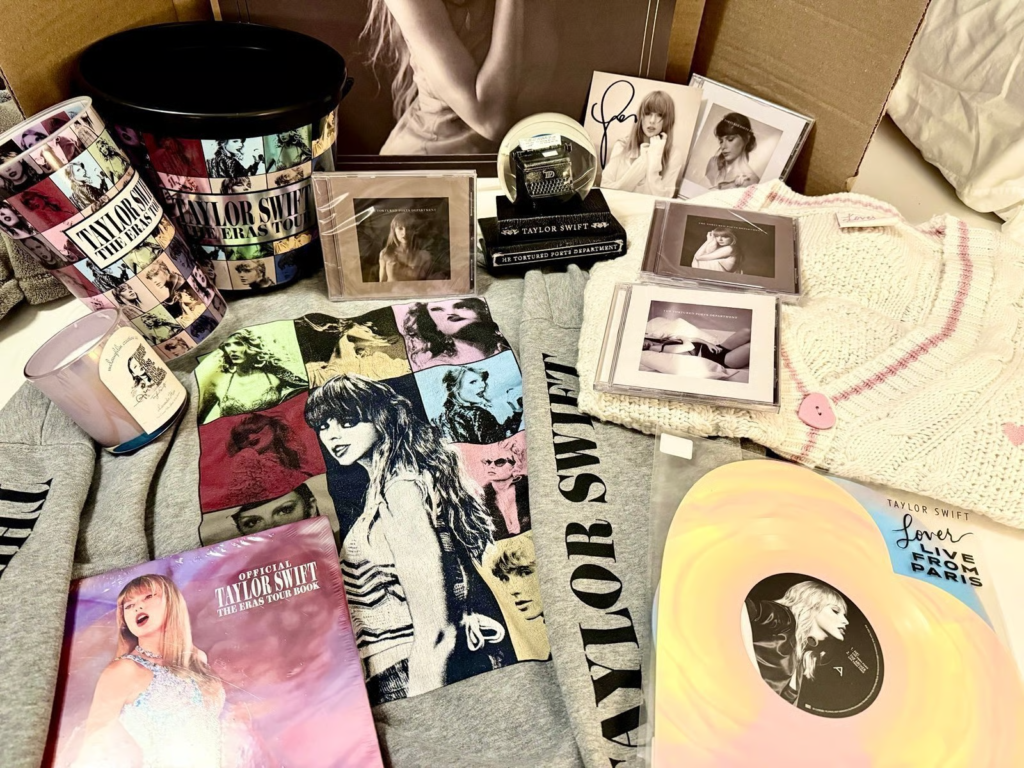
Taylor Swift’s legacy is marked by unprecedented success in the music, streaming, and cultural realms, making her one of the most influential artists of the 21st century. She is the only artist in history to have won Album of the Year four times at the Grammy Awards, symbolizing her dedication to her artistic vision and evolution through various eras, from country to pop to indie folk.
Apart from her Grammy Awards, Taylor Swift has won more than 40 American Music Awards, the highest number in the history of the event, reflecting her commercial success as well as her ability to connect with her fans. Her success is also reflected in the streaming world, where she is always among the top most streamed artists in the world. Every year, the Spotify Wrapped report shows billions of streams, symbolizing her capacity to connect with people from all walks of life.
On the charts, Swift has broken many Billboard records. She has had multiple albums at once in the top 40 and has had several number one hits on the Hot 100, a feat that has been accomplished very few times in the history of modern music. These accomplishments show that she has been consistent in her commercial success and that she has a wide appeal.
Another important aspect of Swift’s career is her success as a songwriter. Praised for her lyrical complexity, storytelling ability, and emotional truth, Swift received the Hal David Starlight Award from the Songwriters Hall of Fame, solidifying her reputation as one of the most important voices in modern music. The accomplishments of Swift as a songwriter and on the charts demonstrate a career that combines critical and commercial success, making Taylor Swift not only a music superstar but also a global icon whose influence affects the business, artistry, and cultural conversation of modern music.
Cultural Influence
The impact of Taylor Swift goes beyond the music industry and into the realm of culture, fashion, and international fans. Swift has been instrumental in redefining the image of the contemporary pop star as an artist who owns her story through songwriting, entrepreneurial choices, and fan interaction. Her close relationship with her fans, known as Swifties, has turned musical concert traditions such as the exchange of friendship bracelets into global phenomena. The songs of Taylor Swift frequently incorporate themes of love, learning, loss, and self-discovery, appealing to fans across generations and cultures.
Deep Dive into Albums and Musical Eras
Debut Era – Taylor Swift (2006)
Taylor’s self-titled debut showcased a young songwriter with remarkable storytelling ability. Hits like “Tim McGraw” and “Teardrops on My Guitar” established her narrative style, blending personal experiences with universally relatable themes. This era cemented her identity as a country-pop crossover artist and introduced the world to her lyrical authenticity.
Fearless Era (2008–2010)
Fearless elevated Swift into a mainstream phenomenon. Songs like “Love Story” and “You Belong With Me” dominated charts and earned Swift her first Grammy Album of the Year. She became a symbol of teenage empowerment, showing that young artists could wield significant cultural influence without sacrificing artistic integrity.
Speak Now Era (2010–2012)
Entirely self-written, Speak Now revealed a mature side of Swift. Tracks such as “Back to December” and “Mine” explored personal introspection and vulnerability. The album highlighted her growth as a songwriter capable of weaving complex emotional narratives into commercially successful music.
Red Era (2012–2014)
Red marked Swift’s first deliberate experimentation with pop. By blending country, pop, and electronic elements, tracks like “I Knew You Were Trouble” demonstrated her versatility. The era also reflected a transition in both sound and public persona, preparing her for a full pop reinvention.
1989 Era (2014–2016)
The release of 1989 signaled Swift’s complete embrace of pop. With polished synths, catchy hooks, and confident lyricism, songs like “Shake It Off” became global anthems. This era also showed her strategic mastery of marketing, social media engagement, and image reinvention.
Reputation Era (2017–2018)
In Reputation, Swift explored darker themes: fame, media scrutiny, and personal resilience. The album’s bold aesthetic and sonic experimentation highlighted her willingness to evolve and challenge expectations. Iconic tracks like “Look What You Made Me Do” reflected a more assertive public persona.
Lover Era (2019–2020)
Lover embraced optimism and nostalgia, featuring Brendon Urie on the lead single “ME!” and a collaboration with the Dixie Chicks (now The Chicks). Its pop sophistication, romantic narratives, and political commentary in songs like “The Man” showcased Swift’s growing maturity as both an artist and cultural figure.
Folklore and Evermore Era (2020–2021)
Amid the COVID-19 pandemic, Swift released Folklore and Evermore, embracing indie-folk and alternative sounds. These albums were praised for lyrical depth, storytelling mastery, and sonic subtlety. Tracks like “Cardigan” and “Willow” displayed her ability to craft cinematic, intimate songs that resonated universally.
Midnights Era (2022–2023)
Midnights marked a return to synth-pop, exploring insomnia, reflection, and vulnerability. Swift’s songwriting maturity shone as she translated personal experiences into universal themes. The album broke streaming records globally and underscored her dominance in contemporary music.
Taylor Swift’s Collaborations: Expanding Musical Boundaries

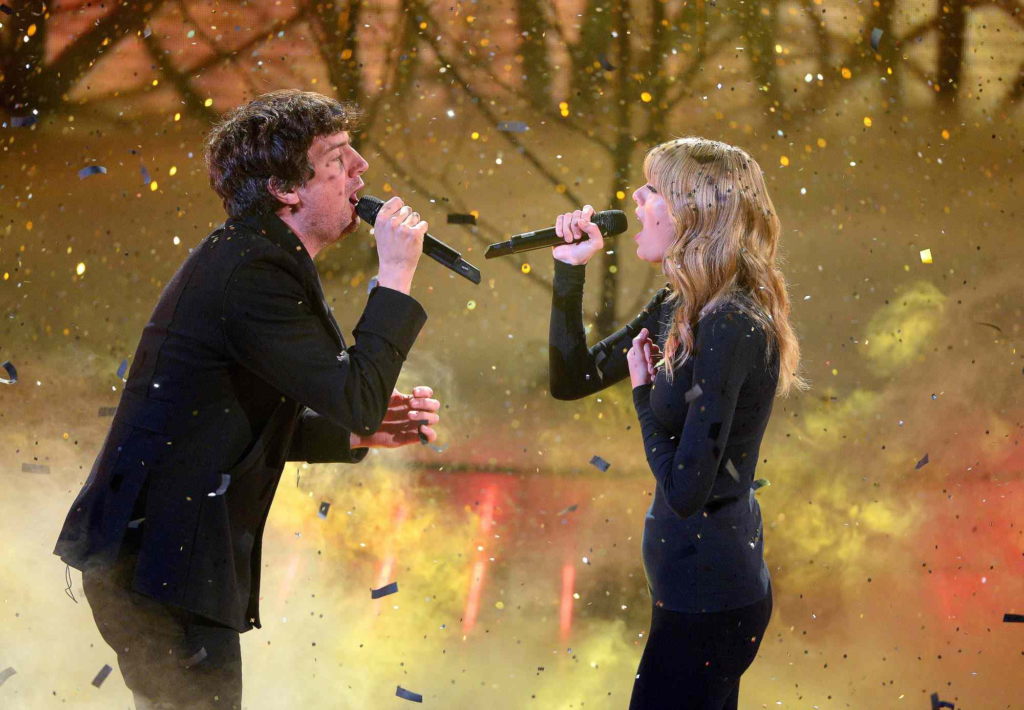
Taylor Swift’s body of work is characterized by a diverse range of collaborations with producers, songwriters, and other artists, each contributing to a different stage of her artistic development. The Swedish producers Max Martin and Shellback were instrumental in Swift’s complete pop overhaul during the 1989, Reputation, and The Life of a Showgirl periods, penning hit singles and well-crafted, radio-friendly productions while maintaining a sense of Swift’s personal narrative. This collaboration cemented Swift’s status as a pop force to be reckoned with, able to conquer mainstream success without losing her sense of self.
The American producers Aaron Dessner and Jack Antonoff were instrumental in the indie-folk and alternative-pop soundscapes of Folklore and Evermore. Their production style centered around acoustic elements, lyrical introspection, and complex instrumentation, allowing Swift to tell narrative-driven stories through song rather than relying on pop hooks.
Collaborations with artists like Ed Sheeran, especially in Everything Has Changed, exemplified shared lyrical understanding and appeal, whereas collaborative efforts with Zayn Malik and Bon Iver demonstrated her ability to blend genres. Taken together, these collaborations demonstrate Swift’s versatility and her ability to form artistic collaborations. By combining her artistic vision with the best of other musical styles, Swift has managed to keep her artistic vision fresh and authentic while maintaining the essence of storytelling that defines her as a songwriter.
Tours and Live Performance Mastery
Taylor’s tours are milestones of spectacle and fan engagement:
- Fearless Tour (2009–2010) – introduced her to global audiences with storytelling-focused performances.
- Red Tour (2013–2014) – elaborate production and emotional storytelling, including thematic sets for each song.
- 1989 World Tour (2015) – complete pop spectacle with choreography, special guest appearances, and immersive staging.
- Reputation Stadium Tour (2018) – broke North American attendance and revenue records.
- Eras Tour (2023–2024) – historic in scale, becoming the highest-grossing tour ever, celebrating all her musical eras and drawing international acclaim.
Swift’s concerts combine narrative arcs, visual spectacle, and intimate storytelling, reinforcing her connection with fans.
Re-recordings and Intellectual Property Battles
The dispute over her original masters (Big Machine Records sale to Scooter Braun) led to the Taylor’s Version project. Swift re-recorded all six of her original albums—Taylor Swift, Fearless, Speak Now, Red, 1989, and Reputation—reclaiming ownership while adding unreleased “vault” tracks. This project is a landmark in music industry history, emphasizing artists’ rights, inspiring other musicians to prioritize ownership, and showing the commercial viability of re-recordings.
Taylor Swift: Record-Breaking Achievements
Taylor Swift has reached a level of recognition and success in the music industry that has been equaled by very few artists in the history of modern music. Taylor Swift has won 16 Grammy Awards, four of which are Album of the Year Awards, making her one of the most awarded artists in the history of the Grammy Awards. Taylor Swift’s success also extends to the American Music Awards, where she holds the record for the most wins by any artist, with over 40 awards, which speaks to her broad commercial success and appeal.
In terms of Billboard chart success, Taylor Swift has had numerous number one albums and singles, which have set record-breaking milestones for sales, streaming, and longevity.
In tribute to her songwriting talents, Swift was honored as the youngest recipient of the Hal David Starlight Award from the Songwriters Hall of Fame. Her contributions have been widely cited for their ability to merge personal storytelling with universal themes, influencing the way songwriting is perceived both critically and commercially.
Taken together, these accomplishments demonstrate the impact that Taylor Swift has had not only as a performer but also as a cultural icon and innovator in the music industry. She has challenged the way that commercial success, artistic integrity, and fan engagement are defined, reflecting the changing face of artists in the contemporary pop culture and music industry.
Fan Culture
The Swifties fandom is a cultural phenomenon, shaping social media trends, streaming dynamics, and concert experiences. Fans participate in Easter-egg hunts for lyrics, vault tracks, and video references, creating unparalleled engagement. Swift’s influence extends into fashion, philanthropy, and political discourse, cementing her role as a cultural icon beyond music.
Conclusion
Taylor Swift’s journey from a teenage country singer to a global pop icon exemplifies artistry, resilience, and cultural influence. Her fearless exploration of genres, combined with honest storytelling, has redefined modern music, while her innovative fan engagement and advocacy have strengthened her connection with audiences worldwide. Swift’s record-breaking achievements, award-winning albums, and iconic tours reflect not only commercial success but also a lasting impact on the music industry. Beyond music, she has influenced contemporary fashion, particularly streetwear, by incorporating casual, wearable pieces like hoodies, graphic tees, sneakers, and caps into her public appearances and merchandise drops. Through this integration of style and culture, Swift has expanded her influence into the streetwear scene, making her aesthetic aspirational yet accessible for fans. She also inspires through philanthropy and authenticity, demonstrating how celebrity influence can intersect with culture and community. Taylor Swift is more than an entertainer; she is a generational voice, shaping culture, inspiring millions, and leaving an indelible legacy in both music and fashion, including the evolving streetwear landscape.
Frequently Asked Questions About Taylor Swift
1. What genre of music does Taylor Swift perform?
Taylor Swift started in country music but has explored pop, synth-pop, indie-folk, and alternative genres throughout her career.
2. How many Grammy Awards has Taylor Swift won?
Taylor Swift has won 12 Grammy Awards, including multiple Album of the Year wins.
3. What are Taylor Swift’s most famous albums?
Her most iconic albums include Fearless, 1989, Reputation, Folklore, Evermore, and Midnights.
4. What is the significance of Taylor’s “Eras Tour”?
The Eras Tour celebrates all her musical periods, breaking records as the highest-grossing tour in history.
5. Has Taylor Swift influenced fashion trends?
Yes, each of her album eras is associated with a distinct fashion style, influencing global trends.
6. How does Taylor engage with her fans?
She engages fans through Easter eggs, social media interactions, surprise releases, and personal letters.
7. What philanthropic causes does she support?
Taylor Swift supports education, disaster relief, LGBTQ+ rights, women’s rights, and healthcare initiatives.
8. How many songs has Taylor Swift had debut at number one?
She has over ten songs that debuted at number one on the Billboard Hot 100.
9. What was Taylor Swift’s first album?
Her debut album was Taylor Swift, released in 2006, establishing her as a country music sensation.
10. Has she been involved in any controversies?
Yes, including the Kanye West VMA incident, disputes over master recordings, and media scrutiny of her personal life.
11. Does Taylor write her own songs?
Yes, Taylor is a prolific songwriter, often writing or co-writing all her songs.
12. What is Taylor Swift’s influence on the music industry?
She has influenced songwriting, fan engagement, streaming records, and artists’ rights advocacy.
13. How has Taylor evolved musically over the years?
She transitioned from country to pop, indie-folk, and synth-pop while maintaining storytelling authenticity.
14. Is Taylor Swift active in social or political causes?
Yes, she advocates for voting rights, LGBTQ+ equality, and gender equality in addition to charitable initiatives.
15. What is Taylor Swift’s global impact?
She has topped charts worldwide, influenced artists across genres, and shaped cultural trends in music, fashion, and fan engagement.
For collaborations, press, or inquiries, contact us at streeticonic1@gmail.com.