Brands
Samsung: From Electronics Pioneer to Global Technology Leader

Samsung – Origins and Early History
Samsung began long before it became a global tech leader. The company’s roots trace back to March 1, 1938, when Lee Byung‑Chull founded a trading business in Taegu (now Daegu), Korea. It was called Samsung Sanghoe and sold dried fish, noodles, and groceries while exporting goods to China and Manchuria. The name Samsung comes from the Korean for “three stars,” symbolizing something big, numerous, and powerful (the “three”) and everlasting or eternal (the “stars”).
Korea was still under Japanese rule when Samsung started. The business began with just forty employees and humble goals. Its early focus was not electronics — it was trade and food export. Lee’s ambition, however, always aimed at growth and diversification.
In 1947, Samsung moved its headquarters to Seoul, then expanded into sugar refining with Cheil Jedang in Busan after the Korean War. The company soon ventured into textiles, founding Cheil Mojik, which built Korea’s largest woollen mill in Daegu.
During the 1950s and 1960s, Samsung diversified into insurance, securities, retail, and industrial projects, including fertilizer and chemical businesses. By then, it had become a major player in Korea’s post‑war economic growth.
Samsung Steps into Electronics
Samsung made a defining shift in 1969 when it formally founded Samsung Electronics in Suwon, South Korea, marking its entry into consumer electronics. Its first products were black‑and‑white televisions, a bold move that set the company on a path to technological innovation.
Samsung sent trainees overseas to Japanese companies like Sanyo and Toshiba to learn electronics manufacturing, including tubes, transformers, and display technology. This early training helped build Samsung’s internal technical capability.
In the 1970s, the electronics division expanded rapidly. Samsung produced not only TVs but also home appliances such as refrigerators, washing machines, and air conditioners. In 1974, the SR-201XD refrigerator was launched, marking a milestone as Korea’s first direct-cooling refrigerator.
The same decade saw Samsung acquire Korea Semiconductor, which laid the foundation for its semiconductor business. By the late 1970s, the company had produced over 4 million black-and-white televisions, the most in the world, and was rapidly building global export capacity.
Growth into a Technology and Semiconductor Powerhouse
In the 1980s and 1990s, Samsung deepened its technology focus. It became one of the world’s leading manufacturers of memory semiconductors. Samsung’s DRAM development milestones included producing the first 64MB DRAM in 1992, followed by the world’s first 256Mb DRAM in 1994 and the first 1Gb DRAM in 1996 — breakthrough products that fueled global demand.
The company also pioneered high‑capacity flash storage. In 2004, Samsung developed the world’s first 8Gb NAND flash memory chip, later becoming a key supplier of chips to major tech firms, including Apple.
Meanwhile, consumer electronics continued to diversify. In 2010, Samsung expanded its Galaxy mobile device lineup, introducing Galaxy Tab tablets and subsequently launching Galaxy Gear smartwatches in 2013 as part of its push into connected devices.
Samsung’s willingness to innovate extended to foldable technology. In 2019, the company launched the first Galaxy Fold, blending smartphone and tablet designs in a pioneering format.
Samsung’s Evolution into a Global Tech Leader

By the 1990s and 2000s, Samsung had shifted from a national player to a global technology leader. It became the top seller of televisions worldwide, driven by innovations in LCD and display technology.
Leadership transitions also shaped Samsung’s direction. After founder Lee Byung‑Chull’s death in 1987, his son Lee Kun‑Hee transformed the company’s strategy from low‑end manufacturing to high‑quality innovation. Samsung moved aggressively into premium electronics, including mobile devices, semiconductors, and cutting‑edge displays.
In 2020, after Lee Kun‑Hee’s death, leadership passed to his son Lee Jae‑Yong, formally appointed chairman of Samsung Electronics in 2022. Under his guidance, the company launched massive investment plans totaling hundreds of billions of dollars in AI, next‑generation semiconductors, and advanced technologies to secure future growth.
Samsung continues evolving its product portfolio and global strategy. Its latest innovations include the world’s largest micro RGB display (130‑inch) unveiled at CES 2026, showing Samsung is still at the forefront of display technology.
Samsung’s Product Ecosystem and Innovation
Samsung is not just a company; it is a technology ecosystem. Its product lines span mobile devices, televisions, home appliances, semiconductors, and display technology, creating a cohesive network that touches billions of lives worldwide. This ecosystem strategy allows Samsung to integrate products, services, and innovations seamlessly, making its devices work together efficiently.
The Galaxy brand exemplifies this ecosystem. Starting in 2009 with the original Samsung Galaxy (GT-I7500), Samsung redefined the mobile market. The Galaxy S series, introduced in 2010, competed head-to-head with Apple’s iPhone. The company focused on high-resolution displays, durable batteries, fast processors, and sleek design, ensuring global appeal. Today, Samsung sells hundreds of millions of Galaxy devices annually, including smartphones, tablets, smartwatches, and wireless earbuds.
Samsung’s innovation in foldable technology demonstrates its commitment to pushing boundaries. In 2019, it launched the first Galaxy Fold, a device that combines smartphone portability with tablet functionality. Later iterations, rebranded under the Galaxy Z series (such as the Z Fold2 and Z Flip), introduced new hardware mechanisms and ultra-thin glass technology, redefining mobile form factors. These devices showcase Samsung’s research-intensive approach, with billions invested in R&D annually.
Consumer Electronics Leadership
Samsung’s consumer electronics segment is equally influential. The company leads in televisions, refrigerators, washing machines, and air conditioners, often integrating smart home technology. Samsung’s QLED TVs, introduced in 2017, use quantum-dot technology to achieve brilliant color volume, industry-leading brightness, and improved energy efficiency. Samsung has also been a pioneer in 8K TVs, smart home integration via SmartThings, and AI-driven enhancements for visual and audio experiences.
Home appliances are not just functional; they are connected devices. Samsung’s refrigerators, for instance, can now track grocery inventory, suggest recipes, and sync with smartphones. Washing machines can be remotely controlled, and smart ovens adjust cooking settings automatically. This IoT integration exemplifies Samsung’s forward-thinking strategy: products are no longer standalone; they are components of a larger ecosystem. (news.samsung.com)
Semiconductors and Advanced Technology
Perhaps the crown jewel of Samsung’s business is semiconductors. Samsung is the world’s largest manufacturer of DRAM and NAND flash memory, while also being a major producer of high-bandwidth memory. These chips power not only Samsung devices but also Apple iPhones, PCs, servers, and cloud infrastructure worldwide.
In addition to memory, Samsung is a leader in system semiconductors, including processors, sensors, and mobile application processors. While its Exynos chips are used in various mobile devices, Samsung heavily utilizes Qualcomm’s Snapdragon series for its flagship smartphones. The company also invests heavily in next-generation AI chips, automotive chips, and advanced logic semiconductors, ensuring it remains at the cutting edge of technology.
Samsung’s semiconductor division contributes a large portion of its revenue, allowing the company to reinvest in innovation. By 2025, Samsung plans to lead in 3nm chip production, positioning itself for AI, 5G, and high-performance computing markets.
Samsung Streetwear, Sneakers, and Apparel Culture
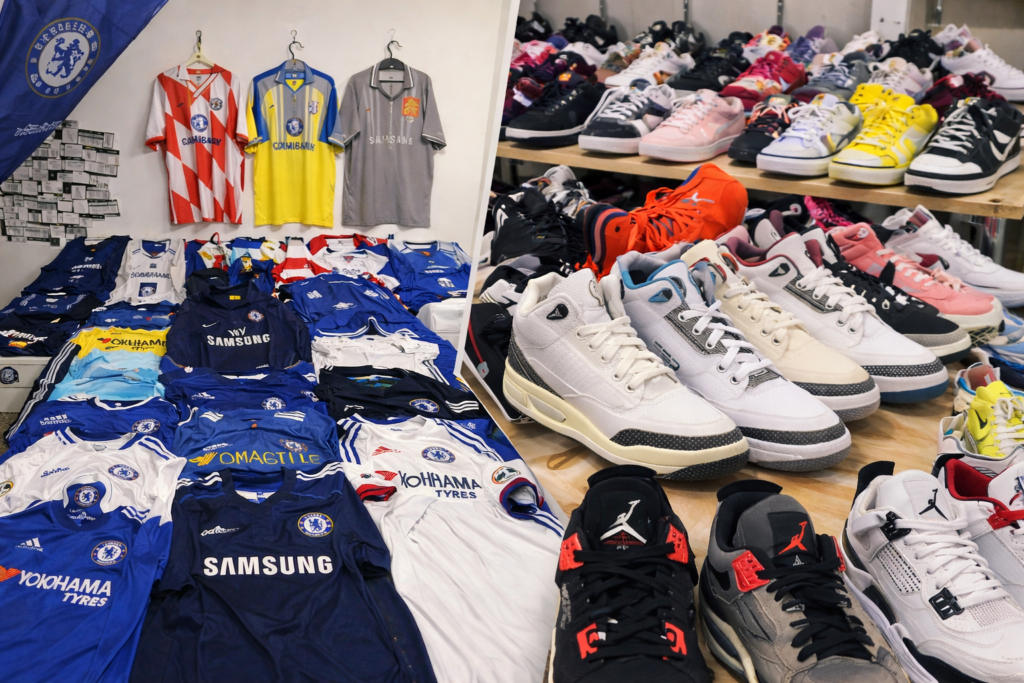
Samsung’s connection to streetwear culture has expanded beyond technology into fashion-inspired merchandise, including sneakers, shirts, and branded lifestyle apparel. While the company is not a traditional fashion label, its collaborations with sports organizations, gaming communities, and limited promotional campaigns have produced collectible clothing that resonates with sneaker and streetwear audiences. Branded T-shirts, hoodies, and jerseys featuring Samsung logos or campaign graphics often appear during product launches, esports tournaments, and sponsorship activations, turning corporate branding into wearable culture.
Sneaker culture intersects with Samsung primarily through partnerships, influencer marketing, and tech-focused collaborations. Limited-edition sneakers inspired by smartphone colors, futuristic materials, or foldable technology themes have been released in collaboration with designers and promotional campaigns. These items appeal to collectors who value exclusivity, innovation, and cross-industry creativity. The sleek design language of Samsung devices, especially Galaxy smartphones and wearables, naturally complements sneaker aesthetics, reinforcing the brand’s presence in lifestyle fashion conversations.
Streetwear thrives on identity and community, and Samsung taps into this by connecting technology with personal style. Fans often pair Samsung devices with sneakers and branded apparel as part of a coordinated look, turning tech into a fashion statement. This fusion of electronics, footwear, and clothing positions Samsung not only as a technology leader but also as a culturally relevant lifestyle brand.
Global Influence and Market Leadership
Samsung’s influence goes beyond products. It is a global cultural and technological brand, often shaping consumer expectations and market trends. Samsung smartphones dominate markets in Europe, Asia, and Latin America, while its TVs are top sellers in North America and its home appliances lead in several major markets across the Middle East.
Samsung’s approach blends aggressive marketing, innovation, and strategic partnerships. The company sponsors major events like the Olympics, collaborates with tech firms like Google and Microsoft, and invests in startup ecosystems and AI research. These strategies not only expand Samsung’s market share but also position it as a thought leader in consumer electronics and digital innovation.
Sustainability and Corporate Responsibility
Samsung increasingly emphasizes sustainability. The company has committed to reducing carbon emissions across its factories, increasing recycled materials in devices, and advancing energy-efficient technologies. Samsung also focuses on digital inclusion, prioritizing accessibility features in its software and providing global education programs to empower youth in underserved communities. For example, its Galaxy Upcycling program transforms old smartphones into IoT devices, extending their lifecycle and reducing e-waste. Sustainability is now a core component of Samsung’s global strategy, aligning with environmental, social, and governance (ESG) priorities.
Legal and Market Challenges
No company grows without challenges. Samsung has faced intense competition, intellectual property disputes, and regulatory scrutiny. The most famous case was the Apple vs. Samsung patent dispute in the 2010s, which led to significant multi-million-dollar settlements after years of litigation. Moreover, Samsung competes with Apple, Huawei, and Xiaomi in smartphones, and with LG in TVs and home appliances. Its ability to adapt quickly, invest in R&D, and maintain brand loyalty has helped it survive these challenges and maintain a global leadership position.
AI and Smart Technology
Artificial Intelligence is central to Samsung’s innovation strategy. Its comprehensive AI framework, including Galaxy AI and integrated Google Gemini models, powers voice assistants, smart home integration, and device optimization. Samsung is also developing AI chips that enable faster processing for edge computing, IoT devices, and autonomous systems. By embedding AI into mobile devices, appliances, TVs, and industrial solutions, Samsung seeks to create a truly intelligent ecosystem, where devices anticipate user needs and optimize energy consumption, convenience, and security.
In addition, Samsung’s AI research supports visual recognition, natural language processing, and predictive analytics. These technologies enhance user experiences in smart TVs, robotics, and connected cars, positioning Samsung at the forefront of consumer-facing AI applications.
6G Connectivity and Next-Gen Networks

Samsung is a pioneer in 6G research, aiming to go beyond the current 5G standards. While 5G has revolutionized mobile data, 6G promises ultra-low latency, massive IoT integration, and AI-enabled network optimization. Samsung’s 6G initiatives focus on holographic communication, extended reality (XR), and industrial automation. By leading early 6G development, Samsung ensures its devices, networks, and semiconductors remain future-proof in a hyper-connected world.
Robotics and Automation
Robotics represents another frontier for Samsung. The company has introduced home assistant robots, industrial automation solutions, and advanced AI-driven machines. Samsung’s robotics initiatives aim to simplify domestic chores, enhance industrial productivity, and improve healthcare outcomes. For example, robots equipped with AI can assist in elderly care, deliver goods in warehouses, or even perform precision tasks in manufacturing plants. Samsung’s investment in robotic research demonstrates its focus on creating devices that go beyond traditional electronics, moving towards intelligent systems capable of autonomous decision-making.
Foldable Technology and the Mobile Roadmap
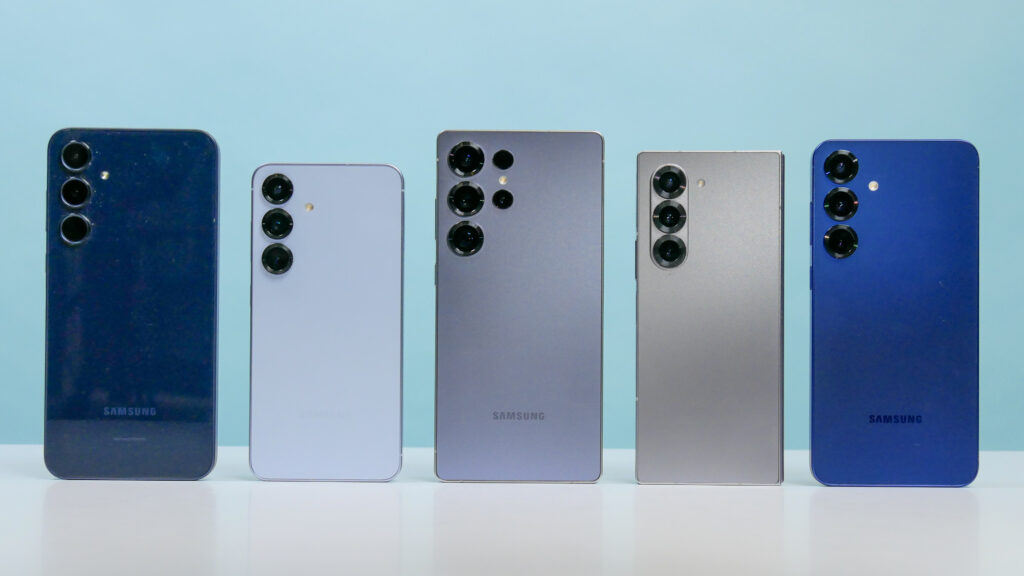
Samsung continues to innovate with foldable devices, making this technology more durable, affordable, and practical. The latest Galaxy Z Fold and Z Flip models feature improved hinge mechanisms, ultra-thin flexible glass, and longer-lasting batteries. Samsung’s roadmap hints at larger foldable tablets, dual-fold designs, and hybrid devices that merge smartphones, tablets, and laptops into a single portable form factor. Foldables are more than novelty devices—they represent Samsung’s vision for modular, adaptive hardware, capable of responding to user lifestyles and creating new experiences in mobile computing and entertainment.
Global Strategy and Market Expansion
Samsung’s global strategy balances innovation, marketing, and localized production. It maintains regional R&D centers in countries like South Korea, the U.S., and India to tailor products to local markets. Strategic partnerships with telecom providers, app developers, and tech startups further expand its ecosystem. The company’s supply chain resilience helps it mitigate global disruptions, though it remains vulnerable to geopolitical unrest and trade restrictions. Investments in domestic chip manufacturing and energy-efficient factories ensure long-term sustainability and competitiveness. By focusing on innovation, affordability, and ecosystem integration, Samsung secures leadership across diverse global markets.
Cultural and Social Impact
Samsung is more than a tech company—it shapes digital culture, consumer expectations, and global innovation trends. From sponsoring the Olympics to creating cutting-edge displays, foldable devices, and AI assistants, Samsung influences how people communicate, entertain, and work. Its products often set industry standards, inspiring competitors and shaping the expectations of billions worldwide. Samsung also prioritizes education, digital inclusion, and sustainability, demonstrating corporate responsibility alongside commercial success. Programs that repurpose devices and reduce e-waste primarily focus on circular innovation and medical outreach, while separate global initiatives provide affordable access to technology to help shape societies.
Samsung’s Future Vision
Samsung’s vision for the future is deeply rooted in technological convergence. The company aims to create a world where devices, AI, and connectivity seamlessly interact to improve daily life. Samsung’s corporate roadmap emphasizes AI-driven experiences, 6G connectivity, robotics, smart cities, and sustainability. By combining its leadership in semiconductors, displays, and mobile devices, Samsung positions itself to define the next era of digital transformation.
Conclusion
Samsung’s journey from a small trading company in 1938 to a global technology giant reflects innovation, risk-taking, and vision. Samsung leads in mobile devices, consumer electronics, semiconductors, and AI, influencing industries like streetwear, where technology meets fashion. The brand has explored youth culture through limited-edition T-shirts, hoodies, and accessories tied to product launches, featuring bold logos and futuristic graphics. Collaborations with designers have inspired sneakers and wearable tech concepts, blending style with functionality. Through continued investment in R&D, foldables, AI, and robotics, Samsung remains a cultural force shaping both technology and modern streetwear trends globally.
Frequently Asked Questions About Samsung
When was Samsung founded?
Samsung was founded in 1938 in Su-dong, South Korea.
Who founded Samsung?
Samsung was founded by Lee Byung-chul.
What was Samsung’s first business?
The company began as a trading and export business and later diversified into textiles, food processing, and eventually electronics.
When did Samsung start producing electronics?
Samsung entered the electronics industry in 1969, initially producing black-and-white televisions and home appliances.
What is Samsung’s flagship smartphone line?
Samsung’s flagship smartphones belong to the Galaxy series, including the S, Note, Z Fold, and Z Flip models.
What are Samsung’s main business divisions?
The company operates through several key divisions: Consumer Electronics, IT & Mobile Communications, Device Solutions (semiconductors), and Display.
What is Samsung’s role in the semiconductor market?
Samsung is the world’s largest manufacturer of memory chips and a major supplier of processors and system semiconductors globally.
What is Bixby?
Bixby is Samsung’s artificial intelligence assistant, integrated across smartphones, appliances, and other connected devices.
When did Samsung introduce foldable phones?
Samsung launched its first foldable smartphone in 2019 with the original Galaxy Fold.
What is Samsung SmartThings?
SmartThings is Samsung’s platform for Internet of Things (IoT) connectivity, allowing users to control and automate smart home devices.
How is Samsung contributing to sustainability?
Samsung focuses on reducing carbon emissions, increasing the use of recycled materials, and promoting device recycling and upcycling programs.
What is Samsung’s role in 6G technology?
Samsung is actively researching and developing next-generation 6G wireless technology to support future connectivity needs.
What is Samsung’s global market presence?
Samsung has a strong presence worldwide, particularly in Asia, Europe, North America, and Latin America, across multiple industries.
Has Samsung faced legal challenges?
Yes, Samsung has faced several legal disputes, most notably patent battles with Apple Inc..
What is Samsung’s long-term vision?
Samsung aims to build an AI-driven, fully connected ecosystem of devices while advancing sustainability and next-generation technologies
For collaborations, press, or inquiries, contact us at streeticonic1@gmail.com.