Blogs
Inside Marc Jacobs from Grunge Rebel to Global Fashion Architect

The Early Life of Marc Jacobs
The Marc Jacobs story begins not in a sleek presentation on the runway or in a famous fashion house, but in a young boy trying to navigate the busy streets of New York City. Born in 1963 in Manhattan, Jacobs had a childhood of creativity and turmoil. The death of his father had a profound effect on his life, creating a sense of sensitivity and introspection. In a constantly changing world, fashion was not just clothing but a means of protection and a way to express who one was. Jacobs’ earliest fashion influences came from his life with his grandmother on the Upper West Side of Manhattan. She loved beautiful things and was supportive of Jacobs’ endeavors, allowing him to experience the street life and underground culture that would influence his future work.
Jacobs was a young boy with a natural visual sense. He loved texture, shape, and the juxtaposition of different materials. These skills would propel him into formal education, first at the High School of Art and Design in New York City and then on to Parsons School of Design. At Parsons, Jacobs thrived. His student collections already displayed the duality that would define his career: a mastery of craftsmanship coupled with a playful rebellion against convention. These early explorations foreshadowed the creative audacity that would later make him one of the most influential designers of his generation.
Education and Early Influences
Jacobs’ experience at Parsons was not just an academic exercise but a full immersion in a community of mentors, peers, and industry experts who would influence his aesthetic. The program was highly competitive and encouraged a focus on the discipline of fashion design and the importance of storytelling through clothing. Jacobs was quickly recognized for his oversized hand-knit sweaters and graphic pieces that challenged the power dressing and extravagance of the early 1980s. Awards and accolades would follow the young designer who had a clear understanding of technical skill and a keen sense of aesthetics.
However, his formal education was only part of his foundation. Jacobs was inspired by the streets of New York City: the punk clubs, street wear of the young creatives who wore the clothing, and the edginess of the art gallery scene. Jacobs was also inspired by music: the rise of the underground music scene and alternative rock. Fashion was a reflection of life: messy, complicated, and emotionally charged. These early understandings of the importance of cultural context would become a defining element of Jacobs’ design philosophy and would help him connect the worlds of high fashion with the Zeitgeist of modern society.
Launching a Label


In 1986, American designer Marc Jacobs created his first collection under the Marc Jacobs label in New York, in collaboration with business strategist Robert Duffy. This was after Marc Jacobs had already received widespread acclaim for his graduation collection at the Parsons School of Design and had begun his career in the fashion industry. However, he realized that artistic success alone was not sufficient to guarantee a long-term fashion house. The creation of the Marc Jacobs label was, therefore, a creative and strategic move.
Marc Jacobs needed to be independent in the sense that he needed to have full control over the direction of the design, themes, and the identity of the brand, unlike working in a corporate environment where he would be restricted in his work. Robert Duffy, who had experience in business, saw the commercial potential in Marc Jacobs and assisted him in transforming his artistic vision into a business model. Their objective was to develop a brand that would focus on creative innovations, although they found it difficult to sustain themselves financially until they received massive corporate funding years later.
It was a brand that was born at a time when fashion in America was heavily inclined towards opulent power dressing and conservative glamour. Jacobs entered the fashion world at a time when he was intentionally challenging conservatism. By launching his own brand, Jacobs did not simply establish himself as a designer-for-hire, but rather as a creative force that was bent on redefining fashion in original ways.
Perry Ellis and Early Industry Recognition
Marc Jacobs’ breakthrough is closely associated with his period of work at Perry Ellis, during which he worked as a women’s wear designer from 1988. Perry Ellis was already known for its refined American sportswear with clean lines and commercial appeal. Yet, still in his mid-twenties, he was given the role of injecting new energy into the brand after the death of its founder. This gave him a position that was part of a corporate infrastructure that demanded commercial success and retail consistency.
Marc Jacobs used this period to see how far he could take innovation and disruption with an established brand. He introduced looser silhouettes, layering, and references to underground music scenes and youth cultures. His most famous moment came with the 1992 collection that reflected the grunge movement, which went against conventional ideals of glamour. While highly controversial and commercially divisive, it marked his commitment to believing that fashion must evolve with cultural change, rather than against it.
This period taught Jacobs how to manage the tension between innovation and market expectations. It clarified why independence mattered to him. The lessons learned at Perry Ellis directly informed the identity, risk tolerance, and narrative depth that later defined his own label.
The 1992 Grunge Collection

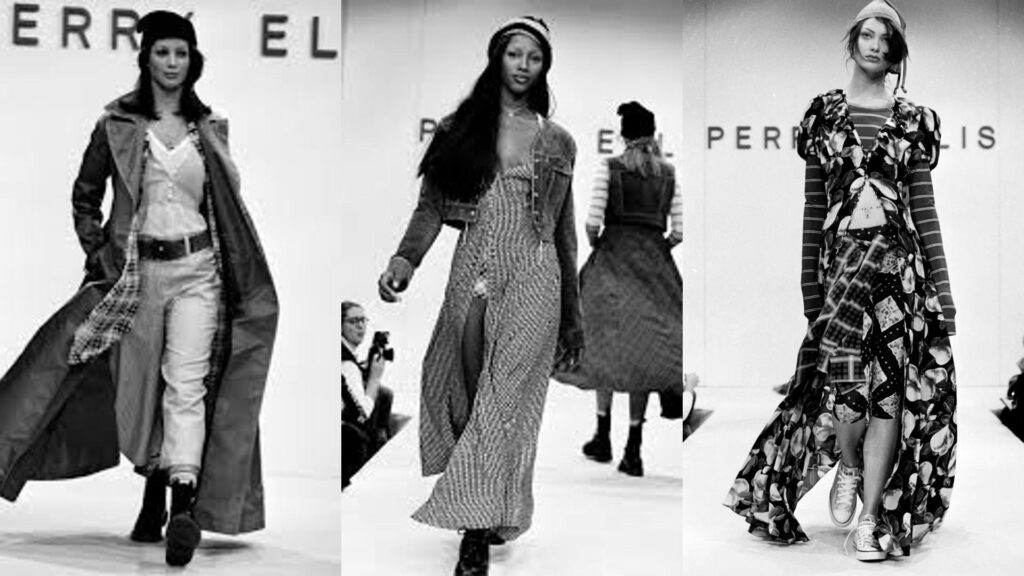
The turning point in Jacobs’ early career came in 1992 with his now-legendary “Grunge Collection.” Inspired by the Seattle music scene, thrift store aesthetics, and a very unglam sensibility, Jacobs took street fashion and elevated it. Rather than aping what he saw on the streets, Jacobs gave it a high fashion twist. His runway show featured models walking down the runway in disheveled clothing, accompanied by disheveled hairstyles and a raw, unadorned makeup look that challenged the conventional standards set by New York Fashion Week.
The reaction was immediate and polarizing. Fashion critics had mixed reviews. Some praised it as bold, while others criticized it as “unkempt” and “uncommercial.” But it only served to further solidify Jacobs’ status as a fashion designer unafraid to challenge conventional wisdom. The Grunge Collection challenged the status quo and made it clear that American fashion could be as interested in contemporary culture as any fashion house in Europe. But it also made it clear that Jacobs was a fashion designer unafraid to take risks.
Risk and Reputation
In 1992, Jacobs launched his now-famous grunge collection while in his position as Vice President of Women’s Design at Perry Ellis. This was no impulsive decision in favor of a new aesthetic direction. It was a calculated cultural statement. Jacobs took his inspiration from the emerging grunge music scene represented by bands like Nirvana. He adapted elements of this emerging fashion trend in his use of luxurious fabrics and craftsmanship.
Marc Jacobs launched this direction for a reason. He was fed up with the polished power dressing and conservative glamour that was still the fashion establishment in early 1990s America. He was of the opinion that clothing reflected the reality of society. He wanted his clothing to reflect the reality of youth disillusionment and rebellion against the establishment.
The cultural impact was immediate. The grunge collection was a wake-up call for new designers and stylists. It proved that fashion could engage with subculture and still be luxurious. It was a moment of clarity for Marc Jacobs. He realized his long-term vision was about combining unconventional sources of inspiration with technical excellence and allowing cultural commentary to play a part in his decision-making process.
Transition to Eponymous Success
After the controversy surrounding the 1992 grunge presentation for Perry Ellis, Jacobs entered a new era that was both more scrutinized and more opportune for him. While it ultimately led to his leaving the company, it also greatly increased his visibility in the international fashion world. By the mid-1990s, Jacobs focused this newfound visibility on reinvigorating his own eponymous line, which he and his business partner, Robert Duffy, officially founded as Marc Jacobs International in 1993.
It was a strategic move for Jacobs, as it coincided with a new fashion environment that emphasized designer-centric branding. After learning from his experience with Perry Ellis, Jacobs perfected his approach to fashion, striking a new balance between conceptualization and tailoring, as well as structure in production. Duffy handled licensing and retail, although it would take a major investment from LVMH in 1997 to resolve significant financial issues for the company. This division of labor allowed Jacobs to focus on his aesthetic evolution as a designer. They were able to position him to move from niche recognition to international influence throughout the late 1990s and early 2000s.
Founding the Eponymous Label
The journey of Marc Jacobs as an independent fashion brand begins in 1986 when the designer launched his brand in New York. At the time, Jacobs was in his early twenties and partnered with his lifelong friend and business brains Robert Duffy. The brand was a result of a collaboration between the visionary creativity of Jacobs and the business acumen of Duffy. The fashion industry was in a state of flux in the mid-1980s in America. The fashion landscape was dominated by conservative power dressing and opulent glamour. There was no space for a new voice in fashion that was both youthful and subcultural. The market was missing a brand of luxury that was both accessible and radical.
The brand of fashion created by Marc Jacobs was always about a certain philosophy of fashion that combined elements of high fashion and street sensibility. The fashion created in the early days of the brand was all about precise silhouettes, innovative fabric use, and a certain willingness to incorporate elements of different styles and cultures. Jacobs was not just selling clothing; he was presenting a lifestyle, an attitude, and a cultural lens through which fashion could be understood. The eponymous label became a platform for him to explore these ideas, though he initially struggled against the financial and operational constraints of his corporate backers.
Why the Eponymous Label? The Creative Impulse
Jacobs’ decision to start his own brand was heavily influenced by a mix of artistic expression and cultural ambitions. Having already established his own brand in 1986, his subsequent experience with the thrill and limitation of working with Perry Ellis merely reinforced his decision that he needed complete autonomy to express himself. He wanted to challenge the status quo that luxury fashion had to be exclusive or disconnected from culture. Jacobs realized that clothing could be used to make social commentary, to reflect subcultures, and to be an expression of individuality. His eponymous brand gave him the platform to execute this vision with precision and accuracy, while establishing brand identity that was synonymous with his own artistic expression.
Duffy’s involvement was crucial because it gave Jacobs the autonomy to completely focus on design by delegating other responsibilities. It was a move that helped maintain brand integrity from an artistic perspective, although they struggled to scale the brand because of severe financial constraints before receiving major corporate backing. Jacobs once noted that having a trusted partner in Duffy freed him from “the distractions of spreadsheets and investors,” enabling the label to focus on innovation, runway impact, and cultural resonance.
Key Milestones in the Early Years
Since its founding in 1986 by Jacobs and his business partner Robert Duffy, the Marc Jacobs brand has grown through deliberate creative and strategic developments. In the latter half of the 1980s and the early 1990s, Jacobs developed a reputation for his dramatic runway shows that married storytelling with technical skill. Post the investment from LVMH in 1997, the company set out on a deliberate expansion strategy in accessories. This was in response to the increased global appetite for accessories such as leather goods as a source of steady revenues.
A major turning point in the company’s history was in 1997 when Jacobs was appointed creative director of Louis Vuitton. Jacobs was instrumental in introducing ready-to-wear at the iconic luggage brand and also initiated the brand’s association with artists. This not only helped revamp the brand’s image but also increased the prestige of the Jacobs brand. In 2001, Jacobs launched the diffusion line Marc by Marc Jacobs to appeal to a younger demographic at a more affordable price point.
By 2015, the company consolidated its structure, closing the diffusion line to refocus on luxury positioning. Through the 2020s, Jacobs emphasized digital campaigns, archival revivals, and youth-driven casting, ensuring relevance through 2026 by balancing nostalgia, innovation, and direct cultural engagement.
Building a Global Brand: Strategy and Vision
The ascension of Marc Jacobs to the status of a global brand was also facilitated by its savvy understanding of the importance of marketing, celebrities, and retailing. From the beginning, Jacobs had fostered relationships with influential people in music, film, and the arts, so that the brand he created would have an impact beyond the runway.
The next step was the expansion of Marc Jacobs’ retail presence. Flagship stores in New York, Paris, and Tokyo provided Marc Jacobs an opportunity to create an immersive experience in which the aesthetic of the brand—edgy, luxurious, and culturally relevant—could be experienced in an unfiltered way. The design of the store, the curation of the visual merchandising, and even the curation of the staff were an extension of the designer’s storytelling sensibility, in which the experience of the store was an extension of the storytelling process, so that the retail spaces themselves became an extension of the Marc Jacobs’ brand, reinforcing the global identity of the brand and the loyal following of fashion-conscious consumers that it had acquired.
The Early Runway Disruptions
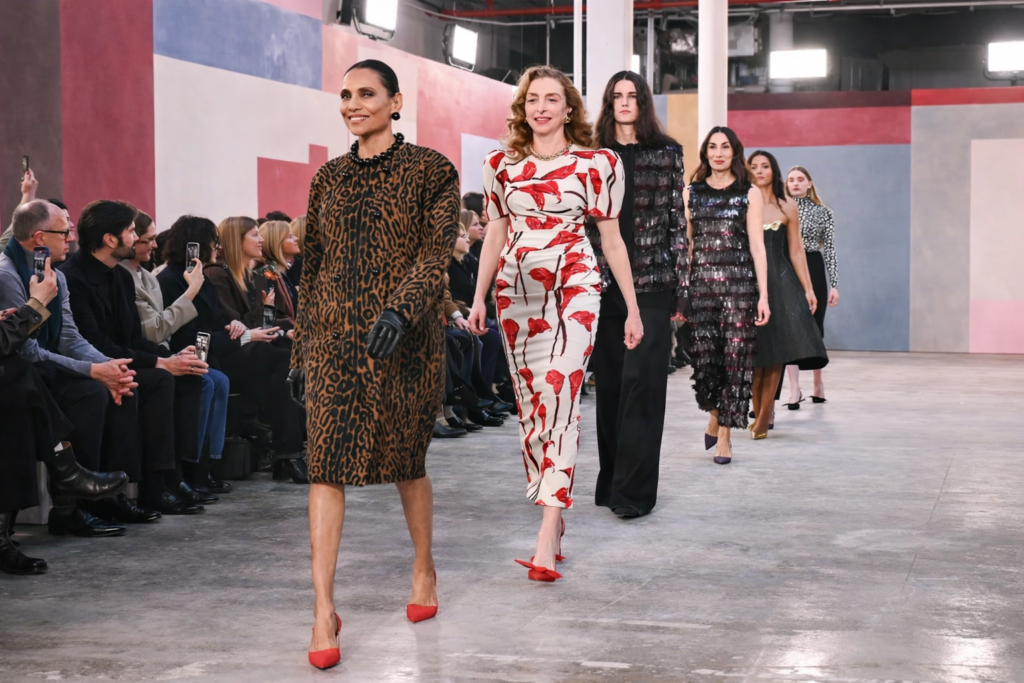
Marc Jacobs’ runway presentations soon became the events to attend, not just for the clothing but for the cultural statement he was making through his designs. By the late 1980s and early 1990s, Marc Jacobs’ collections had already started to subvert the traditional notion of beauty and fashion order. Take, for instance, the Spring/Summer 1989 collection, where the designs were playful, Western-inspired, and featured gingham and cowboy themes, a whimsical departure from the more formal power dressing that dominated American fashion at the time. Marc Jacobs wanted to subvert the traditional notion of clothing for both genders, but in a way that was also wearable.
It was also during this time that Marc Jacobs forged his alliance with celebrities, who would prove to be essential in promoting the Marc Jacobs brand in the coming years. Celebrities such as Winona Ryder, Sofia Coppola, and eventually Kim Gordon and Chloë Sevigny would wear his designs both on and off the red carpet, providing the brand with a natural but powerful cultural endorsement. Marc Jacobs understood that the power of the celebrity could work for the brand, to reinforce its voice in the world of youth, rebellion, and cutting-edge culture.
Louis Vuitton Era
One of the most important moments in Jacobs’ career, and for his brand, was when he was named creative director at Louis Vuitton in 1997. This was a surprise to the fashion world, where a young, edgy American designer would assume the role of creative director at one of the most historic luxury fashion brands in the world. Jacobs’ job was to make Louis Vuitton modern while also paying homage to its heritage, a tightrope that required careful balance between tradition and innovation.
Jacobs’ first ready-to-wear collection for Louis Vuitton was in 1998, and it featured his signature stark, minimalist aesthetic that focused on luxury materials rather than luxury branding. Jacobs would go on to feature graffiti designs, such as the famous Stephen Sprouse graffiti handbags in 2001, and collaborations with modern artists, such as the colorful monogram collection by Takashi Murakami in 2003. These collections were not only commercial successes, but they also sent an important cultural message that luxury could be fun, accessible, and associated with modern art. Jacobs’ work at Louis Vuitton also boosted his own brand, reinforcing his reputation for being a designer who could navigate the worlds of business, creativity, and culture.
Notable Marc Jacobs Collections and Themes
Throughout the 2000s, Marc Jacobs made it his goal to turn his brand into a collectible-driven global brand. After LVMH’s investment in 1997, Jacobs concentrated on developing rapid product growth during the early 2000s. In 2001, Marc by Marc Jacobs was introduced, which catered to young consumers looking for affordable luxury goods. It was during this year that small leather goods, logo jewelry, and seasonal accessories were introduced with high retail turnover.
In 2005, the Stam bag was introduced, named after model Jessica Stam. It quickly gained popularity with its quilted leather design and chain strap, becoming one of the most recognizable “It-bags” of the decade, especially during 2005-2008.
In 2006 and 2007, Jacobs introduced more collectible-driven items, including enamel bangles, charm bracelets, logo necklaces, and branded tech accessories like iPod cases. Footwear during 2004-2009 included platform heels that resembled glam rock from the 1970s and limited-edition sneakers that reflected streetwear’s impact on fashion.
The focus of the brand between 2008 and 2012 was to grow its contemporary diffusion range, known as Marc by Marc Jacobs, as well as its high-end accessories, including the Stam bag. These are clear indications of how Jacobs has worked to develop a collectible range of products.
Cultural Collaborations: Artists, Musicians, and Media
“Marc Jacobs has made collaboration a long-term strategy for his fashion brand since its founding in 1986.” In 1997, when Jacobs took over as creative director of Louis Vuitton, he launched what could be considered the most influential collaboration in the world of luxury fashion when he teamed up with Stephen Sprouse in 2001. This was followed by another highly successful collaboration with Takashi Murakami in 2003. The multi-colored Monogram collection was a reinterpretation of Louis Vuitton’s iconic logo and proved the potential of collaboration in creating a new paradigm of commercial success.
In the early 2000s, Jacobs worked in collaboration with photographer Juergen Teller. Teller’s unglamorized photography, especially after 1998, gave the brand of Marc Jacobs a new visual identity. In 2008, Jacobs collaborated with artist Richard Prince for Louis Vuitton.
Celebrity endorsements helped to ensure cross-industry relevance. Madonna worked with Louis Vuitton in 2009, and Lady Gaga appeared in the Fall 2016 campaign for Marc Jacobs. Contemporary music culture is linked with fashion through these celebrity endorsements. In 2020, Jacobs worked with Peanuts to create capsule collections with Snoopy prints.
Over four decades, these collaborations were carefully planned to ensure that they were culturally relevant. Marc Jacobs’ brand has been at the center of music, art, and pop culture since the 1990s and continues to be so until 2026.
Why These Collections Mattered
The works of Jacobs were significant not only for their beauty but also for their sociocultural relevance. They subverted conventional ideals of beauty, challenged the concept of luxury, and proved that fashion could be used as a catalyst for artistic dialogue. Every runway, accessory, and collaboration was an opportunity for storytelling, experimentation, and commentary on identity, culture, and society.
Through the fusion of whimsy and precision, rebellion and sophistication, and celebrity appeal and artistry, Jacobs cemented his brand as a global cultural phenomenon rather than simply a fashion house. His contributions to fashion continue to remind the industry that creativity is often the product of the intersection of authenticity, cultural understanding, and calculated risk.
Diffusion Lines and Market Reach
Marc Jacobs soon realized that luxury alone may not be enough to increase brand access. In 2001, Jacobs launched a diffusion line called Marc by Marc Jacobs. This line was designed to appeal to a younger demographic. Unlike the mainline brand, the diffusion line was more playful, accessible, and experimental. At the same time, the diffusion line did not lose the irreverence that defined the mainline brand.
The diffusion strategy was successful for Marc Jacobs, allowing the brand to expand internationally. It opened flagship stores in New York, Paris, Tokyo, and London. It also partnered with select department stores to increase brand access. The brand curated these stores according to its values, which were modern, slightly rebellious, and cultured.
Media Presence
However, Jacobs’ business savvy was not just limited to product offerings, as he also used the media and the power of celebrities to help maintain the momentum of his brand. By partnering with pop culture icons such as Lady Gaga, Sofia Coppola, and Chloë Sevigny, the Jacobs brand remained at the forefront of cultural conversations at all times. Strategic product placements in films, television, and music videos also ensured that Jacobs’ place at the crossroads of fashion, art, and media was not threatened.
The 2010s also saw the importance of the digital platform in the expansion of the Jacobs’ brand, and by engaging with global millennials through social media campaigns and e-commerce platforms, the brand set the stage for the 2020s, where the “Heaven” product offerings would utilize the power of the internet and the viral popularity of TikTok to engage the younger audience at a much deeper level than just the traditional store experience.
Legacy and Cultural Impact
Marc Jacobs’ legacy is not only about business but also culture. He has been redefining American fashion by integrating youth culture, art, and luxury, thereby developing a fashion language that is not only creative and bold but also rooted in individualism. His grunge movement, creative runway presentations, and partnerships with artists like Takashi Murakami and Stephen Sprouse have significantly changed the fashion discourse of the 21st century.
Even though Jacobs resigned from Louis Vuitton in 2013, his brand continued to flourish, proving that his impact was not only cultural but also institutionalized in the fabric of modern fashion.
Conclusion
Marc Jacobs is not just an individual; he is a cultural architect who has changed the way in which luxury is associated with youth identity and streetwear culture. From the time he appeared in the 1980s in New York to his appointment at Louis Vuitton in 1997, Marc Jacobs has always managed to blur the lines between high fashion and streetwear culture. From his grunge influence, oversized clothing, and slip dresses, Marc Jacobs has always been associated with the bridge between high fashion and streetwear culture. Marc Jacobs has not just followed the trend of streetwear; he has incorporated it into his brand, bringing together craftsmanship and rebellion. Marc Jacobs streetwear looks have managed to influence the younger generations, and the longevity of the Marc Jacobs brand is a result of the fact that when innovation meets cultural awareness, it is not just for the seasons but for the decades to come.
Frequently Asked Questions About Marc Jacobs
1. Who founded Marc Jacobs?
Marc Jacobs, born in 1963 in New York City, founded his eponymous brand in 1986, two years after graduating from Parsons School of Design.
2. When did Marc Jacobs become creative director of Louis Vuitton?
He joined Louis Vuitton in 1997 and remained until 2013, introducing ready-to-wear collections and groundbreaking artist collaborations.
3. What was the “Grunge Collection”?
The 1993 Grunge Collection for Perry Ellis featured intentionally disheveled styling, ripped flannels, slip dresses, and Doc Martens, challenging the era’s polished fashion norms.
4. What is Marc by Marc Jacobs?
The Marc by Marc Jacobs diffusion line launched in 2001 to offer younger consumers accessible luxury with playful, colorful, and experimental designs.
5. Which artists has Jacobs collaborated with?
Notable collaborations include Takashi Murakami, Stephen Sprouse, and Richard Prince, blending pop art and cultural references into fashion.
6. How has Marc Jacobs influenced street culture?
By merging runway fashion with youth subcultures, music, and art, Jacobs introduced subversive streetwear aesthetics into luxury markets worldwide.
7. What are his most iconic handbag designs?
Signature pieces include the Louis Vuitton Murakami Monogram and Graffiti collections, the Marc Jacobs Stam bag, and the modern retail sensation “The Tote Bag.”
8. Why is Marc Jacobs culturally significant?
He challenged industry norms, promoted inclusivity, and connected fashion to broader art and music movements, redefining American luxury.
9. Has the brand expanded globally?
Yes, with flagship stores in New York, Paris, and Tokyo, and select retail partnerships across Europe, Asia, and North America.
10. Is Marc Jacobs still designing today?
Yes, he continues to innovate through his eponymous label, focusing on ready-to-wear, accessories, collectible collaborations, and contemporary streetwear lines.
11. What inspired Jacobs’ early collections?
His early work drew from youth culture, music, film, and subcultures, blending technical tailoring with playful rebellion.
12. How did the Louis Vuitton tenure impact his brand?
Jacobs gained global recognition, learned to merge heritage luxury with innovation, and used the experience to elevate his eponymous label.
13. What is the brand’s approach to collaborations?
Jacobs partners with artists, photographers, musicians, and franchises to produce limited-edition handbags, apparel, and accessories that merge art and fashion.
14. Which celebrities have influenced Marc Jacobs campaigns?
Icons like Sofia Coppola, Lady Gaga, and top models have amplified the brand’s cultural reach.
15. How does Marc Jacobs balance luxury and accessibility?
Through sub-labels like Heaven, collectible accessories, streetwear-inspired pieces, and limited editions, the brand appeals to diverse markets without compromising creativity.
For collaborations, press, or inquiries, contact us at streeticonic1@gmail.com.