Blogs
How Louis Vuitton becomes the World’s Most Powerful Luxury House?

The Origins: A Boy Who Walked Toward Destiny
The Louis Vuitton legacy does not begin in a luxurious Parisian workshop or under the golden glow of Place Vendôme. It begins in 1821, in the rural village of Anchay, in the eastern part of France, where Louis Vuitton was born to a humble family as the son of a farmer and carpenter. His childhood was marked by difficulties. His mother died when he was only ten years old, and his father soon married another woman with whom Louis had a complicated and troubled relationship. By the time he was thirteen years old, Louis made a choice that would alter the course of fashion history – he left home.
In 1835, he set out on a journey from Jura to Paris on foot, walking a total of 380 kilometers. This took him almost two years. During this time, he lived by taking up small laboring jobs, working wherever he could to earn enough to continue his journey. Paris in the 1830s was not just a city. It was rapidly becoming the cultural and industrial capital of Europe. Trains were being laid. Steam travel was revolutionizing transportation. Traveling was no longer the prerogative of the aristocracy. Travel itself was becoming fashionable.
When Louis Vuitton finally settled in Paris in 1837, he was only sixteen years old. He apprenticed with Monsieur Maréchal, a renowned layetier-emballeur, or professional packer and box maker. This trade demanded skill, craftsmanship, and knowledge of aristocratic requirements. At that time, wealthy travelers needed expert craftsmen to carefully pack their wardrobes for long journeys. Vuitton soon made a name for himself for his attention to detail and creativity.
He soon gained popularity among the Parisian aristocracy. In the 1850s, he was already packing trunks for Empress Eugénie de Montijo, wife of Napoleon III. Being the Empress’s trunk packer placed Vuitton in the highest echelons of French society. It also introduced him to a very important lesson: dome-shaped trunks were not very practical for stacking when traveling by train and boat. Flat-topped trunks would be more practical. While other craftsmen were just beginning to think of new designs, Vuitton was the first to successfully patent and market a practical, stackable flat-topped trunk for the modern era.
In 1854, Louis Vuitton opened his own business at 4 Rue Neuve-des-Capucines in Paris. His signboard read, “Securely packs the most fragile objects. Specializing in packing fashions.” In 1858, he launched his groundbreaking flat-topped, rectangular trunk made of light poplar wood and grey Trianon canvas. The trunk was waterproof, stackable, and robust. It turned luggage from a burden to a necessity into a practical innovation.
The flat trunk was more than a product. It was a reaction to the industrial revolution. As railroads extended their reach across Europe and steamships bridged the continents, Vuitton’s trunks became the travel accessory of choice for aristocrats, adventurers, and entrepreneurs. His workshop would soon relocate to Asnières-sur-Seine in 1859 to meet the rising demand. This workshop is still operational today and is a symbolic beating heart of the brand’s craftsmanship.
Louis Vuitton passed away in 1892, but he had already established the groundwork for something much bigger than a luggage brand. What he established was not just a travel accessory. He established a philosophy of innovation, functionality, and elitism. The brand would soon be passed down to his son, Georges Vuitton, who would turn this respected French trunk manufacturer into a worldwide luxury phenomenon.
The Rise of the Monogram: Georges Vuitton and Brand Protection
If Louis Vuitton built the foundation, Georges Vuitton built the empire.
Although Georges did increase the protection of the brand, the notion was not “revolutionary for his time” in the sense that he was the first to grasp it; his father, Louis Vuitton, had already pioneered visual and legal protection by registering the trademark of the Damier canvas in 1888, specifically to combat counterfeiters.
In 1896, he created the Louis Vuitton Monogram Canvas. The pattern consisted of interlocking LV letters and floral patterns influenced by Japanese art and Victorian design fads. It was not just for show. It was intentional. The Monogram was one of the first instances of luxury branding as a form of anti-counterfeiting technology.
This marked Louis Vuitton as more than a craftsman workshop. It marked it as a distinct global identifier. By the end of the 19th century, the brand was growing globally, taking part in World Exhibitions in Paris and Chicago, and opening the first international store in London and entering the United States market.
Georges also launched new products such as the Steamer Bag in 1901, intended as a laundry bag to be packed inside larger trunks to separate dirty laundry from clean clothes during travel. It launched the first smaller leather goods products for the house. By the early 20th century, Louis Vuitton had evolved from a luggage innovator into a symbol of refined mobility. The world was shrinking through technology, and Vuitton was traveling with it.
The Interwar Years and Global Expansion
The early 1900s saw the arrival of cars, ocean liners, and a new breed of elite travelers. Louis Vuitton was quick to adapt. In 1930, the brand launched the Keepall, a soft and lightweight travel bag designed for the faster modes of transportation. Two years later, in 1932, the Noé bag was developed to hold five champagne bottles. It would later become one of the most recognizable handbag designs of the brand.
Following the death of Georges Vuitton in 1936, his son Gaston-Louis Vuitton took over the reins of the company. He was passionate about design, art, and collecting. During his tenure, the company diversified its leather accessories line while still exercising strict control over the quality of its products. During World War II, Louis Vuitton managed to keep its head above water by maintaining close ties with the Vichy government. In fact, the company even opened a store in the Hotel du Parc to cater to the needs of government officials. But the brand weathered the storm of the period.
The prosperity of the post-war period in the 1950s and 1960s rekindled the desire for luxury around the world. Vuitton continued to move into other international markets, solidifying its foundation in Europe and the United States. In 1959, the company launched a new, soft Monogram canvas that made it possible to use the material in soft-sided luggage, causing the canvas to become a status symbol among world travelers.
However, the company was still controlled by the family until the merger with Moët Hennessy in 1987.
Louis Vuitton Streetwear Influence

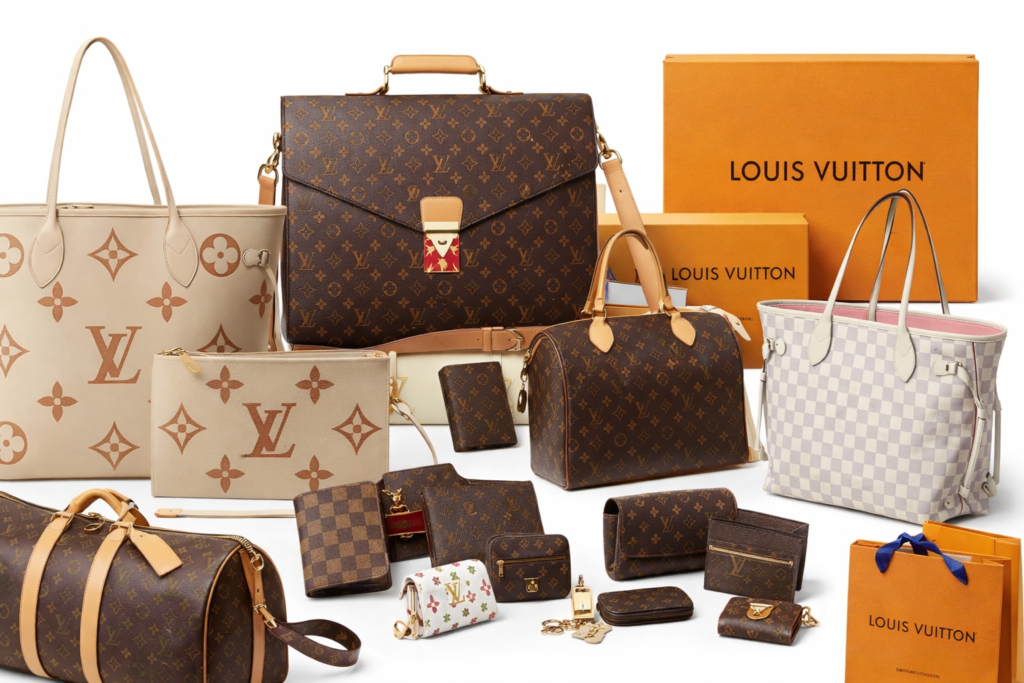
Louis Vuitton’s streetwear influence developed gradually but reached a transformative impact between 2017 and 2023, reshaping how luxury fashion interacts with youth culture. A pivotal moment occurred in 2017, when Virgil Abloh was appointed Artistic Director of Menswear. Abloh, already known for founding Off-White, brought a streetwear-first philosophy into the heritage luxury house. His debut Spring/Summer 2019 collection introduced sneakers, harnesses, utility bags, and logo-driven apparel that blended luxury craftsmanship with urban silhouettes, signaling a structural shift in the brand’s identity.
The collaboration with Supreme in 2017 further accelerated Louis Vuitton’s streetwear credibility. The collection combined luxury leather goods with bold street graphics, limited quantities, and drop-style distribution, generating global hype, long queues, and immediate resale market demand. This partnership proved that scarcity-driven streetwear economics could coexist with high fashion pricing, influencing the broader luxury industry to adopt similar strategies.
Between 2019 and 2022, Louis Vuitton expanded its streetwear presence through sneaker innovation, including models like the LV Trainer, which referenced basketball culture and vintage athletic footwear. Celebrity ambassadors and musicians amplified visibility, with artists frequently wearing Louis Vuitton in music videos, tours, and social media, reinforcing its cultural relevance among younger audiences. After Abloh’s passing in 2021, the brand continued evolving under new creative leadership, maintaining streetwear elements while integrating broader cultural narratives.
Limited editions became central to Louis Vuitton’s strategy. Capsule collections, artist collaborations, and region-exclusive releases created urgency and collector demand. Partnerships with contemporary artists and designers transformed products into cultural artifacts rather than simply fashion items, encouraging resale markets and long-term brand loyalty. The approach also aligned with changing consumer psychology, where younger buyers value exclusivity, identity expression, and cultural meaning over traditional luxury status symbols.
The reason behind Louis Vuitton’s streetwear transformation lies in generational shifts within luxury consumption. Millennials and Gen-Z consumers prioritize authenticity, cultural relevance, and accessibility of style, even within premium price segments. By merging heritage craftsmanship with streetwear aesthetics, Louis Vuitton positioned itself at the intersection of luxury and youth culture, proving that high fashion could remain aspirational while embracing modern cultural movements.
The Birth of LVMH: Luxury Becomes Corporate Power
In 1987, Louis Vuitton merged with Moët Hennessy to create LVMH, which stands for Moët Hennessy Louis Vuitton. This merger brought together fashion, champagne, and cognac under one luxury conglomerate umbrella. Soon after, Bernard Arnault appeared on the scene as the force behind LVMH. During his tenure, Louis Vuitton would evolve from a heritage leather goods brand to the foundation of the world’s largest luxury conglomerate.
Arnault knew size. He expanded the brand’s retail presence globally, investing in flagship stores and brand positioning. Louis Vuitton stores began popping up in the world’s most luxurious neighborhoods, from Tokyo to New York to Hong Kong. However, one important evolution was yet to come. Louis Vuitton required fashion. The brand was famous for its luggage and leather accessories. It was not yet the leader in ready-to-wear. This would soon change, beginning in 1998, with the hiring of Marc Jacobs as Artistic Director.
Marc Jacobs and the Fashion Revolution
When Marc Jacobs joined Louis Vuitton in 1997, he brought a modern touch to a heritage brand. He introduced the company’s first ready-to-wear line in 1998. This was a turning point. Louis Vuitton was no longer just a travel brand. It was about fashion, personality, and relevance.
Jacobs’ collaborations revolutionized luxury marketing. In 2001, he collaborated with artist Stephen Sprouse, who graffitied text on top of the Monogram pattern. In 2002, he collaborated with artist Takashi Murakami, who recreated the Monogram pattern in multicolor for the Spring/Summer 2003 collection. In 2008, he collaborated with artist Richard Prince. These collaborations erased the boundaries between art and fashion. Luxury was no longer subdued. It was now expressive. During this period, sales skyrocketed. Louis Vuitton was the most profitable brand within LVMH. The Monogram pattern transitioned from a travel utility to a pop culture symbol.
Nicolas Ghesquière: Reinventing Heritage for the Digital Age
When Marc Jacobs left Louis Vuitton in 2013, he left the brand with a reputation for spectacle. The challenge was no longer whether Louis Vuitton was relevant. The challenge was how to move forward without sacrificing credibility. In 2013, LVMH hired Nicolas Ghesquière as the Artistic Director of Women’s Collections. His hiring marked a change in tone.
Ghesquière did not come to Louis Vuitton with a need to loudly reinvent the brand. He saw Louis Vuitton as an architectural monument that needed to be adjusted rather than overhauled. Ghesquière had a reputation for being visionary in his work at Balenciaga. He brought a sculptural aesthetic and a sense of futuristic precision to Louis Vuitton. His designs combined historical allusions with sharp modern cuts. He delved deeply into the brand archives, taking inspiration from trunk hardware, travel geometries, and structured leathers.
Ghesquière’s designs for handbags, such as the Petite Malle, took traditional trunk design and shrunk it down to a wearable accessory. The design was a direct nod to Louis Vuitton’s 19th-century expertise while also communicating with a modern consumer. It reinforced the idea that innovation and heritage could coexist.
Ghesquière was also aware of the digital revolution that was transforming the fashion industry. Social media was no longer a choice. It was a necessity. Louis Vuitton started organizing fashion shows in architecturally striking settings such as the Louvre Museum and the Miho Museum. These fashion shows were more than just fashion events. They were global digital transmissions that further cemented Vuitton’s position as a cultural icon.
The revenue stream continued to rise. By the mid-2010s, Louis Vuitton had become the largest luxury brand in the world in terms of sales. It was perennially picked as LVMH’s main profit driver. The brand continued to expand its product offerings beyond its classic canvas prints. It now covered ready-to-wear, leather goods, accessories, footwear, fragrances, watches, and high jewelry.
After the huge success of the 2017 Supreme collection in the women’s and unisex lines, the next phase of the brand’s evolution heavily focused on the men’s division.
Virgil Abloh: When Streetwear Entered the Luxury Palace
In 2018, Louis Vuitton made one of the most important appointments in the history of fashion. Virgil Abloh was appointed Artistic Director of Men’s Collections. He was the first African American designer to head a leading French luxury fashion house. Abloh did not make a low-key entrance. His first fashion show in Paris was emotional and full of meaning. The models paraded on a rainbow-colored catwalk, symbolizing diversity and inclusiveness. The collection combined tailored suits with elements of streetwear, harness bags, sneakers, and graphic messages.
Abloh knew the youth culture inside out. As the founder of Off-White and a close associate of Kanye West, he was at the nexus of music, art, and fashion. At Louis Vuitton, he combined the language of luxury with the aesthetics of streetwear. Monogram bags were colored in neon hues. Keepalls were restyled with industrial straps. Traditional trunks were transformed into pop art sculptures.
He broadened the appeal of Vuitton for younger generations globally. Sneaker culture was integrated into the brand’s approach. Limited releases generated hype. Collaborations went beyond fashion to encompass cultural discourse.
One of the most successful collaborations in terms of sales was the Louis Vuitton and Supreme collaboration in 2017, which began during the Kim Jones tenure but was fully leveraged during the streetwear movement that Jones initiated. The collaboration erased the lines between skate culture and Parisian heritage. The items were sold out as soon as they were released, and the resale market went through the roof.
Abloh’s impact saw Louis Vuitton menswear become a major sales driver. The brand leveraged storytelling, community, and cultural significance. Although it retained its roots in high craftsmanship, fashion also became a platform for global dialogue. When Virgil Abloh died in 2021, the fashion world acknowledged the extent of his influence. He had transformed the notion of luxury for the next generation.
Architecture as Identity: The Era of Global Flagships
Louis Vuitton does not merely open new stores. It erects landmarks. From the futuristic Ginza flagship in Tokyo by Jun Aoki to the crystalline Fondation Louis Vuitton in Paris by Frank Gehry, architecture became a brand extension. These buildings embody travel, motion, and innovation. The Fondation, opened in 2014, is a contemporary art museum founded as a non-profit organization through the generosity of Bernard Arnault and the LVMH group. It underscores the group’s cultural patronage and locates Louis Vuitton in the realm of artistic heritage rather than mere business.
The retail strategy evolved into experiential luxury. Flagship stores featured art installations, private lounges, and exhibition spaces. Consumers did not merely shop. They entered an orchestrated world. This move further solidified exclusivity while amplifying emotional resonance. By the early 2020s, Louis Vuitton had established hundreds of boutiques globally across Asia, Europe, North America, and the Middle East. Asia, specifically China and Japan, emerged as vital revenue streams. Analysts repeatedly observed that Vuitton had an absolute no-discount policy and tightly controlled distribution channels, preserving brand value.
“Scarcity” continued as a deliberate brand practice. Louis Vuitton does not have sales. This practice preserves value and reinforces prestige brand positioning.
Financial Dominance and Market Power
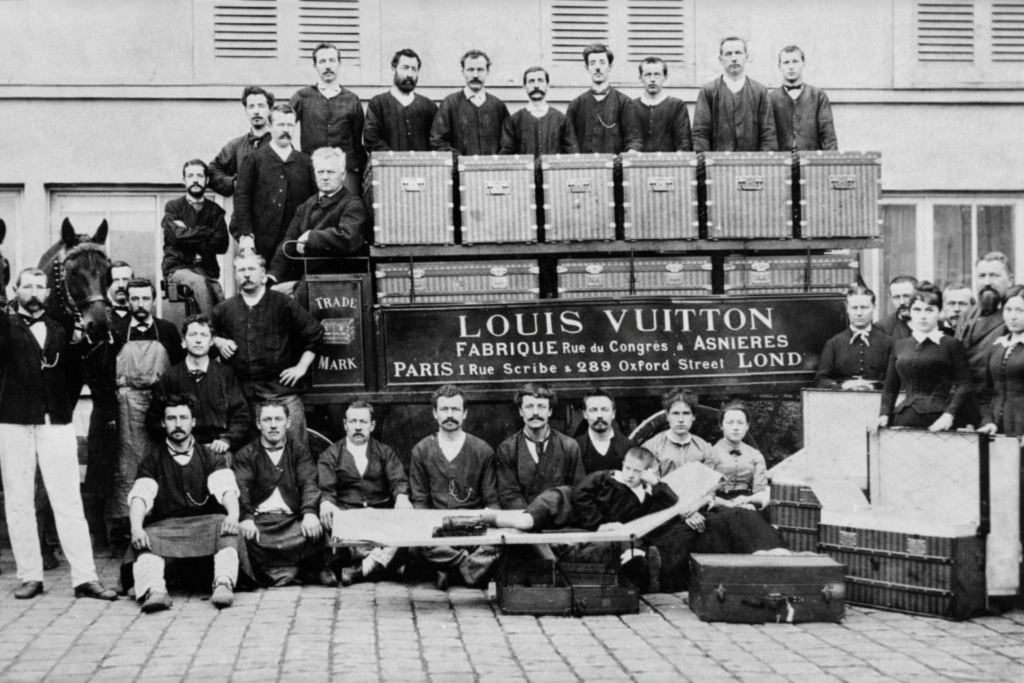
Louis Vuitton is the driving force that generates profits for LVMH, the largest luxury conglomerate in the world. In 2023, LVMH officially announced that Louis Vuitton’s annual sales exceeded 20 billion euros for the first time in 2022. This makes it the most profitable luxury fashion brand in the world.
The model combines three aspects: leather goods, fashion, and direct-to-consumer sales. However, the most profitable area is leather goods, thanks to high margins and constant demand. The Monogram canvas is still the foundation of this profitability, as it demonstrates that heritage can be the key to modern success.
Vertical integration enhances the control of operations. Manufacturing is still limited to France, Europe, and the United States. Workshops for craftsmanship, such as the historical Asnières atelier, represent a connection to the founder’s heritage.
Louis Vuitton is also committed to supply chain transparency and sustainable sourcing. With increasing consumer consciousness, luxury brands are under the spotlight for their environmental performance. LVMH has adopted the LIFE 360 environmental strategy, which targets carbon reduction, sustainable material sourcing, and a circular economy approach. Vuitton operates within this corporate-wide sustainability framework.
Cultural Symbolism: Why Louis Vuitton Means Status
Luxury is as much about psychology as it is about quality. Louis Vuitton stands for freedom, achievement, and citizenship of the world. The brand’s history is directly linked to travel and achievement. To own a Vuitton means to be part of a legacy of sophistication and achievement. The Monogram line is a shorthand for luxury knowledge. The recognition factor is immediate. The LV initials are both logo and language.
Celebrity endorsements add to the symbolism. Audrey Hepburn’s Speedy bag in the 1960s to the present-day endorsements by Emma Stone and Felix from Stray Kids, Vuitton has always been relevant across generations. The imagery of the campaigns often combines cinematic storytelling with product endorsement. Scarcity, heritage, craftsmanship, and alignment all add up to what economists term as brand equity. Vuitton’s pricing power is a result of its brand equity. Even in times of recession, the brand continues to perform well with high-end consumers.
The Appointment of Pharrell Williams and the New Cultural Wave
In 2023, Louis Vuitton named Pharrell Williams as Men’s Artistic Director. Pharrell is known internationally as a musician, producer, and entrepreneur. He embodies multi-disciplinary creativity and not traditional fashion education. His first fashion show in Paris was internationally noticed, held on the Pont Neuf with a huge public presence. This act further confirmed the strategic shift: Louis Vuitton is located at the nexus of music, art, and fashion. Cultural capital has replaced commercial capital. Pharrell’s strategy combines American flair with Parisian formality, indicating further development of menswear identity.
The Future of Louis Vuitton
The future of Louis Vuitton is one of balance. It must preserve its 19th-century craftsmanship and drive 21st-century innovation. E-commerce, sustainability, emerging markets, and the younger luxury consumer will define the future. The company is still pushing into high jewelry, high watchmaking, and exclusive trunk commissions. Customization programs enhance relationships. Art collaborations keep the brand desirable in limited editions.
From a 16-year-old apprentice in 1837 to the foundation of the world’s biggest luxury conglomerate, Louis Vuitton is a tale of strategic transformation over almost two centuries. It has adjusted to the railway, steamship, automobile, jet plane, and e-commerce eras while retaining its essence. The Louis Vuitton story is one of mobility. A young boy walked to Paris in search of opportunity. His company now travels the world.
Conclusion
Louis Vuitton evolved from a Parisian trunk workshop founded in 1854 into one of the most influential luxury fashion houses through continuous innovation, craftsmanship, and global expansion. The brand revolutionized travel goods with flat-topped trunks, established a strong identity through the Damier and later Monogram canvases, and later integrated streetwear into its luxury strategy through collaborations, limited editions, and youth-focused cultural partnerships. This fusion of heritage and modern streetwear relevance has allowed Louis Vuitton to remain culturally dominant while preserving exclusivity and quality. Today, as the flagship label of LVMH, it represents status, artistry, and global prestige, setting industry standards and demonstrating how tradition and innovation can coexist to shape modern luxury fashion worldwide.
Frequently Asked Questions About Louis Vuitton
1. When was Louis Vuitton founded?
Louis Vuitton was founded in 1854 in Paris, France, by Louis Vuitton as a luxury trunk-making workshop.
2. Who founded Louis Vuitton?
The brand was founded by Louis Vuitton, a French craftsman who specialized in innovative travel trunks.
3. What made Louis Vuitton trunks revolutionary?
Louis Vuitton introduced flat-topped trunks in 1858, allowing them to be stacked easily during travel, unlike traditional domed trunks.
4. When was the Louis Vuitton Monogram created?
The iconic LV Monogram canvas was created in 1896 by Georges Vuitton to prevent counterfeiting.
5. What does LVMH stand for?
LVMH stands for Louis Vuitton Moët Hennessy, the world’s largest luxury goods conglomerate.
6. When did Louis Vuitton launch ready-to-wear fashion?
Louis Vuitton entered ready-to-wear fashion in 1998 under Creative Director Marc Jacobs.
7. Who was Louis Vuitton’s first fashion Creative Director?
Marc Jacobs became the first Creative Director of ready-to-wear in 1997.
8. What are Louis Vuitton’s most iconic bags?
Iconic bags include the Speedy, Keepall, Noé, Alma, Neverfull, and Capucines.
9. Is Louis Vuitton still made in France?
Yes, many Louis Vuitton products are still manufactured in France, along with select workshops in Spain, Italy, and the USA.
10. Why is Louis Vuitton so expensive?
Louis Vuitton products are expensive due to premium materials, craftsmanship, brand heritage, limited distribution, and global demand.
11. Who owns Louis Vuitton?
Louis Vuitton is owned by LVMH, led by Bernard Arnault.
12. When did Louis Vuitton collaborate with artists?
Major collaborations began in the early 2000s, including Stephen Sprouse in 2001 and Takashi Murakami in 2003.
13. Who was Virgil Abloh at Louis Vuitton?
Virgil Abloh served as Artistic Director of Menswear from 2018 until 2021, redefining luxury menswear culture.
14. What is Louis Vuitton best known for?
The brand is best known for luxury leather goods, the LV Monogram, and high-end fashion collections.
15. Is Louis Vuitton the most valuable luxury brand?
Yes, Louis Vuitton is consistently ranked as the most valuable luxury fashion brand in the world.