Style Guides
How Anime Culture Is Influencing Streetwear Fashion in 2026

How Anime Culture Is Influencing Streetwear Fashion is no longer a niche question. Anime has moved from convention spaces and graphic T shirts into everyday streetwear, designer collaborations, sneakers, accessories, and social media styling. For many younger consumers, anime is not simply something they watch. It is a visual language they use to express personality.
The biggest change is that anime influence has shifted from obvious merchandise to fashion interpretation. Instead of simply wearing a shirt with a character printed across the front, consumers can take inspiration from a character’s colors, silhouette, attitude, accessories, or world and turn those elements into an everyday outfit.
That shift explains why anime works so well with streetwear. Both cultures value individuality, recognizable symbols, limited releases, experimentation, and community.
Grand View Research estimates that the global anime apparel and fashion market was worth about $3.3 billion in 2024 and projects approximately $4.0 billion in 2026. Its research also identifies clothing as the largest product segment and says the U.S. represented more than 70% of the market in 2024.

How Anime Culture Is Influencing Streetwear Fashion
Anime and streetwear naturally complement each other because both are built around visual identity.
A character can communicate a complete personality through color, clothing, hairstyle, footwear, and accessories. Streetwear uses many of the same visual signals.
Consider a character with a dark color palette, oversized jacket, combat boots, and futuristic accessories. A fan does not need to copy the costume exactly. They can translate those elements into a black bomber jacket, relaxed trousers, chunky sneakers, and a metallic accessory.
This is one reason Anime Streetwear Fashion has become more versatile.
Instead of asking, “How can I dress exactly like this character?” the modern question is:
“What elements of this character can become part of my own style?”
That distinction separates fashion inspiration from traditional cosplay.
From merchandise to personal style
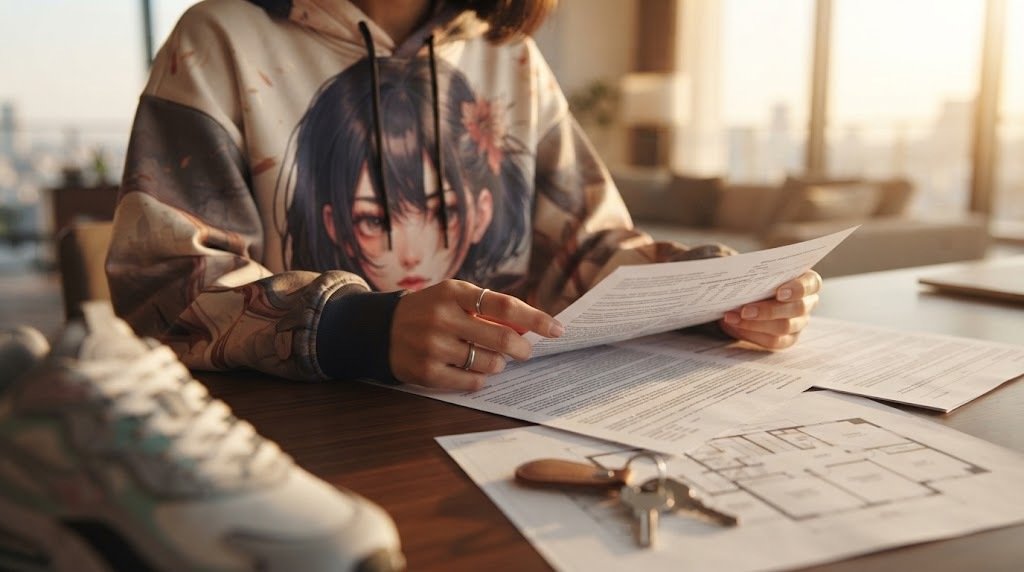
Early anime fashion often depended on licensed merchandise. Graphic T shirts, hoodies, hats, and accessories allowed fans to announce what they watched.
Today, the relationship is more sophisticated.
Fashion creators can reference:
- Character color palettes
- Distinctive silhouettes
- Futuristic technology
- School uniforms
- Military influences
- Gothic styling
- Cyberpunk aesthetics
- Japanese street fashion
- Character accessories
- Manga artwork
- Anime typography
This makes anime useful even for someone who does not want a large character graphic on their clothing.
Why Anime Works So Well With Streetwear
Streetwear has always borrowed from music, sports, art, skateboarding, gaming, and youth culture. Anime fits naturally into that ecosystem because its visual vocabulary is exceptionally broad.
Bold graphics are part of the appeal
Anime characters are designed to be recognizable. Strong facial expressions, dramatic poses, unusual hairstyles, symbols, and distinctive clothing can become powerful graphic elements.
That makes anime particularly effective on:
- Oversized T shirts
- Hoodies
- Varsity jackets
- Bomber jackets
- Sweatshirts
- Denim
- Caps
- Sneakers
- Bags
But graphic design is only one part of the relationship.
Anime offers unusual silhouettes
Anime regularly exaggerates clothing proportions. Characters may wear oversized coats, extremely wide trousers, cropped jackets, layered uniforms, futuristic armor, or exaggerated footwear.
Streetwear already embraces oversized and relaxed proportions, so these ideas can move from animation into real clothing without looking completely out of place.
This is particularly visible in cyberpunk inspired fashion. Akira, for example, has repeatedly been referenced in fashion discussions because of its futuristic Tokyo setting and iconic red biker outfit. Harper’s Bazaar India has connected the Akira aesthetic with high end streetwear influences including Comme des Garçons, Supreme, and BAPE.
Anime gives streetwear a narrative
A normal graphic can look good. A graphic connected to a character, story, or fandom can mean something.
That emotional connection is valuable in streetwear because consumers often buy pieces that communicate identity rather than simply serving a practical purpose.
Which Anime Series Have Influenced Fashion?
Not every anime has the same fashion impact. Certain titles have become particularly important because their characters have distinctive visual identities.
Sailor Moon
Sailor Moon helped establish an important connection between anime, feminine fashion, street style, and high fashion references.
The series featured colorful outfits, skirts, crop silhouettes, accessories, and dramatic transformations. Fashion coverage has also highlighted how creator Naoko Takeuchi incorporated references to real fashion, including runway inspired designs.
Its influence remains important because it showed that an animated character could function almost like a fashion editorial.
Nana and Paradise Kiss
Ai Yazawa’s work took the relationship even further.
Paradise Kiss is explicitly centered on fashion students, while Nana combines punk, music, jewelry, and alternative styling. The connection between Nana Osaki’s wardrobe and Vivienne Westwood is one of the clearest examples of fashion influencing manga character design and then returning from fiction to real world fashion culture.
The lesson for streetwear is simple: characters become more fashion influential when their clothing feels like part of their identity.
Akira
Akira represents another path.
Its dystopian world, motorcycle culture, red uniform, futuristic technology, and rebellious atmosphere have made it a recurring reference point for streetwear and contemporary fashion.
Its influence demonstrates that anime does not need to provide cute or colorful imagery to become fashionable. Dark, industrial, futuristic anime can influence fashion just as strongly.
Dragon Ball, Pokémon and other franchises
Large franchises have helped normalize anime within mainstream retail.
Collaborations involving Pokémon, Dragon Ball, One Piece and other properties have introduced anime imagery to consumers who may not consider themselves dedicated anime fans.
This matters because accessibility changes perception. Once anime inspired products appear in familiar fashion environments, they become easier to treat as clothing rather than niche merchandise.
How Luxury Fashion Helped Make Anime Mainstream
Anime’s relationship with fashion is not limited to streetwear brands.
Luxury houses have increasingly used Japanese animation and manga as creative material. Gucci has worked with Doraemon, Loewe has created Studio Ghibli collections, and Balmain has collaborated around Pokémon. Vogue Singapore has documented this growing relationship between anime and luxury fashion.
Harper’s Bazaar India also highlights anime and manga references across luxury fashion, including Louis Vuitton, Prada, Loewe, Gucci, and Moschino.
This creates a useful trickle down effect.
When a major fashion house treats anime as a legitimate creative reference, streetwear designers can experiment with similar ideas at more accessible price points.
The result is a fashion spectrum:
Luxury collaboration → designer streetwear → independent labels → fan made fashion → everyday styling
Anime therefore does not belong to one price category.

From Cosplay to Everyday Anime Streetwear Fashion
Cosplay remains an important part of anime culture, but everyday anime styling has created another category between cosplay and conventional clothing.
Think of it as character inspired dressing.
A person might take the following approach:
- Identify a character’s dominant colors.
- Choose one recognizable clothing element.
- Match it with neutral everyday pieces.
- Add one accessory that references the character.
- Keep the outfit wearable outside an anime convention.
For example, a character associated with black and red might inspire black cargo pants, a red overshirt, black sneakers, and a small graphic accessory.
The character does not need to be visible.
That subtlety is one of the biggest developments in modern anime fashion.
Vogue Singapore has noted the rise of social media content that translates anime characters into wearable outfit ideas rather than complete cosplay.
Subtle anime styling versus graphic anime styling
There are two major approaches.
Graphic styling uses visible characters, manga panels, logos, or artwork. It is direct and immediately recognizable.
Subtle styling uses colors, silhouettes, accessories, textures, or references that only fans may recognize.
Neither is better.
Graphic pieces work particularly well for casual streetwear, conventions, concerts, and relaxed outfits. Subtle references work well when you want an anime influence without making the fandom the entire focus of the outfit.
How Social Media Is Accelerating Anime Fashion
TikTok, Instagram, Pinterest, YouTube, and other visual platforms have changed how fashion trends travel.
A runway collection once required fashion media to explain it. Today, a creator can turn a character inspired outfit into a short video and reach millions of viewers.
This creates a fast feedback loop:
Anime → fan styling → social video → trend discovery → fashion recreation → new products
It also explains why anime fashion increasingly crosses cultural boundaries.
The 2026 Articles of Interest feature specifically highlights fashion creators such as Wisdom Kaye and Megan Thee Stallion for translating anime references into contemporary looks rather than simply reproducing costumes.
That distinction is important.
Anime becomes more influential when people with strong fashion identities reinterpret it for their own audiences.
The influence of Black fashion creators
Anime’s growth in Western fashion should not be discussed only through Japanese brands and luxury houses.
Black American fans have played an important role in anime’s cultural visibility, while Black fashion creators have helped connect anime references with contemporary menswear, celebrity styling, and street culture.
Wisdom Kaye is a particularly visible example. His character inspired styling demonstrates how anime can become a starting point for editorial fashion rather than a limitation on creativity.
This is a broader lesson for fashion: culture becomes influential when different communities reinterpret it rather than simply copy it.
What Anime Streetwear Fashion Looks Like in 2026
The current direction is less about wearing as much anime as possible and more about integrating anime references into established fashion categories.
Expect to see more:
- Oversized anime graphic tees
- Relaxed hoodies
- Wide leg trousers
- Utility and cargo styling
- Futuristic sneakers
- Varsity jackets
- Manga panel graphics
- Dark cyberpunk palettes
- Bright kawaii inspired accessories
- Character inspired color combinations
- Limited edition collaborations
- Anime inspired jewelry and bags
The market data supports this broader movement. Grand View Research reports that clothing held more than 52% of the global anime apparel and fashion market in 2024, while accessories are expected to record particularly strong growth. It also identifies online retail as the leading distribution channel.
That combination matters.
Clothing builds the outfit, while accessories allow consumers to participate at a lower commitment level.
How to Wear Anime Inspired Streetwear Without Looking Like a Costume
The easiest approach is to balance one statement piece with simple basics.
Try the one statement rule
Choose one strong anime item, then build around it.
For example:
Anime graphic hoodie + relaxed black trousers + neutral sneakers
Or:
Character inspired varsity jacket + plain white T shirt + straight denim + sneakers
Or:
Subtle anime cap + oversized sweatshirt + cargo trousers + low profile sneakers
The goal is not to hide the anime influence. It is to give the outfit enough structure that the clothing still looks intentional.
Use color instead of characters
If graphic clothing is not your preference, take inspiration from the character palette.
A red, black, and white character can inspire an outfit without using any printed character.
A pastel anime aesthetic can translate into soft pink, lavender, cream, and light blue.
A cyberpunk character can inspire black, silver, charcoal, and electric accent colors.
This method makes anime fashion more versatile.
What Is the Future of Anime and Streetwear?
The relationship is likely to become more collaborative and less one directional.
Anime studios, fashion brands, musicians, athletes, creators, and retailers can all participate in the same ecosystem. Limited collections can create urgency, while social media gives fans an immediate platform to style and reinterpret those products.
Grand View Research projects the global anime apparel and fashion market to reach approximately $5.8 billion by 2030, with a projected 10% compound annual growth rate from 2025 through 2030.
One particularly interesting trend is the move toward fashion coded fandom.
In the past, clothing often told strangers exactly which franchise you liked.
The newer approach can be more cryptic.
A jacket may use a color combination associated with a character. A pendant may reference a symbol. A sneaker may borrow a futuristic shape. A graphic may look abstract until another fan recognizes the reference.
That creates a form of community recognition.
Original insight: anime is becoming a fashion vocabulary
After reviewing the major fashion coverage and current market research, the clearest pattern is that anime is increasingly functioning less like a merchandise category and more like a design vocabulary.
That is the important distinction.
When anime is treated as merchandise, the character is the product.
When anime is treated as a design vocabulary, the character becomes inspiration for silhouette, color, graphics, attitude, storytelling, and styling.
That second approach has much greater potential for streetwear because it allows designers and consumers to create something new instead of simply reproducing existing artwork.
Conclusion: Anime Is Now Part of Streetwear Culture
Anime’s influence on streetwear is no longer limited to graphic T shirts or convention outfits. Its impact can be seen in oversized silhouettes, cyberpunk styling, colorful graphics, character inspired outfits, accessories, social media trends, designer collaborations, and luxury fashion.
From Sailor Moon and Nana to Akira and today’s major anime collaborations, the relationship between animation and fashion has developed over decades.
The biggest change in 2026 is how people interpret that influence.
You do not need to dress exactly like an anime character to participate in Anime Streetwear Fashion. You can borrow a color palette, silhouette, accessory, graphic language, or attitude and make it your own.
FAQ Section
How is anime influencing streetwear fashion?
Anime is influencing streetwear through graphic T shirts, oversized hoodies, character inspired colors, futuristic silhouettes, accessories, sneakers, and collaborations between anime franchises and fashion brands.
Why is anime popular in streetwear?
Anime offers distinctive characters, strong visual identities, unusual color combinations, and memorable clothing designs. These qualities translate naturally into graphic and contemporary streetwear.
Is anime inspired fashion the same as cosplay?
No. Cosplay usually recreates a character’s appearance, while anime inspired fashion can simply borrow colors, silhouettes, graphics, accessories, or overall character aesthetics for everyday clothing.
What anime has had the biggest influence on fashion?
Several series have had notable fashion influence, including Sailor Moon, Nana, Paradise Kiss, and Akira. Their impact comes from distinctive character styling, connections with real fashion, and strong visual identities.
How can I wear anime inspired streetwear casually?
Start with one statement piece, such as an anime hoodie or jacket, and combine it with neutral trousers and sneakers. You can also use character color palettes or subtle accessories instead of large graphics.
Will anime continue influencing streetwear in 2026?
The trend is likely to remain significant as anime continues to overlap with social media, creator culture, gaming, music, luxury fashion, and global streetwear. Current market research also projects continued growth in anime apparel through 2030.
Pingback: Why Gorpcore Became One of Streetwear's Biggest Trends
Pingback: How Travis Scott Became a Streetwear Fashion Icon in 2026