Brands
Dior: From Parisian Couture to Global Luxury Icon

Christian Dior, while it sounds merely the name of a fashion brand, is in reality much more, as it carries the intrinsic meaning of elegance, artistry, and innovation within our global culture. Founded in 1946 in France, in the city of Paris, by the great Christian Dior, the brand presented its first collection in 1947, embodying the spirit of daring fashion, innovative craftsmanship, and elegance. It was in the post war era that the great Dior launched the revolutionary look in fashion that defined the genre of haute couture and modern luxury, as the brand, in every single fashion collection, seeks to exude the spirit of elegance.
Birth of Dior
Christian Dior, the founder of the famous fashion brand, was born in 1905 in Normandy, a region of northern France. Although he came from a background that expected a different career path from him, as his family had urged him to study political science, which he had attempted at the Paris-based École des Sciences Politiques, his heart had always been in the field of art. He started by selling his designs to milliners and designers, which would allow him to experiment as much as he would have liked. This would help him to learn about telling stories using his art designs
In 1946, with the support of Marcel Boussac, a wealthy man of textile business, Dior founded the House of Dior in Paris. The first collection of Dior, a haute couture collection, was presented in 1947. This collection marked the beginning of the famous “New Look” style. Therefore, the collection, with emphasis on the waist, shoulders, and skirts, was a surprise to everyone, as it did not have any link to poverty during the war period. The collection glorified the feminine and luxurious, making Dior a sensation. In 1948, Dior opened his first international boutique in New York City, heralding the start of its international expansion.
Crafting Elegance and Innovation
Dior’s design philosophy embodies the essence of tradition, as well as art. Its main fabrics are silk, tulle, organza, leather, and lace. There can also be intricate stitch work, finishing, and architecture, reflecting on the craftsmanship of its designs. Dior’s fashion embodies elegance in suspension, or by means of theatricality. There are times that Dior draws inspiration from art, architecture, or perhaps even nature. Fashion that is not only wearable but also of cultural significance inspires Dior’s creations.
The haute couture has remained a mainstay of Dior, as in each of the designs, there is attention paid to intricate details, which may take as many as hundreds of hours. Dior has successfully mastered the trick of blending couture with ready-to-wear. Ready-to-wear, as mentioned earlier, has remained a huge success story since it was launched as a full collection in the 1960s. Dior successfully made Parisian couture chic, with many of these collections being extremely popular across the world.
Expanding Influence Through Partnerships
Such collaborations played an important role in bringing Dior’s influence from fashion into art, streetwear, and culture. For instance, its collaboration with sneakers through Air Dior brought couture art into sneakers, while its collaboration with artists such as KAWS and Daniel Arsham turned its fashion products into art pieces. Furthermore, there were also collaborations between Dior and Rimowa, Sacai, among others, bringing innovative limited edition products into existence.
Celebrity endorsements also contribute to the further expansion of Dior as a global brand. For example, Rihanna, Natalie Portman, Jennifer Lawrence, and Charlize Theron are just a few of the celebrities who have acted as brand ambassadors, showcasing Dior products in campaigns and events. Charlize Theron, meanwhile, remains a current ambassador for Dior high jewelry and skincare. These artistic runway events further boost Dior as a luxurious and relevant brand to younger consumers.
Dior’s Scent Legacy
Dior, being a fashion company that also contains a line of legendary perfume, was established in the year 1946. In 1947, Dior brought out a perfume called “Miss Dior,” which honored the company founder, Christian Dior. This perfume is the epitome of perfection as far as flower fragrances are concerned. This seems to be the property of all Dior products. Since then, Dior has been adding different scents to its portfolio. Also, it brought out different and iconic perfumes, namely “Diorissimo” (1956), “Eau Sauvage” (1966), “J’adore” (1999), and “Sauvage” (2015), which are statements in themselves and have been promoted in different formats, including movies, making it a major contributor to the revenue, thus making Dior a leading company in the high-end beauty business.
Dior expands into skincare and cosmetics. Rouge Dior lipstick and Dior addict gloss are fashion statements. The quality of ingredients and materials is further evidence of luxury branding. The fashion brand is an extension of Dior clothing, sneakers, and accessories. As mentioned earlier, Dior is all about fashion; however, it has evolved to represent a complete way of life.
From Family House to LVMH Powerhouse
However, ever since the death of Christian Dior in 1957, the company has passed through a series of transformations, some of which involve the contributions of other designers, including Yves Saint Laurent, Marc Bohan, Gianfranco Ferre, John Galliano, and Maria Grazia Chiuri. In 1984, the fashion house of Dior was acquired by Bernard Arnault; later on, it was integrated into a strategic framework of what is now the LVMH group, which ensured stability to the company. As a result of this integration, the company achieved diversification and expansion within the fashion industry as a luxury fashion house.
The business strategy of Dior revolves around innovation and heritage. Therefore, balancing business models with creativity, Dior tries to hold on to its high fashion credentials as well as its market leadership position in the ready-to-wear market and the fragrances business.
The Art of Dior
Dior couture is the heart and soul of the Dior brand. “New Look” was launched in 1947. This was revolutionary, as the styles had full skirts, small waists, and soft shoulders. It was a look that epitomized glamour and elegance. Dior expanded in the 1950s. The Dior brand opened boutiques in Paris, New York, London, and Tokyo. The works of art were individually made. The fashions used silk, satin, and lace, and embroidery and beads to give texture to the outfit. Every Dior garment was telling a story of elegance and artistry. Dior couture epitomizes elegance in fashion.
Then in 1957, Dior’s first assistant, Yves Saint Laurent, took over. He added his own flair but retained the elegance which Dior had popularized. Marc Bohan sustained the style in the 1960s and 70s. He designed softer looks with wearable silhouettes. Gianfranco Ferré brought precision to Dior in the 1980s. Starting in 1996, John Galliano infused drama into Dior. His fashion shows were nothing but drama. Simons emphasized minimalism in the 2010s. Today Maria Grazia Chiuri celebrates and honours it. Of course, each has left an ineluctable mark on Dior’s couture.
Dior Clothing for the Modern Era
They released Ready-to-Wear clothing in the 1960s. Their clothing includes jackets, dresses, trousers, and coats. Currently, the Dior hoodies mean the brand has incorporated luxury and comfort into their clothing. Their clothing features materials made of high-class cotton, wool, and synthetic materials. They also cut them in the perfect shape. They get their inspiration from art, nature, history, among other things. They feature traditional and innovative flair in their clothing. They get their audience from both the couture crowd and the younger generation.
The brand similarly employs street styles through a combination of various styles of streetwear clothing. The collaboration of street brands of sneakers and streetwear clothing has helped the brand to expand its consumer base. Streetwear clothing of Dior consists of their signatures, including oversized styles. The clothing items similarly possess high-end craftsmanship. However, Dior Men’s Ready to Wear combines high-end fashion and streetwear styles.
Dior x Streetwear
The trends for Dior sneakers quickly spread all over the world. In 2020, a buzz about sneakers was created with the release of “Dior X Nike Air Jordan 1”. Leather, contrast, and the iconic logo of Dior were in the front row for this shoe. Iconic “Dior B23 High Top Sneakers” When it comes to canvas, transparent details are joined by geometric elements that showcase impeccable craftsmanship and can be considered collectibles because it belongs to the iconic design and prestige of the brand. This brand’s sneakers make the streetwear style popular. Of course, the list goes on with trendy streetwear clothes like “Dior hoodie”, “Dior jacket”, and “Dior accessories.” This brand influences sneakers to combine exclusivity with modern trends.
The streetwear collections combine casual wear with couture elements. The materials used are of high quality. Each construction in streetwear is perfect. The graphics used are of an artistic nature. The streetwear is like any other Dior product when it comes to high-end qualities. Dior streetwear marks a new era in high-end casual wear.
Dior in Music, Film, and Art
Dior influences global culture. For instance, Dior is spotted on the red carpet by famous people. In Dior ads, Rihanna, Jennifer Lawrence, and Robert Pattinson feature in Dior fashion collections. In music videos, Dior apparels and accessories are seen. Fashion magazines feature Dior’s couture and ready-to-wear designs. Dior has partnered several artists like KAWS and Daniel Arsham, combining fashion and contemporary art. Dior fashion shows incorporate drama, music, and performance. Every piece represents creativity and high status. Dior fluidly combines fashion, art, and culture.
Dior has a significant presence in street culture, with sneakers, hoodies, and jackets featuring in hip hop and pop music videos and films. Dior has the attention of designers, musicians, and influencers all over the globe, and it is relevant to multiple generations.
Dior’s Business & Leadership
Dior belongs to the conglomerate LVMH. In 1984, Bernard Arnault acquired the parent company of Christian Dior, and he later implemented the brand into the luxury house. Dior still holds creative independence under its artistic directors. The creative helm for women’s collections is Maria Grazia Chiuri. Since 2018, Kim Jones has directed the men’s collection. Dior, under their direction, brings together tradition and modernity. Business strategies include limited releases, collaborations, and selective retail expansion. Dior operates worldwide, from Europe to Asia to North America.
The brand also runs a number of subsidiaries. Parfums Christian Dior is in charge of fragrances and cosmetics. Skincare, makeup, and beauty products all fall into this category. Revenue derived from fragrances and cosmetics often surpasses those from clothing. Strategic ownership and corporate structure enable Dior to invest heavily in innovation, runway shows, and collaborations. Creative vision coupled with strong business execution defines the leadership at Dior.
Dior Through the Years
| Year | Milestone / Event |
| 1946 | Christian Dior founded the house in Paris. |
| 1947 | Launched the “New Look” collection, redefining post-war fashion. |
| 1957 | Christian Dior dies suddenly; 21-year-old Yves Saint Laurent is named his successor and artistic director. |
| 1960s-1970s | Marc Bohan introduces softer silhouettes and practical elegance. |
| 1980s | Gianfranco Ferré adds architectural precision. |
| 1996-2011 | John Galliano introduces theatrical runway shows and dramatic styling. |
| 2012-2015 | Raf Simons emphasizes minimalism and modern art references. |
| 2016-Present | Maria Grazia Chiuri celebrates feminism; Kim Jones revamps men’s streetwear. |
| 2020 | Dior x Air Jordan and B23 sneaker collaborations. |
| 2022 | Dior x Sacai, Rimowa, and KAWS limited editions. |
| 2025 | Dior embraces sustainability, digital experiences, and AI-assisted design. |
This timeline shows Dior’s evolution from post war couture to modern luxury streetwear influence. Every era adds depth, innovation, and cultural significance.
Design Philosophy
There is a mix of tradition and experimentation in Dior’s style. In couture, quality is high with craftsmanship. There is still careful attention to embroidery, beading, and tailoring. There are also streetwear, hoodies, and sneakers in modern fashion collections. Dior’s fashion is also about structure, proportion, and silhouette. The clothes worn by individuals are often a depiction of a luxurious narrative, artistry, and identity.
The runway shows are a form of theater, with music, lighting, and scenography adding depth to the spectacle. At the same time, Dior demonstrates its commercial appeal by its ready-to-wear items and accessories, which adhere to the same artistic standards as the rest of the collection, including the “streetwear inspired” clothing maintaining the same standards. Dior’s approach combines artistry with global accessibility.
Dior in Fashion & Culture

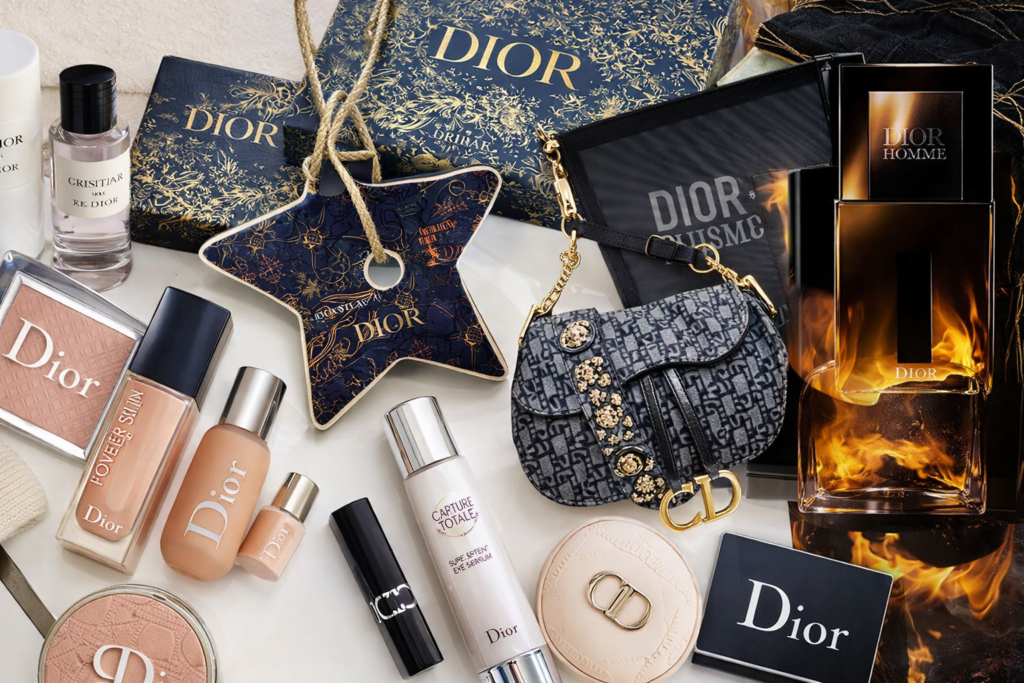
Dior’s influence extends globally. Dior boutiques are in Paris, Milan, Tokyo, New York, and Shanghai. Celebrities, musicians, and influencers wear Dior streetwear and haute couture. Sneakers create excitement among young consumers. Red carpet events promote couture collections. Collaborations with artists blend fashion and art. Dior’s luxury streetwear appeals to a global, younger demographic of high end consumers. Dior conveys a message of identity, aspiration, and luxury.
Another area where Dior leaves its mark is on digital culture. The use of social media and digital live streaming of runway shows contributes to the increased visibility of the brand. Being global is beneficial to the brand’s relevance in 2025.
Future Vision
Dior invests in sustainability with priorities: recycled fabrics, ethical production, and responsible sourcing. Advanced digital tools enhance supply chain efficiency, while the design process remains rooted in traditional human craftsmanship. Digital experiences, virtual try ons, and immersive campaigns are on the rise. The collaborations will continue with artists, streetwear brands, and tech innovators. Dior wants to maintain couture prestige, at the same time as being relevant to future, younger generations. The brand is in a delicate balance between heritage and innovation. Artistry, culture, and global relevance will be reflected in every future collection.
Dior’s Legacy and Vision
Dior, it seems, is not just a fashion company but rather an institution. Dior has existed since 1946 under the founder, Christian Dior. The company has, nevertheless, changed and adapted under different artistic directions, including Yves Saint Laurent, John Galliano, Raf Simons, as well as Kim Jones, and currently, Jonathan Anderson. Dior is currently a blend of haute-couture and street fashion.
Every collection has its own story to tell. It is either related to craftsmanship, innovation, and/ or cultural relevance. Dior is strategically placed in the art space by the partnership with Air Jordan, KAWS, Sacai, and Rimowa. Music, performance, and theater are part of the Dior runway show. Thus, having stores in different locations globally, as well as being social and endorsed by famous individuals, gives the Dior brand its much-needed global appeal.
A look into the future for Dior would therefore be informed by sustainability, technological innovation, and creative collaboration based on human craft. Dior continues to mesmerize the audience from all different ages and therefore creates a connection between fashion, art, and culture, and luxury. Dior is the epitome of the advancement of fashion from couture to streetwear. Dior’s legacy is therefore eternal and global.
CONCLUSION
Dior remains a symbol of timeless elegance and innovation in the fashion world. From its groundbreaking New Look in 1947 to modern haute couture and streetwear collaborations, the brand has continuously redefined style while honoring its heritage. Its influence spans clothing, accessories, fragrances, and beauty, creating a cohesive luxury experience that resonates globally. Dior’s ability to blend tradition with contemporary creativity ensures it stays relevant across generations. The brand’s commitment to craftsmanship, artistry, and visionary design solidifies its place as a leader in fashion. Ultimately, Dior is more than a label, it is a cultural and aesthetic icon.
Frequently Asked Questions About Dior
1. What is Dior?
Dior is a French luxury fashion house founded in 1946 by Christian Dior in Paris. It is known for couture, ready-to-wear clothing, accessories, fragrances, and luxury streetwear. Dior combines heritage craftsmanship with modern design innovation.
2. Who founded Dior?
Christian Dior founded the brand. He was a French designer with a background in art history and fashion illustration. Dior started his career assisting other fashion houses before launching his own couture house.
3. What is Dior’s “New Look”?
The “New Look” was Dior’s 1947 collection. It featured cinched waists, full skirts, and emphasized femininity. The design revolutionized post war fashion and established Dior as a global authority.
4. Where is Dior based?
Dior is headquartered in Paris, France. Its creative, production, and corporate offices operate from multiple locations in Paris. Boutiques exist globally in major cities including London, New York, Tokyo, and Shanghai.
5. What makes Dior different from other luxury brands?
Dior combines couture craftsmanship with modern streetwear influences. The brand balances theatrical runway presentations, collectible sneakers, and traditional couture. Dior merges art, fashion, and culture in every collection.
6. What are Dior’s signature styles or pieces?
Signature pieces include the Bar Jacket, Dior dresses, handbags like Lady Dior, sneakers such as the B23, and modern hoodies. Designs often mix leather, technical cotton, silk, and metallic detailing.
7. What are Dior’s most famous collaborations?
Key collaborations include Dior x Air Jordan, Dior x KAWS, Dior x Rimowa, Dior x Sacai, and Dior x Shawn Stussy. These partnerships blend art, streetwear, and couture. Limited releases often sell out quickly.
8. Are Dior products limited edition?
Yes, many Dior collaborations, sneakers, and couture pieces are limited edition. This exclusivity strengthens collector appeal and maintains brand prestige.
9. How does Dior approach sustainability?
Dior emphasizes ethical sourcing, recycled textiles, and eco-conscious production. Recent collections include biodegradable packaging and sustainable material experimentation. Sustainability integrates with design without compromising luxury.
10. Which celebrities wear Dior?
Celebrities such as Rihanna, Kim Kardashian, Timothée Chalamet, Harry Styles, Jennifer Lawrence, and Bella Hadid frequently wear Dior clothing, streetwear, and accessories. Dior is also seen in music videos and red carpet events.
11. What is the price range of Dior clothing?
Dior prices vary by product type. Ready-to-wear ranges from $1,000 to $5,000. Couture pieces often exceed $20,000. Sneakers like Dior x Air Jordan start around $2,000. Accessories and handbags range from $1,500 to $10,000+.
12. Where can I buy authentic Dior products?
Dior products are sold at official boutiques, the Dior website, and authorized luxury retailers like Farfetch, SSENSE, and Net-a-Porter. Official stores ensure authenticity, while resale markets require careful verification.
13. What themes inspire Dior collections?
Dior collections draw inspiration from art, architecture, global culture, feminism, history, and urban lifestyle. Each collection reflects a balance of heritage, modernity, and social commentary.
14. Is Dior considered luxury streetwear?
Yes, Dior has become a key player in luxury streetwear. Kim Jones’ men’s collections integrate sneakers, hoodies, and streetwear silhouettes while maintaining couture level quality. Dior blends traditional luxury with contemporary youth culture.
15. What’s next for Dior?
Dior continues innovation in sustainable fashion, digital experiences, AI assisted design, and strategic collaborations. The brand aims to engage younger generations while preserving couture heritage. Dior will remain a global leader in both traditional luxury and modern streetwear.
For collaborations, press, or inquiries, contact us at streeticonic1@gmail.com.