Brands
Burberry: From Heritage Fashion to Modern Streetwear Influence

Burberry, a renowned fashion brand with an illustrious history that spans nearly two centuries, is a leading fashion brand that has become a hallmark of fashion and luxury around the globe. The Burberry brand was originally founded in the year 1856 when a young man named Thomas Burberry, then just 21 years old and a former apprentice in a local draper’s shop in England, opened his first store in Basingstoke with the passionate conviction that clothing should offer people protection against the notoriously unpredictable British climate.
Since day one at Burberry, the fundamental concept behind the brand was that of practicality and ingenuity. For instance, founder Thomas Burberry worked extensively on fabric until he coined gabardine fabric in 1879. Gabardine fabric is tight and breathable, making it extremely light and waterproof. The fabric was patented in 1888 and immediately became synonymous with Burberry innovation and became synonymous with innovation and protection for use outside and beyond.
Burberry was exposed to global audiences from a relatively young history. Dr. Fridtjof Nansen, a Norwegian polar explorer, utilized Burberry’s gabardine fabric in his expedition in 1893 in the Arctic climate. In addition, in the early 1900s, famous British explorer Sir Ernest Shackleton utilized Burberry’s quality fabric in several expeditions.
By the early 20th century, Burberry had started to make ensembles meant to be utilized by the British military. During World War I (1914-1918), there was a modification of its Tielocken coat, which was made waterproof to be used in the Second Boer War. It later changed to become what is referred to today as a trench coat, which is suitable because of its epaulets, storm flap, and reinforced stitching, making it suitable even when officers were exposed to wet and muddy environments. Following World War I, trench coats later found their place among civilians.
Burberry Check design introduced in the 1920s also symbolized Burberry’s brand identity. This Burberry Check design was first used in Burberry raincoats. The Burberry Check design was later introduced externally by Burberry to symbolize Burberry a beige base accented with black, red, and white stripes soon became instantly recognizable and a symbol of understated luxury and British style. Over decades it has been woven into scarves, bags, and numerous pieces in Burberry’s collections.
Such recognition from the royal family ensued shortly thereafter. Burberry was first presented with a coveted Royal Warrant in 1919 by HM King George V, signifying that Burberry produced clothing that was worn by a royal. Burberry would go on to earn multiple royal warrants throughout the 20th century, reifying Burberry’s reputation as a developer of innovations and a maker of world class suits and outerwear.
However, into the mid 20th century, Burberry continued its international expansion. By 1965, they were exporting one in five coats from the UK, and its products were being worn around the globe. The company established a factory in Castleford, Yorkshire, where Burberry’s heritage trench coats are still made today, highlighting its levels of traditional craftsmanship and heritage production values.
As the world approached the late 20th century, the evolution of Burberry as a fashion brand progressed from being an outdoors brand to a luxury fashion brand. The brand changed its name from Burberrys to Burberry in the year 1999.The early 2000s saw the opening of Burberry’s first flagship store on Bond Street in London, setting a template for all of its stores around the world and reinforcing its status as one of the centers of luxury fashion capitals of the world.
Burberry Group plc is a British luxury fashion house based in London, England, with hundreds of stores across the globe. Burberry offers high fashion clothing, ready to wear outerwear, accessories, footwear, fragrances, and leather goods that combine British heritage with innovative design. Burberry’s classic trench coat, scarves, and check design continue to be a key element in its identity, linking heritage with high fashion sensibilities.
Design Evolution, and Cultural Influence of Burberry

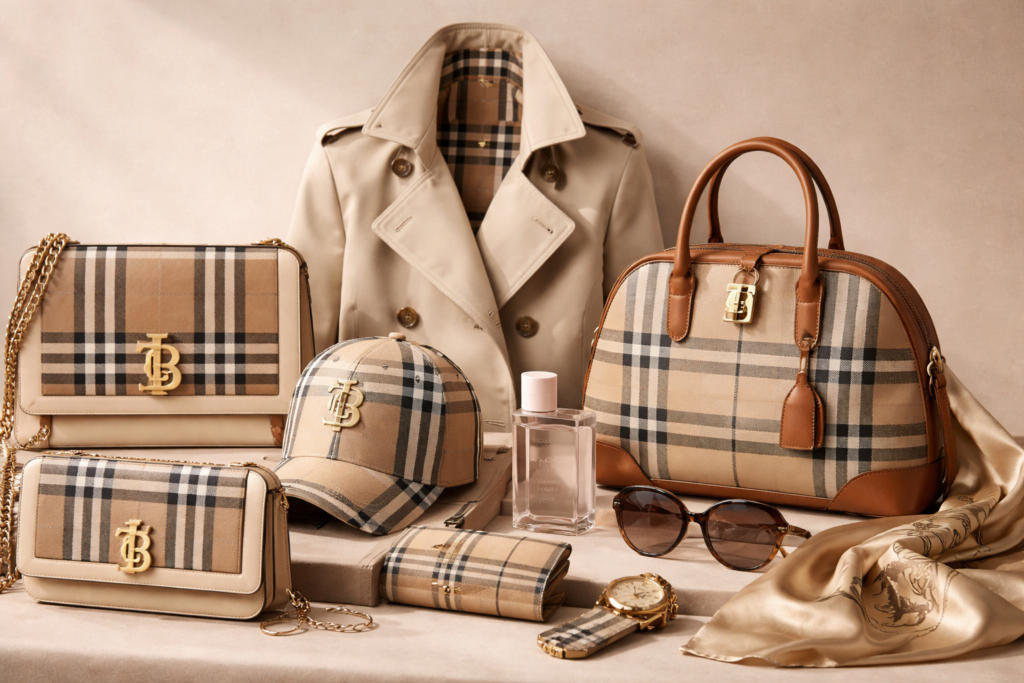
Burberry’s transformation from a heritage rainwear brand to a global luxury fashion brand has been fueled by its ability to adapt and change while keeping its identity intact with its heritage in craftsmanship and British style. The Burberry trench coat, along with its check pattern, epitomized sophistication and elegance with a practicality infusing a sense of style into functionality, dual purpose in clothing that has been a hallmark of Burberry’s identity. In the late 1990s to early 2000s, Burberry was at a point of overexposure due to the ubiquitous use of the Nova Check in popular fashion, hence losing some of their status as an exclusive fashion item. After the appointment of Christopher Bailey as Creative Director in 2001, he began to strategically reinvent Burberry, which significantly changed their global perception. Bailey simplified the usage of the iconic check design, amplified the fashion shows, and introduced some stars to the events with Kate Moss, thus putting Burberry back into fashion dominance globally.
Bailey’s reign was very significant in the company’s history. During his time, he added to the ready to wear collection of Burberry, mixing modern tailoring with the classic items of the company such as the trench coat, scarves, and outerwear in modern shapes and materials. Bailey further established the fashion sense of Burberry in seasonal collections consisting of ancient and modern elements. With his powerful creative leadership, the brand moved from the classic to the cutting edge but with traditional underpinnings.
Burberry recruited the Chief Creative Officer Riccardo Tisci in 2018, marking a new beginning for Burberry in terms of design innovation. The “TB” monogram logo has also become a significant feature for Burberry since then. Riccardo designed this logo to resemble Burberry’s founding father’s logo; however, the logo has also been extensively integrated into Burberry’s clothing lines.
During Tisci’s tenure, Burberry’s runway shows frequently incorporated signifiers of Burberry heritage codes and a variety of modern imagery. To illustrate this, Burberry SS20 (Spring/Summer 2020) fashion show presented reworked interpretations of the Nova Check with new interpretations of Burberry’s iconic pieces in a light hearted and contemporary manner.
Other than that, Burberry’s brand codes, such as the Equestrian Knight Design logo, and other visual codes such as Burberry Check, which were introduced in the early 1900s and have been refined over several decades, continue to be integral to Burberry’s visual identity. It is a brand that is all about tradition married with forward thinking vision, and the equestrian figure is a symbol of both protection and progression, and Burberry Check is a synonym for elegance and British style.
Burberry’s signature trench coat, initially designed for British military officers during WWI, moved beyond its utilitarian origins to become an indispensable item for fashion conscious people. Features of the Burberry trench coat, such as the double breasted front, epaulets, storm flaps, and belt, were initially designed for functional purposes but eventually came to signify elements of timeless design. The Burberry trench coat has endured for many years as designers have reinterpreted it in various styles, lengths, and fabrics for each fashion generation.
The fact that the trench coat has been featured globally, as well as being worn by icons on various screens and runways, cannot be ignored. Audrey Hepburn is arguably known for her classy looks and classy interpretations of various fashion products, and the trench coat is not an exception. The fact that it has been present in various seasonal Burberry collections adds to its and the brand’s significance.
In recent years, Burberry has extended its range of products from outerwear to include other categories such as RTW clothing, accessories, footwear, and leather goods. Its main focus includes tailoring, knitwear, and combinations of contemporary elements of streetwear and classic elements of British fashion, among others. Examples include the Burberry Classics project, which featured essentials such as jersey, coord bottoms, and tailoring, highlighting the potential for applying instructions of heritage fashion codes for other everyday wearable categories such as casual fashion.
Sustainability and responsible design have also become integral parts of the new Burberry narrative. For instance, there has been a rise in organic fabric use in their designs, alongside recycled materials. Programs such as ReBurberry emphasize sustainable design principles and responsible luxury. Items such as organic cotton hoodies, tailor’s shirts, and even lightweight nylon jackets with equestrian knits are a new addition to responsible design.
Burberry’s children’s wear, for example, shows elements of adaptability. The brand’s ‘Remake’ capsule collection combines excess materials with classic elements, offering outerwear, hoodies, among other items, which resemble their adult oriented counterparts, but in a smaller scale.
Collaborations and experiential initiatives also increase Burberry’s cultural impact. The brand has developed strategic partnerships with retailers such as Bloomingdale’s to launch its holiday capsule collections with check prints and other accessories.
As Burberry entered the 2020s and approached its 170th anniversary in 2026, it continued to strike a balance between celebrating heritage and innovation through new seasonal collections. Projects like the Gabardine Capsule celebrated the founder’s original innovation with contemporary outerwear, hoodies, joggers, and knitwear as a testament to the brand’s ability to marry its heritage with current lifestyle fashion.
With the passage of decades, the shift in Burberry’s design trajectory points to an ongoing dialogue between tradition and modernity. The perennial reinvention of its iconic items such as coats, scarves, along with its latest Ready to Wear offerings, combined with its renewed interest in digital culture, streetwear, and sustainability, underscores its sway over global fashion culture.
Major Collections and Collaborations of Burberry
Burberry is known for launching several collections that have merged traditional elements with modern streetwear or luxury fashion. Most of their collections have been inclusive of traditional elements and modern streetwear or luxury fashion elements. Burberry, being one of the most popular brands in streetwear, luxury fashion, and coats, has been associated with trench coats, hoodies, scarves, and other footwear.
Seasonal drops are conceptually designed keeping this in mind to create a story that combines British heritage with modern storytelling. The Burberry Spring/Summer 2021 season featured lightweight gabardine coats, tailoring for shorts, and oversized hoodies with reinvented check details. These also emphasized the need for functionality and urban wear in relation to traditional outerwear design and modern streetwear fashion.
In terms of collaborative works, these have played an integral role in broadening the influence of the Burberry brand. Its partnership with other fashion brands, artists, and retailers has helped the fashion label reinvent their classic designs while catering to a wide range of consumers. Of particular note is Burberry’s partnership with Vivienne Westwood and Gosha Rubchinskiy, as these introduced streetwear, subculture styles, and luxury fashion into their clothing under the theme of the trench coat and scarves.
In addition, in 2022, Burberry also collaborated with Moleskine, launching a capsule collection of notebooks, pouches, and travel accessories all bearing Burberry’s iconic check. This further illustrates Burberry’s ability to take its influence in terms of design beyond just apparel and incorporate its lifestyle and culture within its brand DNA.
Therefore, by the early 2000s, the brand had taken a full swing towards embracing digital marketing and social media; it was now clear that Burberry was a pioneer brand in terms of online luxury presence. Burberry was at the forefront of being a fashion brand that livestreamed its runway shows by combining fashion and technology with culture.
Global Cultural Legacy of Burberry
The cultural impact of Burberry can also be seen in its music, film, and lifestyle sectors. The music industry has witnessed several celebrities such as Rihanna, A$AP Rocky, and Stormzy wearing Burberry clothing, especially hoodies and trench coats, for their performances across the world. Therefore, this impact helped the company’s image to stand at a point where it promotes both luxury fashion and streetwear culture. In terms of its constant innovation in the fashion world, Burberry has managed to strike a balance between its traditional clothing and its experimental clothing culture. The company’s Burberry hoodie has transformed from being an ordinary clothing item for sports activities to an impressive luxury item made from quality cotton materials for streetwear culture. The modern version of the Burberry hoodie allows consumers to wear it along with the Burberry trench coat or other large coats and scarves. Burberry’s influence in the world’s most prominent shoe culture has also led the company to increase its global footprint. The Burberry sneakers have become a leading game changer in the world’s most renowned footwear culture. The shoes were endorsed by Riccardo Tisci and combined traditional British patterns with modern streetwear shoes collections.
The brand focuses on sustainability, interpretation of heritage, and global lifestyle integration. As such, it ensures that fashion products, such as clothing in different seasons, are innovative and include factors such as sustainability, thereby ensuring that Burberry remains at the top as far as luxury and fashion are concerned, including among environmentally conscious individuals. Burberry fashion shows remain some of the iconic happenings in cultural and artistic circles. London Fashion Week by Burberry, under Bailey and Tisci, is on its own a benchmark in terms of fashion show innovation. Fashion shows by Burberry include live performances, thereby indicating some connection to art, fashion, and design, allowing global citizens to not only identify with Burberry clothing but also to recognize that, at some point, Burberry is associated with culture and design. Burberry has effectively managed to leverage the fact that it has engaged in various digital strategies, thereby enhancing not only streetwear but also the luxury feel associated with fashion. Burberry introduced or pioneered innovative strategies such as “see now, buy now” campaigns.This approach is modern and appropriate for the present market as it reconnects consumers with Burberry clothing items like hoodies and collections instantly. Burberry has also successfully married arts into fashion.
Burberry is constantly reinventing its story around seasonable fashion trends by blending its past archives with its present trends. The brand draws inspiration from its over 160 years of history and reinvents its traditional pieces, giving even its current fashion a history of craftsmanship and British culture. Take, for instance, the reinvented trench coats, revamped gabardine cloth, and technologically created checks, which are geared towards the 21st century consumer of streetwear fashion.
Marketing, Digital Strategy, Celebrity Influence

Burberry has always raised the bar for luxury fashion marketing campaigns by introducing innovations that combine traditional craftsmanship with modernity and globality. Burberry’s marketing campaigns are intricately designed to show the perfect juxtaposition of heritage and modernity so that the dialogue between Burberry clothing and its consumers resonates well. The use of traditional marketing techniques like print media campaigns goes hand-in-hand with modern innovations like digital storytelling, videos, and interactive experiences in social media campaigns, thus making Burberry relevant across generations. Burberry’s marketing campaigns feature many historic items like Burberry trench coat, Burberry hoodie, Burberry scarf, along with subtle hints of streetwear elements so that the juxtaposition between luxury and streetwear culture gets perfect equilibrium. Digital First Strategies Adopted by BurberryThat is why Burberry’s digital first strategy can be regarded as ideal for many organizations across the world. Burberry invested heavily in social media campaigns since the early 2010s. Burberry led the race when it came to livestreaming its runway shows straight away on YouTube along with its own separate platform. The foresight to innovate this strategy certainly paid off as Burberry witnessed an increased interest in its campaigns from younger generations across the world.Celebrity InfluencePlayed an important Role. Famous artists such as Rihanna, Stormzy, A$AP Rocky, and Drake are also seen wearing Burberry clothing in different public appearances as well as music videos, which promotes not only the benefit of wearing Burberry clothing but also adds to the overall persona of Burberry as a lifestyle brand, associated particularly with music, film, as well as different cultural movements. Lastly, as has been discussed, Burberry’s retail store expansion is also a key area of its success. Burberry has numerous retail shops around the globe, such as in London, New York, Tokyo, Milan, Paris, etc., which act as Burberry flagships, fulfilling all the heritages of Burberry, thereby providing consumers with a unique shopping experience using cutting edge technology, which is blended within modern retail shops, thereby enhancing the overall shopping experience offered by Burberry. Burberry, as discussed, has an impressive as well as comprehensive online retail presence as well by providing consumers with access and awareness of its collection of clothing, hoodies, outerwear, sneakers, etc., through official e-commerce websites of the company. The website also utilizes artificial intelligence to make recommendations and tell stories, showing how this particular brand has helped consumers navigate around the history of the brand, its style heritage, and recent collaborative endeavors. Burberry, therefore, has managed to position itself as one of the most innovative brands in global streetwear luxury e-commerce. Sustainability has emerged as one of the key pillars in Burberry’s strategy to transform into a sustainable fashion brand by 2025. Burberry has ensured that, while adhering to sustainability, the garments associated with recycling, reworking, and reducing the environmental impact associated with clothing production are maintained at high standards in terms of quality, including outerwear, hoodies, and such other fashion items.
The future strategy of Burberry Group for the year 2025 has a key focus on innovation, technology, digitization, and global culture. Some of its strategies may include increasing its street inspired clothing range, launching limited edition sneakers, and exploring new interactive fashion technologies like augmented reality shopping experiences. The designers at Burberry are still working on reengineering its classic designs, incorporating street wear with its classic checks and trench coats.
This ensures that the clothing Burberry provides continues to be a statement of style and cultural identity.Burberry also relies on content marketing and cultural storytelling techniques for engaging with its global audience. Their social media campaign on designer insights and collaboration videos creates a sense of inclusion and engagement with the audience. Burberry isn’t merely clothing; Burberry is a cultural identity, heritage, street, and contemporary global fashion.
The company’s celebrity driven campaigns mark an important part of Burberry’s digital culture strategy. Collaborations with influencers and artists help launch capsule product collections such as hoodies and sneakers globally. The company was able to combine traditional fashion marketing strategies with modern day trends, keeping its brand name in mind for key markets, especially cities.Next, another facet of Burberry’s global cultural influence is its collaboration with other cultural institutions such as artists and designers. For example, its collaboration with contemporary artists gives the company leverage to promote its exhibitions, featuring fashion, design, and architectural exhibitions. It is, therefore, important to note that such strategies place Burberry as a progressive fashion label in 2025.
Design Evolution, Signature Pieces, Iconic Campaigns
The heritage timeline of Burberry goes way back to 1856, when Thomas Burberry founded it in Basingstoke, England. Thomas started as a young draper, designing functional clothes for outdoor work and exploration. He was credited with inventing gabardine in 1879, a water resistant, breathable fabric. The innovation installed the reputation of Burberry, combining functionality with elegance and a continued definition of Burberry garments or streetwear inspiration into modern times. The evolution in design at Burberry mirrors the blend between British heritage and modern streetwear influences. Early collections were designed around trench coats and outerwear for military and exploratory use. By the 20th century, the classic Burberry check was a symbol of craftsmanship, elegance, and identity. Modern designers have expanded its product line to include Burberry hoodies, sneakers, and full streetwear collections, marrying functional utility with high fashion aesthetics. Each season, careful balancing between heritage motifs and modern innovation generates items appealing to both classic luxury consumers and younger urban audiences.
These items include the iconic trench coat, which has become synonymous with Burberry and its international reputation. However, the Burberry hoodie has increasingly become part of the Burberry Streetwear collection. This hoodie consists of colors ranging from black to gray and oversized designs with the iconic Burberry check print. Additionally, the Burberry sneakers have become an integral part of the Streetwear collection. These shoes have significantly become popular in Streetwear culture and have been part of the collection in the form of collaboration with other brands and celebrities. These clothing items have become an expression of the wearer’s character and style. Furthermore, they have become famous due to iconic campaigns launched by the company for its products. Celebrities such as Rihanna, Stormzy, and Gigi Hadid have been a part of the campaigns. This campaign has effectively integrated the presence of the brand with its products in the Streetwear sphere. In all of the campaigns, the brand has taken steps to promote the overall collection of the brand.The partnerships Burberry has created have reimagined the lines between heritage fashion and streetwear. Collaboration with Supreme, Vivienne Westwood, and artists such as Riccardo Tisci has enabled the brand to reimagine trench coats and scarves for younger audiences. Collaboration with sneaker designers and limited drops of capsules place Burberry as a collector’s brand and as a force driving the streetwear movement. Such efforts confirm the idea that Burberry is not just a luxury house but a global cultural platform moving fashion, art, and design. Looking ahead to 2025, Burberry is focusing on innovation, sustainability, and leadership through culture. Expanding streetwear focused collections will see Burberry push more advanced materials, modular clothing, and limited edition sneakers designed in collaboration with artists globally. Digital technology, such as AR shopping experiences and interactive campaigns, will further enhance customer engagement as consumers can explore Burberry’s collections virtually and learn about its rich history. Sustainability will continue through eco conscious fabrics, reworked garments, and reduced production footprints to keep Burberry relevant for conscious audiences. Burberry’s influence goes beyond fashion. Thus, this blending of British heritage with global streetwear trends and styles has helped the brand to become synonymous with exactly that tradition and innovation combined. Whether spotted on red carpets, music videos, or other cultural settings, Burberry clothing represents identity, tradition, innovation, and modern streetwear culture. Specifically, their innovative and iconic trench coats, hoodies, scarves, and sneakers carry stories of innovation, heritage, and collaboration. Finally, in terms of looking forward, Burberry in 2025 offers promise as one of the icons that will continue to carry forward their legacy as innovators in luxury streetwear and global fashion culture. They have consistently referenced their heritage while embracing modern streetwear, innovation, and global trends. Therefore, their collections of clothing, hoodies, sneakers, and other pieces will continue to define who Burberry is a heritage and tradition based fashion brand with modern streetwear appeal.
“Burberry, once a traditional British drapery in the 19th century, today is a global streetwear luxury brand, with its path being marked by innovation, heritage, and cultural adaptability. Its approach to integration through design, collaboration, marketing, and sustainability makes sure to keep Burberry at the forefront in 2025. The brand demonstrates how history, streetwear, and contemporary culture can co-exist, creating clothing, collections, and campaigns that are relevant, aspirational, and culturally significant.
Conclusion
Burberry is a brand that represents a unique heritage of connecting the past with the present. Burberry combines more than 160 years of heritage with modern-day influences, including luxury streetwear aesthetics. Arguably, Burberry is one of those brands that have successfully connected the early days of Burberry inventor Thomas Burberry’s gabardine-style clothing to the present-day Burberry hoodies, streetwear-inspired sneakers, clothing items, collections, and innovations. Burberry continues to evolve as a worldwide leader in fashion, culture, and design. As it looks towards 2025, Burberry is known for having stayed true to its British roots while embracing contemporary streetwear culture. Burberry is also recognized for its connection to innovation in technology, creativity, and modern style expression. Burberry clothing items, ranging from classic trench coats to limited-edition streetwear infused Burberry hoodies, represent a brand that speaks for itself. Burberry’s story is one of history, identity, streetwear influence, and modern culture.
Frequently Asked Questions About Burberry
1. What is Burberry?
Burberry is a British luxury fashion brand founded in 1856, known for its iconic trench coats, scarves, and contemporary streetwear. It combines heritage craftsmanship with modern fashion innovation.
2. Who founded Burberry and when?
Burberry was founded by Thomas Burberry in 1856 in Basingstoke, England. He started as a draper and later invented gabardine, revolutionizing functional outerwear.
3. What is the significance of the Burberry check?
The Burberry check, introduced in the 1920s, became a symbol of quality, heritage, and British identity. It is used across clothing, accessories, and streetwear pieces.
4. Where is Burberry headquartered?
Burberry is headquartered in London, United Kingdom, with global offices, stores, and concept boutiques across Europe, Asia, and North America.
5. What makes Burberry different from other luxury brands?
Burberry uniquely combines heritage, functionality, and streetwear influence. Its designs focus on craftsmanship, technical fabrics, and contemporary cultural relevance.
6. What are Burberry’s signature pieces?
Signature pieces include the trench coat, Burberry hoodie, scarves, crossbody bags, and sneakers. Each reflects a blend of heritage and modern streetwear aesthetics.
7. What are Burberry’s most famous collaborations?
Burberry has collaborated with Supreme, Vivienne Westwood, Riccardo Tisci, and artists in sneaker capsules, bringing heritage fashion into streetwear and youth culture.
8. Are Burberry products limited edition?
Many Burberry collections, especially collaborations and seasonal streetwear drops, are released in limited quantities, enhancing exclusivity and collector appeal.
9. How does Burberry approach sustainability?
Burberry emphasizes responsible sourcing, recycled fabrics, eco conscious production, and reduced environmental impact, aligning with modern sustainable fashion trends.
10. Which celebrities wear Burberry?
Celebrities like Rihanna, Gigi Hadid, Stormzy, David Beckham, and Harry Styles frequently wear Burberry clothing, hoodies, and sneakers, boosting the brand’s cultural influence.
11. What’s the price range of Burberry clothing?
Burberry products range from approximately $150 to $2,000+, depending on the item, with outerwear, sneakers, and limited editions priced at the higher end.
12. Where can I buy authentic Burberry products?
Authentic Burberry items are available via the official Burberry website, SSENSE, Farfetch, Dover Street Market, and authorized boutiques worldwide.
13. What themes inspire Burberry collections?
Burberry collections are inspired by British heritage, urban culture, social identity, streetwear, architecture, and functionality, blending tradition with modern style.
14. Is Burberry considered luxury fashion?
Yes, Burberry is recognized as a luxury fashion brand that merges traditional British craftsmanship with contemporary streetwear and high fashion design.
15. What’s next for Burberry in 2025?
Burberry plans to expand streetwear focused collections, digital campaigns, collaborations, and sustainability initiatives in 2025, continuing to merge heritage, innovation, and global fashion influence.
For collaborations, press, or inquiries, contact us at streeticonic1@gmail.com.