Style Guides
Best Layering Techniques for Winter Streetwear Looks

Best Layering Techniques for Winter Streetwear Looks start with one simple idea: use each layer for a specific job instead of simply adding more clothes. A good winter outfit should manage moisture, retain warmth, block wind, and still look intentional.
Winter streetwear makes this especially interesting because oversized silhouettes, hoodies, puffers, cargo pants, graphic tees, flannels, and workwear jackets naturally lend themselves to layering. The challenge is avoiding an outfit that feels bulky, restrictive, or visually messy.
After six years of working around fashion and streetwear content, one pattern consistently stands out: the strongest winter outfits usually do not contain the most layers. They contain the best combination of layers. A thin thermal, relaxed hoodie, and weather resistant jacket can often look cleaner and work better than stacking several thick sweaters.
The basic rule is simple:
Start thin, build toward warmth, control your proportions, and let one or two layers create the visual statement.
For outdoor conditions, the classic system is a moisture managing base layer, insulating middle layer, and protective outer layer.

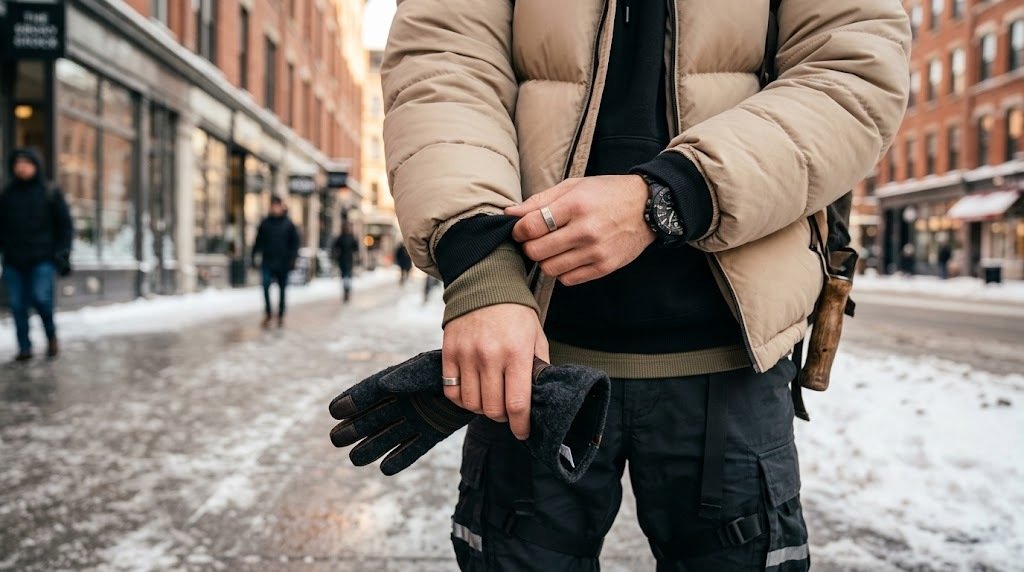
What Are the Best Layering Techniques for Winter Streetwear Looks?
The best approach is to build your outfit from the inside out.
A practical streetwear layering system looks like this:
- Base layer: Thermal shirt, fitted long sleeve, or lightweight tee.
- Style layer: Graphic tee, flannel, shirt, or sweatshirt.
- Insulation layer: Hoodie, fleece, knit sweater, or lightweight puffer.
- Outer layer: Puffer, bomber, parka, wool coat, or weather resistant jacket.
- Accessories: Beanie, scarf, gloves, warm socks, and a practical bag.
You do not always need all five. For a mild winter day, a thermal plus hoodie and jacket may be enough. For freezing conditions, you may need additional insulation.
The key is that every piece should either add warmth, improve protection, or contribute clearly to the outfit.
Outdoor layering guidance similarly separates clothing into moisture management, insulation, and weather protection because each layer performs a different function.
1. Start With a Thin Base Layer
A strong winter streetwear outfit begins with the least noticeable layer.
A fitted thermal, merino wool long sleeve, or lightweight synthetic top can sit underneath your visible streetwear pieces without creating unnecessary bulk.
Why base layers matter
Your base layer sits next to your skin, so moisture management matters. Merino wool and synthetic fabrics such as polyester are commonly used because they can move moisture away from the skin and dry faster than cotton.
For everyday city wear, try:
- Lightweight thermal + graphic tee
- Merino long sleeve + hoodie
- Fitted mock neck + overshirt
- Thermal turtleneck + sweatshirt
- Long sleeve tee + flannel
A useful rule is to keep the base layer relatively close to the body. If the first layer is already extremely oversized, every layer afterward becomes harder to control.
Avoid the cotton trap in very cold conditions
Cotton can be comfortable for everyday fashion, but it is less useful when you are sweating or dealing with wet winter conditions because it absorbs moisture and dries slowly. AMC recommends non cotton wicking fabrics for cold outdoor layering.
That does not mean you need to eliminate cotton from your streetwear wardrobe. It means you should understand where it works best.
2. Build Warmth With Hoodies, Fleece, and Knitwear
The middle layer is where winter streetwear gets its personality.
A hoodie, fleece, crewneck, cardigan, or wool sweater can provide insulation while also defining the silhouette of your outfit.
The trick is choosing the right weight.
Thin hoodie under a larger jacket
This is one of the easiest combinations for everyday streetwear:
Thermal → graphic tee → relaxed hoodie → puffer
The hoodie creates volume without requiring another extremely heavy garment.
Fleece for a technical streetwear look
Fleece works particularly well with nylon pants, cargo pants, trail inspired sneakers, and technical jackets.
Try:
Long sleeve thermal → fleece quarter zip → shell jacket → cargo pants
Fleece can provide warmth while remaining relatively breathable, although it does not block wind particularly well on its own. That is why a protective outer layer can make the combination more effective outdoors.
Knitwear for elevated streetwear
If you want a cleaner aesthetic, replace the hoodie with a heavyweight knit.
For example:
White thermal → charcoal knit → black bomber → wide leg trousers
This gives you the relaxed proportions of streetwear without relying entirely on logos or graphics.

3. Use Oversized Outerwear to Balance the Silhouette
Winter streetwear gives you permission to experiment with volume.
Oversized coats, puffers, parkas, bombers, and workwear jackets can make simple outfits look much more deliberate.
But oversized does not mean every piece needs to be oversized.
A useful proportion rule is:
Fitted inside + relaxed middle + oversized outside.
For example:
- Fitted thermal
- Relaxed graphic sweatshirt
- Oversized puffer
- Straight or wide cargo pants
- Substantial sneakers or boots
This creates a clear progression from narrow to wide.
Streetwear layering guides also emphasize moving from thinner, closer fitting pieces toward heavier, looser outer layers.
Try the one oversized piece rule
If you are new to oversized winter clothing, start with one statement layer.
For example, choose:
- Oversized puffer + regular hoodie
- Oversized wool coat + fitted knit
- Boxy bomber + straight jeans
- Long parka + relaxed cargo pants
Once you understand your proportions, you can intentionally combine oversized pieces.
The goal is not to look smaller. The goal is to make the volume look controlled.
4. Layer Different Textures, Not Just Different Colors
One of the easiest ways to make winter streetwear look expensive is to combine textures.
Instead of adding five colors, try three materials.
For example:
Cotton graphic tee + fleece hoodie + nylon puffer
Or:
Thermal knit + wool sweater + leather bomber
Or:
Heavy tee + corduroy overshirt + insulated jacket
The contrast creates depth even when the colors are simple.
This technique is particularly useful for monochrome outfits. A black thermal, black hoodie, black cargo pants, and black puffer can look flat if every material has the same finish. Add fleece, washed cotton, nylon, leather, or corduroy and the outfit becomes more visually interesting.
Streetwear layering specialists frequently recommend mixing textures and distributing garment weight from lighter inner pieces toward heavier outer pieces.
5. Make Your Layers Visible
Layering should not mean hiding every garment underneath the next one.
Let the lower layers appear.
A slightly longer tee under a sweatshirt can create a visible hem. A shirt collar can sit above a crewneck. A hoodie can extend from underneath a bomber or denim jacket.
These small details make an outfit look intentionally layered.
Use different lengths
Try combinations such as:
- Long tee + cropped jacket
- Hoodie + waist length bomber
- Turtleneck + oversized overshirt
- Long shirt + shorter puffer
- Sweater + longer wool coat
Different hemlines create visual separation.
Psylo’s streetwear guide specifically highlights varying lengths and visible lower layers as a way to create dimension.
Do not expose everything
A common mistake is making every layer visible.
Instead, choose one or two points of contrast.
For example, show:
Tee hem + hoodie hood
but keep the thermal mostly hidden.
This keeps the outfit clean rather than crowded.
6. Use Color Strategically
Winter streetwear often relies on black, gray, brown, navy, olive, cream, and other muted shades.
That makes color coordination easier.
A simple formula is:
Two neutrals + one accent.
Example:
- Black hoodie
- Gray cargo pants
- Red beanie
Or:
- Cream sweater
- Brown trousers
- Dark green jacket
Or:
- Charcoal thermal
- Black jeans
- Blue puffer
You can also use a monochrome base and introduce color through an accessory.
Fashion street style coverage has shown how contrasting colors, prints, textures, and hemlines can turn practical winter layering into a visual styling technique.
Try the color echo technique
Here is a practical styling trick worth testing.
Repeat one small color twice.
For example:
- Green graphic on your tee
- Green beanie
- Black and gray clothing everywhere else
The repeated accent makes the outfit feel coordinated without making every piece match.
7. Add Flannels, Overshirts, and Workwear Pieces
Overshirts are one of the most useful transitional pieces in winter streetwear.
A heavyweight flannel, denim shirt, corduroy overshirt, or canvas jacket can function as both a visible style piece and an additional insulation layer.
Try:
Thermal → graphic tee → heavyweight flannel → puffer
For a milder day:
Tee → flannel → bomber
For a workwear inspired outfit:
Thermal → sweatshirt → canvas overshirt → beanie
Heavy corduroy and flannel are especially effective because their texture adds visual depth while their weight gives the outfit more structure. Sullen’s winter streetwear guide uses graphic tees, sweatshirts, corduroy shirts, heavyweight flannels, and cargo pants as complementary layering pieces.
8. Layer Your Bottoms for Real Winter Weather
Upper body layering gets most of the attention, but your legs matter just as much.
For colder conditions, consider:
- Thermal leggings under relaxed pants
- Fleece lined pants
- Thermal tights under wide leg trousers
- Heavyweight cargos
- Wool socks under boots
- Relaxed jeans over a thin thermal layer
The important part is maintaining enough room for movement.
Do not force a thick thermal layer under slim jeans if it makes the jeans pull or restrict your knees.
Instead, choose a wider cut.
Best pants for winter streetwear
Cargo pants: Great for relaxed technical outfits.
Wide leg denim: Easy to layer underneath and visually balanced with oversized outerwear.
Fleece lined pants: Practical for especially cold days.
Heavyweight work pants: Good for rugged streetwear combinations.
Relaxed joggers: Useful for casual hoodie and puffer outfits.
9. Choose Winter Accessories That Actually Work
Accessories should finish the outfit, not simply decorate it.
A beanie can add warmth and shape. A scarf can introduce color around your face. Gloves protect your hands, while thick socks and insulated footwear can make a major difference in comfort.
Good options include:
- Ribbed beanie
- Wool or merino socks
- Touchscreen gloves
- Oversized scarf
- Crossbody bag
- Backpack
- Neck warmer
- Insulated boots
For genuine cold exposure, footwear deserves particular attention. Warm socks and weather appropriate boots can be more useful than adding another sweatshirt.
AMC specifically recommends warm hats, waterproof gloves, wool socks, and insulated boots as part of a cold weather clothing system.
10. Match Your Layers to the Weather
Not every winter day requires the same outfit.
Mild winter day
Try:
Long sleeve tee → flannel → bomber → relaxed jeans → sneakers
This works when temperatures are cool but not severely cold.
Cold city commute
Try:
Thermal → graphic tee → hoodie → puffer → cargo pants → insulated sneakers or boots
This gives you flexibility because the hoodie can come off indoors.
Freezing conditions
Try:
Merino or synthetic thermal → sweatshirt → fleece or lightweight puffer → weather resistant outer jacket → insulated pants or layered trousers
Prioritize warmth and weather protection over fashion when conditions become genuinely severe.
Wet winter weather
Rain and snow change the equation.
A stylish wool coat may look excellent, but a water resistant or waterproof outer layer can be the smarter choice when precipitation and wind are involved.
Outdoor layering guidance recommends adapting your outer layer to wind and precipitation rather than treating every winter day the same.
11. Avoid These Common Winter Layering Mistakes
Wearing too many thick layers
Five heavyweight pieces can restrict movement and create unnecessary bulk.
Use thinner pieces underneath and save your heaviest item for the outer layer.
Ignoring moisture
If you sweat heavily and remain in damp clothing, adding more insulation will not solve the problem. Moisture management matters because wet clothing can accelerate heat loss.
Making every layer oversized
A huge tee under a huge hoodie under a huge puffer can overwhelm your proportions.
Control the silhouette by varying the fit.
Matching every color
A completely matched outfit can look forced.
Use neutral foundations and one or two intentional accents.
Forgetting indoor temperature
This is a major issue for city streetwear.
If you commute from a freezing sidewalk into a heated office, store, school, or restaurant, removable layers are extremely useful.
That is one reason a thermal plus hoodie plus jacket often works better than one enormous coat.
12. Three Easy Winter Streetwear Formulas to Copy
Formula 1: Everyday Minimal
Black thermal + gray hoodie + black puffer + loose cargo pants + black sneakers + beanie
Best for everyday errands, campus, commuting, and casual city wear.
Formula 2: Layered Workwear
White thermal + graphic tee + brown corduroy overshirt + olive parka + relaxed denim + work boots
The mix of cotton, corduroy, denim, and weather resistant outerwear creates depth without relying on loud graphics.
Formula 3: Elevated Streetwear
Black turtleneck + charcoal knit sweater + leather bomber + wide leg trousers + leather boots
This is a good choice when you want streetwear proportions with a more polished finish.
A useful rule across all three formulas is to keep the base relatively simple and let the outer layers carry the personality.
A Simple 30 Second Layering Test
Before leaving home, check five things:
- Can I move my arms comfortably?
- Can I remove one layer indoors?
- Is my base layer dry and comfortable?
- Does my outer layer handle the actual weather?
- Can I identify one clear visual statement?
If the answer is yes to all five, the outfit is probably doing its job.
This is also a practical way to avoid a common mistake: dressing for how cold you feel while standing inside your bedroom instead of dressing for the full day ahead.
For active outdoor conditions, REI similarly recommends carrying the layers you may need because weather and activity levels can change.
Conclusion: Build Winter Streetwear With Purpose
The best winter outfits are not about wearing as many clothes as possible. They are about assigning every layer a purpose.
Start with a moisture managing base. Add insulation through a hoodie, fleece, sweater, or lightweight puffer. Finish with an outer layer that matches the weather. Then use proportions, textures, colors, accessories, and visible hems to create the streetwear aesthetic.
If you remember only one formula, use this:
Thin base + interesting middle + protective outer layer + controlled proportions.
That approach gives you more outfit combinations while keeping winter dressing practical.
FAQ Section
What is the best way to layer streetwear for winter?
Start with a thin thermal or long sleeve base, add a hoodie, sweater, fleece, or overshirt for insulation, and finish with a puffer, parka, bomber, or weather resistant coat. Adjust the number of layers according to temperature and activity.
How do you layer streetwear without looking bulky?
Use thinner pieces close to the body and progressively heavier pieces on top. Combine fitted or regular base layers with relaxed middle layers and one oversized outer layer. Different garment lengths can also create shape without adding excessive volume.
What should you wear under a hoodie in winter?
A lightweight thermal, merino wool long sleeve, or fitted cotton long sleeve works well. For colder weather, choose a moisture managing synthetic or merino base layer rather than relying on several bulky shirts.
Is layering better than wearing one thick jacket?
Layering usually gives you more flexibility because you can add or remove insulation as conditions change. A well designed winter jacket can still be the best choice for severe weather, especially when wind, rain, or snow protection is important.
What fabrics are best for winter layering?
Merino wool and synthetic fabrics such as polyester are useful for base layers because they can manage moisture. Fleece is a common insulating material, while down and synthetic insulation provide additional warmth. Your outer layer should match the weather, especially when wind or precipitation is involved.
How many layers should you wear in winter?
There is no universal number. A mild day may require two or three layers, while freezing or wet conditions may require more. Focus on the function of each layer rather than counting garments.