Clothing
BAPE (A Bathing Ape): The Evolution of a Luxury Streetwear Icon


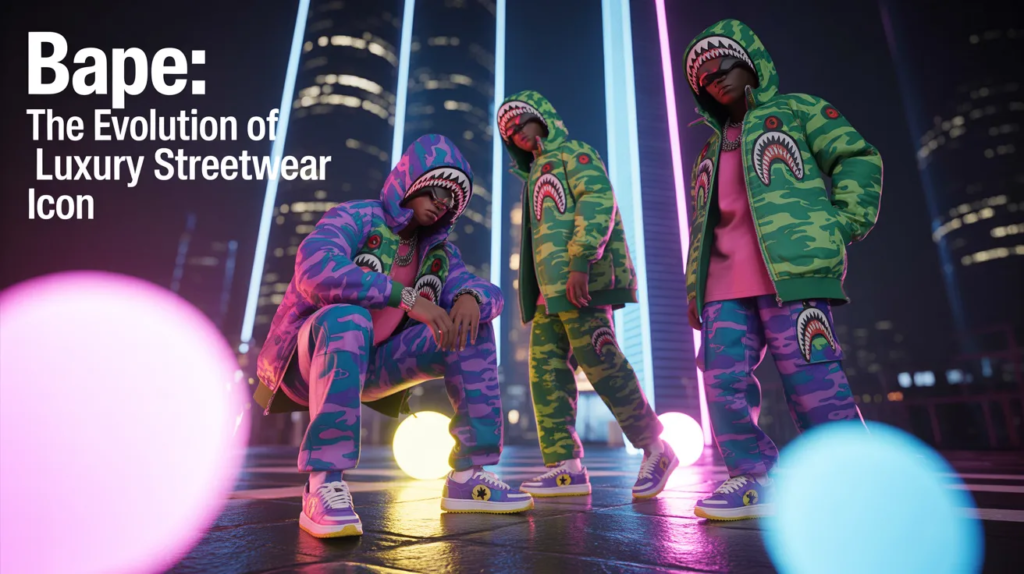
BAPE A Bathing Ape. BAPE is a Japanese streetwear brand. BAPE is also considered a luxury streetwear label. The brand connects fashion with culture. BAPE represents exclusivity. BAPE represents identity. BAPE represents authenticity.
BAPE fashion changed how streetwear is viewed globally. It blurred the line between luxury fashion and street culture. BAPE clothing became a symbol of status. BAPE streetwear became a cultural marker. The brand did not follow trends. The brand created its own lane.
BAPE originated in Japan. Japan already had a strong youth culture. Harajuku was the center of experimentation. Street fashion was deeply expressive there. BAPE was born inside this environment.
The Origins of A Bathing Ape
A Bathing Ape was founded in 1993. Founder: Nigo – whose real name is Tomoaki Nagao – was a designer, also a DJ and a cultural curator.
The brand was born in Harajuku. Harajuku is a district of Tokyo. Harajuku is known for youth fashion. It encourages self-uniqueness. It’s all for creative freedom.
Nigo was inspired by American hip-hop. He loved 1980s pop culture. He studied Japanese consumer behaviour. He knew about irony. He knew about excess.
“A Bathing Ape” is a name with meaning. It is derived from a Japanese phrase. It refers to indulgence. The brand comments on modern consumption. Its brand name itself is social commentary.
From the beginning, BAPE wasn’t normal fashion. The idea was behind every piece of clothing, symbolic, and embedded within culture.
Early BAPE Clothing Philosophy
The early BAPE clothing was simple in terms of design. The implementation of the design was intentional. The design was bold. The graphics were loud. The messages were subtle.
Nigo did not practice mass production. This was a case of scarcity by design. Only a few units were produced. They would sell out in a short while. This would lead to an increase in demand. This was the business model that created exclusivity. It was the model that created desire.
BAPE fashion started with graphic T-shirts. Military cuts were popular. Camouflage designs were added. The Ape Head logo was distinct. These are the characteristics of authentic BAPE. These are still present today. They ensure brand identity.
BAPE Streetwear and the Rise of Hype Culture
BAPE did not create hype. BAPE perfected it early. Lack created urgency. Urgency created a community. The consumer felt that they were a part of something special. To own something was to have status. The resale culture began to emerge
BAPE streetwear was now a collectible. Not all people could get their hands on it. That was the idea. The brand did not advertise. The brand depended on word-of-mouth. The brand depended on visibility through culture.

Influence of Hip-Hop on BAPE’s Global Rise
Hip-hop culture was an important part of this. Music and fashion were already intertwined. Artists wore what symbolized identity. Pharrell Williams was one of the early BAPE wearers. The Clipse wore BAPE. Lil Wayne wore BAPE. Kanye West supported BAPE.
This exposure was organic. It was not paid advertising. It created authenticity. BAPE clothing was featured in music videos. It was featured on stage. It was featured in magazines. The non-Japanese public took notice. The demand for BAPE grew. BAPE expanded worldwide.
BAPE as a Luxury Streetwear Brand
BAPE is a part of luxury streetwear. Luxury streetwear combines quality and culture. Price is associated with exclusivity. BAPE employs high-quality fabrics. The construction quality is excellent. The design has a strong sense of consistency.
The distribution is controlled. Not all stores sell BAPE. This is to preserve the value of the brand.
BAPE is competing with Supreme. It is competing with Off-White. It is competing with Fear of God. It is competing with Comme des Garçons. BAPE retains its distinctiveness. Its trademark is protected.
Design Language of BAPE Fashion
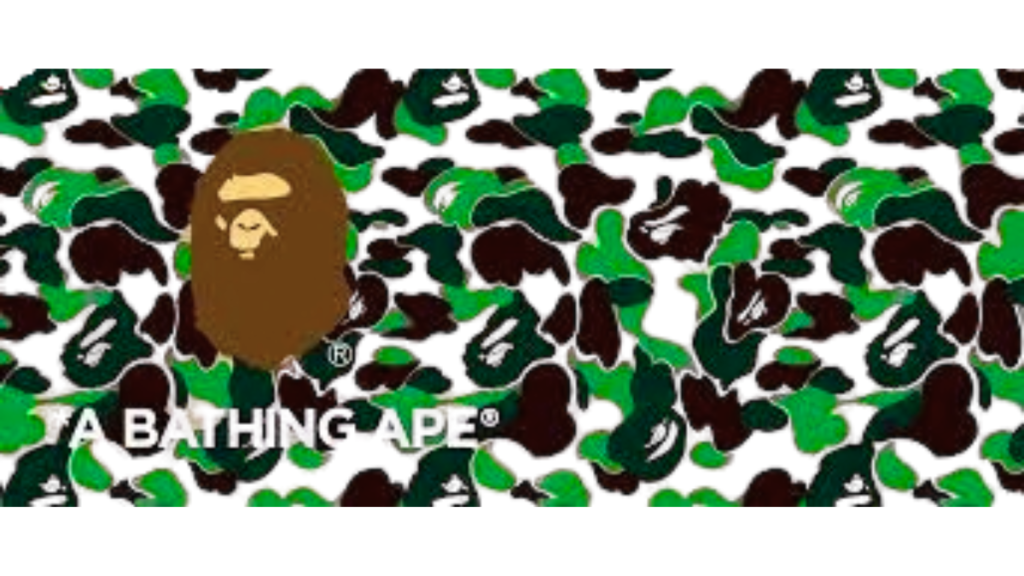
The BAPE fashion style is very identifiable. The Shark hoodie is a classic. The full-zip face design is distinctive. The camouflage style of ABC is signature. The color schemes are bold. The patterns are deliberate. The Ape Head logo is symbolic. It symbolizes rebellion. It symbolizes irony.
BAPE does not water down identity. The language of design remains the same. This is how longevity is created.
Authentic BAPE and Brand Protection


Real BAPE is high-quality. The fabric is heavy. The stitching is clean. Tags are specific. Gold Ape Head tags are common. Labels are precise. Fake BAPE is common. Counterfeit products do not have quality. The pattern is not aligned. Authentic vs fake BAPE is an important issue. This is a concern for collectors. The resale value is based on authenticity.
BAPE’s Early Retail Expansion
BAPE opened its first store in Tokyo. Customer experience counted. Store design reflected brand personality. Interior design was kept to a minimum. Product display was deliberate. It was elite. However, as the demand increased, expansion ensued. New sites opened gradually. The rate of growth was managed. This ensured that the brand was not compromised.
BAPE’s Expansion Era and Global Recognition
However, as the popularity of BAPE rose to fame in Japan, its style began to seep out of Harajuku and into the world of street culture. With the early 2000s, we can say it’s a turning point in time where A Bathing Ape really grew out of its home land as its limited distribution and status catapulted it into international recognition. Instead of being part of Japanese culture, A Bathing Ape had become a status symbol.
Further, the growth was controlled as opposed to rapid, which allowed the brand to hold on to the coveted edge of scarcity. The new stores looked identical to the brand’s clothing line in terms of style and feel. This controlled and strategic growth ensured that Bape did not become just another brand, but a premium streetwear brand.
The Rise of BAPE STA and Sneaker Culture
The BAPE STA sneaker marks one of the major intersection points in BAPE’s fashion history. Drawing from the classic basketball silhouette, it reimagines with real tints of color and patent leather, highlighted by the unmistakable star badge. For the past years, the BAPE STA has raised itself into a cultural icon in sneaker culture as it helped bind streetwear with the overall sneaker world.
Its impact goes beyond looks. The shoe embodies how BAPE can take a rather familiar idea and infuse it with its own signature twist. For more than being just kicks, the STA turned into a piece which many collectors crave, signaling the rise of BAPE streetwear within the global sneaker landscape.
Nike and the Power of Strategic Collaborations
The partnership between the BAPE and Nike brand signified an important milestone in the history of luxury streetwear. In essence, the partnership was a symbol that streetwear had finally achieved its rightful place among the big brands of sports wear. BAPE x Nike Air Force 1 was an iconic release.
In other words, such a partnership helped take BAPE’s luxury streetwear to a new height with a fresh layer of authenticity. Such a partnership showed that BAPE could definitely hold on to its signature style even in a partnership with an established brand.
Celebrity Influence and Cultural Validation
Celebrity adoption of BAPE was instrumental in increasing the BAPE brand’s cultural standing. For instance, celebrities such as Pharrell Williams, Kanye West, and Lil Wayne were not just spotted wearing BAPE products; rather, they were embodiments of the brand, integrating it into their lifestyles.
BAPE street wear had become an expression of creativity, freedom, and leadership. Real BAPE clothing had become a symbol of a way of thinking rather than simply a transient fashion statement. It was this cultural significance of BAPE that made it last even in the face of changing fashion trends.
BAPE as a Symbol of Luxury Streetwear
In late 1990s to early 2000s, , BAPE had made its mark in the profitable luxury street wear market. Its pricing, manufacturing quality, and narrative were more in line with the luxury fashion sector than the traditional street wear market. BAPE’s clothing evoked the essence of luxury based on exclusivity.
The factor that set the brand aside was its ability to successfully blend playfulness with top materials. While many brands sought to attain either minimalism or the hype, Bape found a visual identity that felt authentic within Japanese design culture.
The Transition Period and Nigo’s Departure
But a significant change came in 2011 when Nigo sold A Bathing Ape to Hong Kong-based I.T Group. The sale signaled the end of the founder’s era and ushered in a new chapter for the brand. Changing hands, however, brought financial stability.
Under new ownership, BAPE began to explore global expansion plans without compromising its core design principles. At this point, BAPE had to grow internationally while not losing its authenticity. This period indeed called for good brand management in order not to dilute the brand and lose its cultural identity.
BAPE Under the I.T Group Era
After the acquisition, BAPE expanded its retail stores in Asia, North America, and Europe. New flagship stores attracted new clients without losing the brand’s specific character. At the same time, the company optimized its production lines and improved the sharpness of the distribution networks.
Even while growing, BAPE kept a finger on scarcity-going through limited releases and high-profile collaborations to retain exclusivity. The strategy attracted a younger crowd while still pleasing its core collectors. All in all, the balance helped BAPE lock in a steady standing in the dynamic world of luxury streetwear.
The Role of Archives and Nostalgia in BAPE Fashion
BAPE has recently relied on the archives as a strategic act of late. Vintage graphics, timeless camouflage, and the line’s original silhouettes have all cropped up in new drops from the brand targeting longtime supporters and fresh fans alike. Nostalgia runs strong in today’s BAPE threads.
Archive-driven releases enhance authenticity, serving almost as a nod to the brand’s cultural heritage and its place in history. That would help further position BAPE as a legacy label rather than just a trend-driven name.
BAPE’s Complete Product Ecosystem
BAPE represents more than just graphic t-shirts and hoodies. In the end, A Bathing Ape has developed many other products that can ultimately help the brand stay on top as a whole. Each type of product serves a different segment of BAPE fans. They all have the same design, though.
The clothing line has different drops that display different bold designs. However, the main clothing line consists of hoodies, varsity jackets, sweatpants, and outerwear. This is the base clothing line of the company. They ensure that consistency is met in terms of fit and style. Each release is like wearing the brand’s soul.
BAPE menswear has a collection of bold and casual pieces that make a statement. BAPE collections are all about comfort and style combined. Their collections are still dominated by camouflage prints and shark logo hoodies.
For women, the range follows the same philosophy but in a different scale, shape, and proportion. Clean lines maintain the look precise yet edgy, streetwear style. The graphics are placed thoughtfully. The placement of the graphics helps to blend the men’s range and the women’s range into one style, rather than offshoots.
Accessories and Lifestyle Products
Accessories are a great contributor to the commercial success of BAPE. Accessories such as bags, hats, sneakers, watches, and sunglasses increase commercial success by offering the brand to the public at a relatively cheaper price to stay in public view. Buying these products exposes consumers to the brand name, hence increasing awareness of the brand.
Among footwear, the BAPE STA sneakers are the most recognizable. The consistent design approach for these sneakers plays a critical role in memory for the brand. Apart from being a clothing brand, the accessories such as phone cases and home items help create a reputation of BAPE as a lifestyle brand rather than an apparel brand.
The concept of scarcity is still a crucial part of BAPE’s streetwear strategy. The strategy of limited releases is used to control the supply and keep the demand in check. This strategy is used to create a sense of value and avoid overexposure. Customers associate authentic BAPE with scarcity and not with abundance.
Drop-based releases also promote repeat engagement. Customers track brand calendars very closely. This model reflects high-end fashion trends while remaining true to streetwear culture.
Authentic BAPE vs Fake BAPE: Market Reality
The onset of BAPE portends a flood of duplicates. Fake BAPE products are quite common in markets today, and this is a cause of concern for those seeking genuine products. The ability to distinguish between genuine and counterfeit products is helpful in helping consumers understand the difference better.
Real BAPE items can be identified based on the stitching, typography, and quality of materials. The label also has proper labeling, including proper spacing. The design on the camouflage pattern on the product is properly aligned, unlike in the counterfeit products.
Why Authentication Matters in Luxury Streetwear

Authentication, however, is an important factor in premium streetwear because the resale depends on it. Real BAPE gear retains a certain level of value in the resale market, but above everything, consumers want authentic products. The brand’s image is hurt by counterfeit goods, too.
However, as BAPE becomes more engaged in limited drops, the importance of proper authentication becomes even more critical. People seem to gravitate toward authentic retailers or secondary sources of the product. Educating people on the importance of authentication helps to build the community of the brand.
BAPE’s Position in the Global Streetwear Market
BAPE is located in the nexus of luxury fashion and streetwear. Not many streetwear brands focus on trends, but rather stick to their roots and presence, which is always constant, irrespective of the changing fashion scene.
What makes BAPE singular is that the story becomes the focus. BAPE isn’t akin to the competition, who are intent on pushing the minimalist or hyped fashion trend; rather, the style is protected and perfected.
BAPE is forging its own path within the digital age without forgetting its roots. BAPE’s social media campaigns emphasize its craftsmanship rather than trying to partner with influencers. The hybrid of online releases and physical stores feels well-balanced and gives a sense of exclusivity. While being online allows the brand to expand its audience and reach people across the world who can enjoy BAPE fashion, wherever they are in the world, this continuous cycle of interaction guarantees BAPE will forever be relevant at a global scale.
Cultural Influence Beyond Fashion
BAPE is not just about the gear—its influence extends into music, the arts, and how we perceive ourselves. Graphics have evolved into an iconic pop cultural reference, synonymous with the shifting tides and ebbs of fashion, yet BAPE remains constant by staying connected to the culture it represents. For BAPE, change with the times yet remain true to our founding philosophy.
BAPE has also proved that brand identity is sustainable. The brand is not focused on pursuing trendy images; rather, they are sticking to their original brand vision. The brand’s identity, with its typical images of camouflage, sharks, and brandings, also promotes trust.
Within the horizon of luxurious streetwear, BAPE finds a middle ground where it is neither ephemeral nor completely out of reach. There is the sense of exclusivity, and also the sense of cultural relatability. There is no mass production; instead, it is controlled distribution to retain its value—a continuous demand among generations.
Why BAPE Still Matters in Modern Streetwear
Streetwear fashion is a constantly evolving movement, where brands can emerge overnight and disappear just as quickly. BAPE, however, remains relevant because it was founded on a strong foundation. Tradition meets innovation, and new ideas do not diminish their initial identity. BAPE talks to people on a level that is emotional. People are not buying clothes; they’re buying into a cultural experience. The emotional level is what allows for brand loyalty and perpetuates residual values and collections.
The brand still remains true to its design language with all its releases. Each brand continues to embody the same philosophy, a watchword for clarity. The debate around authentic vs. fake BAPE is as popular as ever, though the proliferation of fakes is itself a measure of success. Yet authentic BAPE continues to represent status, originality, and legitimacy in fashion.
BAPE clothing is successful globally, with Asia, Europe, and North America being major distribution centers. BAPE, via online stores, has penetrated the global market, while on the ground, flagship stores have helped reinforce the brand’s authority. Accessories and sneakers have helped the brand reach more people without diluting its personal style, with cheaper products attracting new customers while the more expensive products help maintain the exclusive image.
Future Outlook for A Bathing Ape
The outlook for A Bathing Ape as a streetwear brand looks good. A strong brand strategy helps BAPE stay relevant and popular in the streetwear scene. The brand focuses on quality and craftsmanship.
BAPE will not change its signature streetwear style but will improve and refine it. New collaborations may come, but the brand’s iconic designs will stay the same. Its heritage will continue to guide future innovation.
Frequently Asked Questions (FAQs) – BAPE (A Bathing Ape)
1. What is BAPE?
BAPE, standing for A Bathing Ape, is a high-end streetwear fashion brand from Japan that was established in 1993 by Nigo. The brand is unique in its bold graphic use, attention-grabbing camouflage designs, and limited edition releases that shaped the world of streetwear.
2. What does BAPE stand for?
BAPE stands for A Bathing Ape, a name inspired by a Japanese phrase referring to overindulgence, reflecting irony, exclusivity, and youth culture.
3. Is BAPE a luxury streetwear brand?
Yes, BAPE is considered a luxury streetwear brand due to its premium materials, high pricing, limited production, and strong cultural influence.
4. Why is BAPE so expensive?
BAPE clothing is expensive because of limited drops, high-quality construction, Japanese craftsmanship, strong brand heritage, and high demand in the resale market.
5. What are BAPE’s most iconic products?
BAPE’s most iconic items include the Shark Hoodie, BAPE STA sneakers, camouflage T-shirts, varsity jackets, and limited-edition collaborations.
6. How can you tell if BAPE is real or fake?
Authentic BAPE products feature premium fabric, precise stitching, gold Ape Head tags, correct camo alignment, and accurate labeling. Fake BAPE often lacks quality and detail.
7. Where is BAPE clothing made?
Most authentic BAPE clothing is designed in Japan, with production spread across Japan and select overseas factories under strict quality control.
8. Who wears BAPE?
BAPE has been worn by global celebrities including Pharrell Williams, Kanye West, Travis Scott, Lil Wayne, A$AP Rocky, and many influential artists and designers.
9. Is BAPE still popular today?
Yes, BAPE remains highly relevant in modern streetwear, supported by collaborations, global retail presence, and strong demand from collectors and youth culture.
10. Is BAPE worth buying?
For collectors and streetwear enthusiasts, BAPE is worth buying due to its resale value, cultural significance, and long-standing influence in luxury streetwear.
11. What is the difference between BAPE and other streetwear brands?
Unlike many streetwear brands, BAPE focuses on exclusivity, bold identity, and Japanese design philosophy rather than trend-driven fashion.
12. Where can you buy authentic BAPE?
Authentic BAPE products can be purchased from official BAPE stores, the brand’s website, and authorized retailers such as SSENSE, Farfetch, END., and Dover Street Market.
13. What makes BAPE camo unique?
BAPE camo is custom-designed and features the Ape Head motif embedded into the pattern, making it instantly recognizable and brand-specific.
14. Does BAPE release limited editions?
Yes, BAPE is known for limited drops and exclusive collaborations, which increase scarcity and drive resale demand.
15. Is BAPE streetwear or fashion?
BAPE is both streetwear and fashion. It bridges underground culture with luxury aesthetics, positioning itself as a pioneer of modern luxury streetwear.
For collaborations, press, or inquiries, contact us at streeticonic1@gmail.com.