Lifestyle
Balmain Collaboration History Luxury Fashion Meets Global Culture


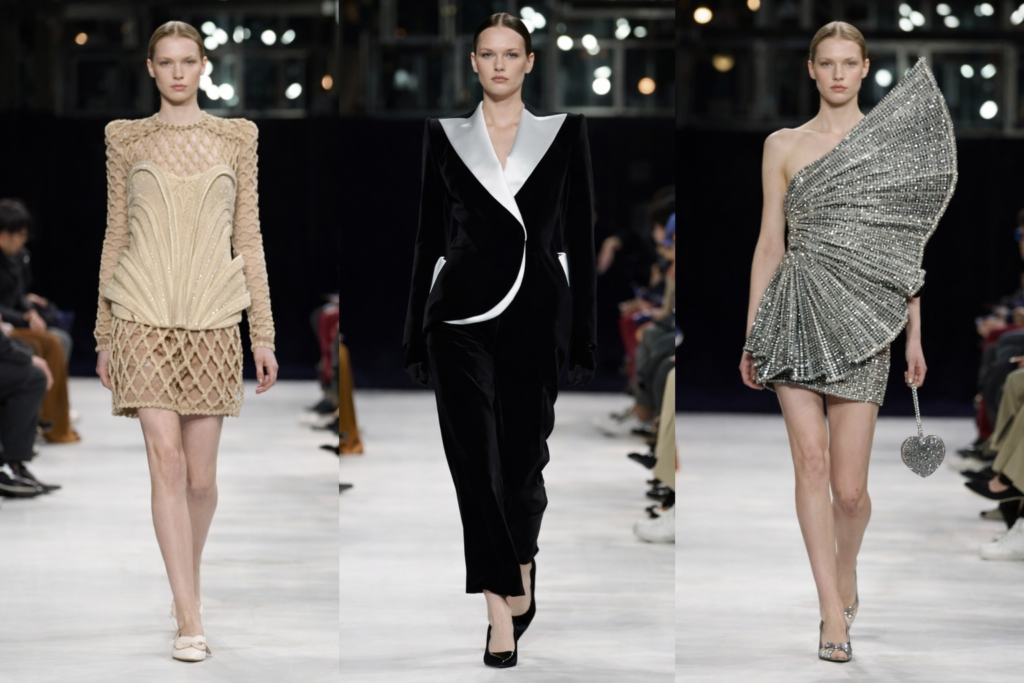
Balmain Collaboration History stands among the most recognized French fashion houses in modern culture. The label connects couture history with celebrity culture, music performance, and global retail projects. Collaborations sit at the center of this expansion. They act as cultural bridges between luxury fashion and mass audience platforms. This article studies Balmain collaborations through history, design language, cultural symbolism, and market effect. The emphasis remains on verified history, creative direction, and social meaning as opposed to hype. Now, let’s dissect this. Collaborations with Balmain demonstrate how a couture house can project its identity over various forms of media, performance, and products while maintaining its visual control.
Balmain projects rarely feel random. Each partnership reflects power dressing, stage presence, and visual drama. These elements trace back to the house founder and continue through modern leadership periods. When Balmain joins another brand, the result usually carries armor-like tailoring, strong silhouettes, and decorative intensity. This pattern appears again and again across collaboration history.
Early Life and Education
The fashion house was founded by Pierre Balmain in Paris in 1945. Pierre Balmain studied architecture at the École des Beaux Arts before pursuing fashion education. This background in architecture influenced his perception of clothing design. He approached clothing as if it were a designed structure that could move with the wearer’s body. Balmain trained with Robert Piguet and Lucien Lelong before establishing his fashion house. His first collections were for the post-war Parisian society and the international elite. Movie stars and royalties wore Balmain in the late 1940s and 1950s. This built early prestige and global recognition.
Pierre Balmain described dressmaking as movement architecture. That statement reveals his design logic. Garments required balance, geometry, and disciplined line control. This philosophy later helped the house maintain identity even when creative directors changed. Collaborations decades later still reflect this structural mindset through bold shoulders, fitted waists, and controlled line flow.
Rise Within Balmain
The house passed through several creative eras after Pierre Balmain. Each era adjusted style language while preserving couture authority. A major cultural shift arrived when Olivier Rousteing became creative director in 2011. He was very young at appointment time. He brought a strong media presence and celebrity network. He expanded Balmain into music culture, red carpet visibility, and social media conversation.
Rousteing built what the press later called the Balmain Army. This referred to a circle of musicians, actors, and models who wore Balmain in public appearances and performances. This circle included global pop figures. The label gained constant visual exposure through concerts, award shows, and digital platforms. Collaborations increased during this era because the brand already lived inside popular culture channels. Partnership projects felt like natural extensions rather than side experiments.
Balmain moved from salon prestige to cultural visibility across youth audiences. Collaborations became one of the main tools used to reach new consumer groups without removing couture identity.
Design Philosophy and Creative Vision
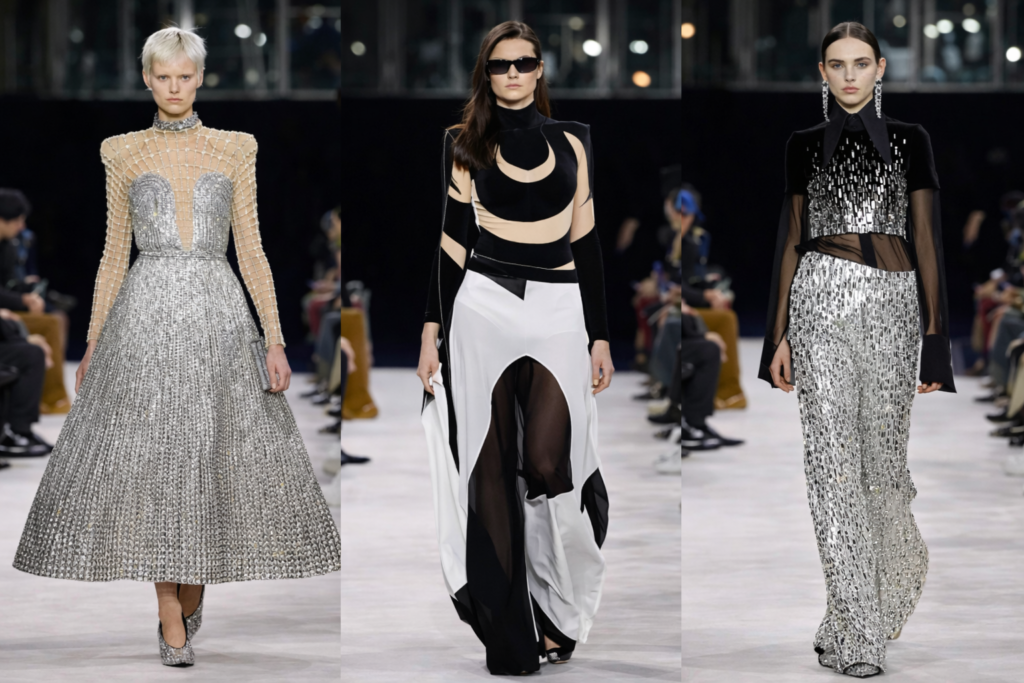
Balmain design language centers on authority, glamour, and controlled aggression. Garments often show strong shoulders, narrow waists, military references, and dense surface decoration. Gold hardware, embroidery, and sculpted jackets appear frequently. This creates a visual message of power and performance readiness.
Stage wear plays a large role in Balmain design thinking. Many pieces look prepared for spotlight conditions. Cameras, bright lights, and long distance viewing shape design decisions. High contrast detail reads well on stage and screen. This matters when studying collaboration choices. Many Balmain partners come from music, performance, or spectacle driven industries.
A collaboration partner must support three Balmain values. Visual strength comes first. Cultural visibility comes second. Performance context comes third. When these three appear together, a Balmain partnership feels coherent.
Innovation and Technical Experimentation of BALMAIN
Balmain collaborations often act as testing grounds for new material treatments and production methods. Capsule projects allow the house to try fabrication ideas outside runway schedules. These include molded leather, metallic textiles, engineered denim, and performance fabrics adapted to couture silhouettes.
Music related partnerships encourage work with wearable technology and sound culture objects. Beauty and fragrance partnerships allow sensory translation of brand identity into scent and packaging design. Toy and pop icon partnerships allow experimentation with color systems and graphic language outside tailoring.
Each collaboration acts like a controlled laboratory. The house tests visual codes in a new product class. Results influence later runway collections. This feedback loop appears across several Balmain partnership cycles.
BALMAIN Approach to Collaborations
Balmain selects partners based on cultural reach and symbolic fit. The house favors partners with strong visual identity and global audience presence. Music brands, performance platforms, athletic labels, and mass retail giants appear repeatedly in Balmain partnership history.
Balmain garments communicate best when worn publicly and photographed widely. A collaboration multiplies those public moments. The partner supplies distribution or stage access. Balmain supplies visual authority and couture codes.
Most Balmain collaborations use capsule structure. Capsule format keeps product range tight. This protects brand image and maintains scarcity appeal. The capsule usually echoes runway themes already present in seasonal collections. This creates visual continuity between the main line and partnership line.
Noticeable Collaborations of BALMAIN
Our Favorite Balmain Collaborations
For more than seven decades, Balmain has produced garments that reward long term appreciation and visual recognition. The Parisian fashion brand has established its identity through structured tailoring, ceremonial elements, and strong silhouettes. Contemporary Balmain has extended this legacy through high-profile collaborations in retail, music, sports, technology, and popular culture. These partnerships extend house design codes into new product categories while keeping visual authority intact.
The foundation of Balmain design lies in architectural structure, strong shoulders, fitted lines, and decorative intensity. This philosophy appears across collaboration projects where capsules translate runway language into accessible formats without removing signature elements. Common Balmain values repeated across partnerships include:
- Structured silhouette
- Decorative strength
- Performance presence
- Visual authority
- Cultural visibility
Balmain was founded in 1945 by its founder, Pierre Balmain, who studied architecture before becoming a fashion designer. He thought that fashion is a “moving piece of engineering.” This philosophy of fashion is still reflected in the direction of the brand. Collaboration design also reflects this in sculpted silhouettes, metal hardware, and uniform details.
The collaboration activity increased under creative director Olivier Rousteing, who joined the brand in 2011. He brought Balmain into the orbit of international celebrities and music culture. This put the brand on concert floors, at awards shows, and on social media platforms. Collaborations became events, not just product drops.
Balmain focuses on partners with global recognition and high visibility platforms. Music brands, athletic labels, broadcast runway shows, and mass retailers appear often in its partnership history. Capsule scale releases protect brand clarity and create collector interest. Many drops sell out quickly because supply stays tight and media attention stays high.
Authenticity remains central in partner selection. Balmain works with category specialists such as sportswear companies, audio manufacturers, and beauty houses. This protects product credibility and construction quality. Balmain collaboration history shows how a couture house can expand reach across industries while keeping strong and consistent visual identity.
Balmain x H&M (2015)
Balmain and H and M released their collaboration in November 2015. Olivier Rousteing announced the project publicly at the Billboard Music Awards with celebrity support on stage. The collection translated Balmain runway signatures into lower price garments and accessories. Structured jackets, embroidery, bandage dresses, and military details appeared throughout the capsule.
Store lines formed overnight in major cities. Online stock sold out quickly after release. This drop marked one of the most commercially successful designer and mass retailer partnerships of that decade. It also introduced Balmain visual language to a younger global audience who had never purchased couture or luxury ready to wear.
Here is why this project mattered. It shifted Balmain from a celebrity wardrobe label to youth culture reference point. Social media activity around the launch reached millions of interactions within days. The collaboration also confirmed that heavy ornament and couture silhouette could survive price translation when design control stayed strict.
The collection followed Rousteing’s early Balmain seasons closely. He did not simplify identity. He compressed it into accessible fabrication and pricing. That decision preserved brand recognition across all price tiers.
Balmain x Victoria’s Secret (2017)


Balmain collaborated with Victoria’s Secret for the 2017 fashion show and capsule launch. This marked the first time Victoria’s Secret invited a Paris luxury house to co design runway looks and a retail capsule. The runway segment presented punk influenced lingerie and garments with leather, studs, and metal hardware.
Stage context played a central role. Victoria’s Secret shows operate as global broadcast events with music performances and celebrity casting. Balmain design language fits that environment well because garments read strongly under stage lighting and camera zoom. The collaboration amplified Balmain visibility across mainstream broadcast channels.
The capsule collection was launched after the fashion show and consisted of lingerie and clothing items inspired by the fashion show segment. Fans could buy items of what they had seen on the runway. This connected spectacle viewing with direct consumer access.
This partnership linked couture attitude with lingerie performance culture. It also showed how Balmain codes adapt to body focused garments without losing authority.
Balmain x Puma (2016 to 2019)
Balmain and Puma produced multiple capsule collections across several seasons. These projects combined luxury fashion codes with sportswear product types. Sneakers, track pants, boxing inspired garments, and athletic silhouettes appeared across releases. Campaigns often featured global pop figures and athletes.
Sportswear partnerships require movement compatibility. Balmain adjusted tailoring intensity to allow flexibility while preserving bold visual markers. Metallic finishes, strong color blocking, and logo prominence appeared across items.
Let’s break it down. This collaboration placed Balmain inside streetwear and athletic retail channels. It connected couture image with gym and performance culture. That connection helped Balmain reach male consumers and sneaker audiences more directly.
The Puma capsules also supported concert wardrobe and performance styling for associated celebrities. This kept the garments visible in motion rather than only in editorial photography.
Balmain x Beats(2017)
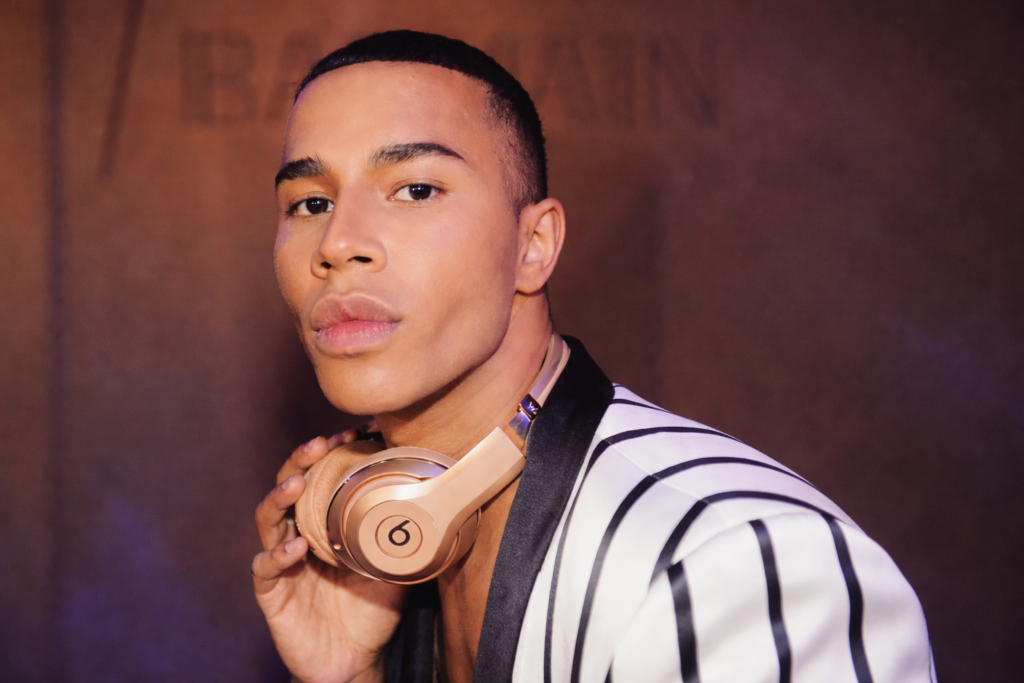
Balmain worked with Beats on luxury versions of popular audio products. Headphones and audio accessories received Balmain visual treatment through color, finish, and branding detail. Music culture stands close to Balmain identity because many brand ambassadors come from recording and performance fields.
Audio devices function as public objects worn on the body. This makes them fashion adjacent. Balmain design treatment turned tech hardware into style statements. Gold accents and bold finishes matched house decoration language.
This project extended Balmain beyond clothing into lifestyle hardware. It showed that brand codes can apply to sound culture objects without losing coherence.
Balmain x Beyoncé Stage Wardrobe Collaboration (2018)
Balmain created a stage wardrobe for Beyoncé’s major festival performance in 2018. The house later released a capsule inspired by those performance looks. The garments referenced collegiate symbolism and historical Black college culture themes presented during the show.
Stage costume collaborations differ from retail capsules. They exist first as performance garments. Later they may become consumer products. Balmain translated performance symbolism into wearable items for public purchase after the event.
This collaboration linked Balmain to cultural history, music performance, and identity symbolism. It showed how couture construction methods support high movement stage choreography.
Balmain x Barbie (2022)
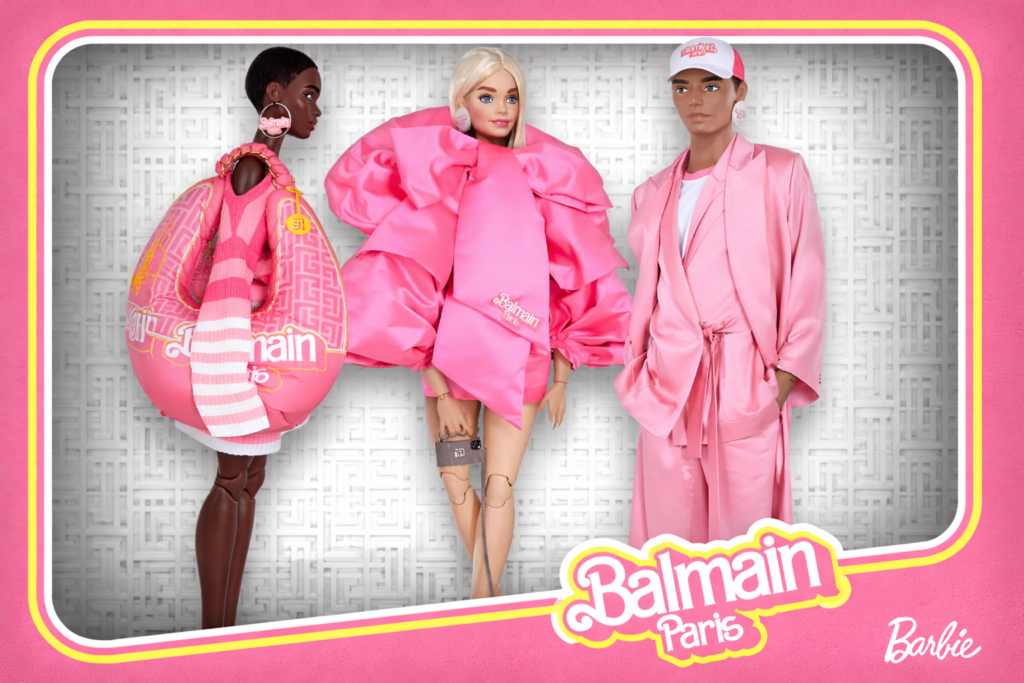
Balmain partnered with Barbie on a fashion collection and digital avatar project. The capsule included clothing and accessories using pink color systems and graphic references tied to Barbie visual heritage. The project also included digital fashion pieces for virtual environments.
This collaboration joined couture fashion with toy culture and digital identity spaces. It targeted both collectors and younger audiences familiar with Barbie symbolism. Pink tailoring and logo treatments blended Balmain authority with pop icon playfulness.
Here is why this project stands out. It connected luxury fashion with both physical and virtual product categories at the same time. It also showed how Balmain codes operate inside strong color narratives rather than only black and gold military palettes.
BALMAIN’s Luxury Revival
Balmain collaborations reshaped how heritage houses interact with mass platforms. Traditional couture labels once avoided mass partnerships. Balmain proved that controlled capsule partnerships can expand reach without erasing identity. Visual discipline made that possible.
The house keeps silhouette control across partnerships. This consistency protects brand memory. Consumers recognize Balmain pieces even when price point or category changes.
Collaborations also reposition heritage as active rather than static. The house does not sit only in archives. It appears on concert stages, sports arenas, digital platforms, and retail chains. That visibility keeps the label culturally current.
Product Category Expansion Through Collaboration
Balmain collaborations expanded the house into product classes beyond classic garments. Audio devices, athletic footwear, dolls, fragrance objects, and lingerie entered the Balmain universe through partnerships. Each new class required design translation.
Garment codes had to become object codes. Tailoring lines became surface paneling on headphones. Military buttons became embossed hardware on sneakers. Embroidery logic became print pattern logic. This translation process shows how brand language can migrate across material types.
Some categories carry ritual use. Fragrance relates to personal identity ritual. Audio devices relate to music immersion ritual. Athletic shoes relate to movement ritual. When Balmain enters these rituals, it enters daily life cycles rather than special event dressing alone.
This shift increases brand presence frequency. Consumers interact with Balmain coded objects more often than runway garments alone would allow.
French Craftsmanship and Global Influence
Balmain still builds couture and high fashion garments through French atelier methods. Tailoring structure, embroidery, and surface work follow established couture practices. Collaborations borrow these visual cues even when manufacturing happens at scale.
Global influence grows through celebrity circulation. When musicians and actors wear Balmain collaboration pieces, images spread across media networks quickly. This creates a global brand imprint beyond the traditional fashion press.
Craft stays at the top line. Symbols travel through collaboration lines. This two level system supports both prestige and visibility.
BALMAIN’s Fashion Legacy
Balmain collaboration strategy influenced how other luxury houses approach partnerships. Many labels now plan capsule projects with mass retailers, sportswear brands, and pop culture icons. Balmain helped normalize this behavior inside luxury fashion.
The house also proved that strong visual identity survives category shifts. Structure, decoration, and silhouette can act as portable brand language. That lesson changed partnership design methods across the industry.
Modern fashion now expects cross industry collaboration cycles. Balmain stands among the houses that made this expectation standard practice.
Conclusion
Balmain collaborations reveal a clear pattern of cultural engagement through controlled design, blending couture authority with streetwear influence. Each partnership extends iconic house symbols into new public and streetwear-driven spaces. Structure, spectacle, and power remain consistent across categories, protecting brand identity as reach expands. Balmain proves how a couture house can move confidently through streetwear and mass culture without losing its visual dominance.
For collaborations, press, or inquiries, contact us at streeticonic1@gmail.com.