Artist Plate Project Guide to Art and Collectibles
The Artist Plate Project brings contemporary art into an unexpected format: collectible dinner plates that support people experiencing homelessness. Launched in 2020 by the Coalition for the Homeless, the initiative connects established and emerging art audiences with a practical charitable purpose. Instead of limiting artwork to gallery walls, the project places original artist-selected imagery on fine bone china, creating objects that can be displayed, collected, or used at home.
What makes the project distinctive is the connection between art collecting and direct community support. Buyers receive a limited-edition object associated with a participating artist, while proceeds support programs addressing homelessness and housing instability in New York City.
The project has attracted internationally recognized artists, art galleries, cultural organizations, and collectors. Its editions have also appeared in connection with major art events, including Frieze New York. For anyone interested in contemporary art, collectible design, or charitable initiatives, the project offers an example of how creative work can reach beyond traditional galleries.
In this guide, you will learn what the Artist Plate Project is, how it began, who participates, how the plates are made and sold, and what buyers should know before collecting one.
What Is the Artist Plate Project?
The Artist Plate Project is a charitable art initiative that produces limited-edition dinner plates featuring artwork by prominent contemporary artists. It was established by the Coalition for the Homeless in 2020, with sales helping fund the organization's services for people experiencing homelessness and housing instability.
The plates combine three elements:
- Contemporary art: Artwork from participating artists is reproduced on ceramic dinnerware.
- Collectible design: Limited production runs and artist attribution give each plate a distinct identity.
- Charitable impact: Sales support food assistance, crisis services, housing programs, and other essential aid.
The project is not simply a decorative dinnerware collection. It is a fundraising model that allows people to support a charitable cause through the purchase of an art object.
Who Organizes the Artist Plate Project?
The Coalition for the Homeless leads the initiative, while Artware Editions serves as the retail platform for the plates. Artists contribute imagery, and production partners manufacture the objects. Galleries and sponsors also help support participating artists and the broader fundraising effort.
Michelle Hellman is credited with co-founding and curating the project. Its partnerships connect the nonprofit sector with the contemporary art market, making the initiative accessible to collectors who might not otherwise participate in traditional fundraising events.
How Did the Artist Plate Project Begin?
The Artist Plate Project launched in 2020 during the COVID-19 pandemic, when public health restrictions and economic uncertainty intensified existing challenges for vulnerable communities.
The initiative was created as an alternative fundraising approach during a period when traditional in-person events were difficult to hold. It grew out of the Coalition for the Homeless's longstanding work supporting New Yorkers facing homelessness and food insecurity.
The first edition demonstrated that art could generate substantial charitable support. According to the Coalition's account of the 2020 project, that edition raised $1.5 million to help fund food, crisis services, protective equipment, housing, and other assistance.
How Has the Project Evolved?
The initiative continued beyond its original pandemic-era launch, bringing together additional artists and developing new editions.
- 2020: The project launched as a fundraising initiative during the pandemic.
- 2021: A new edition expanded the program and celebrated the Coalition's 40th anniversary.
- 2022: The collection continued with plates featuring artists including Virgil Abloh, Harold Ancart, Derrick Adams, and Takashi Murakami.
- 2023: The project returned to Frieze New York, connecting the initiative with an international contemporary art audience.
- 2025: The project featured 50 artists and launched at Frieze New York on May 7, followed by online sales through Artware Editions beginning May 13.
These milestones show how a fundraising concept developed into a recurring collaboration between artists, galleries, retailers, and a nonprofit organization.
The dates above describe documented past editions. They should not be interpreted as confirmation that a particular plate or a new annual edition is currently available in 2026.
What Makes Artist Plate Project Artwork Special?
The appeal of Artist Plate Project artwork comes from the meeting of artistic expression, functional design, limited production, and charitable giving.
Rather than commissioning a single visual style, the project brings together artists with different backgrounds and approaches. The resulting plates offer a compact way to experience artwork that may also appear in galleries, museums, and established art collections.
Which Artists Have Participated?
The project has featured a broad range of recognized artists. Depending on the edition, participants have included:
- Alexander Calder: Known for pioneering modern sculpture and kinetic art.
- Jean-Michel Basquiat: Celebrated for expressive imagery, text, and influential Neo-Expressionist work.
- Amy Sherald: Recognized for distinctive figurative portraiture.
- Amoako Boafo: Known for expressive portraits and distinctive depictions of Black identity.
- Derrick Adams: An interdisciplinary artist whose work explores Black culture, representation, and everyday life.
- Takashi Murakami: Known for colorful imagery and the relationship between fine art and popular culture.
- Ed Ruscha: Recognized for text-based paintings and explorations of American visual culture.
- Cindy Sherman: Known for photographic work examining identity and representation.
These examples span different artistic movements and media. Participation varies by year, so collectors should check the specific edition rather than assume that every artist appears in every collection.
How Does Artwork Translate to a Dinner Plate?
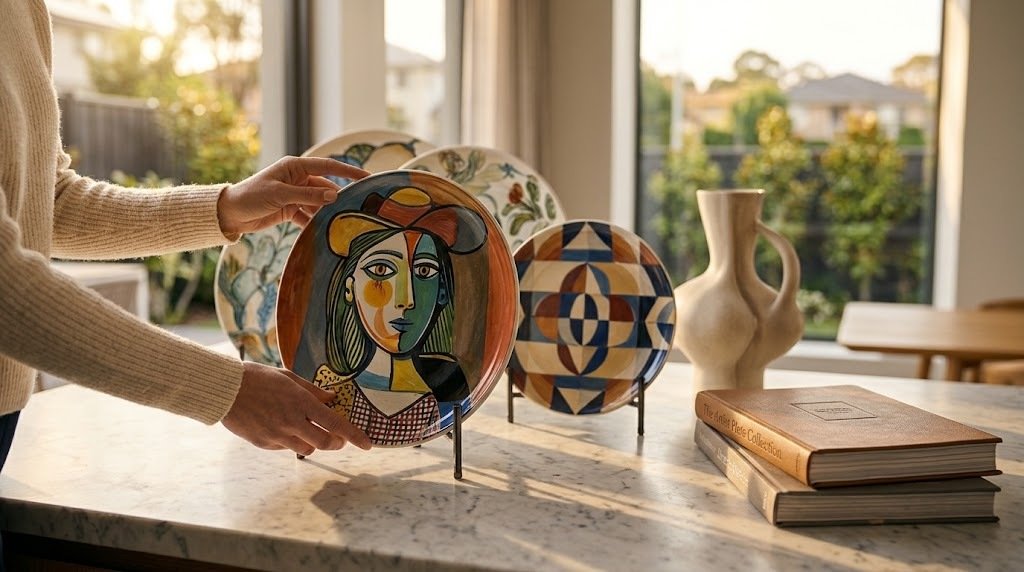
A plate has a different viewing experience from a painting or photograph on a wall. Its circular surface, curved edge, and relatively compact dimensions affect how imagery is presented.
Artists' images can create a central focal point, use the full surface, or emphasize patterns and color relationships. On a table, the artwork interacts with surrounding objects, lighting, and the arrangement of the meal. Displayed vertically, the same plate can function more like a small art print.
This change in format is one of the project's most interesting design features: it makes artwork part of everyday surroundings without requiring the buyer to own a large original painting.
What Materials and Production Details Should Collectors Know?
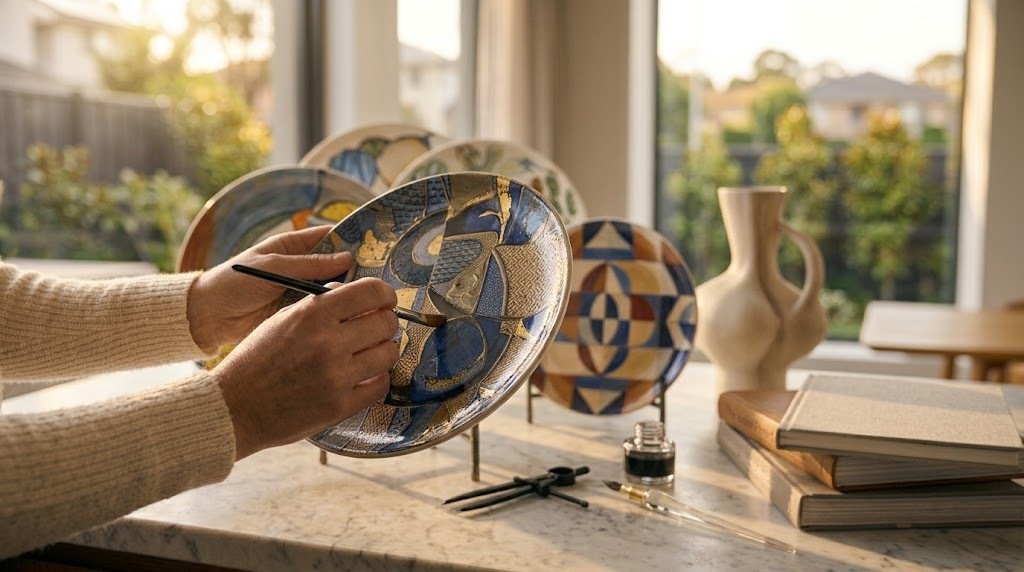
Product specifications vary by edition, but Artware Editions listings document several recurring features:
| Feature | Typical documented specification |
|---|---|
| Material | Fine bone china |
| Diameter | Approximately 10.5 inches |
| Edition size | Often 250 per artist in documented editions |
| Artist identification | Printed signature and edition details on the reverse |
| Packaging | Custom artist presentation box on many listings |
| Production | Prospect for many earlier editions; Atelier Eighty Eight for the 2025 edition |
These details matter because the plate is both a designed object and a collectible. The artist's name, edition information, production details, and condition can help distinguish one release from another.
Check the individual product listing before purchasing. Not every plate necessarily shares the same production partner, edition size, packaging, or care instructions.
How Does the Artist Plate Project Support the Coalition for the Homeless?
The charitable purpose is central to the Artist Plate Project. The Coalition for the Homeless uses the funds raised through the initiative to support services for people experiencing homelessness and housing instability.
These services include food assistance, crisis support, housing-related programs, and other forms of critical aid. The organization combines direct services with advocacy aimed at addressing the conditions that contribute to homelessness.
How Much Does One Plate Contribute?
The project's official descriptions state that purchasing one plate can provide meals for more than 100 homeless and hungry individuals. This is an impact estimate communicated by the project, not a guarantee that every individual purchase funds exactly 100 meals.
The distinction is important. Fundraising proceeds support a range of services, and the relationship between a plate's sale price and the number of meals provided should not be interpreted as a fixed, item-by-item accounting.
Consider a hypothetical collector choosing between two decorative plates at the same price. One purchase is simply a design choice; the other also participates in a fundraising initiative. That additional purpose can make the object meaningful beyond its appearance.
This is the project's central proposition: collecting art and supporting a social cause can happen through the same transaction.
Why Is This Fundraising Model Different?
Traditional art philanthropy can involve gallery benefits, auctions, sponsorships, or direct donations. The Artist Plate Project adds a product-based option to that mix.
Its model offers several advantages:
- Buyers receive a physical object connected to a named artist.
- Limited editions give the collection a defined scope.
- The product can be displayed or used rather than existing solely as a donation receipt.
- Retail and gallery partnerships introduce the charitable cause to art audiences.
- The initiative can reach people who prefer purchasing a collectible over attending a fundraising event.
The project does not replace direct donations or the Coalition's other fundraising efforts. Instead, it creates another route through which people can contribute.
For more information about the organization's work, visit the Coalition for the Homeless official website.
Where Can You Buy Artist Plate Project Plates?
Artware Editions is the primary retail destination identified by the project for its plates. The website provides collection listings and individual product pages with details about artwork, materials, dimensions, edition sizes, and other product information.
Start with the Artist Plate Project collection at Artware Editions to explore listed products.
Are Plates Available in 2026?
Availability depends on the individual release. Earlier editions may be sold out, listed as unavailable, or offered through other channels. A page remaining online does not necessarily mean that the plate can still be purchased.
Before ordering, check:
- Current inventory: Confirm that the specific plate is available to buy.
- Edition details: Review the artist, edition year, production run, and identifying marks.
- Price and shipping: Check the current price, delivery charges, and estimated shipping time.
- Return policy: Read the seller's conditions of sale before placing an order.
- Authenticity and condition: For secondary-market purchases, request clear photographs and documentation.
The project has also received coverage from art organizations and galleries. For example, Gagosian's announcement of the 2025 Artist Plate Project documents that edition's launch plans, participating artists, and charitable purpose.
For additional visual context, see Frieze's coverage of the Artist Plate Project at Frieze New York 2025.
How Much Do Artist Plate Project Plates Cost?
For the 2025 edition, Artware Editions and the Collectible Art Plates for the Homeless listed individual plates at $250 each, plus shipping and handling, with an edition size of 250 per artist. These figures refer to the documented 2025 offering, not a guaranteed current price for every plate.
Older editions can have different prices and production quantities. For example, Gagosian Shop's 2022 listing describes a bone china plate measuring 10.5 inches and produced in an edition of 250. Its listed price was $250 when documented.
Collectors should compare the specific item rather than assume that all releases share one price.

How Should You Display and Care for Artist Plate Project Artwork?
An art plate can work as part of a dining arrangement, a display collection, or a carefully styled interior. Its presentation depends on the artwork, the room, and whether the owner intends to use the plate or preserve it primarily as a collectible.
Display Ideas for Collectors
- Wall display: Use a suitable plate hanger or mounting system that supports the plate securely.
- Shelf styling: Place the plate on a stable display stand, with enough space around it for the artwork to remain visible.
- Dining table: Pair the plate with simple tableware so the artwork remains the focal point.
- Collection grouping: Arrange several plates together, considering differences in color, subject, and composition.
Avoid placing valuable plates where they could be knocked over, exposed to unstable mounting hardware, or damaged by direct sunlight over long periods.
Can You Use the Plates for Everyday Dining?
Some product listings state that plates are dishwasher and microwave safe, but buyers should verify the instructions for their particular edition.
If the plate is a valuable collectible, consider displaying it rather than using it regularly. Repeated handling, accidental impact, and abrasive cleaning can affect its condition. Follow the manufacturer's care instructions, and avoid assuming that one edition's care specifications apply to every plate.
Why Does the Artist Plate Project Matter to Contemporary Art and Design?
The Artist Plate Project offers a useful example of how contemporary art can move beyond traditional exhibition spaces.
Art collecting is often associated with paintings, sculptures, photography, and expensive gallery transactions. A plate presents a different entry point. It is relatively compact, has a clear functional identity, and can be displayed in both domestic and professional environments.
The project also brings together participants from different parts of the art ecosystem: artists, galleries, producers, nonprofit organizations, sponsors, retailers, and collectors. Each contributes to a model in which creative work helps raise funds for social services.
What Can Collectors Learn From the Project?
There are three useful lessons.
First, format influences accessibility. A familiar object can introduce people to an artist or artistic practice they might not encounter otherwise.
Second, limited editions require careful research. Edition size, artist attribution, production history, condition, and documentation matter more than a product's marketing language alone.
Third, charitable value and collectible value are different. A purchase can support a nonprofit without guaranteeing that the plate will appreciate financially. Buyers should choose pieces because they value the artwork, the cause, or both—not because future resale profits are assured.
This distinction is particularly relevant for people new to collecting. A plate's charitable purpose may provide a compelling reason to buy it, but it does not replace the usual considerations involved in evaluating an art object.
For readers interested in the wider relationship between art and cultural institutions, the Smithsonian American Art Museum offers resources for exploring American art and its historical context.
Conclusion: Is the Artist Plate Project Worth Exploring?
The Artist Plate Project combines contemporary art, collectible design, and charitable fundraising in one distinctive initiative. Launched by the Coalition for the Homeless in 2020, it has brought together more than 150 artists over its history, with limited-edition plates helping support food assistance, crisis services, housing, and other programs for vulnerable New Yorkers.
Its appeal extends beyond the plates themselves. The project shows how a thoughtfully designed object can connect artistic expression with a practical social purpose.
If you are interested in collecting, begin by browsing the official Artware Editions collection. Compare individual artworks, confirm current availability, review the edition information, and read the seller's conditions before buying.
Whether you want to discover an artist, add a distinctive piece to your home, or support the Coalition for the Homeless, the project offers a meaningful way to explore the intersection of art and philanthropy.
FAQ Section
What is the Artist Plate Project?
Who organizes the Artist Plate Project?
How much does an Artist Plate Project plate cost?
Which artists have participated in the Artist Plate Project?
Where can I buy Artist Plate Project plates?
Can Artist Plate Project plates be used for dining?
Janet Arklis
Janet Arklis is a fashion writer at Street Iconic. She covers streetwear brands, designer collaborations, sneaker culture and Japanese fashion, with a focus on how a label’s history, ownership and design choices shape what ends up on the rack. Her guides trace where a brand came from, what it sells and what it costs.
Research support: AI tools working from public sources.
Keep reading
The Story of Acne Studios
Born in Stockholm with an experimental spirit, Acne Studios built its identity through denim,...
Inside Adidas Redefined Streetwear Culture
From German sports workshops to hip-hop stages and global fashion runways, discover how Adidas...
Junya Watanabe Collaborations We All Love
Designer Collaborations • Menswear • Fashion History
Balmain Luxury Fashion Brand in Paris
Founded in post-war Paris, Balmain built its identity around precision tailoring, sculpted silhouettes and...
Street Iconic is independent and not affiliated with the brands, people or companies mentioned. Prices and details change, so check current information before you buy. See our Disclaimer and Affiliate Disclosure.