Blogs
Andy Warhol Collection and Streetwear: Exploring the Legacy of Pop Art Icon

Andy Warhol, Birth of a Cultural Brand
Andy Warhol is considered one of the most influential artistic figures in modern times, and his influence extends far beyond the realm of traditional art. Andy Warhol has, over the years, transformed from an individual artist to an entity that represents culture. The term Andy Warhol today represents art, fashion, celebrity culture, mass media, consumer culture, and modern culture, among others. While the influence of most artists fades with the passage of time, the influence and relevance of Andy Warhol’s work have increased, especially in the modern era of digital culture, branding, and street culture.
Andy Warhol represents the fusion of art and business, and it represents the idea that art and mass production cannot exist separately. Andy Warhol did not shun the idea of commercialization; on the contrary, he used it as the greatest form of art.
Early Life and Creative Formation
Andy Warhol was born in 1928 in Pittsburgh, Pennsylvania, as Andrew Warhola, to Slovakian immigrants. His upbringing was not luxurious, and as a child, he was often bedridden with illness, forcing him to stay indoors for long periods of time. This resulted in a fascination with art, movies, and celebrity culture. From a young age, Warhol was fascinated by visual culture and repetition, two concepts that would later become cornerstones of his art.
Warhol pursued a course in pictorial design at the Carnegie Institute of Technology, which is now Carnegie Mellon University. The course was not in fine art, as would be expected, but rather in commercial art, which would later play a huge part in the development of Warhol’s views on art and creativity.
Warhol graduated and moved to New York in 1949, where he quickly established himself as a successful commercial illustrator. He worked for various magazines, including Vogue and Harper’s Bazaar, creating shoe art and advertisements. During this period, Warhol learned a lot about how the fashion world worked, gaining insight into branding, visibility, and desire.
Transition from Commercial Artist to Pop Icon
Warhol started to feel confined by the work he was doing in the late 1950s. He sought recognition as a fine artist but didn’t want to let go of his work in commercial art. He chose to elevate the work he did in consumer art instead of rejecting it. This formed the basis of Pop Art and the Andy Warhol brand.
In the early 1960s, Warhol started producing art based on consumer products, such as Campbell’s Soup Cans, Coca Cola Bottles, and Brillo Boxes. This art shocked the art community. People questioned the legitimacy of the art Warhol produced. Warhol chose to deal with this by saying nothing. This formed part of the Andy Warhol brand.
Warhol realized the power of familiarity. Repetition of the same image repeatedly formed the basis of the art he produced. This art became a form of branding, which made Warhol a symbol rather than just an artist.
Pop Art as a Branding Strategy
Pop Art was not only an artistic movement but a branding strategy as well. Warhol took art and removed the emotional component, replacing it with images. Warhol’s work became easily accessible and identifiable. The Andy Warhol brand became synonymous with simplicity, repetition, and irony.
Warhol’s decision to work with mass-produced products made the line between high art and low art ambiguous. Warhol’s work reinforced the notion that value is given to something based on the amount of attention it receives. This would later become a crucial component of modern branding, where visibility is more important than content.
Warhol’s work made it possible for it to be consumed in different ways. Warhol’s work could be in a museum, on a poster, or on a T-shirt without losing any of its meaning.
The Factory and the Industrialization of Creativity
One of the most important things that the Andy Warhol brand accomplished was the development of The Factory. The Factory, located in the New York City area, was Warhol’s studio and creative space. It was not exactly like other artists’ studios, as it was more of a factory. Warhol’s assistants assisted him in creating paintings, screen prints, films, and publications. Warhol’s concept of art was collective, not individual. Warhol’s concept of art as collective, rather than individual, challenged the romantic concept of the genius artist.
The Factory was also used as a social space, and it attracted musicians, actors, models, designers, and socialites. Warhol’s social life and the social life of the Factory reinforced Warhol’s concept of art and fame. The Factory itself became part of the Warhol brand, as it represented creativity, excess, and experimentation.
Celebrity Culture and Image Construction
Warhol was heavily fixated on fame. He saw it as the strongest form of currency that existed. His depictions of Marilyn Monroe, Elvis Presley, Elizabeth Taylor, and later Michael Jackson were representations that made these icons into graphic images.
These images eliminated the emotional complexity of the subjects and replaced it with repetition. Warhol made these icons into consumer products that could be viewed as images. This is reminiscent of the influencer culture that would later develop with the advent of social media branding.
Warhol also became a celebrity. He wore a silver wig and sunglasses and had an air of detachment that became his trademarks. He never really expressed strong opinions or feelings. He allowed people to interpret him as they wanted to.
Fashion, Style, and Personal Branding
Andy Warhol’s influence on fashion transcended visual art. Warhol’s own style was minimalistic, controlled, and easily identifiable. Warhol’s use of the same look repeatedly made him a logo himself.
Fashion designers were attracted to Warhol’s capacity for transforming the visual into the individual’s identity. Warhol’s visual art influenced fashion runway styles, prints, and branding. Fashion designers realized that Warhol understood the role of fashion as an expression of communication, not decoration.
Andy Warhol worked with fashion publications and designers throughout his career. Warhol’s view of fashion was that it was another form of expression, another form of storytelling and cultural commentary. Warhol’s attitude towards fashion made it easy for him to be relevant in modern-day collaborations.
Media, Publishing, and Interview Magazine

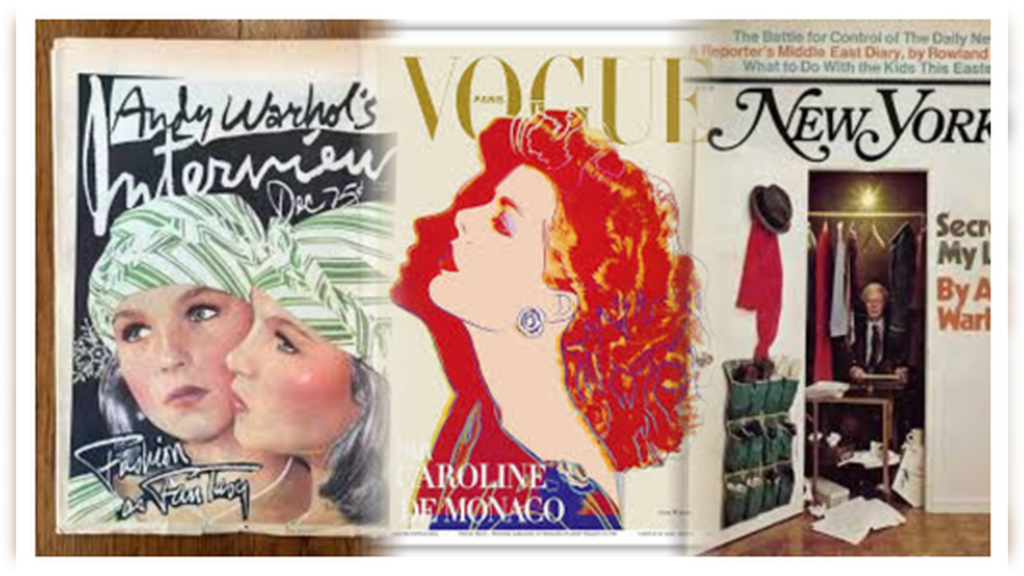
Warhol co-founded the magazine “Interview” in 1969. The magazine centered on the lives of celebrities, artists, and cultural icons, and it featured interviews in a raw and natural style. The interview took the Andy Warhol brand into the field of media and publishing.
The magazine centered on Warhol’s interest in the famous and the superficiality of communication. The magazine emphasized the image and the presence of the people it featured, rather than the in-depth content of the interviews. The content of the magazine is reminiscent of modern-day celebrity journalism and influencer culture.
The “Interview” magazine furthered Warhol’s position as a cultural intermediary. The magazine placed Warhol in the center of art, fashion, film, and music.
Death and the Transformation into a Legacy Brand
Andy Warhol passed away in 1987 after suffering from complications related to surgery.
The Andy Warhol Foundation for the Visual Arts was formed to preserve his art and license it. In this way, Warhol’s art continued to travel the world.
Unlike many brands, the legacy of Andy Warhol actually grew rather than diminished after his death. Licensing his images for fashion, home decor, books, exhibitions, and the Internet was a success.
Andy Warhol Foundation and Brand Governance
The Andy Warhol Foundation is instrumental in the maintenance of the integrity of the brand. The foundation is responsible for the copyright of the brand and also funds various initiatives related to contemporary art. The structure of the Andy Warhol Foundation ensures that the brand remains relevant without becoming overly exposed.
The Andy Warhol Foundation considers Warhol as an intellectual property system. This is similar to how most brands are run today, thus making Warhol a successful example of brand management.
Andy Warhol and the Economics of Art
One of the important aspects that are not discussed as part of Andy Warhol’s life is his knowledge about money and value creation. Warhol was vocal about discussing business as an art form. Additionally, he considered financial success as a way to prove cultural relevance. Thus, he redefined modern art in a capitalist society. His approach to pricing his work and accepting collectors as part of his business later impacted how contemporary artists viewed themselves as business entities.
Influence on Contemporary Branding and Advertising
The influence of Andy Warhol’s visual philosophy can also be seen on the branding and advertising strategies that are being adopted today. The use of repetition, color schemes, and easily identifiable imagery that Warhol is known for is similar to how global brands are attempting to create brand identities today. In fact, many advertising strategies are adopting Andy Warhol’s philosophy unconsciously by promoting simple imagery as cultural icons.
Andy Warhol as a Blueprint for Creative Entrepreneurs
Beyond the fields of art and fashion, Andy Warhol can be used as a business blueprint for creative entrepreneurs in other fields. Warhol’s life and career demonstrate how personal identity, aesthetic style, and cultural timing can turn an individual into a business brand. Contemporary creative entrepreneurs, ranging from fashion designers to digital influencers, are all mimicking Warhol’s business blueprint by marrying creativity with business acumen. Warhol’s creative success, as mentioned earlier, is not coincidental but rather well-planned.
Fashion Collaborations and Streetwear Influence

Warhol’s imagery has been adopted by various fashion brands. The Pop Art movement was started in the early 1960s by Warhol. Since then, Warhol’s imagery has gradually transitioned from the walls of galleries to the world of fashion. Warhol realized the influence of fashion as early as the 1960s. He associated himself with designers, magazines, and celebrities at his New York City studio, The Factory. The Factory was where Warhol created his works of art. After Warhol’s death in 1987, the Andy Warhol Foundation for the Visual Arts took charge of Warhol’s imagery. The foundation has been instrumental in the commercial use of Warhol’s imagery to various brands. The commercial use of Warhol’s imagery is the reason it has endured for so long.
In the 1990s and 2000s, high-end fashion houses such as Versace adopted Warhol’s imagery. The reason for adopting Warhol’s imagery was that the imagery contained bold colors and portraits of celebrities. These are the characteristics that high-end fashion houses use to define themselves. Comme des Garçons is an avant-garde fashion brand that adopted Warhol’s imagery. The reason for adopting Warhol’s imagery was that the artist challenged the hierarchy of the art world.
Streetwear was a later development, but it was also culturally more significant. The collaborations with Supreme, especially in the 2010s, and the mass-market initiatives with companies like Uniqlo’s UT collections made his visual language more accessible. They were not accidental. Brands worked with Warhol because his art was already a commentary on consumerism, repetition, and branding itself. Wearing Warhol’s images is not only fashionable but also a commentary on consumerism itself.
Streetwear culture, driven by drops, hype, and visuality, is a natural fit for Warhol’s idea of art being part of everyday life. Younger generations, who might not be interested in visiting art museums, will be exposed to Warhol through streetwear, sneakers, and T-shirts. By the 2020s, and indeed 2026, this cross-generational exposure has made Warhol a living cultural brand, rather than a historical artist. The reason for this is that Warhol’s visual language is still malleable, commenting as it does on fame, capitalism, and media saturation, all of which define our current digital culture as much as they did the 1960s.
Museums and Institutional Presence
The Andy Warhol Museum in Pittsburgh is the primary source of information on Warhol’s life and works. It contains thousands of artworks, films, and documents. It projects Warhol as a thinker, brand builder, and cultural theorist.
Global exhibitions are constantly reinventing Warhol’s works, relating them to contemporary issues like social media, identity, and capitalism. These exhibitions keep the Warhol brand intellectually alive and not stuck in the past.
Andy Warhol in the Digital Age
Andy Warhol famously stated that everyone in the world would be famous for fifteen minutes. The current day and age, with the advent and prevalence of social media, make this statement seem prophetic. Social media sites such as Instagram and TikTok are built on the same ideas that Warhol popularized: repetition, visibility, and surface-level identities. Many digital artists and creators look at Warhol’s work as the starting point for modern visual culture. Warhol’s ideas on reproduction and originality are also very similar to digital art and NFTs. The Andy Warhol brand works well in the modern world because it was built for mass media. Warhol’s work does not become less powerful in reproduction; it becomes more powerful.
Brand Philosophy and Cultural Impact
At its essence, the Andy Warhol brand is about authenticity, value, and meaning. It’s about challenging what you think art needs to be in order to be art. Is art necessarily singular or emotional? The answer, of course, is no, as demonstrated by Warhol’s art, which was strategic, business-oriented, and revolutionary.
This philosophy, of course, has been emulated by generations of artists, designers, and marketers. Warhol did not divide art and business. Instead, he demonstrated that art and business can coexist and feed each other.
Conclusion
The Andy Warhol brand is arguably one of the most successful brands in the world of culture. It exists beyond time, beyond medium, and beyond industry. The brand has evolved from commercial illustration to Pop Art, and then into the global world of licensing, fashion, and streetwear collaborations. Warhol created a system rather than just a body of work. The reason for his enduring legacy is that his vision reflects the world that exists today. In a culture driven by images, attention, identity creation, and streetwear influenced self-expression, the Andy Warhol brand feels remarkably contemporary. It is not frozen in the past; it remains alive, relevant, and influential in the present and beyond.
Frequently Asked Questions About Andy Warhol
1. Who was Andy Warhol?
Andy Warhol was an American artist, filmmaker, and producer, widely recognized as a leading figure in the Pop Art movement. His work explored the relationship between artistic expression, celebrity culture, and consumerism, making him a cultural icon of the 20th century.
2. What is Andy Warhol best known for?
Warhol is best known for his vivid, colorful paintings of consumer goods like Campbell’s Soup cans and Coca-Cola bottles, as well as portraits of celebrities such as Marilyn Monroe and Elvis Presley. These works challenged traditional boundaries between high art and mass culture.
3. When and where was Andy Warhol born?
Andy Warhol was born on August 6, 1928, in Pittsburgh, Pennsylvania, United States. He grew up in a working-class family, which influenced his later fascination with everyday objects and mass production.
4. What was Andy Warhol’s early career before becoming a pop artist?
Before gaining fame as a Pop artist, Warhol worked as a commercial illustrator in New York City. He created advertisements, album covers, and magazine illustrations, refining his distinctive style that would later define his artwork.
5. What is the significance of The Factory in Andy Warhol’s career?
The Factory was Warhol’s New York studio and creative hub. It was a place where artists, musicians, celebrities, and cultural influencers gathered. Many of his experimental films, artwork, and collaborations originated at The Factory, making it a cornerstone of his legacy.
6. How did Andy Warhol influence pop culture?
Warhol transformed the perception of everyday objects and celebrity images into art, creating a dialogue between commercial culture and fine art. His approach inspired generations of artists, designers, and brands to blur the line between art, marketing, and popular culture.
7. What materials and techniques did Andy Warhol use?
Warhol often used silkscreen printing, acrylic paint, and collage techniques. His approach to mass-produced art, such as repeating images with different color variations, mirrored industrial production while maintaining artistic creativity.
8. What are some of Andy Warhol’s most famous works?
Some of his most iconic works include Campbell’s Soup Cans (1962), Marilyn Diptych (1962), Eight Elvises (1963), and portraits of Elizabeth Taylor, Mick Jagger, and Jackie Kennedy. These works remain central to modern art collections worldwide.
9. How did Andy Warhol approach celebrity culture?
Warhol celebrated and critiqued fame simultaneously. He immortalized stars through repetitive, colorful portraits while also highlighting the commodification of celebrity life. This commentary on fame remains relevant in contemporary media and marketing.
10. Did Andy Warhol have any notable collaborations?
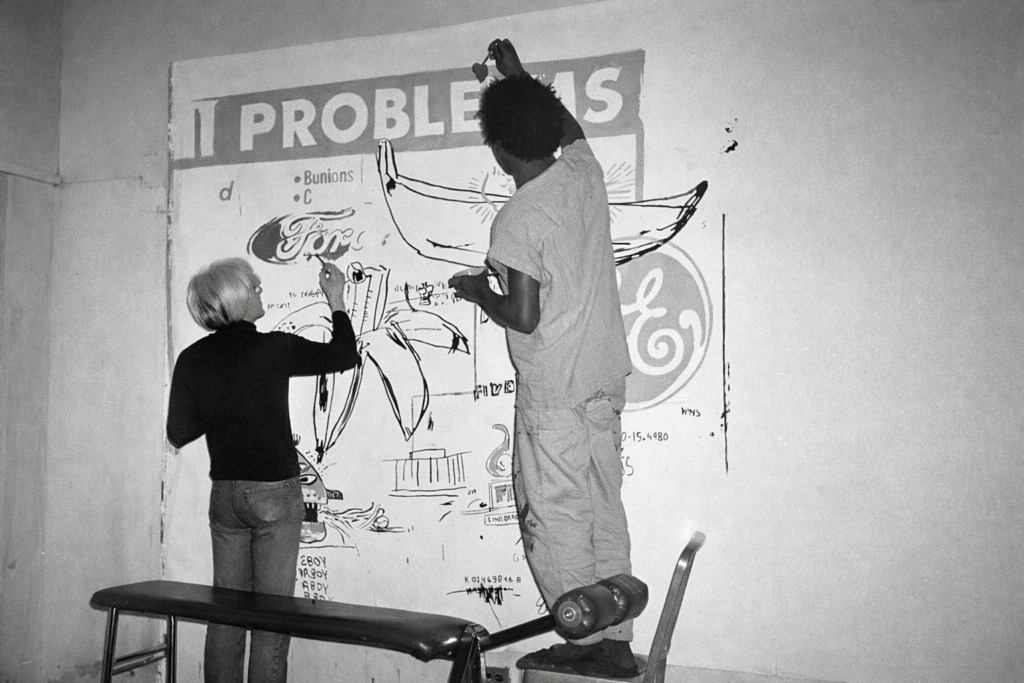
Yes, Warhol collaborated with musicians, designers, filmmakers, and brands. Notable collaborations include his work with Velvet Underground, fashion photographer Richard Avedon, and designers such as Jean-Michel Basquiat. His collaborative spirit expanded the influence of his art.
11. Where can I view Andy Warhol’s collections today?
Andy Warhol’s artwork is displayed in major museums globally, including The Andy Warhol Museum in Pittsburgh, the Museum of Modern Art in New York, Tate Modern in London, and the Guggenheim Museum. Many private galleries also hold his works.
12. How did Andy Warhol change the art market?
Warhol introduced the idea that art could be reproduced like consumer products without losing value. His silkscreen prints and serialized works challenged traditional notions of uniqueness, reshaping how collectors and galleries approach contemporary art.
13. What was Andy Warhol’s impact on fashion and design?
Warhol’s bold colors, celebrity portraits, and pop imagery influenced fashion designers and brands. Collaborations with designers and his presence in magazines bridged the worlds of visual art and style, inspiring streetwear, luxury fashion, and graphic design aesthetics.
14. How did Andy Warhol handle fame and public life?
Warhol embraced public attention as part of his artistic persona. He cultivated an enigmatic, media-savvy identity, attending social events, creating interviews, and appearing in public to both mystify and engage audiences, merging life with art.
15. What is Andy Warhol’s legacy today?
Warhol’s legacy endures through his innovative approach to art, celebrity, and commerce. His influence can be seen in contemporary art, fashion, advertising, and media culture. He redefined the concept of artistic value, showing that everyday objects and images could become lasting cultural symbols.
For collaborations, press, or inquiries, contact us at streeticonic1@gmail.com.