Analogue has become a recognizable name among retro gaming enthusiasts who want to experience classic video games on modern hardware. From its portable Analogue Pocket to the Analogue 3D, the company focuses on recreating the experience of older gaming systems while adding modern features such as high-resolution displays, HDMI output, and updated connectivity.
But what exactly is Analogue, how does its technology work, and why are collectors interested in its consoles?
Analogue is an American video game hardware company that designs modern systems intended to play original games from classic gaming platforms. Its products combine hardware-based recreation of older gaming systems with contemporary design and display technology.
Unlike a conventional gaming console built around a new generation of games, Analogue products are primarily designed for people who already own classic game cartridges or want a more faithful way to experience gaming history.
This guide explores the company, its most important products, FPGA technology, compatibility, pricing considerations, and what buyers should know before choosing a system.
What Is Analogue and What Does the Company Do?
Analogue is a hardware company focused on retro gaming and video game preservation. Founded in 2011, it became known for producing carefully designed systems that recreate the functionality of classic consoles rather than simply offering collections of old games through a software application.
Its product range has included systems associated with Nintendo, Sega, Neo Geo, and other historical gaming platforms.
The central idea is straightforward: many people still own original cartridges, controllers, and accessories, but connecting older consoles to modern televisions can be inconvenient. Original hardware may also need repairs, replacement cables, or video modifications.
Analogue addresses this problem by developing new hardware designed to work with original game media while providing modern display options.
Why Is Analogue Popular With Retro Gamers?
Several factors explain the company’s appeal:
- Original game cartridges: Selected Analogue systems accept cartridges from the platforms they recreate.
- Modern video output: Products offer contemporary display connections, including HDMI.
- Hardware-based design: FPGA technology recreates important hardware behavior.
- Premium construction: The company emphasizes compact designs and carefully finished hardware.
- Preservation: Its products give collectors another way to continue using aging game libraries.
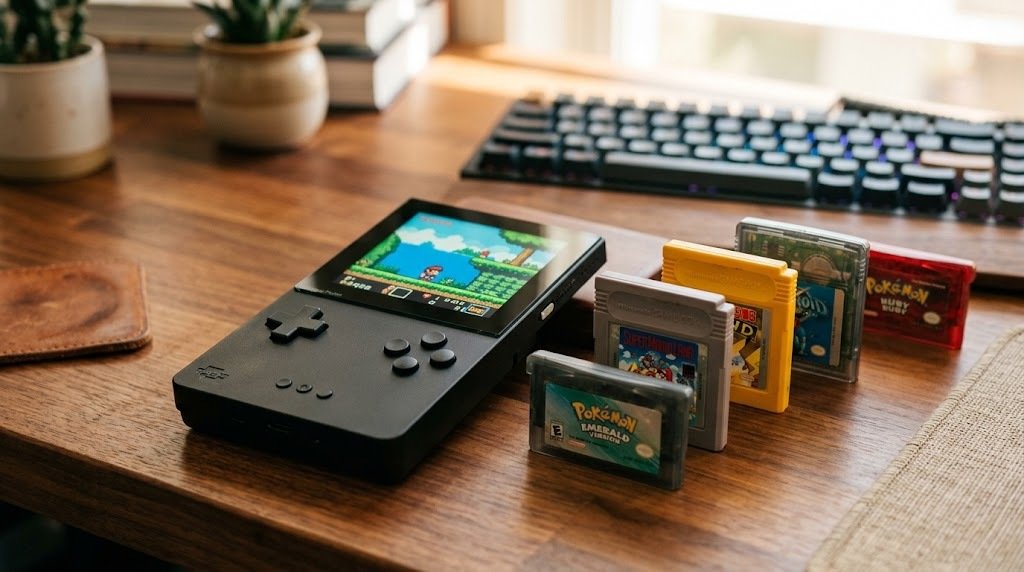
For example, someone who owns original Game Boy Advance cartridges can use an Analogue Pocket rather than relying exclusively on an aging handheld. Similarly, someone with a collection of Nintendo 64 cartridges may consider the Analogue 3D.
The important distinction is that Analogue is not a general clothing label or fashion retailer. In the context of the websites and products discussed here, it refers to retro gaming hardware.
How Does Analogue FPGA Technology Work?
One of the most important features of Analogue hardware is its use of FPGA technology.
FPGA stands for field-programmable gate array. It is a type of integrated circuit that can be configured to implement digital logic circuits. Analogue uses this technology to recreate the behavior of classic gaming hardware.
Understanding this distinction helps explain why the company’s products attract collectors who care about more than simply making an old game run.
FPGA Hardware Versus Software Emulation
Software emulation uses software to imitate the behavior of another system. An emulator running on a computer, for instance, can reproduce many functions of an older console using a modern processor.
FPGA-based hardware takes a different approach. Developers configure programmable hardware to reproduce the relevant digital logic of the original platform.
Here is a simplified comparison:
| Feature | Software emulation | FPGA-based recreation |
|---|---|---|
| How it works | Software imitates system behavior | Programmable hardware implements digital logic |
| Hardware requirements | Depends on emulator accuracy and system complexity | Depends on the FPGA design and surrounding hardware |
| Compatibility | Varies by emulator and game | Varies by hardware implementation and game |
| Performance | Can be excellent when properly configured | Can closely reproduce original timing and behavior |
| Flexibility | Often easy to update and modify | Depends on the device, firmware, and available development tools |
Neither approach automatically guarantees a perfect experience. A well-developed emulator can be highly accurate, while an FPGA implementation still depends on the quality of its design and testing.
Analogue’s approach appeals to enthusiasts who value timing, controller response, video output, and other details that can influence how older games feel.
Does Analogue Use Emulation?
Analogue describes its relevant products as FPGA-based hardware systems rather than conventional software emulators. Its official product documentation explains that the Pocket and Analogue 3D use programmable hardware to recreate the functionality of their target systems.
That does not mean the devices reproduce every electrical, mechanical, or display characteristic of the original consoles. The goal is to recreate the important gaming hardware behavior while delivering a practical modern setup.
What Are the Most Popular Analogue Consoles?
Analogue has produced several systems for different generations of video games. Choosing the right product depends on the cartridges you own, the platform you want to revisit, and whether you prefer handheld or television gaming.
1. Analogue Pocket
The Analogue Pocket is a portable gaming system designed around classic handheld cartridges.
According to the company’s official specifications, it features a 3.5-inch LCD with a 1600 × 1440 resolution and 615 pixels per inch. It supports original Game Boy, Game Boy Color, and Game Boy Advance cartridges. Additional systems can be accessed through separately sold cartridge adapters.
Its major features include:
- A high-resolution color display.
- Support for compatible original handheld cartridges.
- Save states and screenshots.
- Custom display modes designed to recreate characteristics of older screens.
- A rechargeable battery and USB-C charging.
- Compatibility with the optional Analogue Dock for television play.
- Nanoloop music creation tools.
- The openFPGA platform for supported third-party hardware cores.
The Pocket is particularly appealing to collectors who want to use their existing handheld game libraries without carrying multiple original consoles.
It is also more versatile than a dedicated cartridge player because supported software and music tools extend its uses beyond playing physical games.
2. Analogue 3D
The Analogue 3D is designed to recreate the Nintendo 64 gaming experience on modern displays.
Its headline feature is 4K output, with the company advertising resolution up to ten times the original N64’s commonly used 320-pixel horizontal resolution. The system is designed for original N64 cartridges and includes four original-style controller ports.
Important features include:
- FPGA-based hardware.
- 4K HDMI output, with 1080p support as well.
- Compatibility with original N64 game cartridges.
- Region-free cartridge support.
- Four controller ports.
- Bluetooth Low Energy and dual-band Wi-Fi hardware.
- A dedicated operating system called 3D OS.
- Support for original N64 controllers and accessories.
The 4K output is not the same as converting every original game into a newly rendered 4K game. Instead, the system recreates the original platform’s behavior and scales its output for modern displays. Its display modes can also reproduce selected characteristics associated with older television technology.
The system is best suited to players who own N64 cartridges and want a modern way to use them. Buyers should also consider controller costs, television compatibility, and the availability of features they expect from a contemporary console.
3. Other Analogue Systems
The company’s history includes several products built around different classic gaming platforms.
| Product | Gaming platform or purpose |
|---|---|
| Analogue Nt | Nintendo Entertainment System and compatible cartridges |
| Analogue Nt mini | Compact NES-focused system |
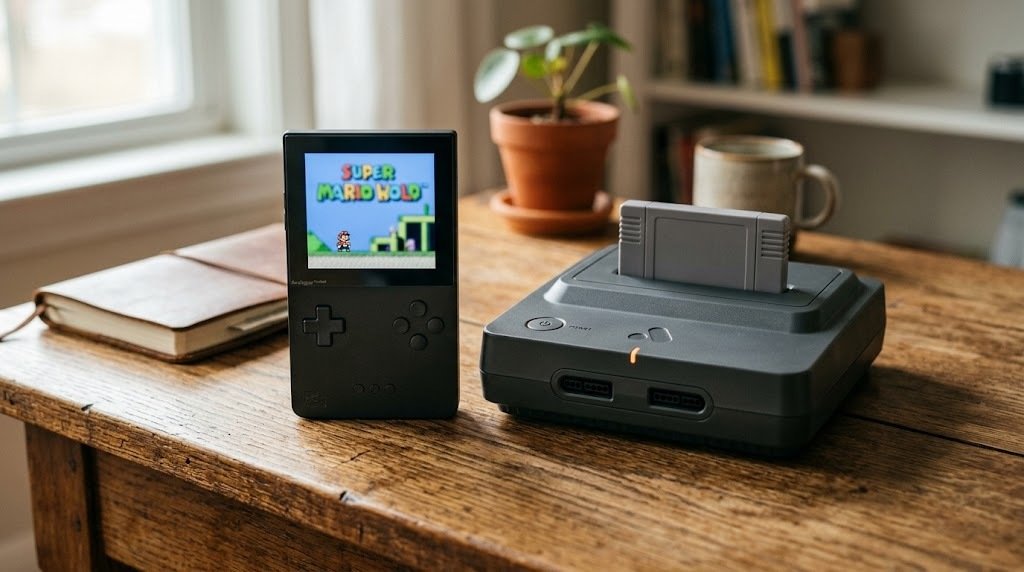
| Analogue Super Nt | Super Nintendo Entertainment System |
| Analogue Mega Sg | Sega Genesis and selected related systems |
| Analogue Duo | TurboGrafx-16 and PC Engine gaming |
| Analogue Pocket | Portable cartridge-based gaming |
| Analogue 3D | Nintendo 64 gaming |
Availability varies. Some older products are discontinued, and finding them may require buying from a reseller or collector.
Before purchasing an older model, confirm its supported cartridge regions, included accessories, firmware status, and condition. A secondhand unit may not include everything originally supplied with the console.
Is Analogue Compatible With Original Games and Accessories?
Compatibility is one of the biggest reasons people research Analogue before buying.
However, compatibility is product-specific. A handheld designed for Game Boy cartridges will not automatically play Nintendo 64 games, and a home console made for N64 cartridges is not a universal retro gaming machine.
Can You Play Original Cartridges?
Yes, supported Analogue products are designed to play original cartridges from their respective platforms.
The Pocket supports Game Boy, Game Boy Color, and Game Boy Advance cartridges. Its additional cartridge adapters extend compatibility to certain other handheld systems. The Analogue 3D is designed for original Nintendo 64 cartridges and advertises region-free support.
This is useful if you already own physical games and want to keep using them.
Before inserting a cartridge, inspect its condition and contacts. Dust, corrosion, damaged labels, or worn connectors can cause problems. Clean cartridges carefully using appropriate methods rather than forcing a cartridge into its slot.
Can You Use Original Controllers?
Controller compatibility also depends on the system. The Analogue 3D includes four original-style controller ports, while the Pocket supports a range of wired and wireless controller options through its dock and supported connections.
Check the exact model’s specifications before assuming that an old controller, adapter, or accessory will work.
Does Analogue Play ROM Files?
Do not assume that an Analogue product can load every downloaded game file.
Analogue’s official product documentation distinguishes cartridge playback from unauthorized copyrighted ROM files. The Pocket’s openFPGA platform supports third-party development of hardware cores, but that is separate from a blanket promise that every game file will work.
Users should follow the relevant device documentation and applicable copyright laws. If your main goal is to play legally acquired physical games, confirm cartridge compatibility before buying.
How Much Does Analogue Cost in 2026?
Analogue products generally occupy the premium end of the retro gaming market. The total cost depends on the model, its availability, accessories, and whether you buy directly or from a reseller.
For example, the official Analogue store has listed the standard Analogue 3D at $269.99. Prices can change, and limited editions or secondhand listings may cost more. Check the official store for current pricing.
The Analogue Pocket’s price, accessories, and stock status should also be checked before purchasing.
What Additional Costs Should You Consider?
A console’s advertised price is only part of the total cost.
Consider these possible expenses:
- Controllers: Some systems support original controllers, while modern compatible controllers may be sold separately.
- Docking hardware: Pocket television play requires the appropriate dock.
- Cartridge adapters: Extra handheld platforms may require separate adapters.
- Storage: Some features require a compatible microSD card or other supported storage.
- Shipping and taxes: These can affect the final checkout total.
- Reseller premiums: Discontinued or limited-edition products may be listed above their original prices.
A useful buying exercise is to compare the complete cost of your intended setup rather than the console price alone.
For instance, a buyer interested in the Pocket for Game Boy Advance games may need only the handheld. Someone who wants several additional cartridge systems and television play should budget for adapters and a dock as well.
This small calculation can prevent an expensive surprise after checkout.
Is Analogue Worth Buying?
Analogue can be an excellent option for the right Retro Gaming Consoles
enthusiast, but it is not necessarily the best choice for everyone.
Who Should Consider Analogue?
You may find an Analogue system worthwhile if you:
- Own a collection of original game cartridges.
- Want to play classic games on a modern display.
- Care about hardware accuracy and controller response.
- Prefer dedicated gaming hardware over a general-purpose computer.
- Appreciate premium industrial design and physical game collecting.
- Want to explore supported FPGA development on the Pocket.
For these buyers, the combination of original media, updated connections, and carefully designed hardware can justify a higher purchase price.
Who Might Prefer an Alternative?
An alternative may make more sense if you:
- Do not own physical game cartridges.
- Mainly want access to a large digital game library.
- Have a strict budget.
- Prefer a single device that supports many gaming generations.
- Need features that a specific Analogue model does not provide.
Software emulation, official re-releases, and other retro gaming devices may be more convenient or affordable depending on your goals. Their compatibility, accuracy, and legal options differ, so comparisons should be made model by model.
Analogue Versus Conventional Emulation
The key question is not simply which technology is superior. It is which experience you want.
If you value portability, digital convenience, and quick access to multiple systems, software emulation may be a practical solution. If you own original cartridges and prioritize a dedicated hardware recreation, Analogue may be more attractive.
Neither choice automatically guarantees better graphics or perfect compatibility. The specific hardware, software, display, and game all influence the result.
How to Choose the Right Analogue System
Use this simple process before making a purchase.
Step 1: Identify your game collection. List the platforms and cartridges you actually own. This immediately narrows your options.
Step 2: Decide where you want to play. Choose a handheld for portable gaming or a home console for a television-based setup.
Step 3: Check compatibility. Confirm that your games, accessories, and preferred controllers are supported by the exact model.
Step 4: Calculate the full cost. Include necessary adapters, controllers, docking equipment, shipping, and taxes.
Step 5: Review current firmware and support. Read the official manuals, compatibility notes, and update information.
Step 6: Compare alternatives. Consider whether your budget and gaming habits justify dedicated hardware or whether another solution would serve you better.
A practical rule is to buy for the games you want to play now, not for a hypothetical collection you might build later.
Conclusion: Should You Explore Analogue in 2026?
Analogue has built its reputation by combining retro gaming compatibility with modern hardware design. Its Pocket serves portable gaming enthusiasts, while the Analogue 3D focuses on recreating the Nintendo 64 experience on contemporary displays.
The company’s FPGA approach is particularly interesting for players who care about hardware behavior, original cartridges, and preserving access to older games. At the same time, premium pricing, accessory costs, availability, and product-specific limitations deserve careful consideration.
The best starting point is to identify your existing game collection, check the relevant product’s compatibility, and compare the complete setup cost with alternatives.
Frequently Asked Questions About Analogue
What is Analogue?
Analogue is an American video game hardware company that creates modern systems designed to play games from classic gaming platforms. Its products include the Analogue Pocket and Analogue 3D.
Is Analogue a clothing brand?
The Analogue Pocket is a portable gaming system compatible with original Game Boy, Game Boy Color, and Game Boy Advance cartridges. Supported cartridge adapters expand its compatibility to additional handheld platforms.
What is the Analogue Pocket used for?
The Analogue Pocket is a portable gaming system compatible with original Game Boy, Game Boy Color, and Game Boy Advance cartridges. Supported cartridge adapters expand its compatibility to additional handheld platforms.
What is the Analogue 3D?
The Analogue 3D is a modern gaming system designed to play original Nintendo 64 cartridges. It uses FPGA technology and supports 4K video output for compatible modern displays.
Is Analogue better than software emulation?
It depends on your needs. Analogue focuses on dedicated FPGA-based hardware and original game media, while software emulation offers flexibility and convenience. Compatibility, accuracy, cost, and available features vary by product and emulator.
Where can you buy Analogue products?
You can check the official Analogue website and online store for current products, prices, and availability. Older or discontinued models may also appear on resale marketplaces, where buyers should verify the seller, condition, and return policy.
One Response